

Scientific Name : Oonopsis monocephala
Author : A. Nelson NatureServe Explorer
Common Name : Rayless Goldenweed
 Current Research Activities
 1997 profile


☰ Click link below for details.
Taxonomy
Asteraceae (sunflower family)
Ackerfield (2015, 2022) recognizes Oonopsis monocephala. Weber and Wittmann (2012) include only Oonopsis foliosa in their Colorado flora, not recognizing var. foliosa or var. monocephala. Hughes and Brown (2004) and Schulz and Shaw (1992) recognize the two varieties, with var. foliosa having ray and disc flowers, and var. monocephala having only disc flowers.
Ranks and Status
State Rank : S3
State Rank Reason : Oonopsis monocephala is endemic to Las Animas and Otero counties, Colorado, USA. Although this species is limited in range it can be quite common when found. Potential threats to Oonopsis monocephala are road maintenance activities and the effects of climate change.
U.S. Endangered Species Act : none
Colorado Threatened and Endangered List : none
Other Statuses : SWAP Tier 2
Description and Phenology
General Description:
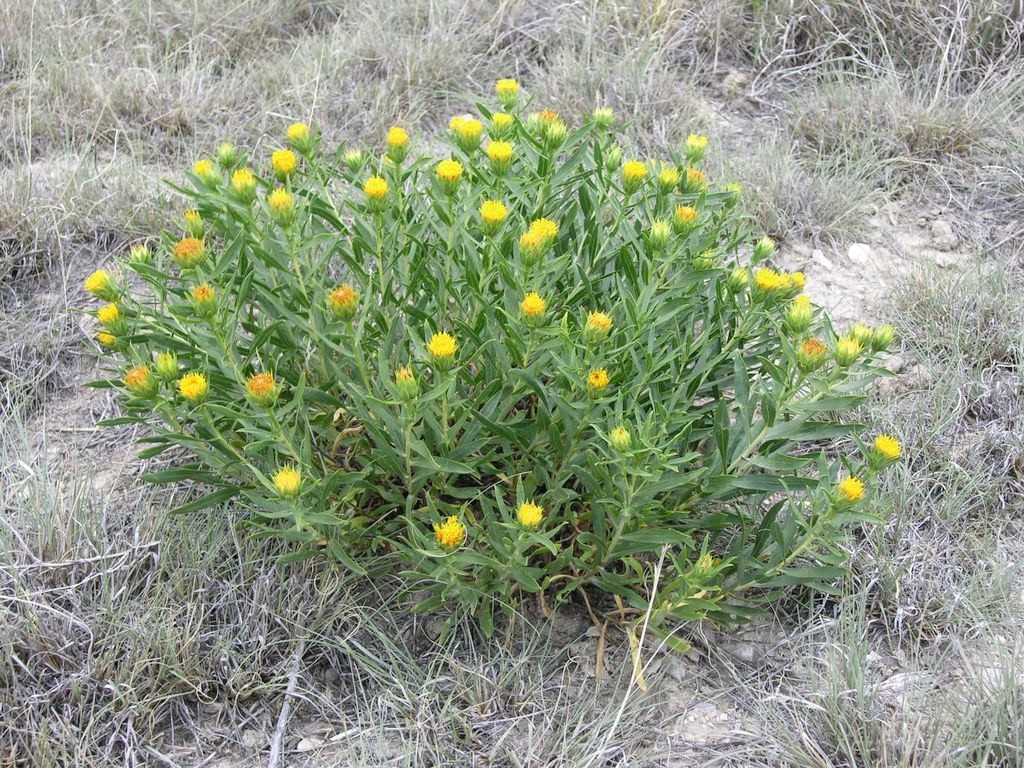
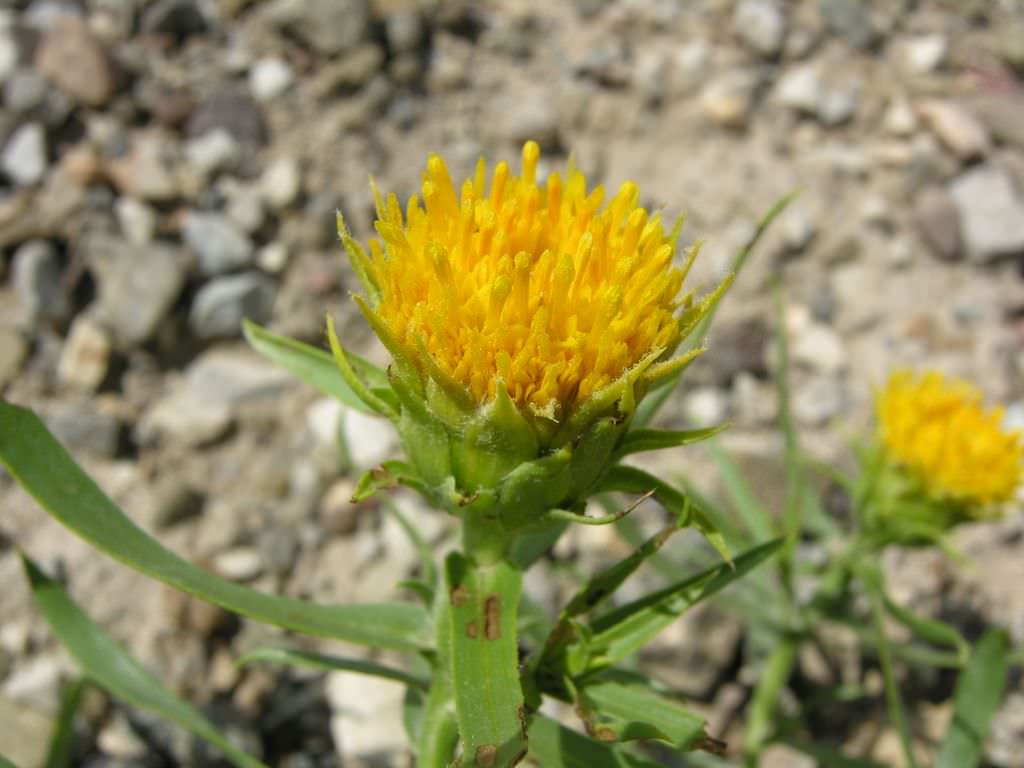
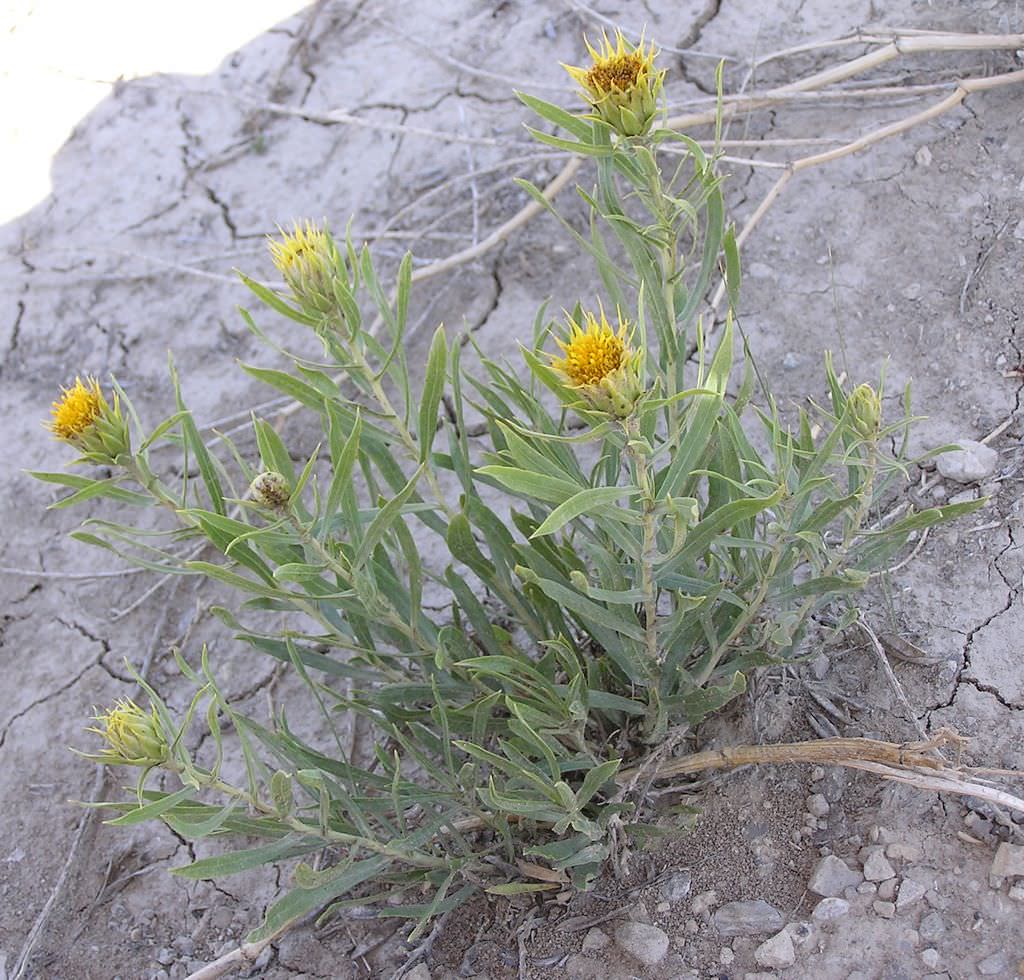
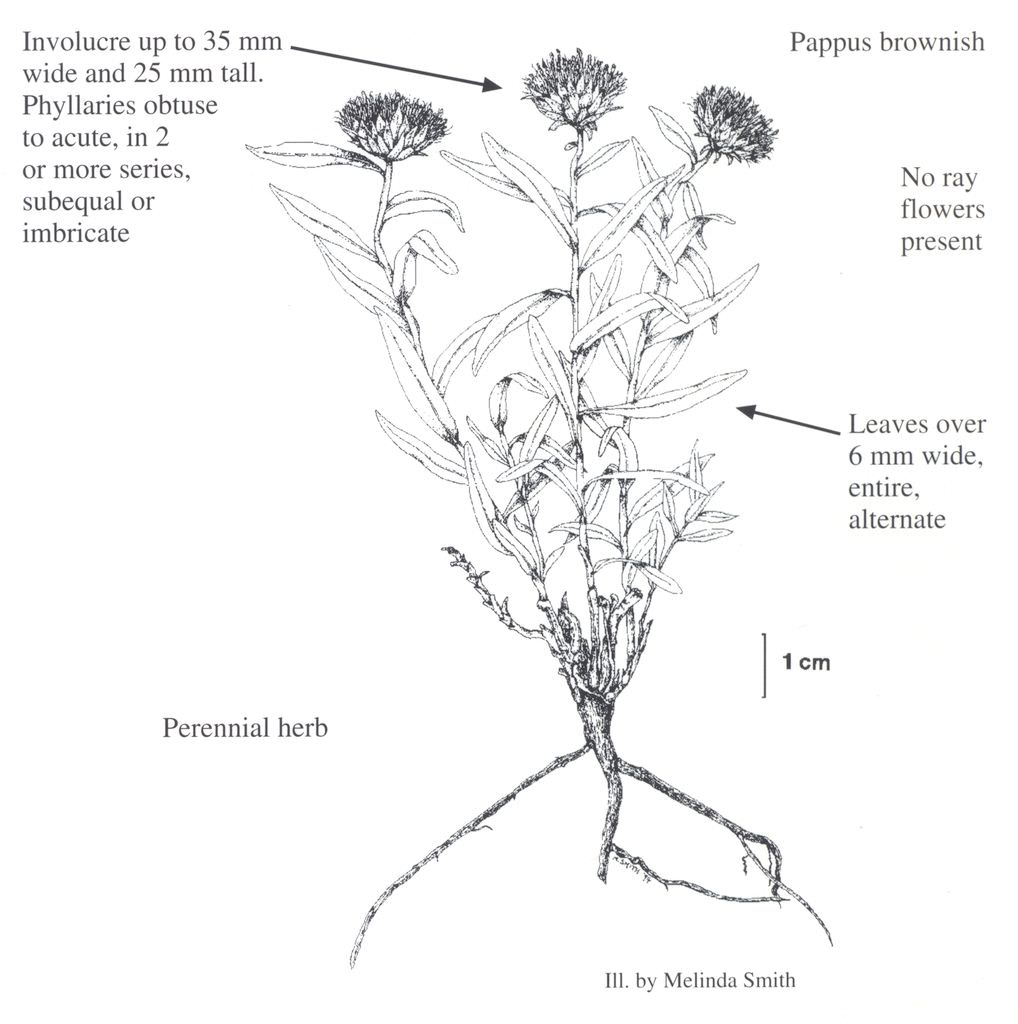
A perennial herb generally 10-40 cm tall, arising from a woody taproot. Vegetative reproduction via one or two horizontal, spreading, sprouting branch roots is common. The erect stems are glabrous or very sparsely hairy, with numerous entire, alternate, oblanceolate leaves of 5-15 cm in width. Involucre up to 35 mm wide and 25 mm tall. Phyllaries obtuse to acute, in 2 or more series, subequal or imbricate, ray flowers are absent.
Look Alikes:
The lack of ray flowers distinguishes this species from sympatric Oonopsis species, although hybrids between var. monocephala and var. foliosa may exhibit a gradual transition from discoid to radiate morphology (Hughes and Brown 1994).
Phenology:
Flowers June-July.
 |
Habitat
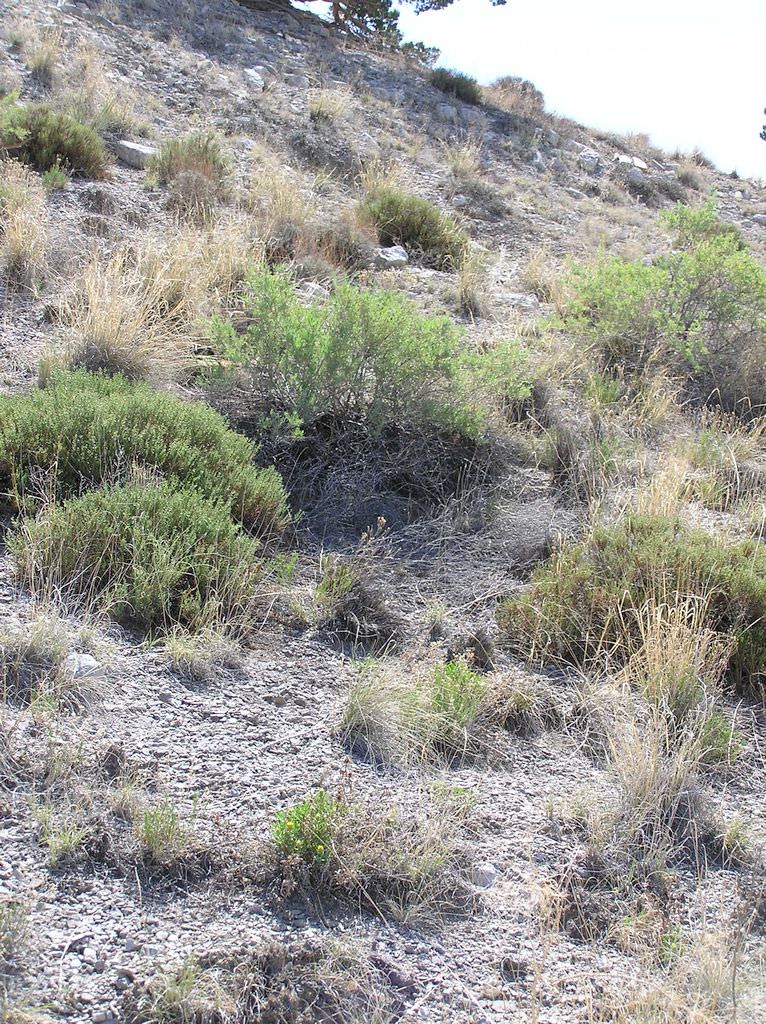
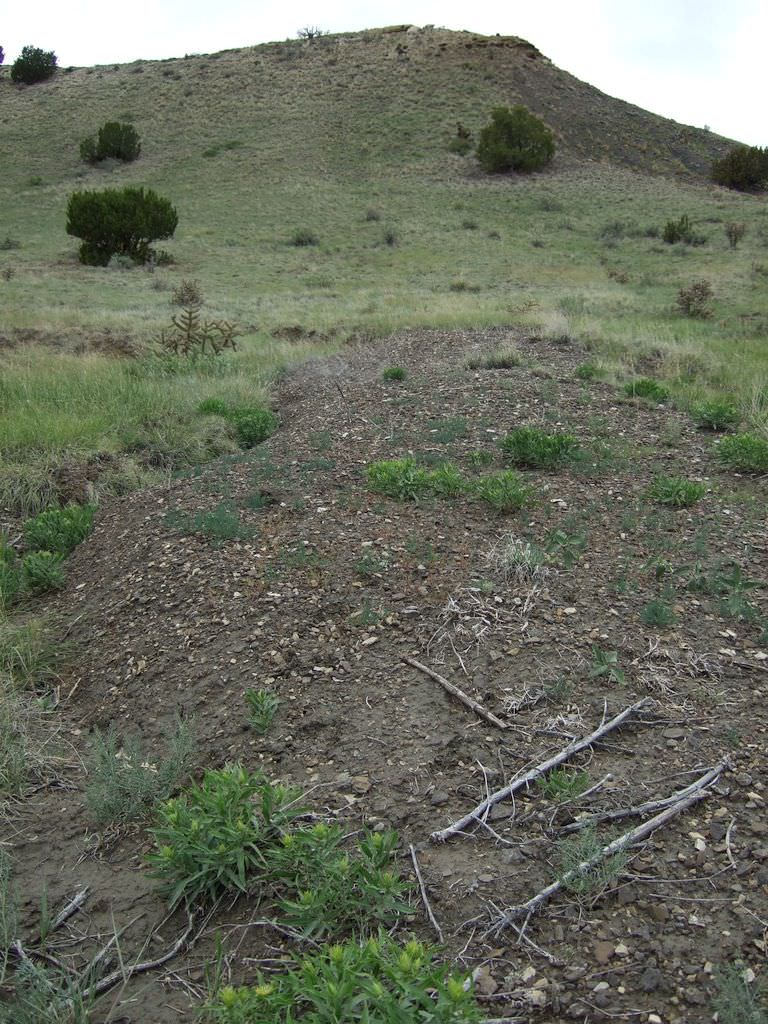
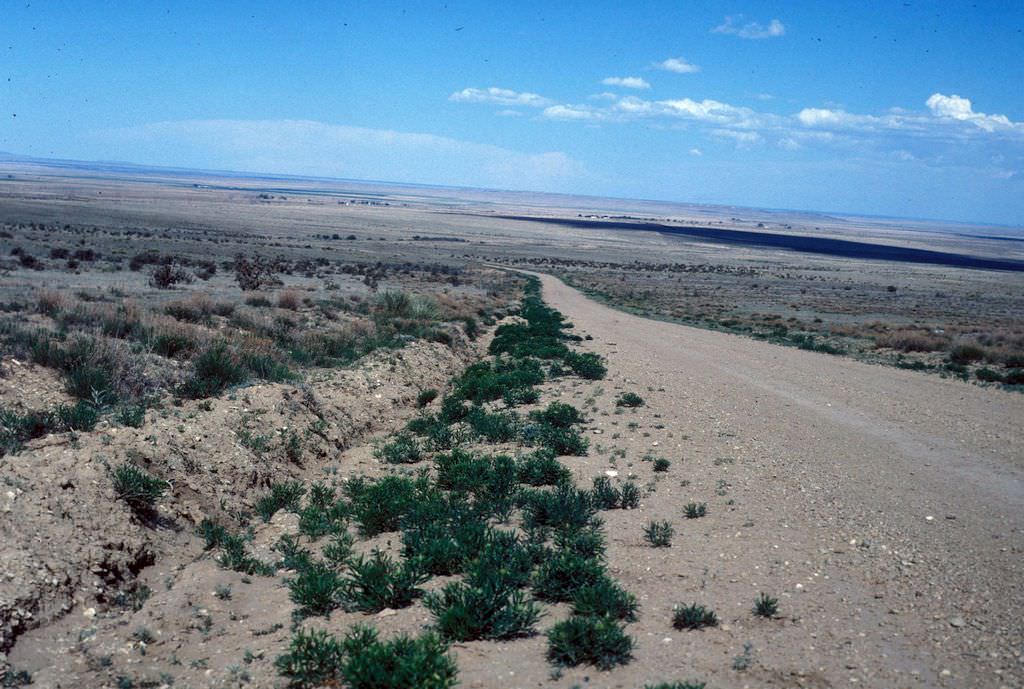
This species is most often found in sparsely vegetated areas on or near highly eroded shale and clay slopes, including disturbed areas such as two-tracks. Soils are typically dry, fine-grained and clayey. Within the shortgrass prairie matrix, it may be associated with a variety of semi-arid grassland, shrubland, and woodland associations, including those dominated by Pinyon-Juniper, Bouteloua gracilis, Frankenia jamesii, Krascheninnikovia lanata, Sarcobatus vermiculatus, and Yucca glauca. Additional associated species include: Hesperostipa neomexicana, Achnatherum hymenoides, Oenothera harringtonii, Guiterrizea sarothrae, Astragalus racemosus, Sporobolus airiodes, Chrysothamnus nauseosus, Lycium pallidum, Opuntia imbricata, Pascopyrum smithii, Opuntia polycantha, Hilaria jamesii, Atriplex canescens, Sphaeralcea coccinea, Artemisia sp., Ceratoides lanata, Stanleya pinnata, Zinnia grandiflora, Elymus elymoides, Glandularia bipinniatifida, Echinocereus reichenbachii, and Aristida purpurea (Colordado Natural Heritage Program 2022).
click on image to enlarge
 |  |  |
Elevation Range:
4,333 - 7,885 feet (1,321 - 2,403 meters)
Distribution
Colorado Endemic:
Yes
Range:
Oonopsis monocephala is endemic to Las Animas and Otero counties, Colorado, USA. The estimated range extent in Colorado of 5421 square kilometers was calculated in GeoCAT using occurrence data provided by the Colorado Natural Heritage Program (2022).
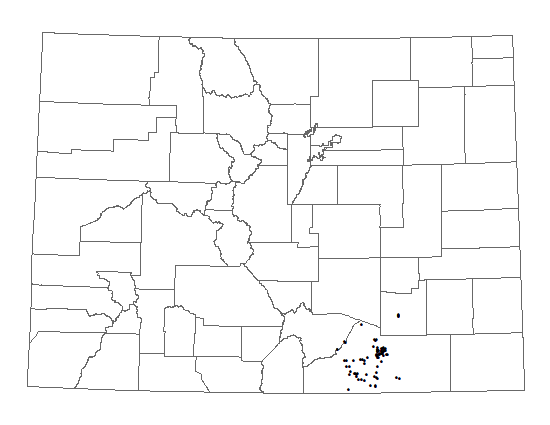 Click on map to enlarge |
Threats and Management Issues
Road construction and maintenance are considered to be the primary threats to the species. Most of the individuals occur on private cattle ranches and on the Department of Defense Pinyon Canyon Maneuver Site. There are several highways, roads, and telephone lines throughout the occurrences. Although the species seems to tolerate a moderate level of disturbance, maintenance or further developments may adversely disturb or destroy individuals. Competition from non-native invasive plant species may be a threat, along with the effects of climate change within this species range. This species is considered to have high adaptive capacity and is expected to be slightly vulnerable to climate change under both RCP 4.5 and 8.5 scenarios, as assessed for the 2025 Colorado State Wildlife Action Plan (CNHP 2025).
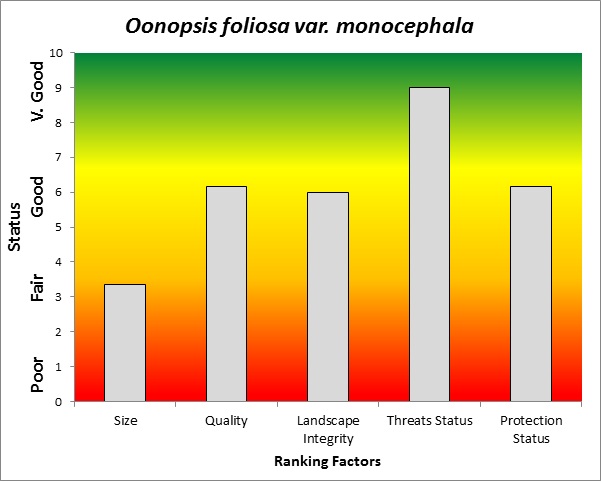 Summary results of an analysis of the status of Oonopsis foliosa var. monocephala based on several ranking factors. This species was concluded to be Effectively Conserved. From Rondeau et al. 2011. |
References
- Ackerfield, J. 2015. Flora of Colorado. BRIT Press, Botanical Research Institute of Texas, Fort Worth, TX. 818 pp.
- Colorado Natural Heritage Program (CNHP). 2025. Climate Change Vulnerability Assessment of Colorado Tier 1 and Tier 2 Plant Species of Greatest Conservation Need (SCGN) for the 2025 Colorado State Wildlife Action Plan. Colorado Natural Heritage Program, Colorado State University, Fort Collins.
- Handwerk, J., L. Grunau, and S. Panjabi. 2015. Colorado Wildlife Action Plan: 2015 Rare Plant Addendum. Colorado Natural Heritage Program, Colorado State University, Fort Collins, Colorado, USA.
- Hughes, J.F. and G.K. Brown. 2004. A putative hybrid swarm within Oonopsis foliosa (Asteraceae: Astereae). Western North American Naturalist 64:109-124.
- Neely, B., S. Panjabi, E. Lane, P. Lewis, C. Dawson, A. Kratz, B. Kurzel, T. Hogan, J. Handwerk, S. Krishnan, J. Neale, and N. Ripley. 2009. Colorado Rare Plant Conservation Strategy, Developed by the Colorado Rare Plant conservation Initiative. The Nature Conservancy, Boulder, Colorado, 117 pp.
- Schulz K.A. and R. B. Shaw. 1992. Status of Haploppapus fremontii ssp. monocephalus [Asteraceae] in Colorado. Prairie Naturalist, 24(3):143-148.
- Spackman, S., B. Jennings, J. Coles, C. Dawson, M. Minton, A. Kratz, and C. Spurrier. 1997. Colorado Rare Plant Field Guide. Prepared for the Bureau of Land Management, the U.S. Forest Service and the U.S. Fish and Wildlife Service by the Colorado Natural Heritage Program.
- USDA, NRCS. 2022. The PLANTS Database. National Plant Data Team, Greensboro, NC 27401-4901 USA.
- Weber, W. A. and R. C. Wittmann. 2012. Colorado Flora, Eastern Slope, A Field Guide to the Vascular Plants, Fourth Edition. Boulder, Colorado. 555 pp.