

Scientific Name : Asclepias stenophylla
Author : Gray NatureServe Explorer
Common Name : Narrow- leaved Milkweed
 Current Research Activities


☰ Click link below for details.
Taxonomy
Apocynaceae (dogbane family)
Ackerfield (2015) and others place this genus in the Apocynaceae (Dogbane Family).
Ranks and Status
State Rank : S2
State Rank Reason : There are 14 known occurrences of Asclepias stenophylla within a 6 county distribution in Colorado. Urban development and the effects of climate change are potential threats to this species.
U.S. Endangered Species Act : none
Colorado Threatened and Endangered List : none
Other Statuses : none
Description and Phenology
General Description:
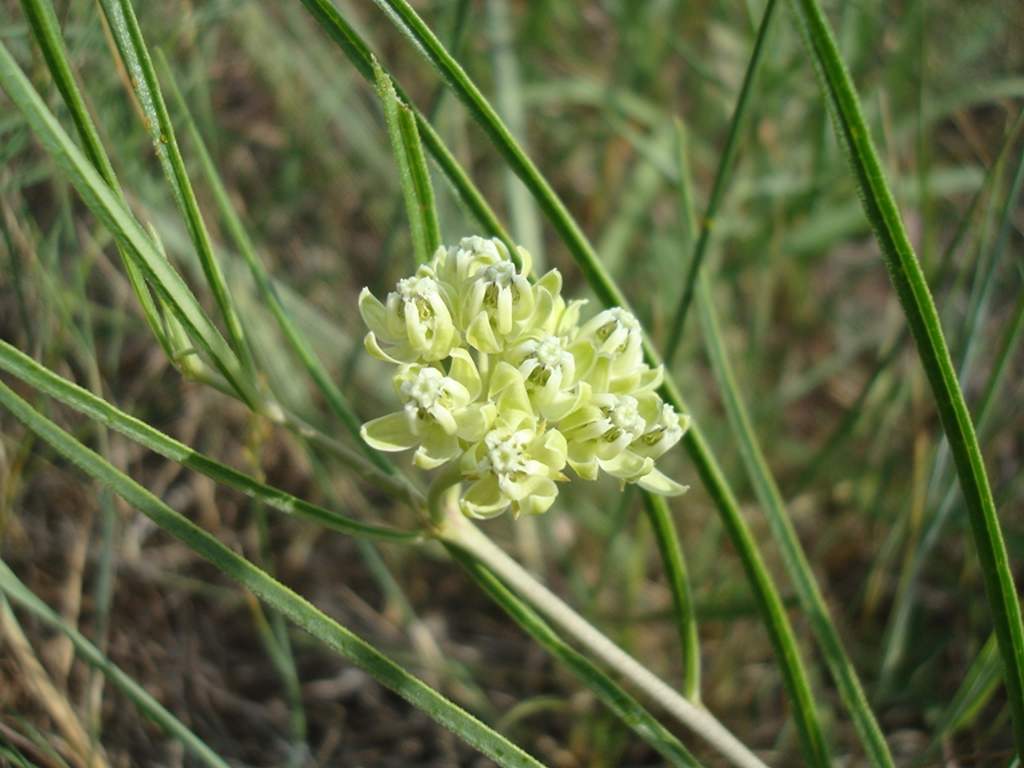
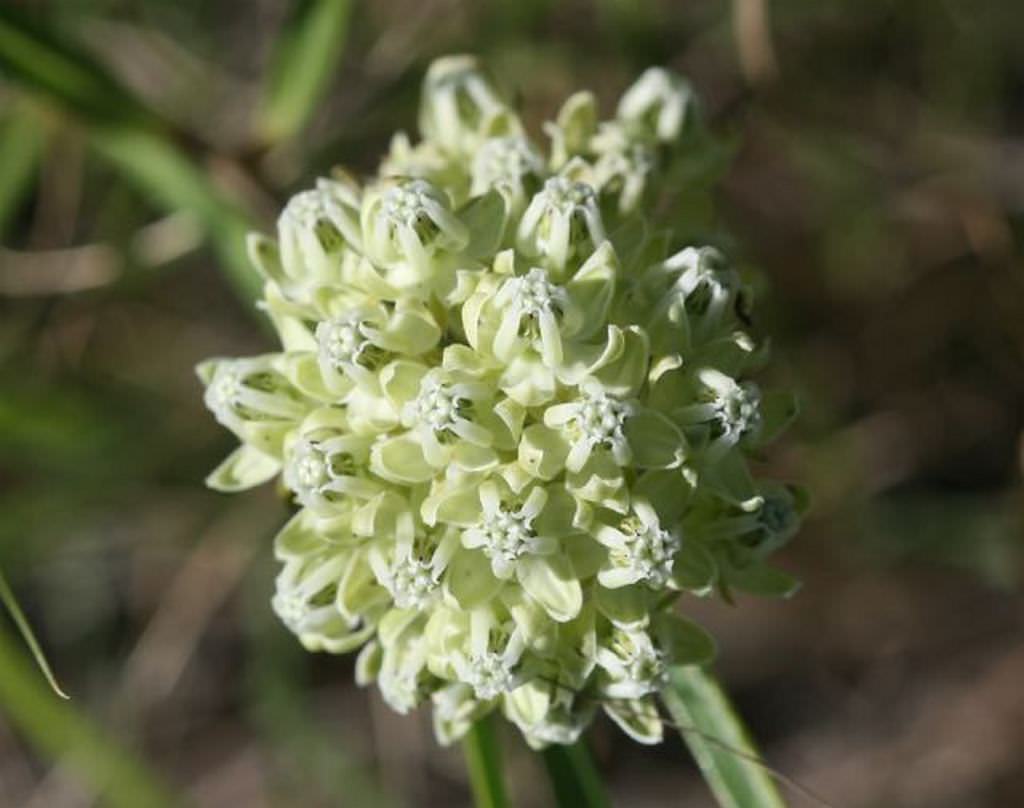
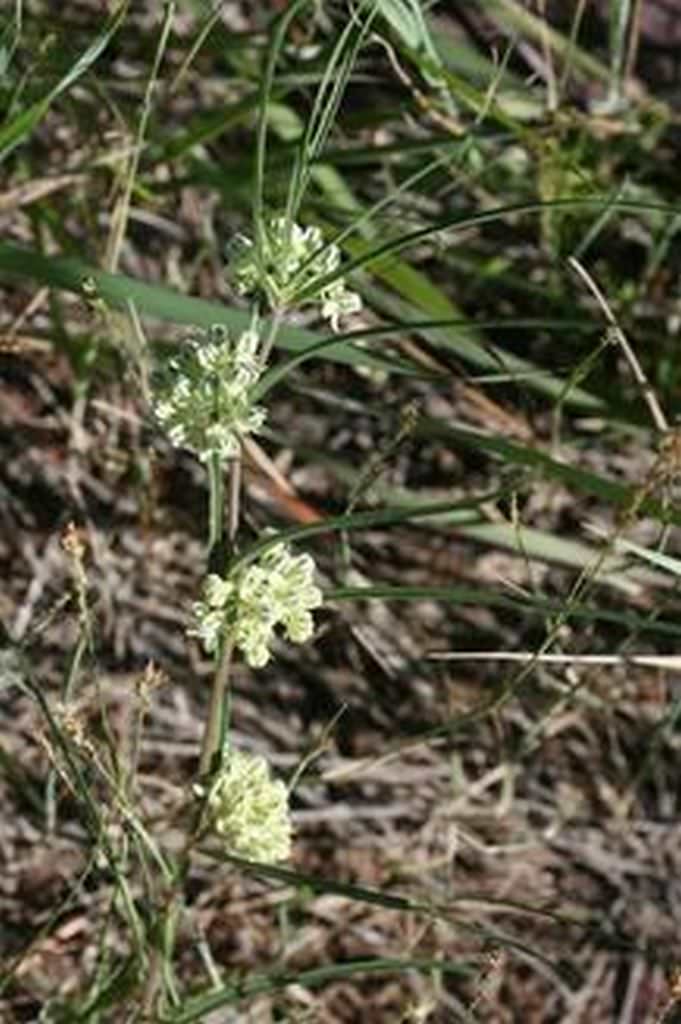
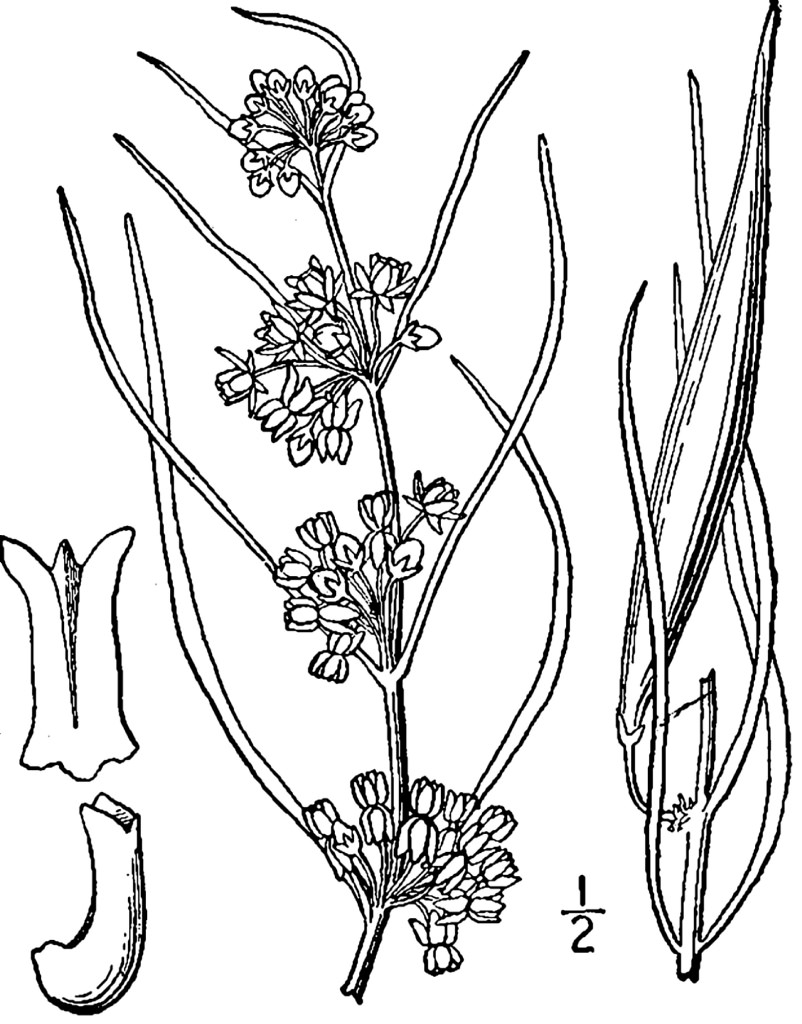
Asclepias stenophylla is a perennial herb with few, erect and usually unbranched stems that are decumbent or upright, 2-8 dm high and arise from a thick, woody root. The alternate or opposite leaves are 8-18 cm long, and 1-5 mm wide. Foliage is moderately to sparsely hairy, and the sap is milky. Umbrella-shaped clusters of 10-25 flowers are nearly stemless in the leaf axils on the upper half of the stem. Each greenish-white to yellow flower is only 7-9 mm long and is borne on a hairy stalk that can be up to 1 cm long. Flowers have 5 reflexed corolla lobes which are about 5 mm long, and 5 erect hoods that are distinctly 3-lobed at the tip and which surround a central column. Erect spindle-shaped fruits are 9-12 cm long and less than 1 cm wide. Each fruit has numerous seeds, each with a white tail that is about. 3 cm long (Heidel and Dueholm 1995, Montana Natural Heritage Program 2017).
Look Alikes:
Asclepias stenophylla resembles narrow-leaved forms of A. viridiflora but has flowers with horns. Both A. pumila and A. verticillata also have narrow leaves, but often filiform and less than 1.5 mm wide. A hand lens reveals the three-lobed hoods of A. stenophylla that are diagnostic (Heidel and Dueholm 1995, Montana Natural Heritage Program online Field Guide 2017).
 |
Habitat
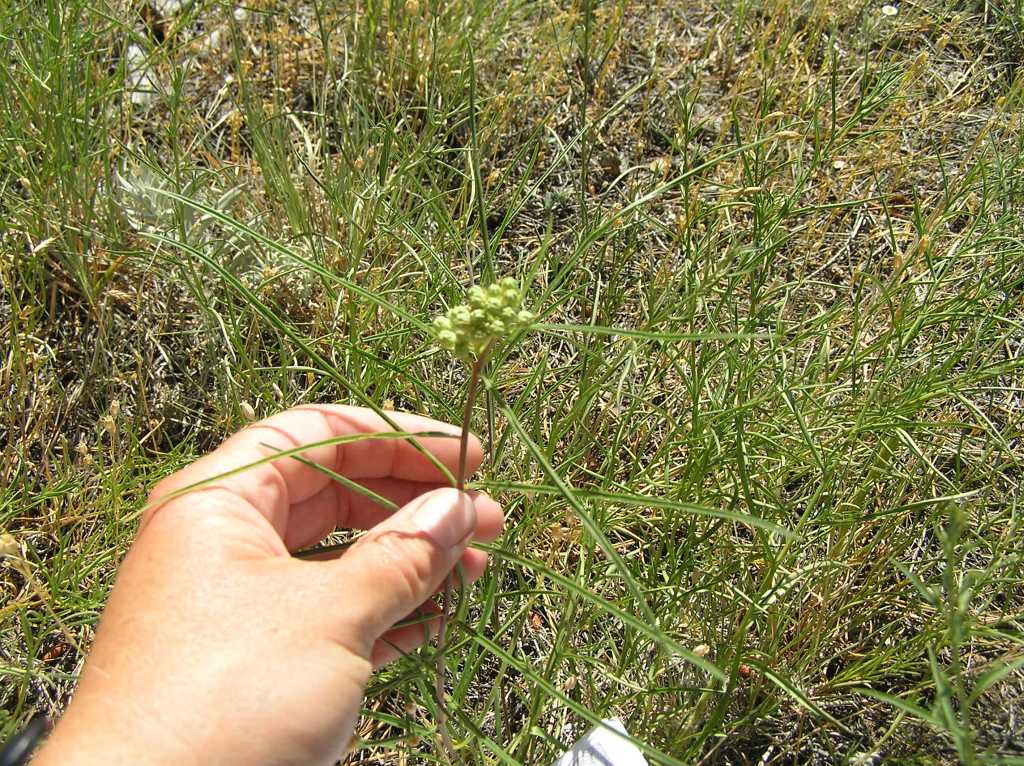
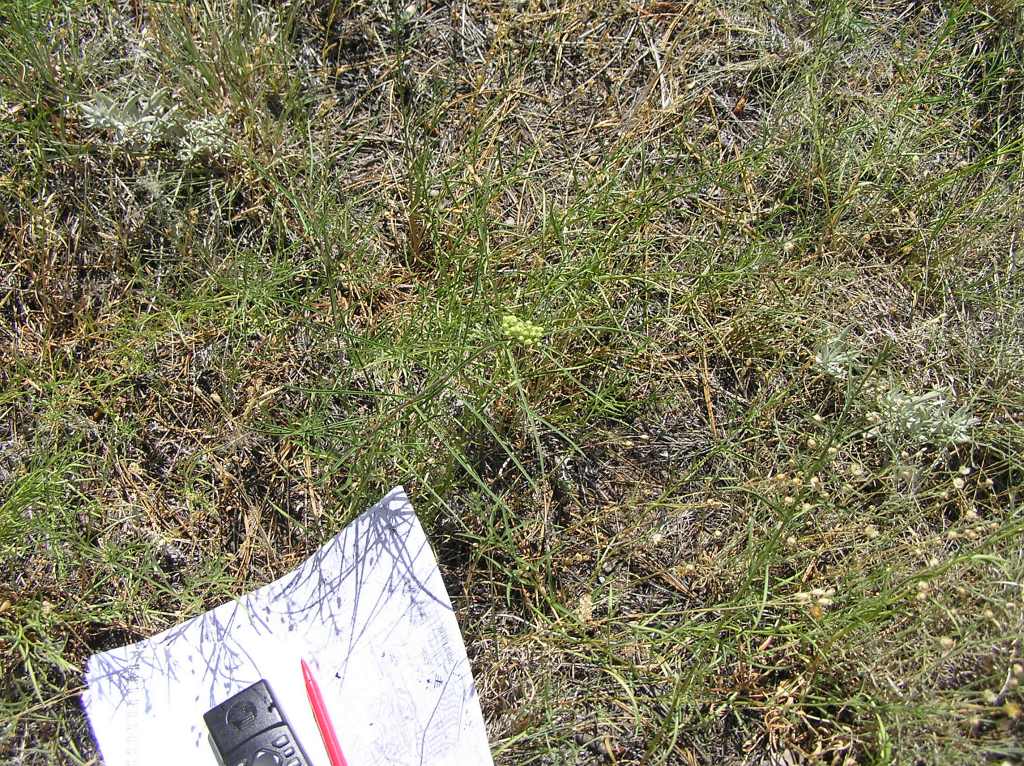
In Colorado, Asclepias stenophylla has been found in grasslands and ponderosa pine savanna habitats in sandy, gravelly, or often calcareous soils. Associated species include: Pinus ponderosa, Cercocarpus montanus, Andropogon gerardii, Rhus trilobata, Pascopyrum smithii, Carex pensylvanica, Hesperostipa comata, Dicanthelium oligosanthes, Poa agassizensis, Dalea purpurea, Psoralidium tenuifolium, Ratibida columnifera, Allium textile, Onosmodium molle, Liatris punctata, Bouteloua gracilis, Poa compressa, Psoralea tenuiflora, Ambrosia psilostachya, Stipa comata and Townsendia grandiflora (Ackerfield 2015, Colorado Natural Heritage Program 2017).
click on image to enlarge
 |
 |
Elevation Range:
4,218 - 6,601 feet (1,286 - 2,012 meters)
Distribution
Colorado Endemic:
No
Range:
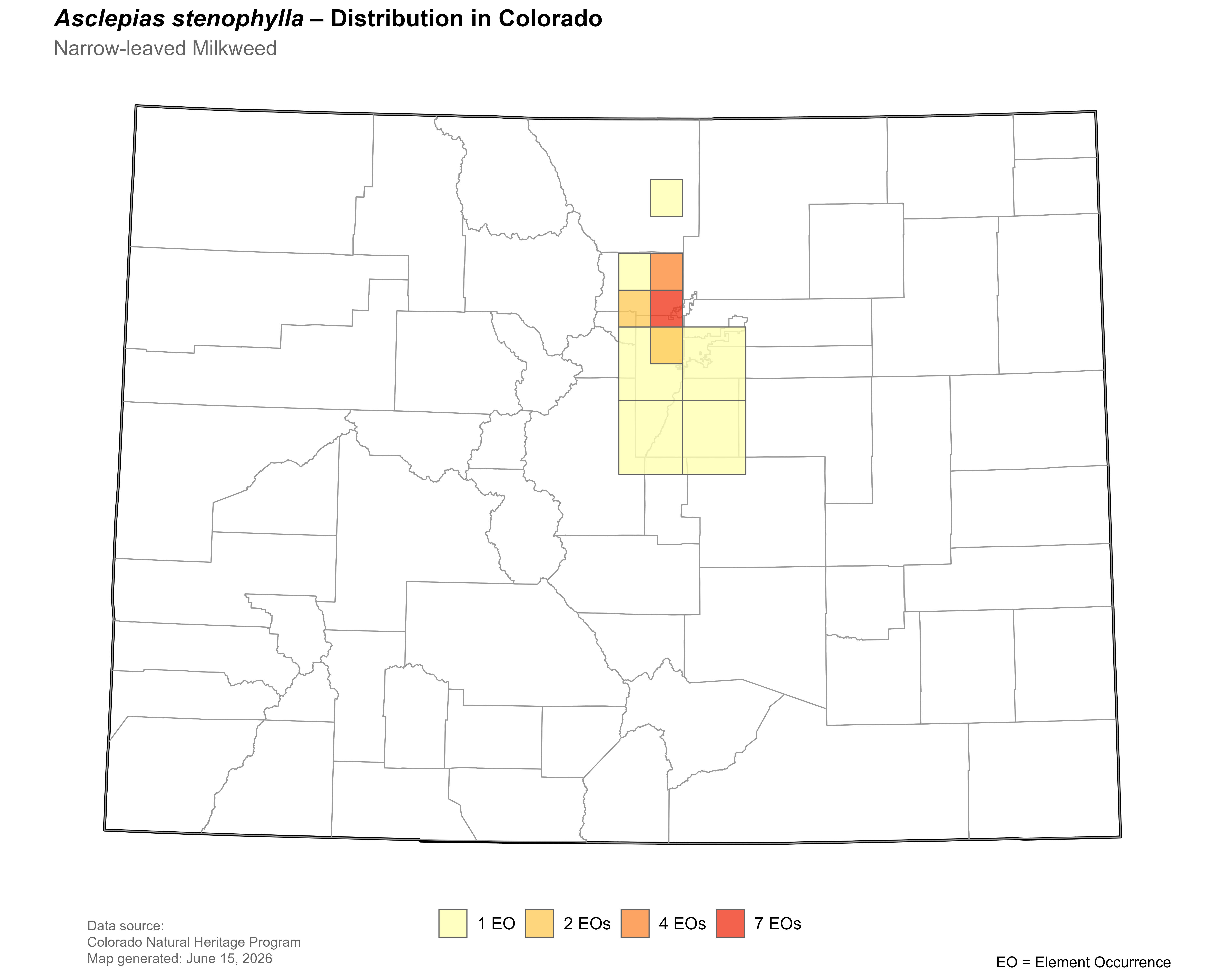
Foothills and grasslands of eastern Colorado (Ackerfield 2015). Boulder, Douglas, Jefferson, Larimer, Pueblo, Yuma counties. Also known from Arkansas, Illinois, Iowa, Kansas, Louisiana, Minnesota, Missouri, Montana, Nebraska, New Mexico, Oklahoma, South Dakota, Texas, and Wyoming (USDA NRCS 2017).
Click on map to enlarge |
Threats and Management Issues
In Colorado, this species is infrequent and found in areas with considerable development pressures (grasslands and Front Range foothills). Colorado climate scenarios for 2050 suggest temperature will increase by 3-7 F and precipitation may decrease or increase. The impact to any given rare plant habitat is likely to vary. Long-term monitoring that includes weather and soil moisture data is critical to understanding climate impacts.
References
- Ackerfield, J. 2015. Flora of Colorado. Botanical Research Institute of Texas, Fort Worth, TX. 818 pp.
- Britton, N. L. and A. Brown. 1913. An Illustrated Flora of the Northern United States and Canada. 3 vol. Dover Publications, Inc., N. Y. 2052 pp.
- Colorado Natural Heritage Program (CNHP). 2023. Biodiversity Tracking and Conservation System (Biotics 5). Colorado Natural Heritage Program, Colorado State University, Fort Collins.
- Colorado Natural Heritage Program and the Geospatial Centroid. 2017. The Colorado Ownership and Protection Map (COMaP). Colorado State University, Ft. Collins, CO.
- Heidel, B. L. and K. H. Dueholm. 1995. Sensitive plant survey in the Sioux District, Custer National Forest, 1994, Carter County, Montana and Harding County, South Dakota. Unpublished report to the Custer National Forest. Montana Natural Heritage Program, Helena, Montana. 95 pp. plus appendices.
- Kartesz, J.T. 1994. A synonymized checklist of the vascular flora of the United States, Canada, and Greenland. 2nd edition. 2 vols. Timber Press, Portland, OR.
- Montana Natural Heritage Program. 2017. Montana Field Guide. Online. Available: http://fieldguide.mt.gov (Accessed 2017).
- USDA, Natural Resources Conservation Service, PLANTS Database [USDA PLANTS]. http://plants.usda.gov/. Accessed 2017.
- USDA, NRCS. 2022. The PLANTS Database. National Plant Data Team, Greensboro, NC 27401-4901 USA.
- Weber, W. A. and R. C. Wittmann. 2012. Colorado Flora, Eastern Slope, A Field Guide to the Vascular Plants, Fourth Edition. Boulder, Colorado. 555 pp.