

Scientific Name : Physaria alpina
Author : Rollins NatureServe Explorer
Common Name : Avery Peak Twinpod
 Current Research Activities
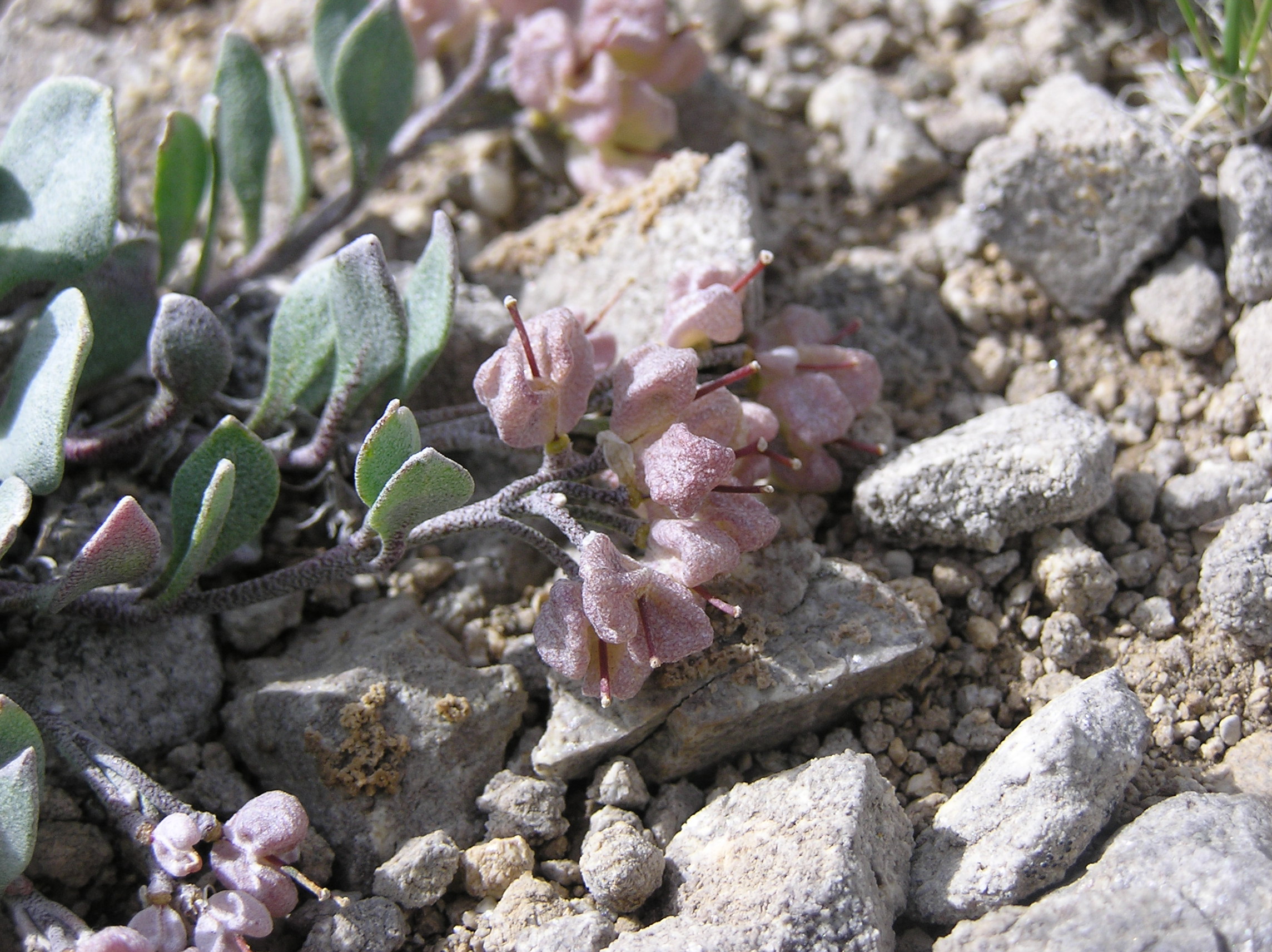
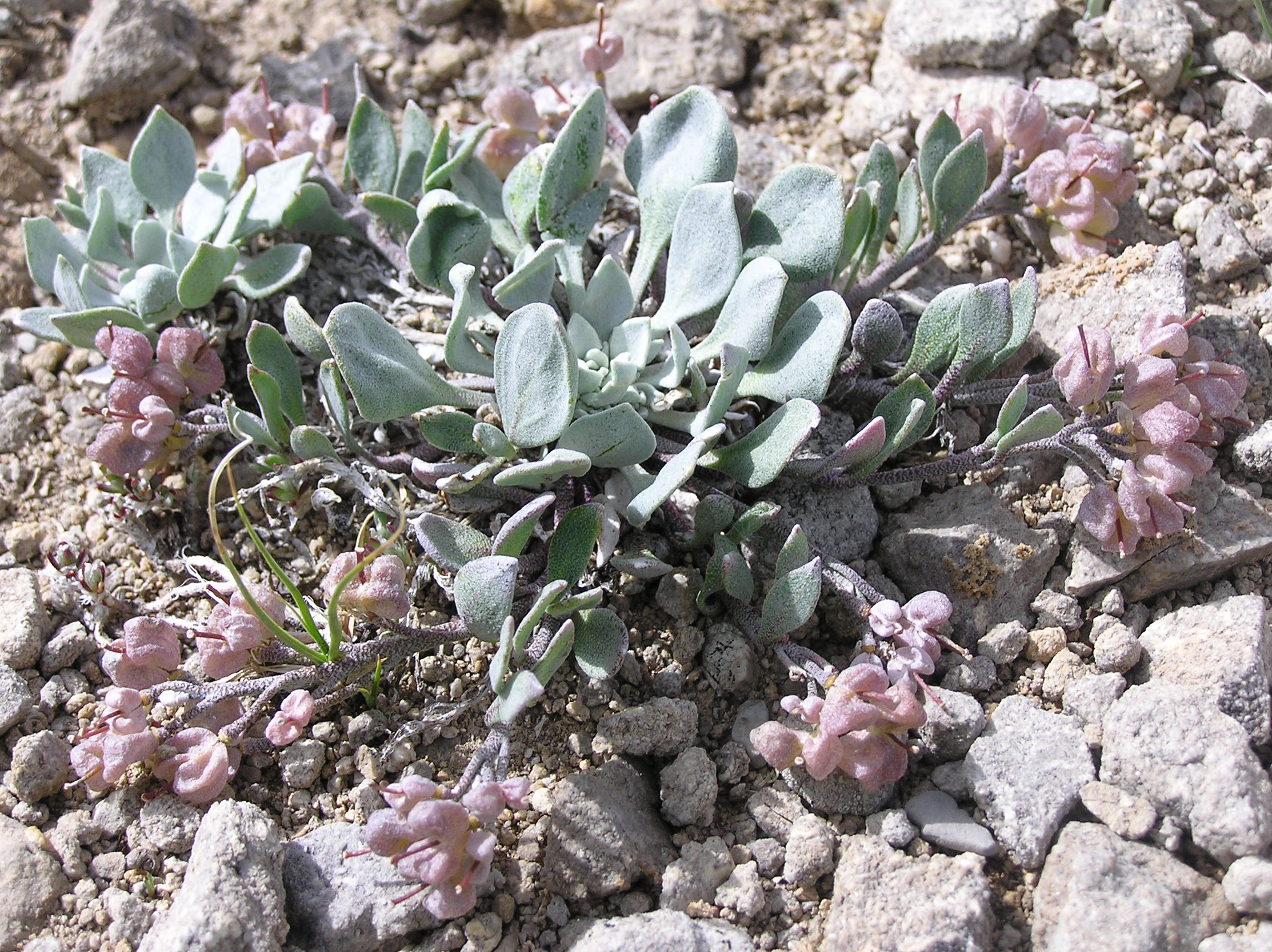


☰ Click link below for details.
Taxonomy
Brassicaceae (mustard family)
Physaria alpina was described in 1981 (Rollins 1981).
Ranks and Status
State Rank : S2
State Rank Reason : Physaria alpina is endemic to high alpine areas of the central Rocky Mountains of Colorado (USA). Of the 16 documented occurrences only four are of good to excellent viability, the remainder are of fair or unknown viability or historical observations. Threats to Physaria alpina include impacts from motorized and non-motorized recreation and potential mining activity. This species is considered to be moderately vulnerable to the effects of climate change.
U.S. Endangered Species Act : none
Colorado Threatened and Endangered List : none
Other Statuses : SWAP Tier 1, USFS GMUG
Description and Phenology
General Description:
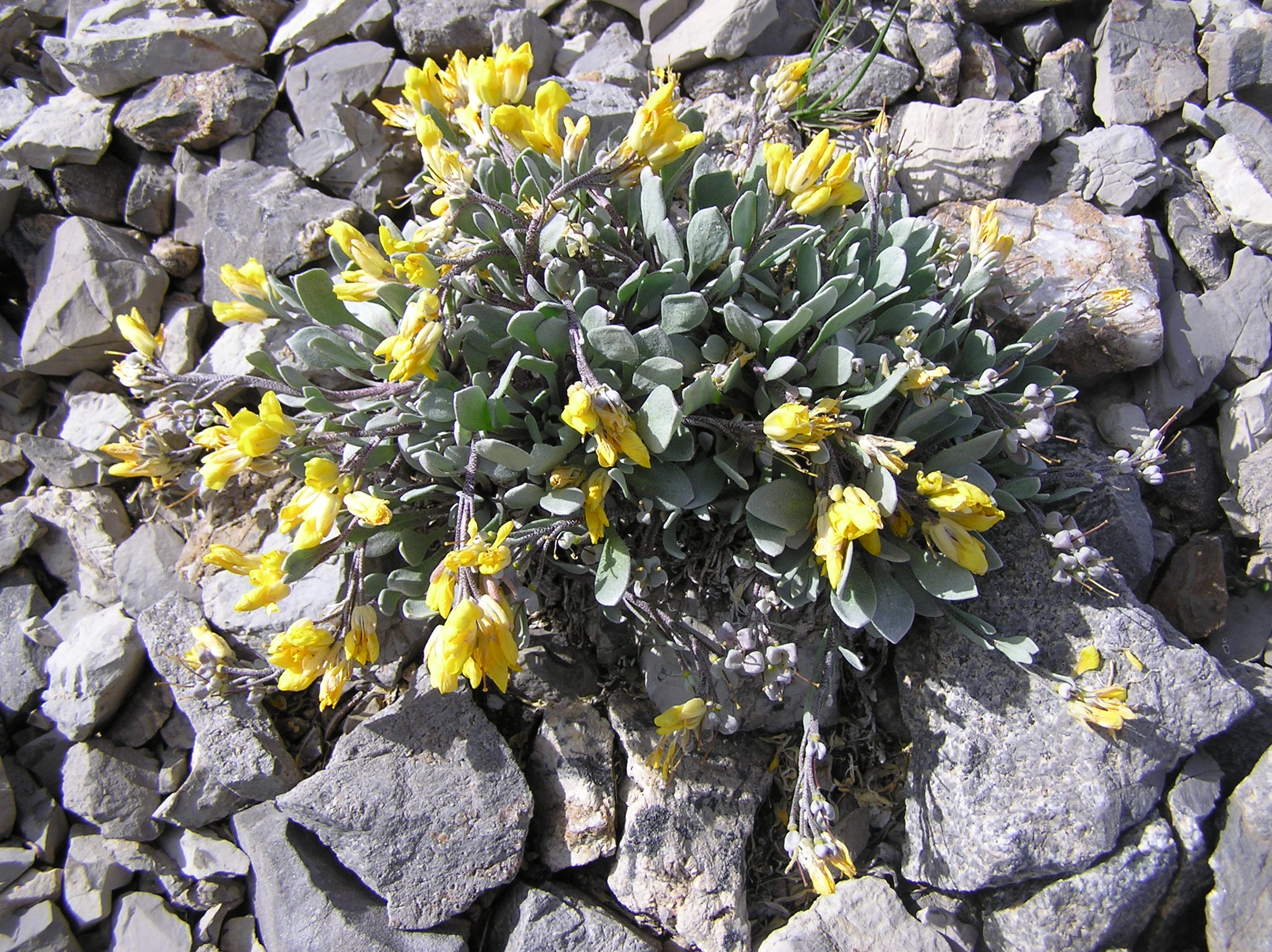
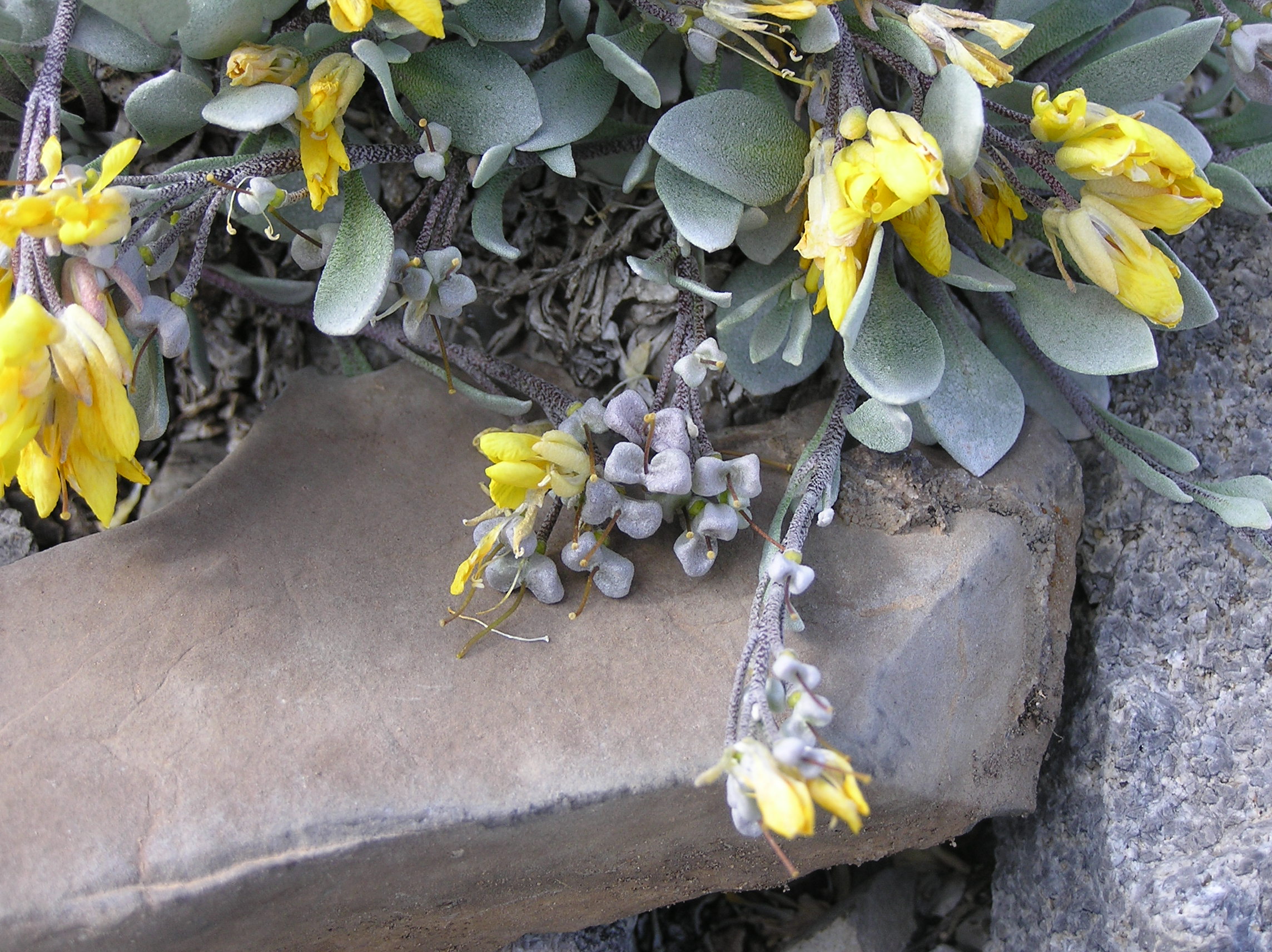
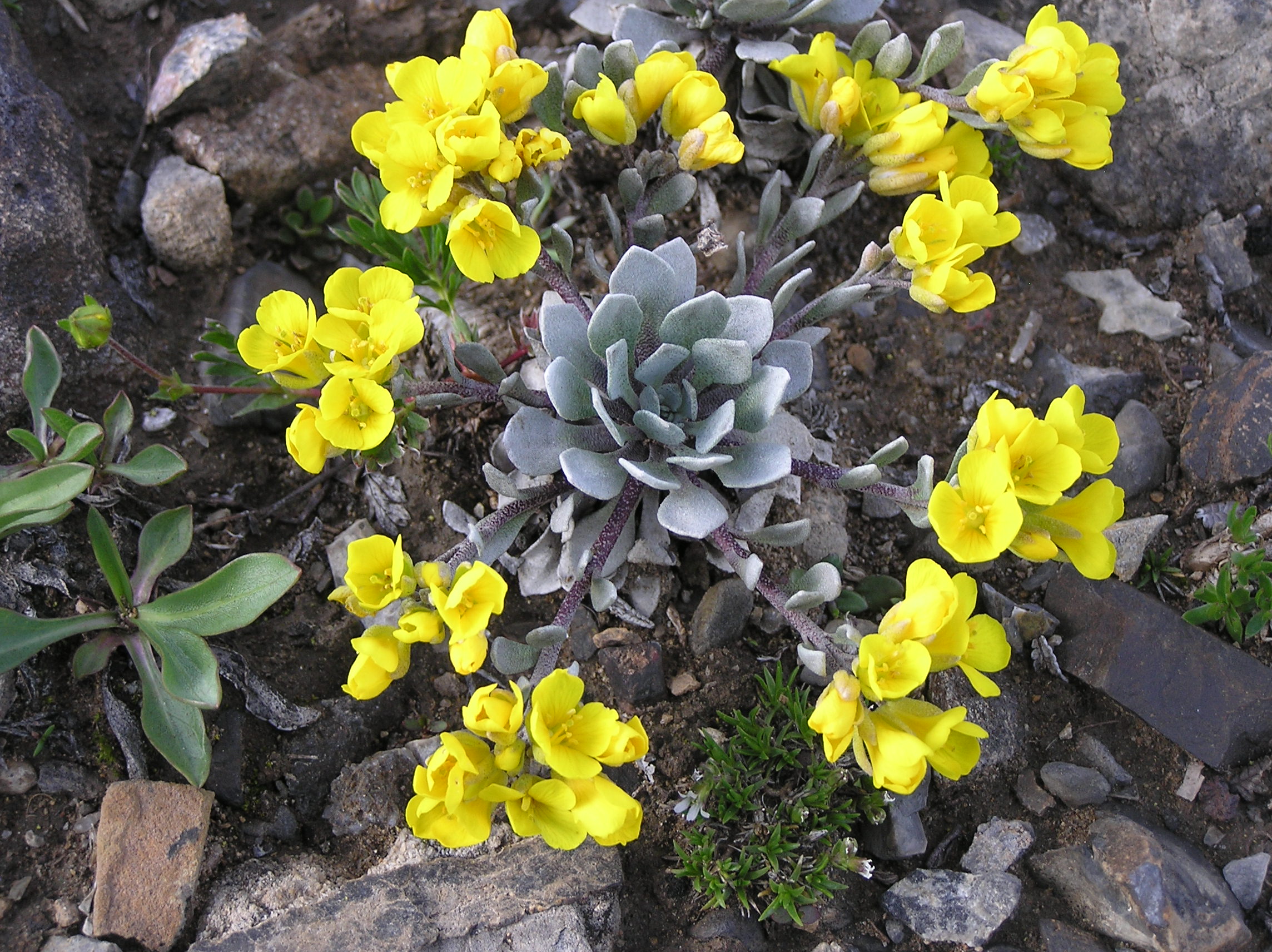
Physaria alpina is a perennial herb with a long taproot and a basal rosette of broadly ovate leaves often narrowing to a distinct petiole. Stems are decumbent (lying on the ground with the inflorescence curving upward). On the stem are two to five oblanceolate to spatulate leaves. There are two to six flowers in each inflorescence. Petals are bright yellow and are 7 to 9 mm long. The leaves and stems are covered by silvery, stellate hairs that result in the plants looking distinctly bluish. The fruit is also covered by stellate hairs and also has a notch at the apex (Ackerfield 2012, Flora of North America 2010).
Look Alikes:
Not likely to be confused with other species in the alpine areas of central Colorado.
Phenology:
Physaria alpina flowers from June to July. Fruits are apparent in August (Colorado Natural Heritage Program 2012, Flora of North America 1993+). Flowering and fruiting also observed in early September in 2022.
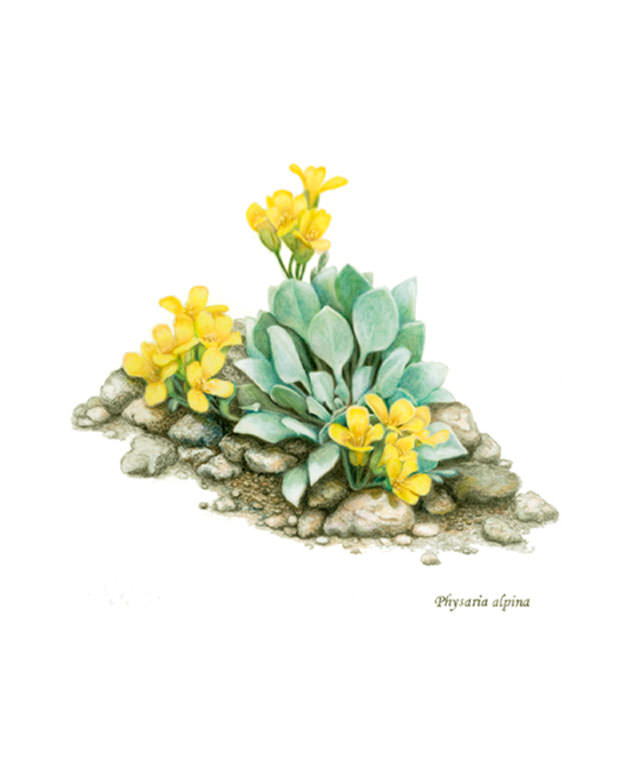 |
Habitat
Physaria alpina is found on open, rocky alpine tundra and ridge crests. Sites are underlain by limestone and dolomite, often whitish or red in color. Populations occur on flat to 30 percent slopes. Plants have also been found on road-cuts and mine spoils. Frequently associated species include Kobresia myosuroides, Dryas octopetala, Claytonia megarhiza, Salix brachycarpa, Eritrichium nanum, and Phlox condensata (Colorado Natural Heritage Program 2012, Flora of North America 2010).
click on image to enlarge
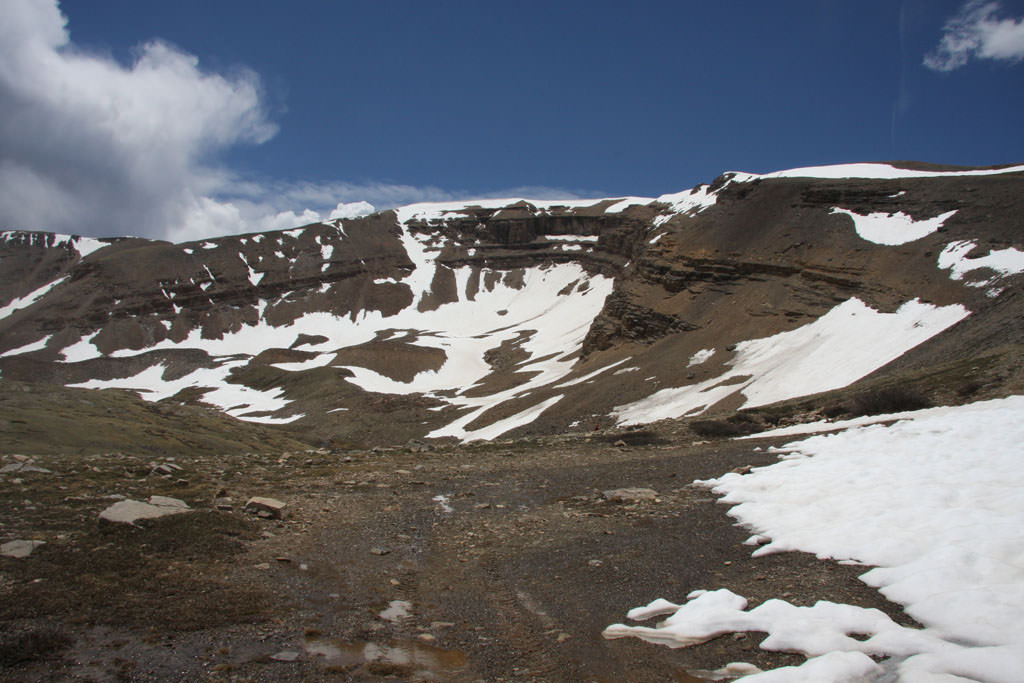 |
Elevation Range:
11,143 - 13,940 feet (3,396 - 4,249 meters)
Distribution
Colorado Endemic:
Yes
Range:
Physaria alpina is endemic to high alpine areas of the central Rocky Mountains of Colorado (USA), including portions of Lake, Gunnison, Pitkin and Park counties. The estimated range extent in Colorado of 2756 square kilometers was calculated in GeoCAT using occurrence data provided by the Colorado Natural Heritage Program (2023).
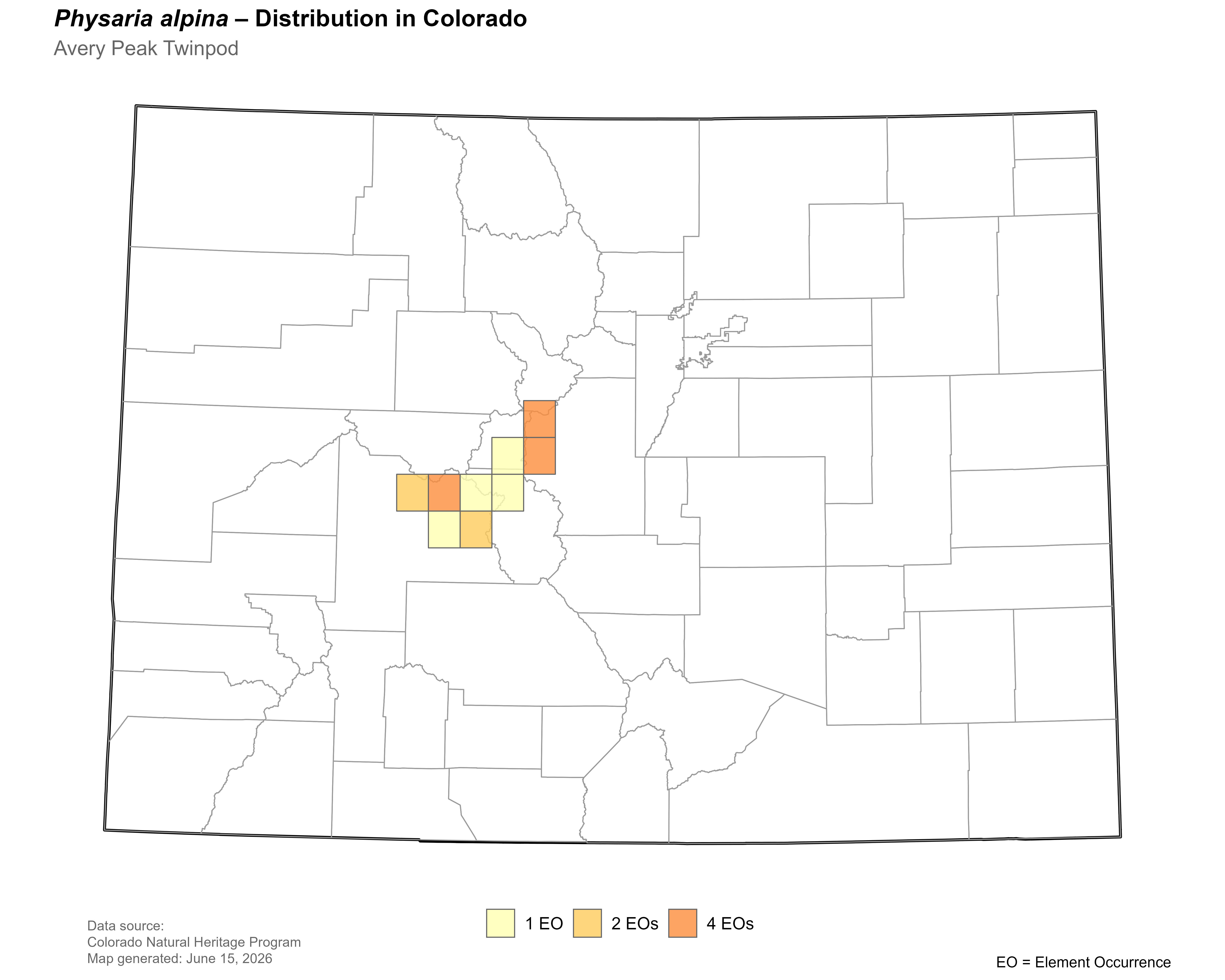
Click on map to enlarge |
Threats and Management Issues
Threats are not well known, the primary threat at this time is considered to be off road vehicle use (Rondeau et al. 2011). Other threats are from hiking, and potential resumption of mining in the vicinity of the species habitat. This species is considered to have moderate adaptive capacity and is expected to be moderately vulnerable to climate change under both RCP 4.5 and 8.5 scenarios, as assessed for the 2025 Colorado State Wildlife Action Plan (CNHP 2025).
References
- Ackerfield, J. 2015. Flora of Colorado. BRIT Press, Botanical Research Institute of Texas, Fort Worth, TX. 818 pp.
- Colorado Natural Heritage Program (CNHP). 2023. Biodiversity Tracking and Conservation System (Biotics 5). Colorado Natural Heritage Program, Colorado State University, Fort Collins.
- Colorado Natural Heritage Program (CNHP). 2025. Climate Change Vulnerability Assessment of Colorado Tier 1 and Tier 2 Plant Species of Greatest Conservation Need (SCGN) for the 2025 Colorado State Wildlife Action Plan. Colorado Natural Heritage Program, Colorado State University, Fort Collins.
- Flora of North America Editorial Committee (FNA). 2010. Flora of North America north of Mexico. Vol. 7. Magnoliophyta: Salicaceae to Brassicaceae. Oxford University Press, New York. xxii + 797 pp.
- Handwerk, J., L. Grunau, and S. Panjabi. 2015. Colorado Wildlife Action Plan: 2015 Rare Plant Addendum. Colorado Natural Heritage Program, Colorado State University, Fort Collins, Colorado, USA.
- Lavender, A.E., M.M. Fink, S.E. Linn, D.M. Theobald. 2011. Colorado Ownership, Management, and Protection v9 Database. Colorado Natural Heritage Program and Geospatial Centroid, Colorado State University, Fort Collins, CO. (30 September).
- Neely, B., S. Panjabi, E. Lane, P. Lewis, C. Dawson, A. Kratz, B. Kurzel, T. Hogan, J. Handwerk, S. Krishnan, J. Neale, and N. Ripley. 2009. Colorado Rare Plant Conservation Strategy, Developed by the Colorado Rare Plant conservation Initiative. The Nature Conservancy, Boulder, Colorado, 117 pp.
- Rocky Mountain Society of Botanical Artists. 2009. RARE Imperiled Plants of Colorado, a traveling art exhibition. Exhibition catalogue developed by the Denver Botanic Gardens and Steamboat Art Museum.
- Rollins, R. 1981. Studies in the Genus Physaria (Cruciferae). Brittonia 33(3) pp. 332-342.
- Rollins, R.C. 1993. The Cruciferae of Continental North America:Systematics of the Mustard Family from the Arctic to Panama. Stanford University Press. Stanford, CA.
- Rondeau, R., K. Decker, J. Handwerk, J. Siemers, L. Grunau, and C. Pague. 2011. The state of Colorado's biodiversity 2011. Prepared for The Nature Conservancy. Colorado Natural Heritage Program, Colorado State University, Fort Collins, Colorado.
- Southwest Environmental Information Network (SEINet). 2021. Collections Databases. Online. Available: https://swbiodiversity.org/seinet/collections/index.php (accessed 2021).
- USDA, NRCS. 2022. The PLANTS Database. National Plant Data Team, Greensboro, NC 27401-4901 USA.
- Weber, W. A. and R. C. Wittmann. 2012. Colorado Flora, Eastern Slope, A Field Guide to the Vascular Plants, Fourth Edition. Boulder, Colorado. 555 pp.
- Weber, W. A. and R. C. Wittmann. 2012. Colorado Flora, Western Slope, A Field Guide to the Vascular Plants, Fourth Edition. Boulder, Colorado. 532 pp.