

Scientific Name : Proatriplex pleiantha
Author : (W.A. Weber) Stuz & Chu NatureServe Explorer
Common Name : Mancos Saltbush
 Current Research Activities
 1997 profile
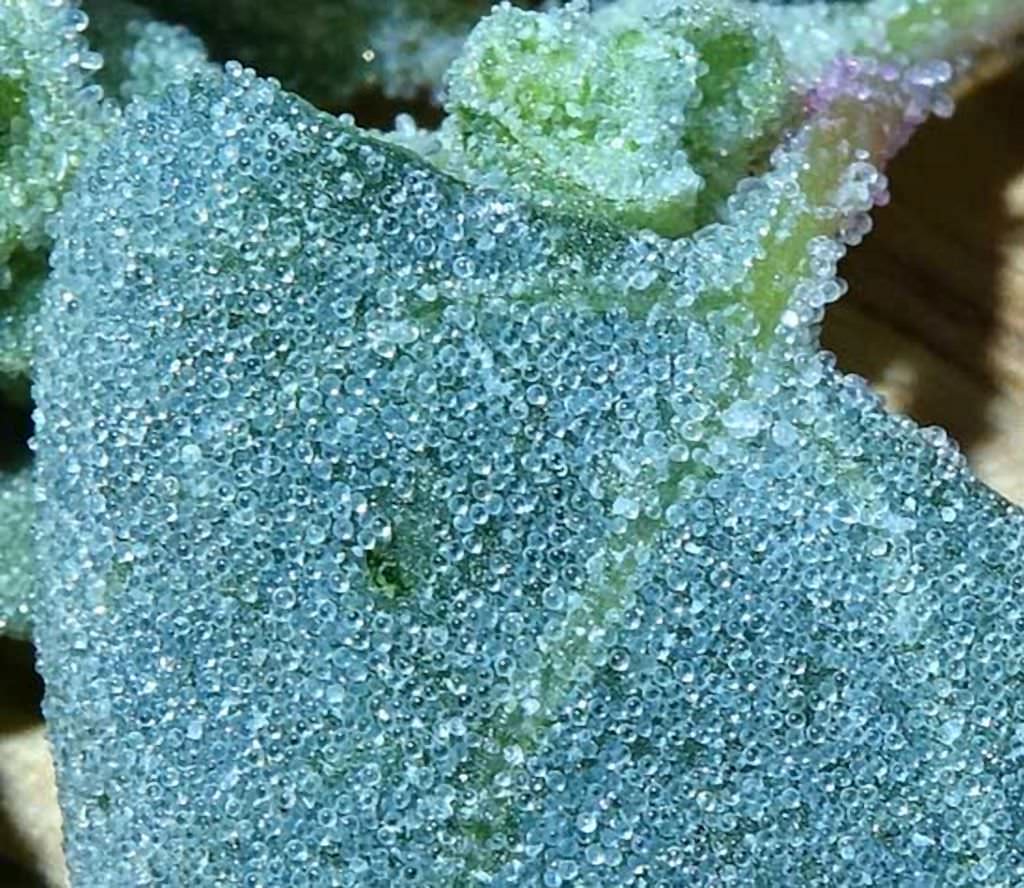
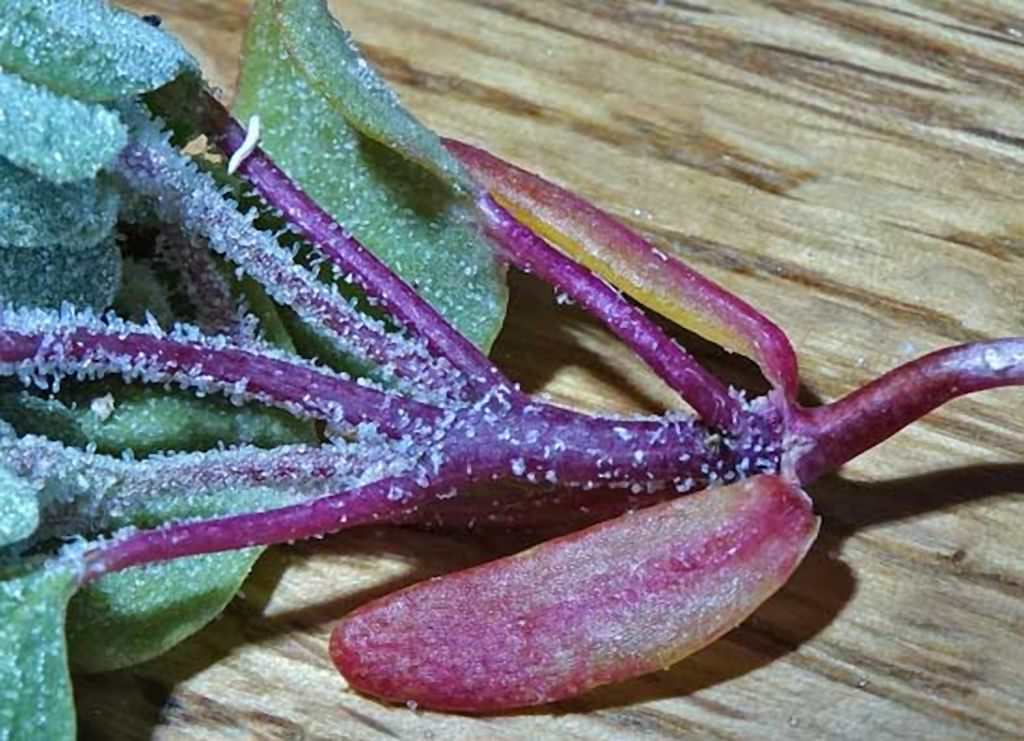
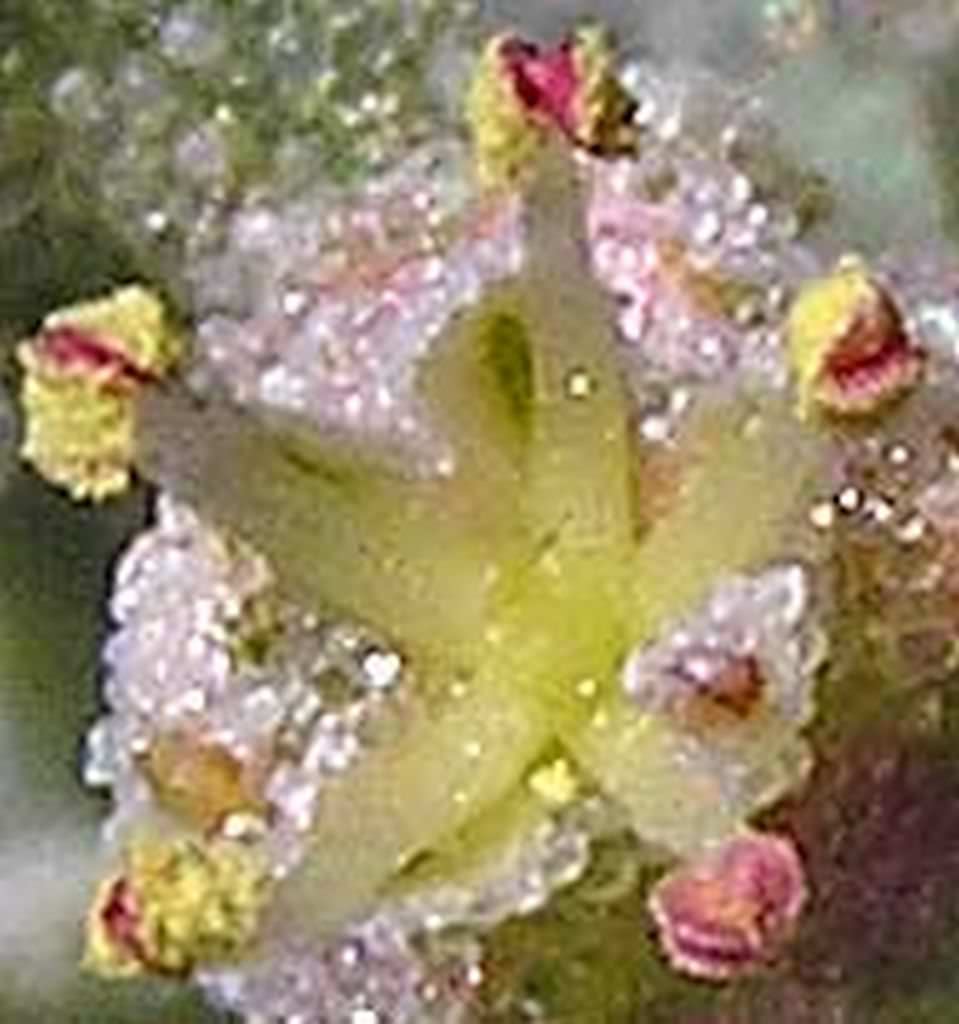


☰ Click link below for details.
Taxonomy
Amaranthaceae (amaranth family)
Listed as Proatriplex pleiantha (W.A. Weber) Stutz & G.L. Chu in Ackerfield (2022) and Atriplex pleiantha W.A. Weber in Ackerfield (2015). Ackerfield (2022) places this genus in the Amaranthaceae (Pigweed Family). Ackerfield (2015) and Weber and Wittmann (2012) place this genus in the Chenopodiaceae (Goosefoot Family).
Ranks and Status
State Rank : S1
State Rank Reason : Proatriplex pleiantha is known only from a small area of the Four Corners region of Colorado, USA; all but two of the occurrences are historical. Potential threats include motorized recreation and long-term drought.
U.S. Endangered Species Act : none
Colorado Threatened and Endangered List : none
Other Statuses : SWAP SGIN
Description and Phenology
General Description:
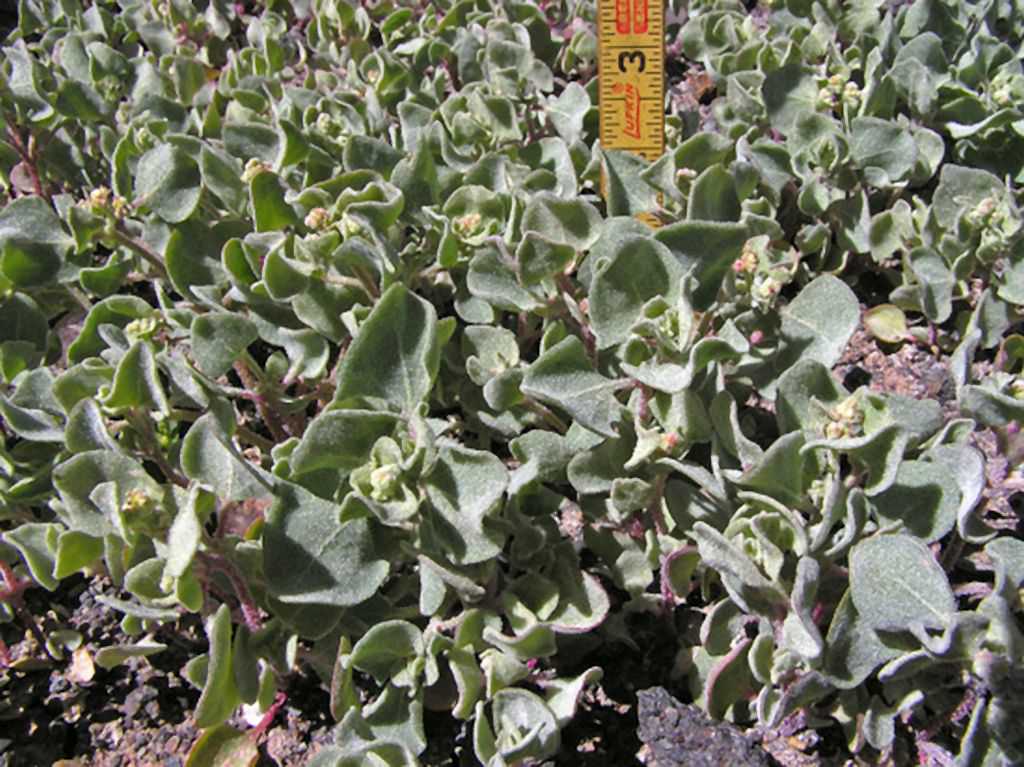
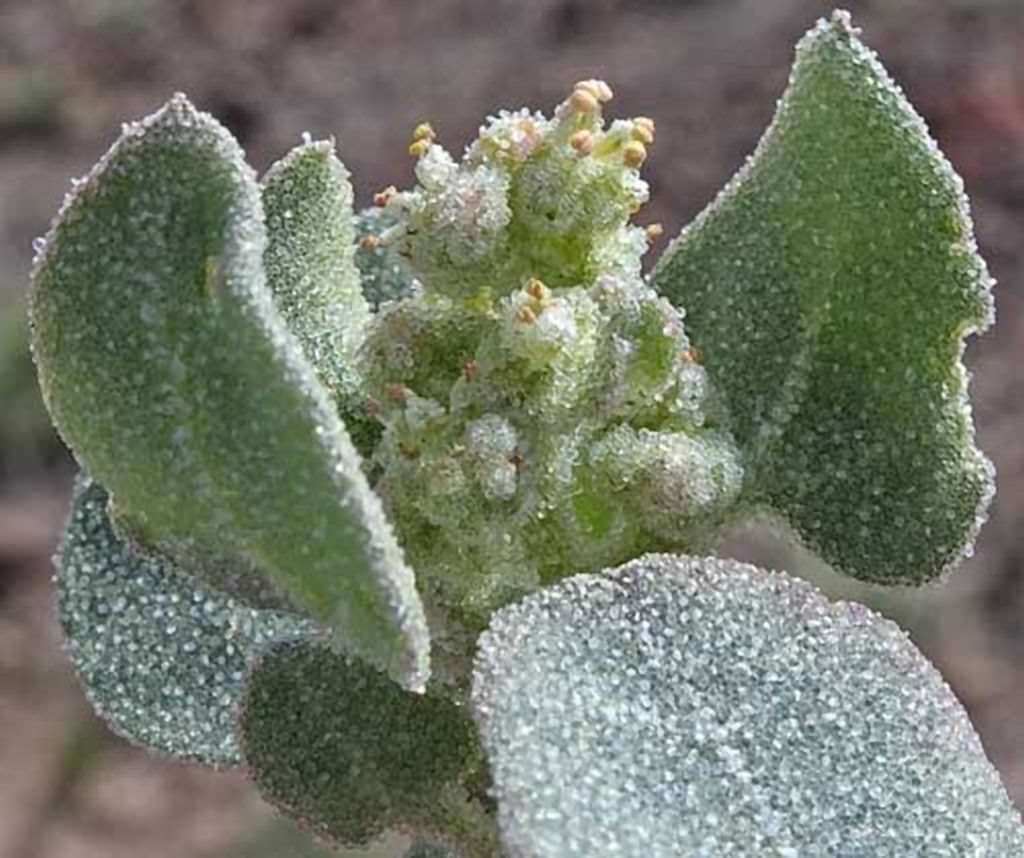
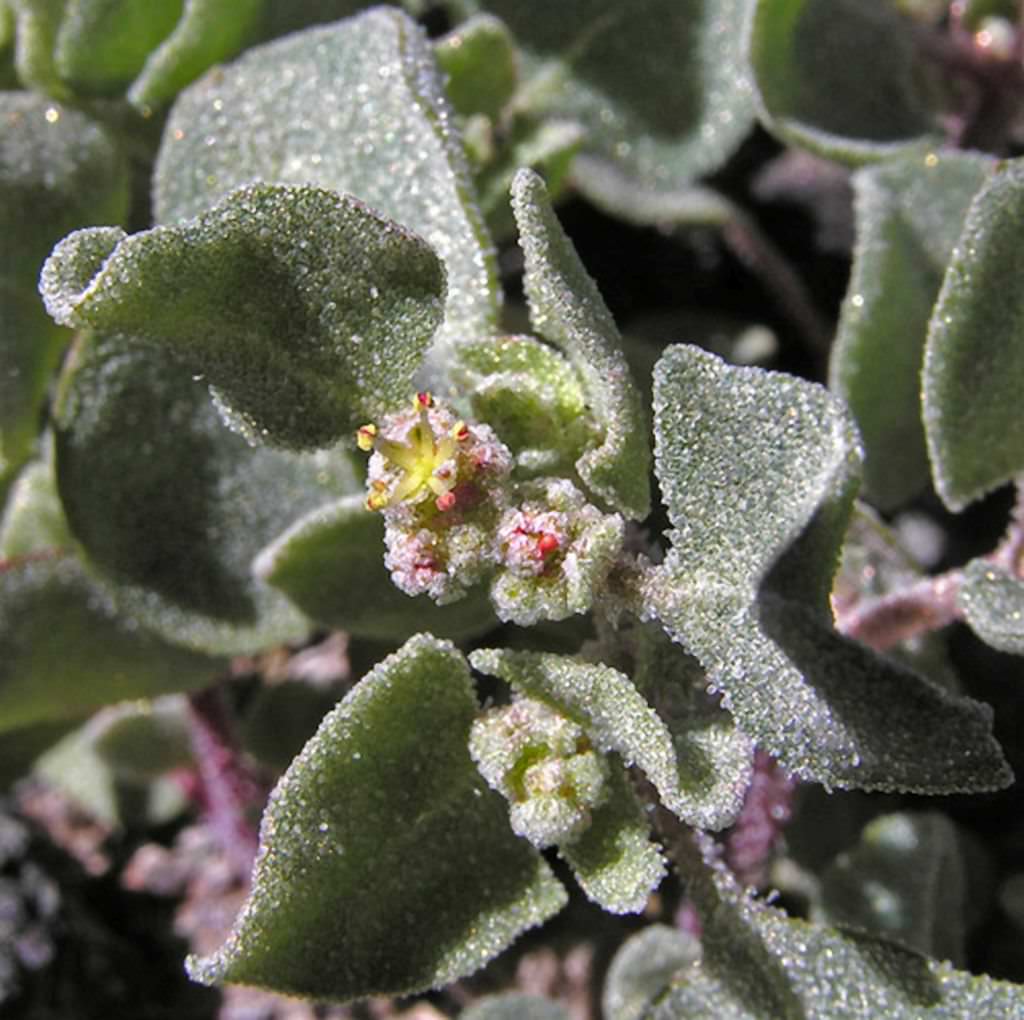
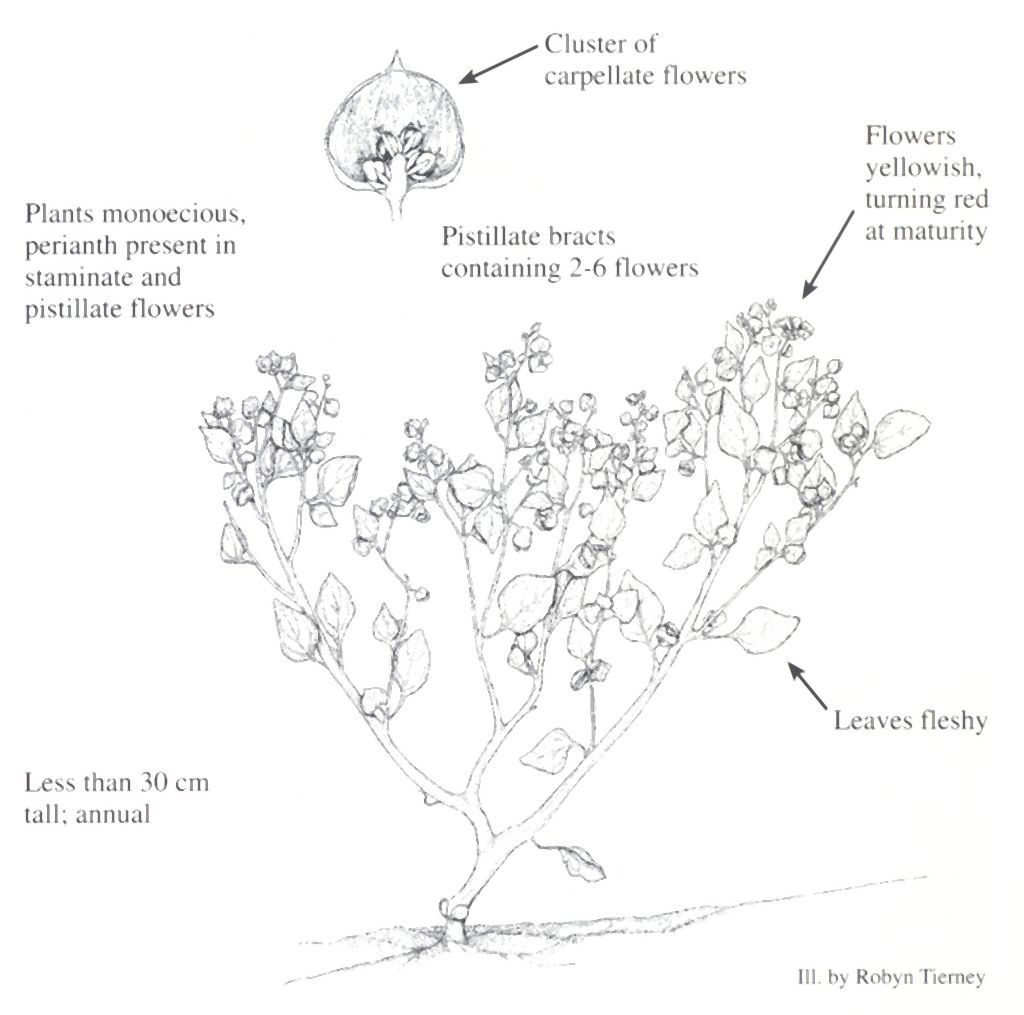
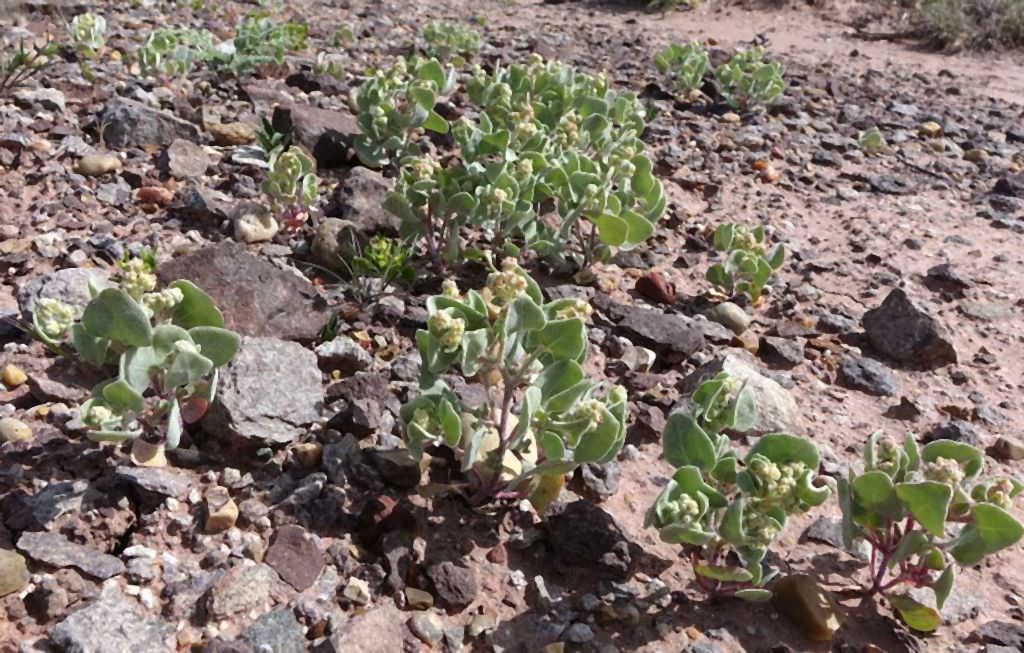
Annual herbs, stems 2-15 cm tall, succulent, branches ascending, yellow-white or reddish-purple, glabrous or sparsely farinose; leaves entire, alternate, fleshy, ovate to suborbicular, 5-15 mm long; flowers monoecious; bracts of female flowers triangular-ovate, short-petiolate, entire, 3-7 mm broad and long, obtuse or mucronate at the apex (New Mexico Rare Plant Technical Council 1999). Leaves are alternate or subopposite (Ackerfield 2022).
Look Alikes:
Could be confused with Atriplex saccaria, which is also an annual, but has fruiting bracts that enclose one flower, while Proatriplex pleiantha has fruiting bracts that enclose 2-5 flowers (Ackerfield 2022).
Phenology:
May-June (Ackerfield 2022).
 |
Habitat
Occurs on barren, saltbrush badlands; on highly dissected and eroded gray shale and clay of the Mancos Formation (Spackman et al. 1997). Associated species include: Atriplex corrugata, A. powellii, A. gardneri, Cleomella palmeriana, Phacelia demissa, Eriogonum sp., and Sueda sp.(CNHP 2023).
click on image to enlarge
 |
Elevation Range:
4,721 - 5,102 feet (1,439 - 1,555 meters)
Distribution
Colorado Endemic:
No
Range:
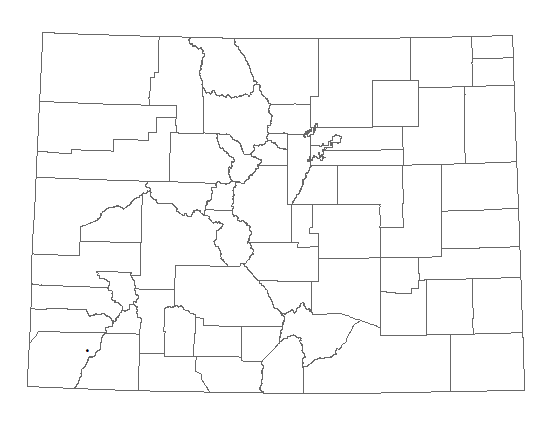
Proatriplex pleiantha is known from Montezuma County, Colorado, USA. Estimated range extent in Colorado of 372 square kilometers was calculated in GeoCAT using occurrence data provided by the Colorado Natural Heritage Program (2023). This species can also be found in New Mexico and Utah.
 Click on map to enlarge |
Threats and Management Issues
ORV use on adobe hills is one of the primary management and protection concerns. Long-term drought is occurring throughout the species range.
References
- Ackerfield, J. 2015. Flora of Colorado. BRIT Press, Botanical Research Institute of Texas, Fort Worth, TX. 818 pp.
- Ackerfield, J. 2022. Flora of Colorado. Second Edition. Bot. Misc. 60. BRIT Press, Fort Worth Botanic Garden/Botanical Research Institute of Texas, U.S.A. 861 pp.
- Colorado Native Plant Society. 1989. Rare plants of Colorado. Rocky Mountain Nature Association, Colorado Native Plant Society, Estes Park, Colorado. 73 pp.
- Colorado Natural Heritage Program (CNHP). 2023. Biodiversity Tracking and Conservation System (Biotics 5). Colorado Natural Heritage Program, Colorado State University, Fort Collins.
- Cully, A. C. 1985. Status report on Atriplex pleiantha. Unpublished report prepared for the US Fish and Wildlife Service, Albuquerque, NM.
- Flora of North America Editorial Committee, ed. (FNA). 1993+. Flora of North America North of Mexico. Oxford Univ. Press, New York, Oxford.
- New Mexico Rare Plant Technical Council. 1999. New Mexico Rare Plants. Albuquerque, NM: New Mexico Rare Plants Home Page. http://nmrareplants.unm.edu (Latest update: 29 Nov 2023).
- Schneider, A. 2023. Wildflowers, Ferns, and Trees of the Four Corners Regions of Colorado, New Mexico, Arizona, and Utah. Accessed on-line at http://www.swcoloradowildflowers.com.
- Spackman, S., B. Jennings, J. Coles, C. Dawson, M. Minton, A. Kratz, and C. Spurrier. 1997. Colorado rare plant field guide. Prepared for Bureau of Land Management, U.S. Forest Service and U.S. Fish and Wildlife Service by Colorado Natural Heritage Program.
- USDA, NRCS. 2013. The PLANTS Database. National Plant Data Team, Greensboro, NC 27401-4901 USA.
- Weber, W. A. and R. C. Wittmann. 2012. Colorado Flora, Western Slope, A Field Guide to the Vascular Plants, Fourth Edition. Boulder, Colorado. 532 pp.