

Scientific Name : Solidago ptarmicoides
Author : (Nees) Boivin NatureServe Explorer
Common Name : Prairie Goldenrod
 Current Research Activities
 1997 profile


☰ Click link below for details.
Taxonomy
Asteraceae (sunflower family)
=Oligoneuron album (Kartesz 1999)
=Solidago ptarmicoides (Flora of North America 2006, Ackerfield 2015)
=Unamia alba (Weber and Wittmann (2012)
Ranks and Status
State Rank : S2
State Rank Reason : This species grows in areas that are being heavily developed for agriculture, recreation, residences and industry including oil and gas development. Many of the occurrences have not been observed in over 20 years.
U.S. Endangered Species Act : none
Colorado Threatened and Endangered List : none
Other Statuses : none
Description and Phenology
General Description:
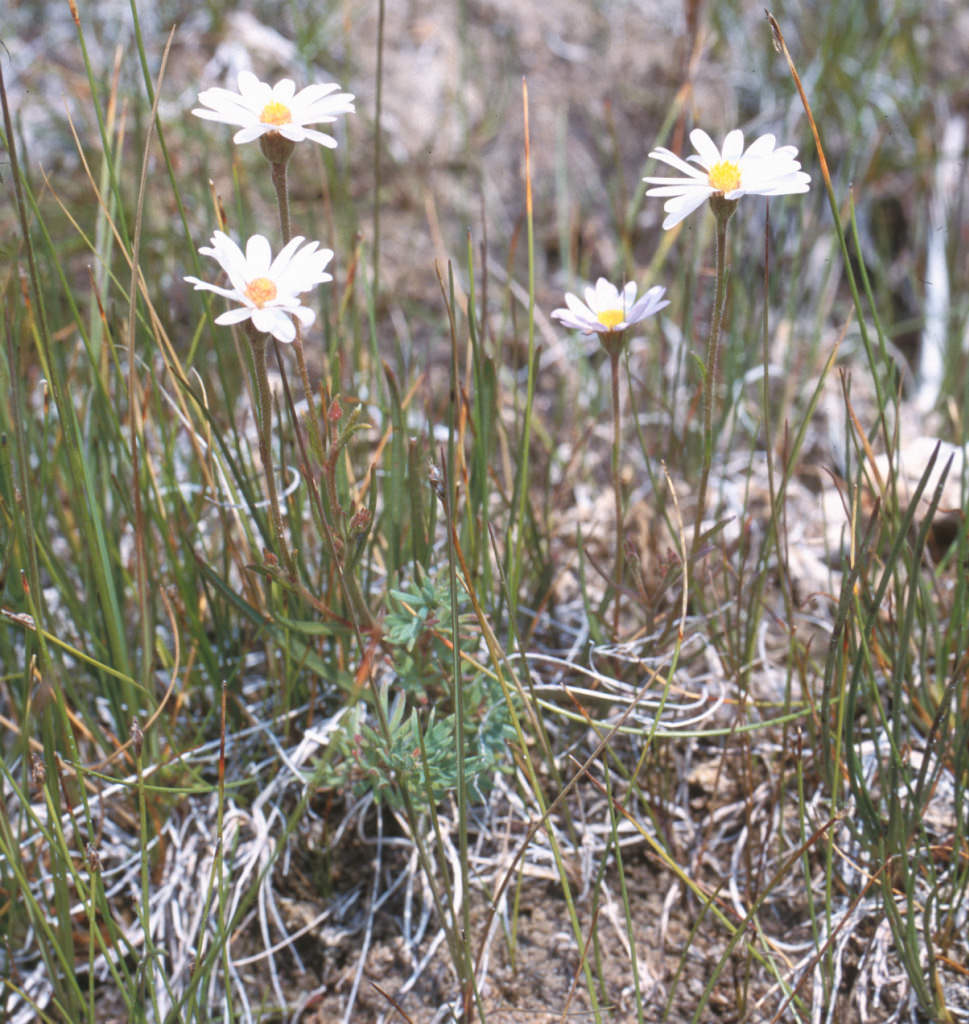
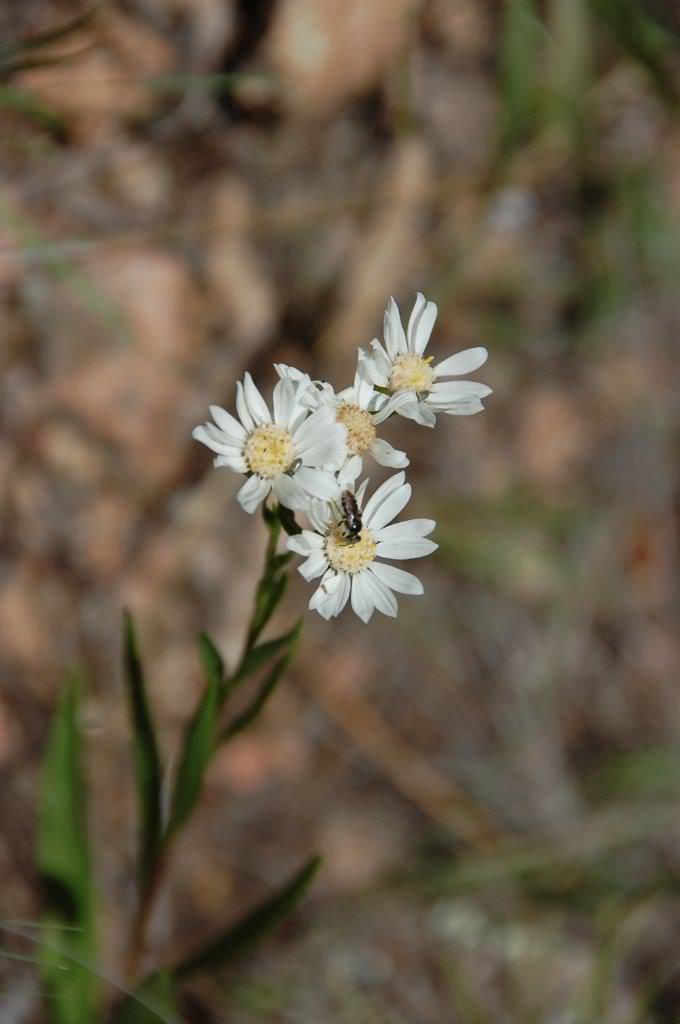
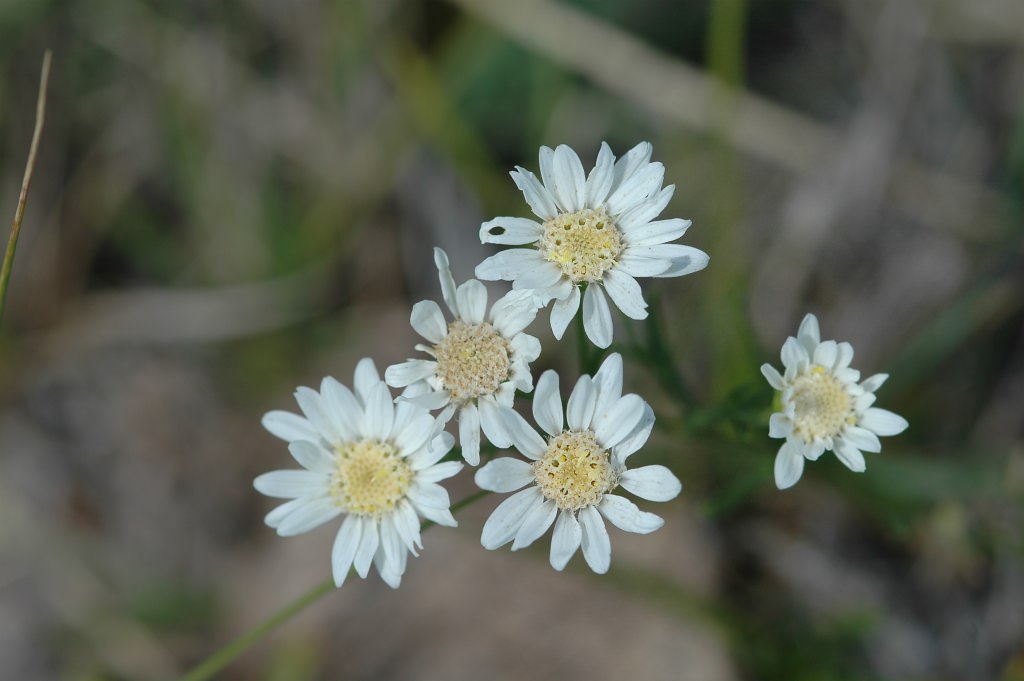
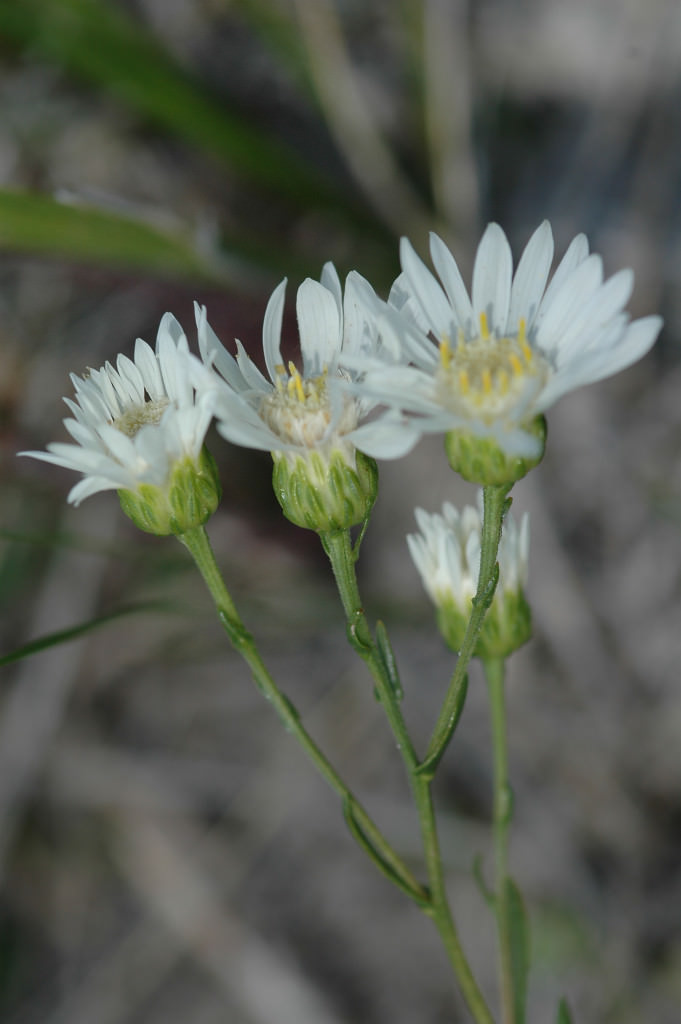
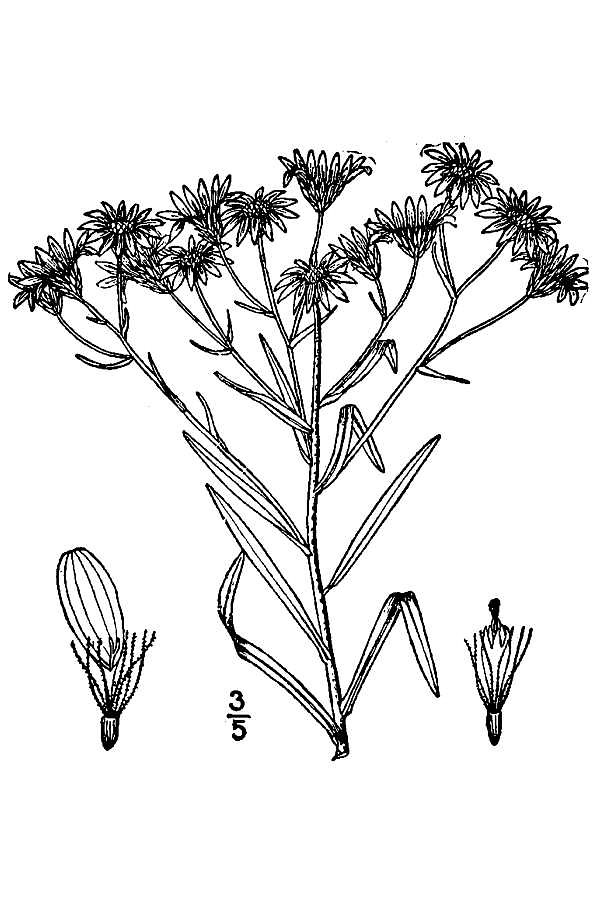
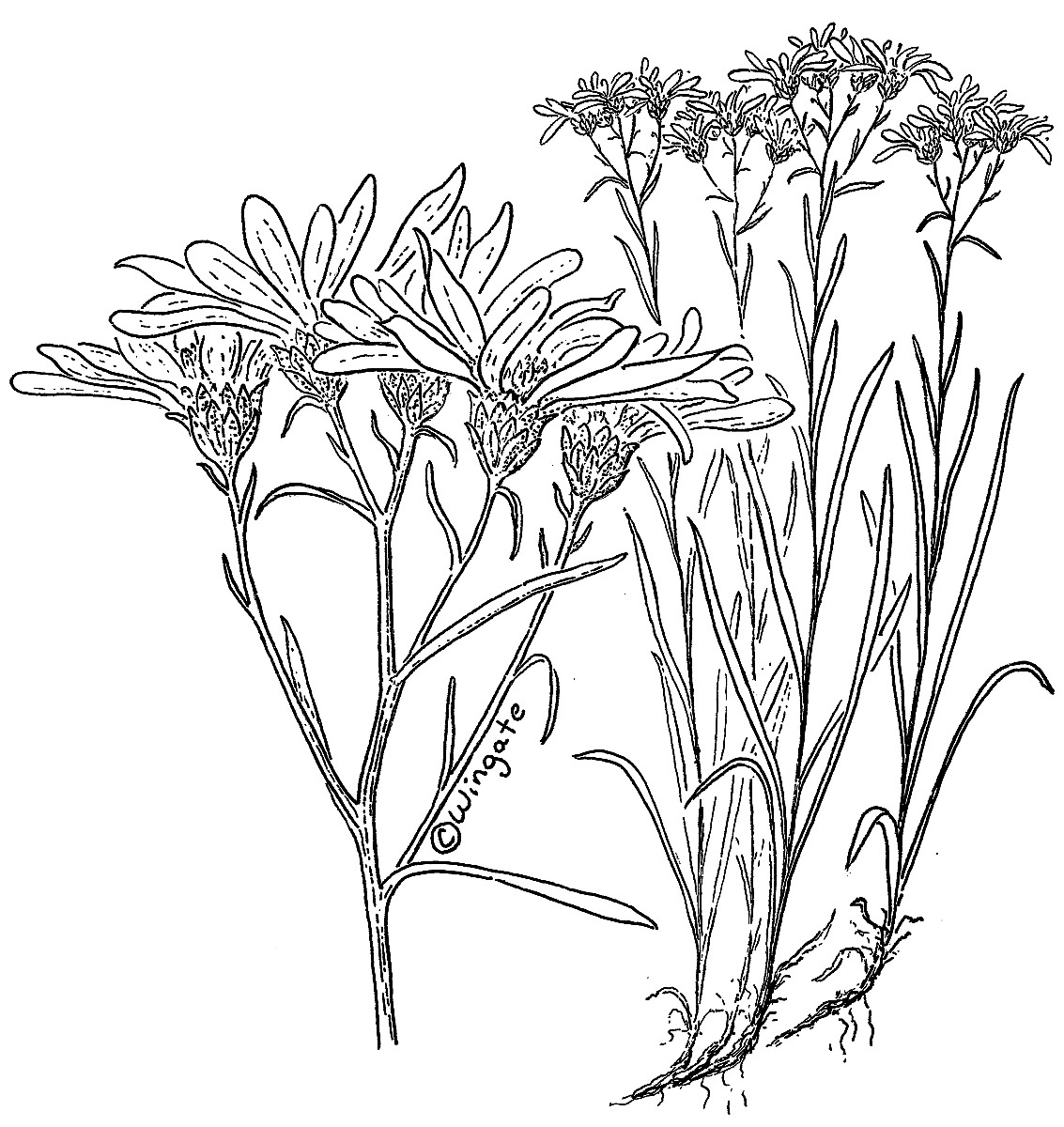
Prairie goldenrod has stems that are 1-7 dm high and clustered on a woody-thickened, branched rootcrown. The narrowly lance-shaped leaves near the base of the plant have entire margins and are petiolate and up to 20 cm long, while those on the upper stem are shorter, strap-shaped, and lacking petioles. Foliage is glabrous to slightly roughened. The 3-60 flower heads are borne in an open, flat-topped inflorescence. The glabrous, overlapping involucral bracts of each head are 5-7 mm long, each with a greenish apex and a prominent, thickened midrib. The 10-25 rayflowers are white and 5-9 mm long, and the numerous disk flowers are white. The achene is glabrous and has a pappus of bristles that are thickened toward the top.
Look Alikes:
Differs from Solidago species in having larger inflorescences and white to pale yellow flowers rather than yellow ones. Distinguished from white flowered, linear- lanceolate leaved Aster species (A. junciformis, A. hesperium, A. porteri, and A. ascendens = Virgulaster ascendens) in having a prominent midrib on the phyllaries and at least some of the pappus bristles enlarged at the apex (Spackman et al. 1997).
Phenology:
In Colorado, this species flowers July through September (Ackerfield 2015).
 |  |
Habitat
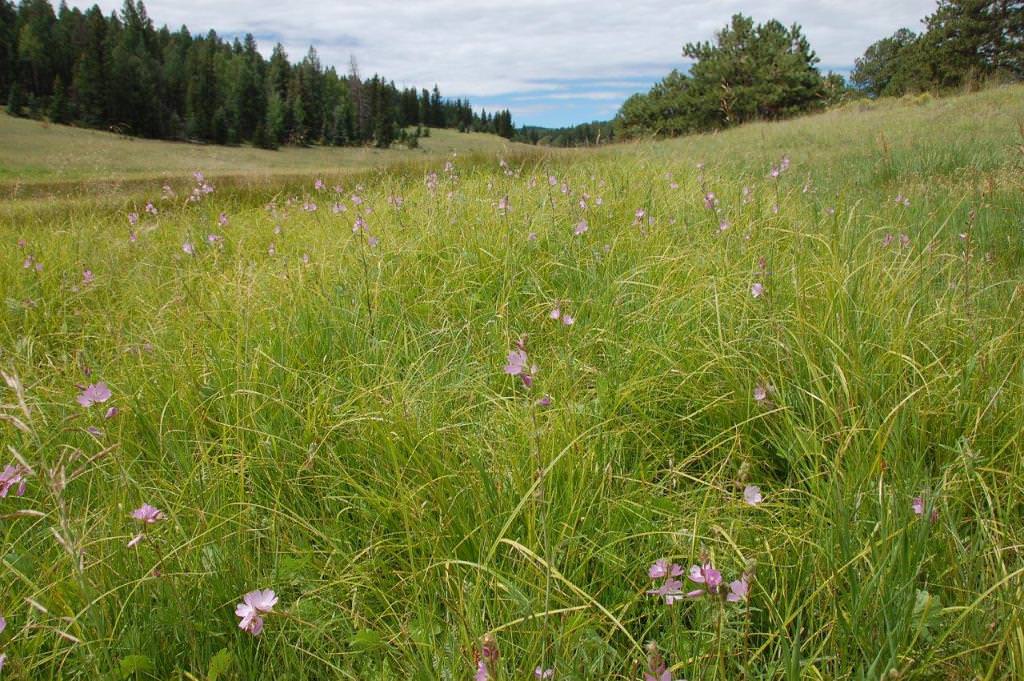
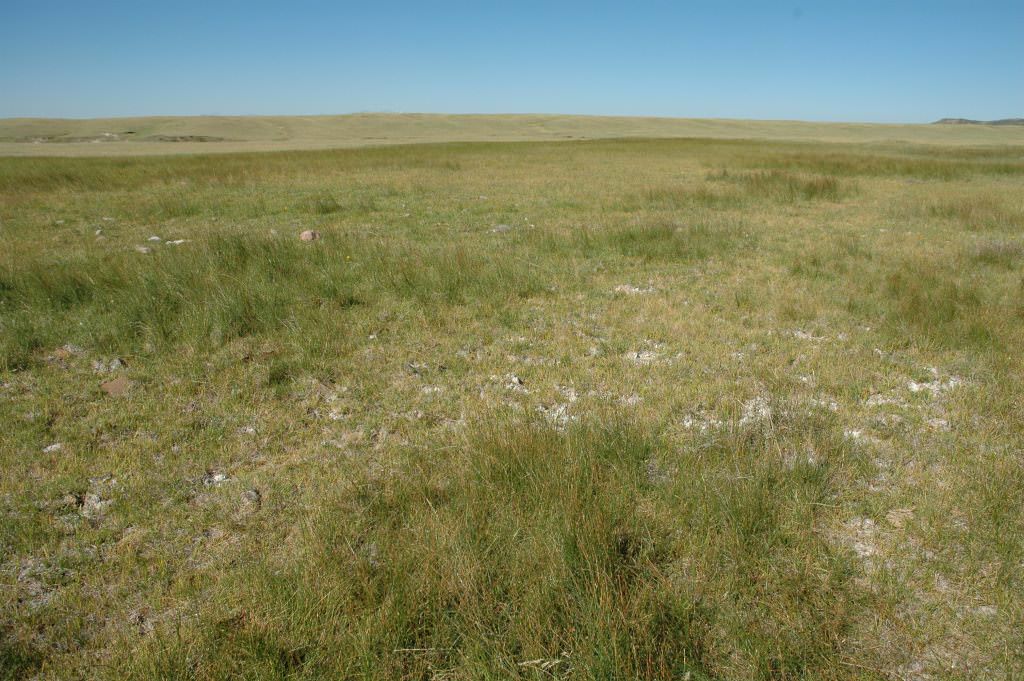
In Colorado, this species is found in wet to dry, open prairies, forest clearings, or montane meadows (Spackman et al. 1997, Ackerfield 2015). Associated plant species include Pinus ponderosa, Festuca arizonica, Muhlenbergia montana, Danthonia parryi, Cercocarpus montana, Koeleria macrantha, Castilleja integra, Orthocarpus luteus, Bahia dissecta, Heterotheca villosa, Campanula rotundifolia, Allium cernuum, Arenaria fendleri, Antenarria pulcherrima, Besseya plantaginea, Erigeron flagellaris, Frasera speciosa, Schizachyrium scoparium and Cirsium flodmanii.
click on image to enlarge
 |
 |
Elevation Range:
5,558 - 9,968 feet (1,694 - 3,038 meters)
Distribution
Colorado Endemic:
No
Range:
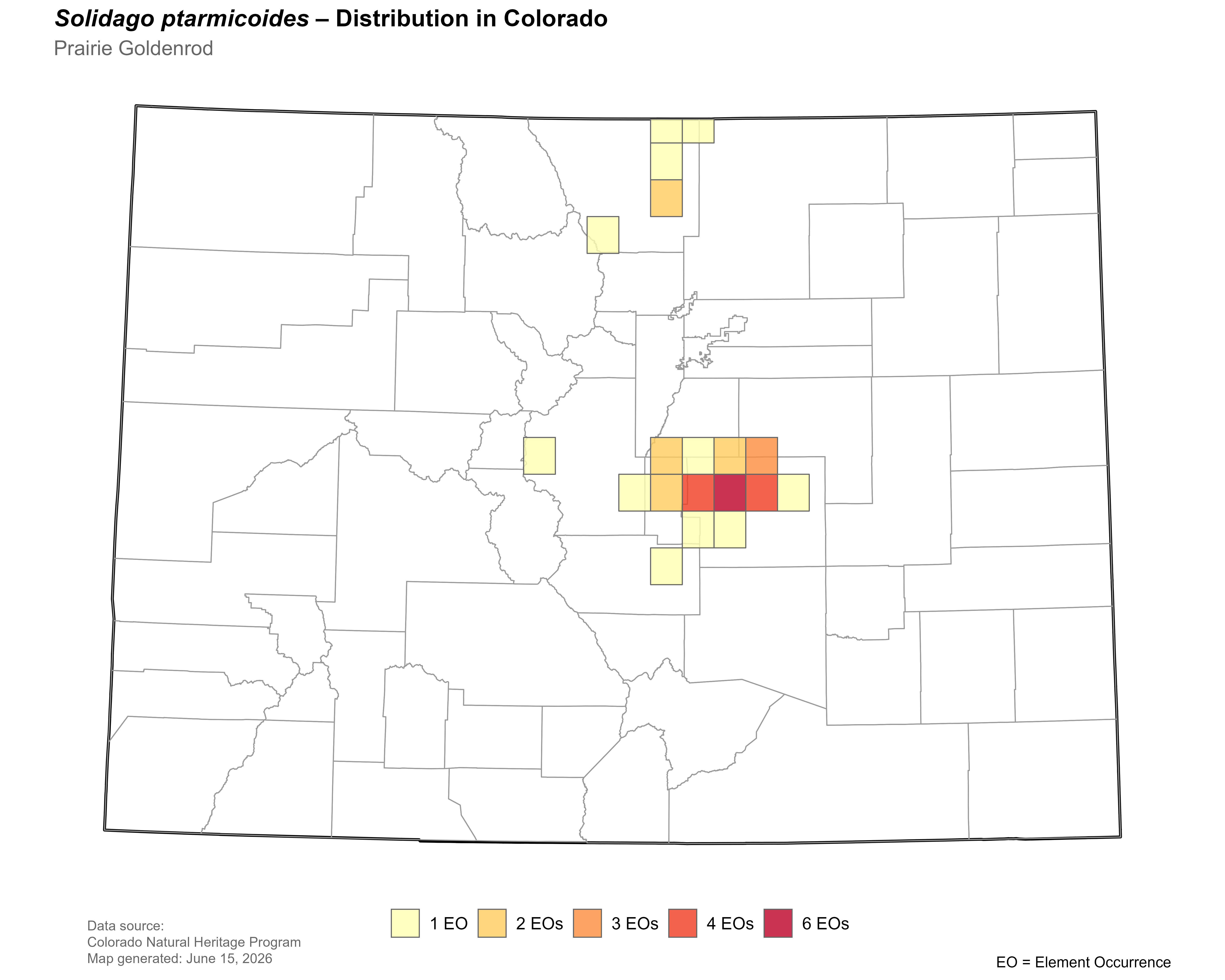
In Colorado, this species is known from El Paso, Larimer, Park and Teller counties. Range extent including historical sites with known locations is 19,118 sq km as of 2021. If historical occurrences (last documented prior to 2001) are excluded, range extent is 10,176 sq km (calculated using GeoCAT in 2021). Rangewide, this species can be found in Arkansas, Connecticut, Georgia, Illinois, indiana, Iowa, Massachusetts, Michigan, Minnesota, Missouri, Montana, New Hampshire, New York, North Carolina, North Dakota, Ohio, Oklahoma, South Carolina, South Dakota, Tennessee, Vermont, West Virginia, Wisconsin, and Wyoming, US. Globally, this species can also be found in Manitoba, New Brunswick, Ontario, Quebec, and Saskatchewan, Canada (USDA NRCS 2017; Flora of North America 2006).
Click on map to enlarge |
Threats and Management Issues
Noted threats include oil and gas developments, fragmentation from road and trail building, weed treatments, pipeline development, industrial and municipal water withdrawals (Colorado Natural Heritage Program occurrence records as of 2017). Colorado climate scenarios for 2050 suggest temperature will increase by 3-7 F and precipitation may decrease or increase. The impact to any given rare plant habitat is likely to vary. Long-term monitoring that includes weather and soil moisture data is critical to understanding climate impacts.
References
- Ackerfield, J. 2015. Flora of Colorado. Botanical Research Institute of Texas, Fort Worth, TX. 818 pp.
- Britton, N. L. and A. Brown. 1913. An Illustrated Flora of the Northern United States and Canada. 3 vol. Dover Publications, Inc., N. Y. 2052 pp.
- Colorado Native Plant Society. 1997. Rare Plants of Colorado, second edition. Falcon Press Publ., Helena, MT.
- Colorado Natural Heritage Program and the Geospatial Centroid. 2017. The Colorado Ownership and Protection Map (COMaP). Colorado State University, Ft. Collins, CO.
- Flora of North America Editorial Committee, ed. (FNA). 1993+. Flora of North America North of Mexico. Oxford Univ. Press, New York, Oxford.
- Great Plains Flora Association. 1986. Flora of the Great Plains. University Press of Kansas, Lawrence, KS. 1402 pp.
- Rydberg, P.A. 1906. Flora of Colorado. Bull. 100, Colorado Agricultural Experiment Station, Fort Collins, Colorado. 488pp.
- Spackman, S., B. Jennings, J. Coles, C. Dawson, M. Minton, A. Kratz, and C. Spurrier. 1997. Colorado rare plant field guide. Prepared for Bureau of Land Management, U.S. Forest Service and U.S. Fish and Wildlife Service by Colorado Natural Heritage Program.
- USDA, NRCS. 2022. The PLANTS Database. National Plant Data Team, Greensboro, NC 27401-4901 USA.
- Weber, W. A. and R. C. Wittmann. 2012. Colorado Flora, Eastern Slope, A Field Guide to the Vascular Plants, Fourth Edition. Boulder, Colorado. 555 pp.