

Scientific Name : Frasera paniculata
Author : Torr. NatureServe Explorer
Common Name : Tufted Green Gentian
 Current Research Activities


☰ Click link below for details.
Taxonomy
Gentianaceae (gentian family)
=Swertia utahensis
Ranks and Status
State Rank : S1
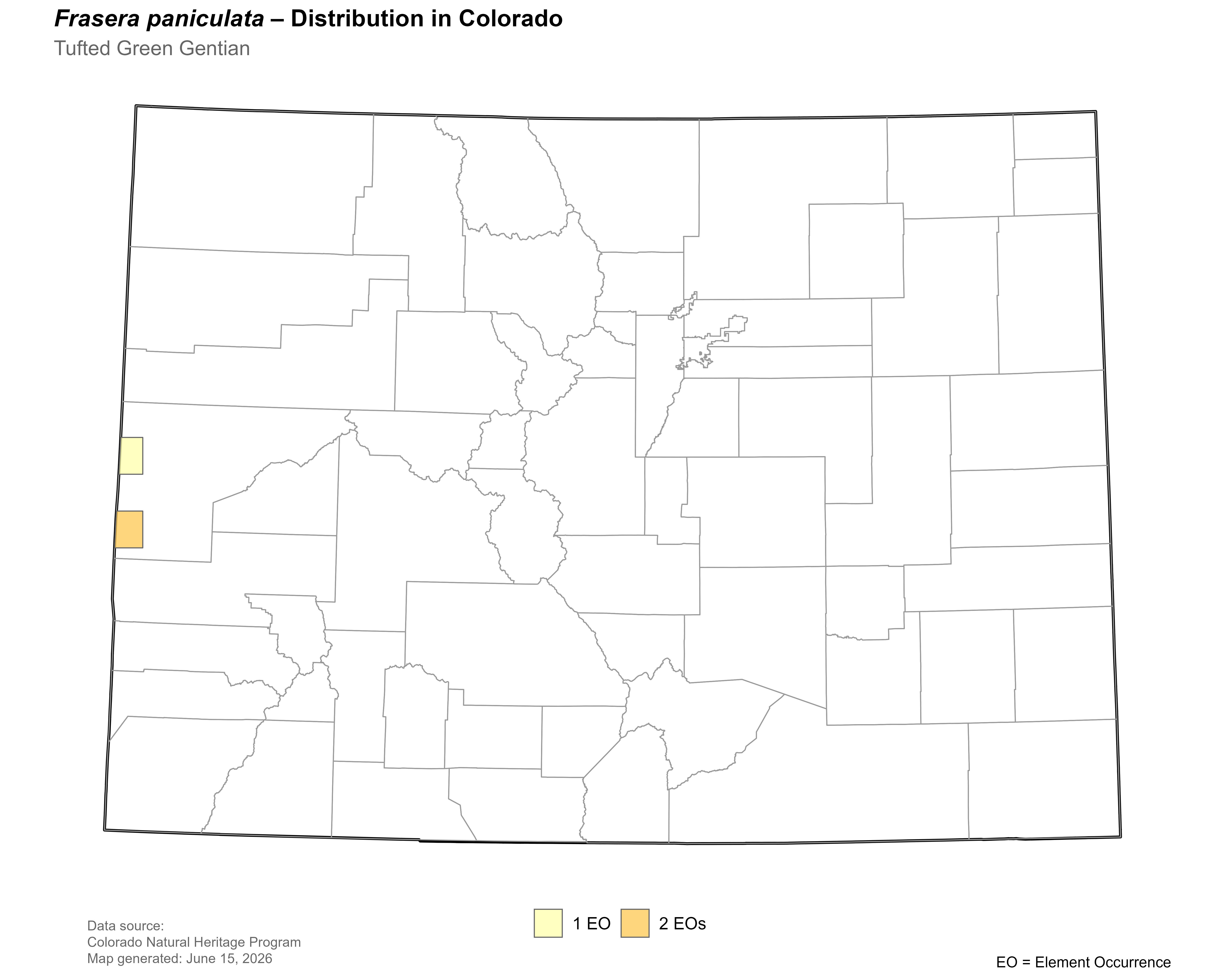
State Rank Reason : Frasera paniculata is known in Colorado from 3 locations in Mesa County, Colorado, USA, near the Utah border.
U.S. Endangered Species Act : none
Colorado Threatened and Endangered List : none
Other Statuses : BLM
Description and Phenology
General Description:
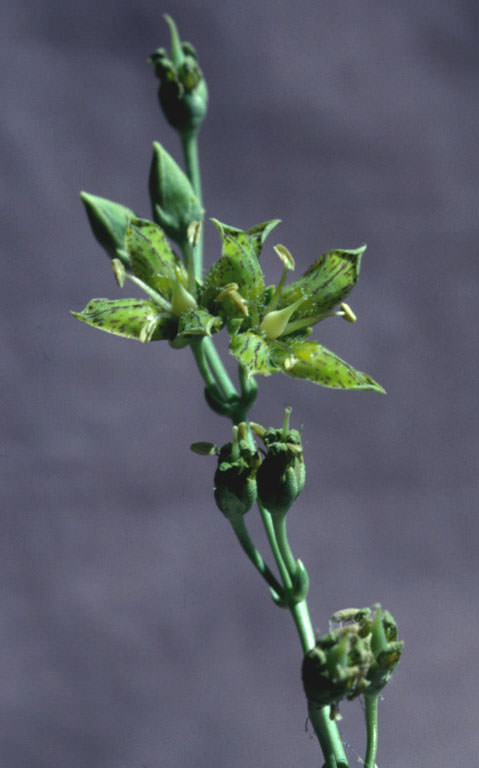
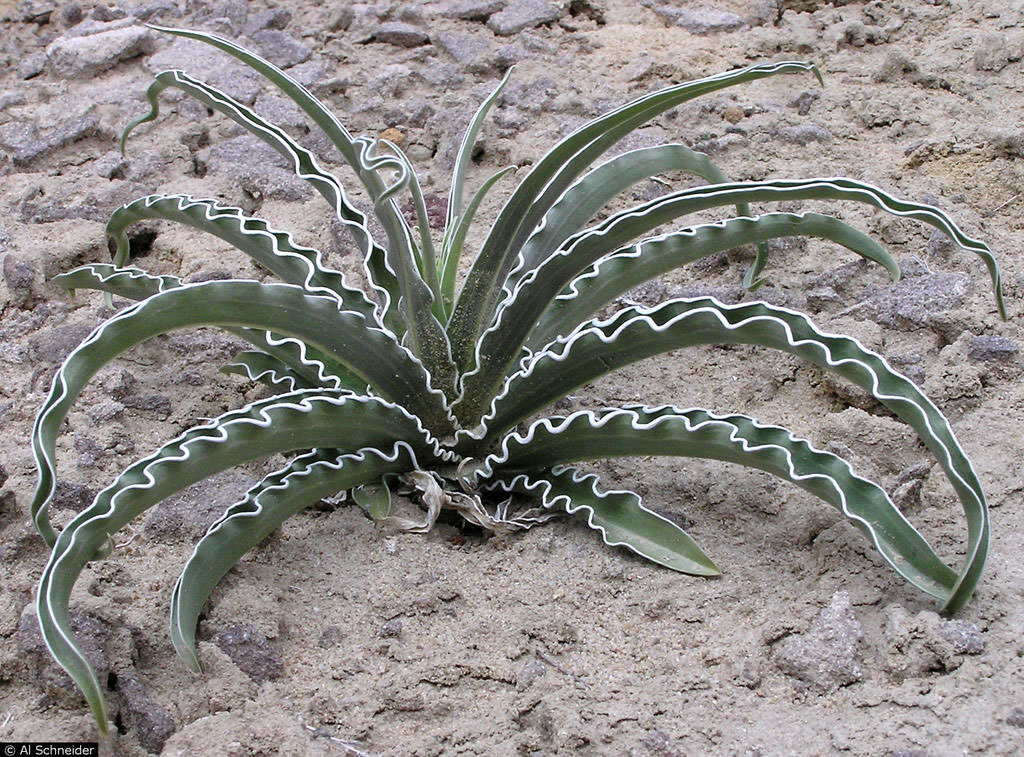
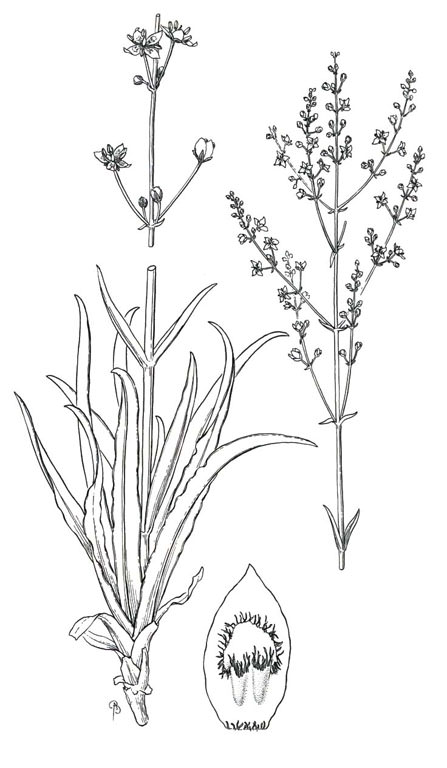
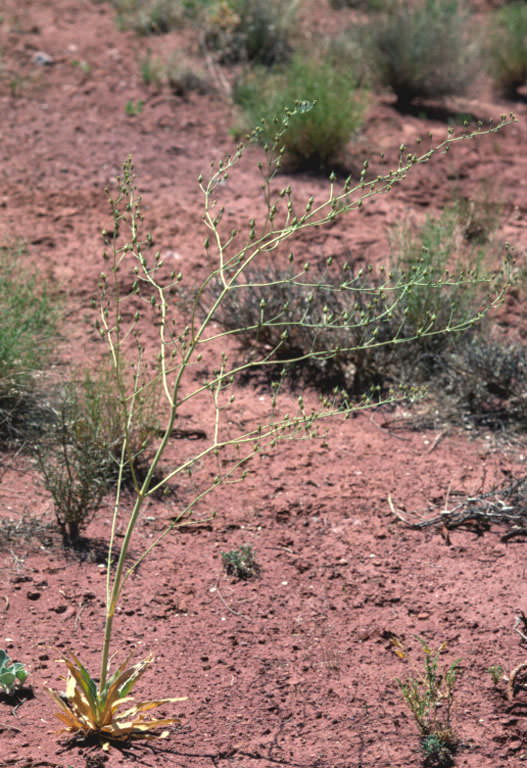
Flowers white or pale green, flecked with dark green; leaves opposite, broadly lanceolate, and white-margined; plants 7-10 dm tall, usually single stemmed; monocarpic perennial.
Look Alikes:
Not likely to be confused with other species in this area.
Phenology:
June-early July.
 |
Habitat
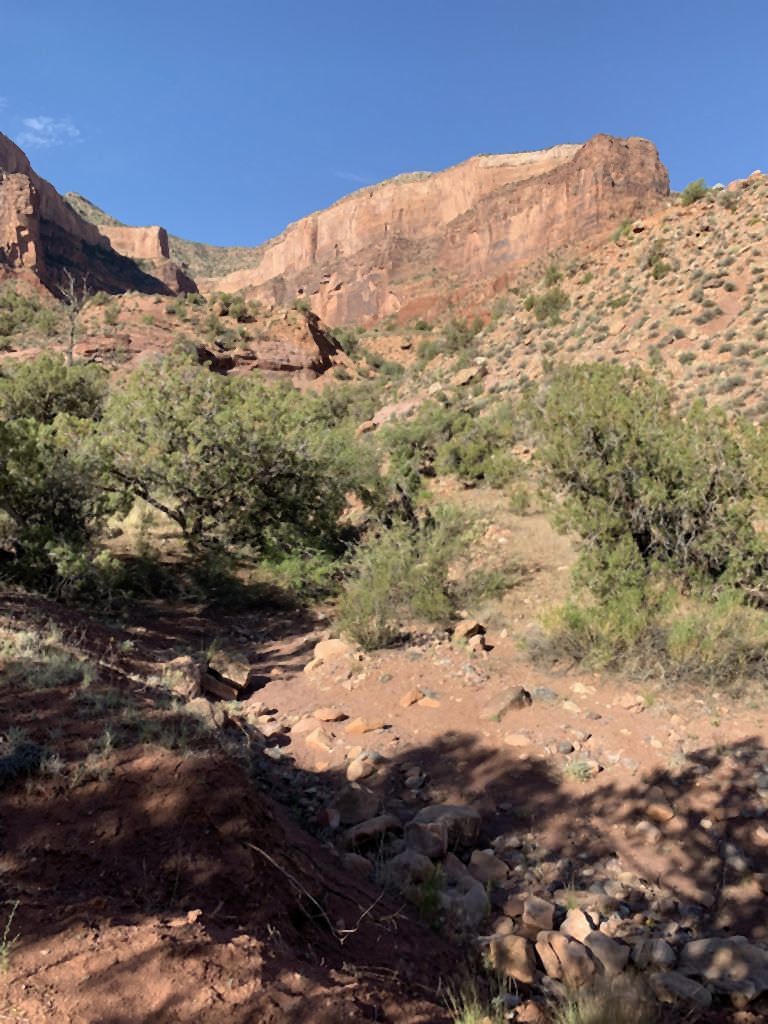
Dry, often sandy habitats, in desert shrub and pinyon-juniper communities (Welsh et al. 1993). Associated taxa include Sabina osterosperma, Rhus aromatica ssp. trilobata, Fraxinus anomala, Atriplex canescens, and Seriphidium tridentatum (Colorado Natural Heritage Program 2012).
click on image to enlarge
 |
 |
Elevation Range:
4,480 - 5,035 feet (1,366 - 1,535 meters)
Distribution
Colorado Endemic:
No
Range:
Frasera paniculata is known from Mesa County, Colorado, USA. the species range is 129 square kilometers in Colorado (calculated in GeoCAT in 2022). This species is also known from Arizona, Nevada, New Mexico, and Utah, USA (USDA NRCS 2012).
Click on map to enlarge |
Threats and Management Issues
As of 2022, 66% of the occurrences are found in habitat with minimal to low levels of landscape disturbance, the remainder are in areas with moderate levels of landscape disturbance (CNHP 2021). Threats at the local level are not known, however, long term drought is is a concern for this species.
References
- Ackerfield, J. 2012. The Flora of Colorado. Colorado State University Herbarium. 433 pp.
- Colorado Natural Heritage Program (CNHP). 2022. Biodiversity Tracking and Conservation System (Biotics 5). Colorado Natural Heritage Program, Colorado State University, Fort Collins.
- Colorado Natural Heritage Program. 2021. Landscape Disturbance Index Layer for Colorado. Edition 04_2021. Raster Digital Data Set. Colorado Natural Heritage Program, Fort Collins, CO. April 21, 2021.
- Cronquist, A., A.H. Holmgren, N.H. Holmgren, J.L. Reveal, and P.K. Holmgren. 1984. Intermountain Flora: Vascular Plants of the Intermountain West, U.S.A. Vol. 4, Subclass Asteridae (except Asteraceae). New York Botanical Garden, Bronx. 573 pp.
- Heil, K.D., S.L. O'Kane Jr., L.M. Reeves, and A. Clifford, 2013. Flora of the Four Corners Region, Vascular Plants of the San Juan River Drainage; Arizona, Colorado, New Mexico, and Utah. Missouri Botanical Garden Press, St. Louis, Missouri. 1098 pp.
- Lavender, A.E., M.M. Fink, S.E. Linn, D.M. Theobald. 2011. Colorado Ownership, Management, and Protection v9 Database. Colorado Natural Heritage Program and Geospatial Centroid, Colorado State University, Fort Collins, CO. (30 September).
- Schneider, A. 2013. Wildflowers, Ferns, and Trees of the Four Corners Regions of Colorado, New Mexico, Arizona, and Utah. Accessed on-line at http://www.swcoloradowildflowers.com.
- USDA, NRCS. 2022. The PLANTS Database. National Plant Data Team, Greensboro, NC 27401-4901 USA.
- Weber, W. A. and R. C. Wittmann. 2012. Colorado Flora, Western Slope, A Field Guide to the Vascular Plants, Fourth Edition. Boulder, Colorado. 532 pp.
- Welsh, S.L., N.D. Atwood, S. Goodrich, and L.C. Higgins (eds.) 1993. A Utah flora. 2nd edition. Brigham Young Univ., Provo, Utah. 986 pp.