

Scientific Name : Penstemon yampaensis
Author : Penl. NatureServe Explorer
Common Name : Yampa Beardtongue
 Current Research Activities
☰ Click link below for details.
Taxonomy
Plantaginaceae (plantain family)
Listed by Ackerfield (2015, 2022) as P. yampaensis and by Weber and Wittmann (2012) as P. acaulis var. yampaensis. The Flora of North America (1993+) and Ackerfield (2015, 2022) place this genus in the Plantaginaceae (Plantain Family).
Ranks and Status
State Rank : S2S3
State Rank Reason : As of 2022 there are 30 known occurrences in northwest Colorado (USA), however approximately one third of them are based on historical observations. Threats to the species include livestock grazing and competition from invasive nonnative species (primarily cheatgrass), and it is considered to be extremely vulnerable to the effects of climate change.
U.S. Endangered Species Act : none
Colorado Threatened and Endangered List : none
Other Statuses : BLM, SWAP Tier 1
Description and Phenology
General Description:
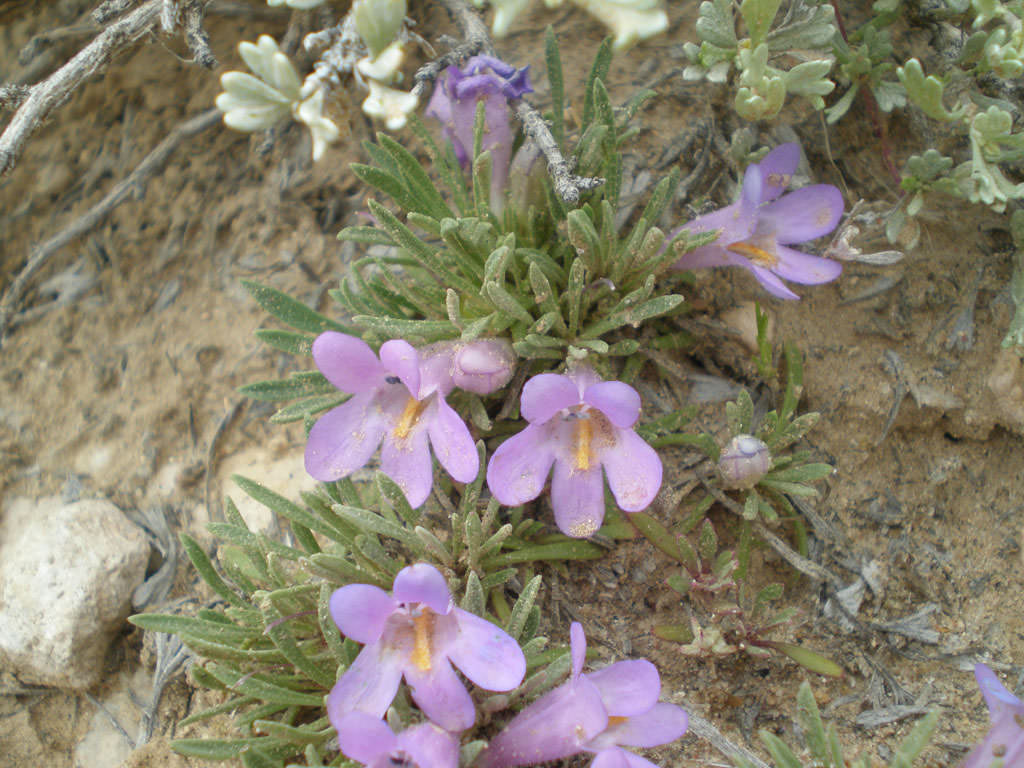
Penstemon acaulis var. yampaensis is a low-growing, non-succulent, mat-forming perennial, completely lacking aerial stems, but with a stout subterranean caudex. The leaves are narrowly oblanceolate, scabro-pubescent with papilliform or spiculate hairs, a prominent midrib and two or more lateral veins. The flowers are sub-sessile (on very short branches arising from the basal rosette of leaves), usually 4 (2-6), lilac with a strong bluish tinge when older, glandular-pubescent externally, and golden (to whitish) bearded in the throat below. The capsules are nearly globose, glabrous at maturity, with 2-4 seeds per capsule (Painter 1980; Ackerfield 2012; Weber and Wittmann 2012).
Look Alikes:
Similar to Penstemon caespitosus (Painter 1980), which has creeping aerial stems, while P. acaulis var. yampaensis completely lacks aerial stems (Weber and Wittmann 2012).
Phenology:
Flowering late May to early July. Fruiting early July to early August (Painter 1980, Colorado Natural Heritage Program 2012).
Habitat
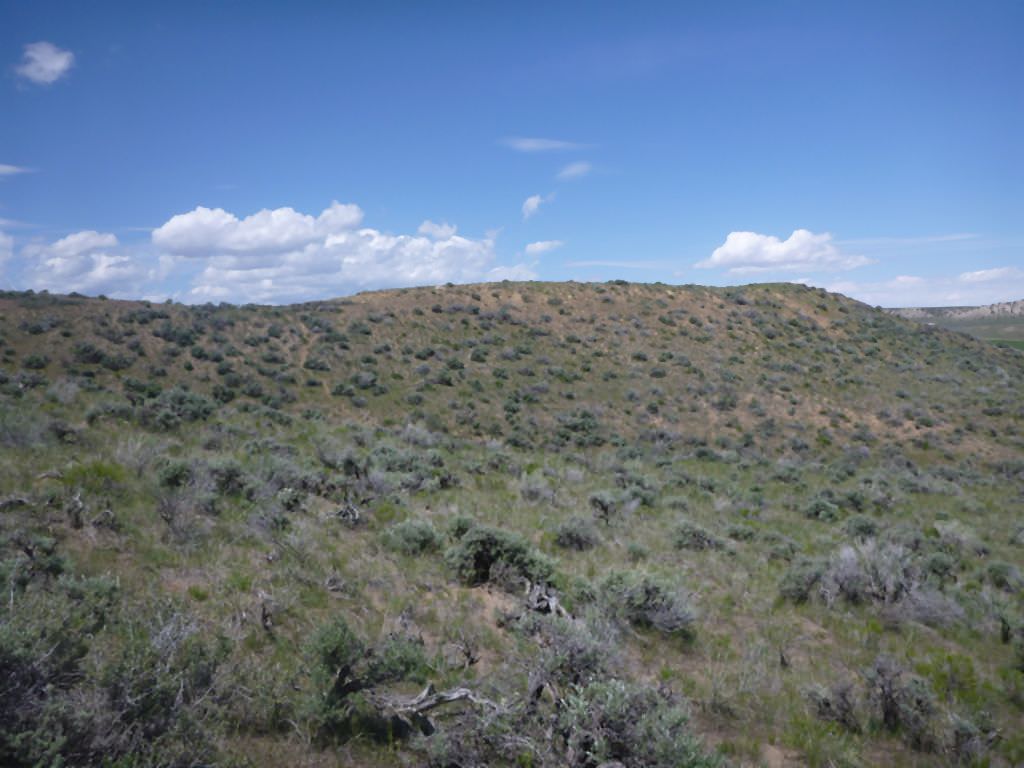
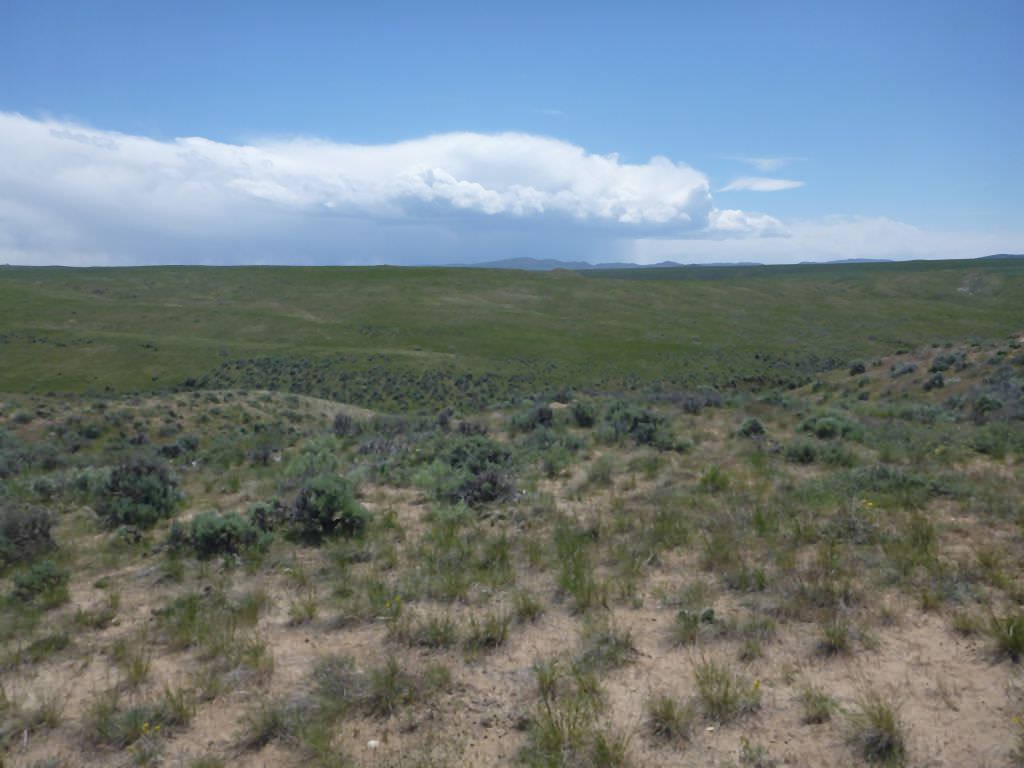
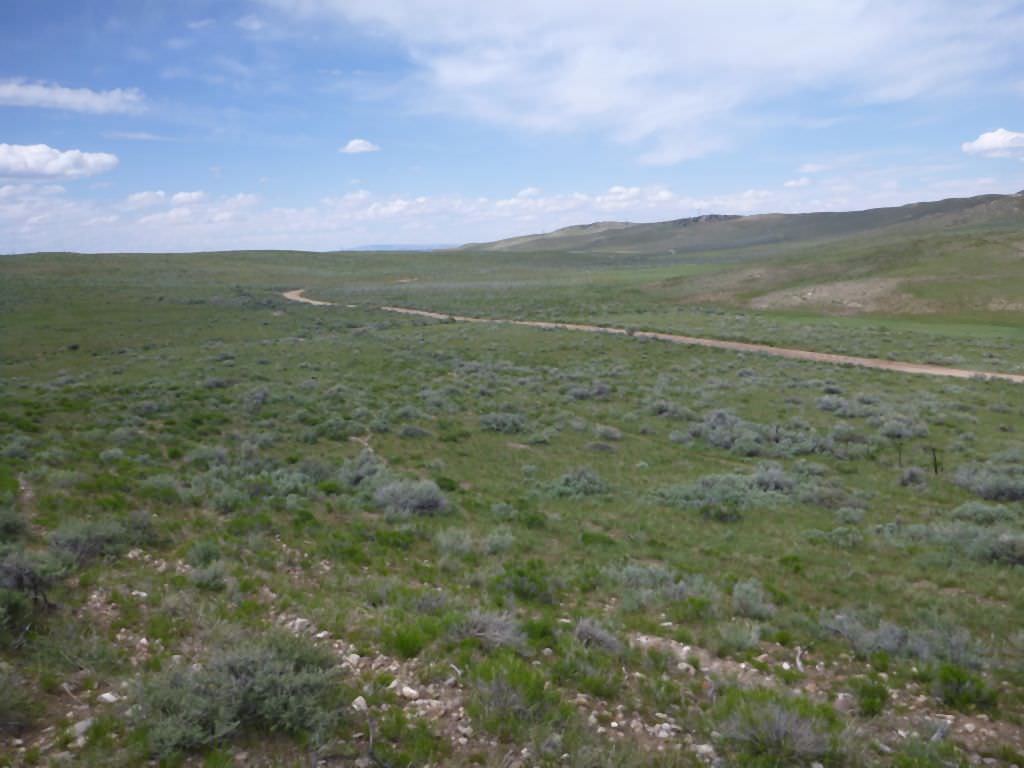
Penstemon acaulis var. yampaensis is found on dry slopes, limestone outcrops, gypsum hills, or barren shale ridges in sagebrush and pinyon-juniper communities. The plants are found in gently sloping to flat areas with fine sandy soil sometimes reported as calcareous (Painter 1980). Soils are usually sandy, but a few records are from sites with loam, silty clay, and clay loam soils. Geology is variable: Green River, Brown's Park, Moenkopi, Weber, and Mancos Formations (O'Kane 1986). Commonly associated taxa include Artemisia tridentata, Sitanion histrix, Oryzopsis hymenoides, Allium acuminatum, Calochortus gunnisonii, Opuntia, Ipomopsis, Physaria, Linum, Arenaria, Draba, Astragalus, Erigeron, Juniperus, Poa, Lupinus, Calylophus, Pinus, and Chrysothamnus.
click on image to enlarge
 |
 |
 |
Elevation Range:
5,688 - 8,212 feet (1,734 - 2,503 meters)
Distribution
Colorado Endemic:
No
Range:
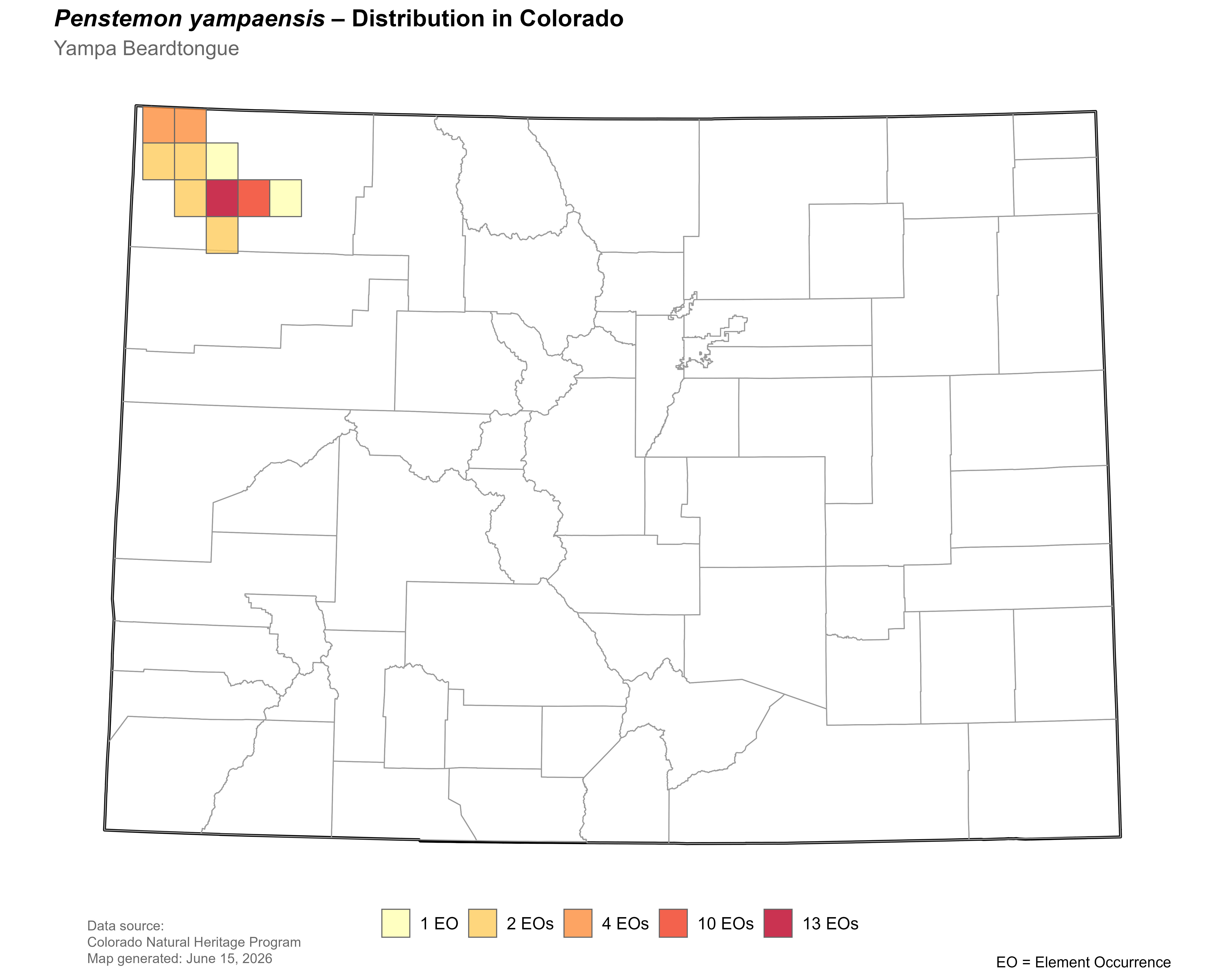
In Colorado, USA, Penstemon yampaensis is only known from Moffat County. Estimated range extent in Colorado of 1751 square kilometers was calculated in GeoCAT using occurrence data provided by the Colorado Natural Heritage Program (2022). This species can also be found in Daggett and Uintah counties in Utah, and in Wyoming, USA.
Click on map to enlarge |
Threats and Management Issues
As of 2022, 66% of the occurrences are found in habitat with minimal to low levels of landscape disturbance, the remainder are in areas with moderate to high levels of landscape disturbance (CNHP 2021). At the local level at least half of the occurrences are threatened by livestock grazing and a third by competition from invasive nonnative species (primarily cheatgrass); several occurrences are within the ROW for transmission lines where disturbance is anticipated. OVH and other recreational activities also occur in a few occurrences. Additionally, long term drought is occurring throughout the range of this species and it is considered to be extremely vulnerable to climate change (Handwerk et al. 2015). This species is considered to have moderate adaptive capacity and is expected to be moderately vulnerable to climate change under both RCP 4.5 and 8.5 scenarios, as assessed for the 2025 Colorado State Wildlife Action Plan (CNHP 2025).
References
- Ackerfield, J. 2012. The Flora of Colorado. Colorado State University Herbarium. 433 pp.
- Ackerfield, J. 2015. Flora of Colorado. BRIT Press, Botanical Research Institute of Texas, Fort Worth, TX. 818 pp.
- Ackerfield, J. 2022. Flora of Colorado. Second Edition. Bot. Misc. 60. BRIT Press, Fort Worth Botanic Garden/Botanical Research Institute of Texas, U.S.A. 861 pp.
- Castellanos, M.C., P. Wilson, and J.D. Thomson. 2003. Pollen transfer by hummingbirds and bumblebees, and the divergence of pollination modes in penstemon. Evolution 57(12): 2742–2752.
- Colorado Natural Heritage Program (CNHP). 2022. Biodiversity Tracking and Conservation System (Biotics 5). Colorado Natural Heritage Program, Colorado State University, Fort Collins.
- Colorado Natural Heritage Program (CNHP). 2025. Climate Change Vulnerability Assessment of Colorado Tier 1 and Tier 2 Plant Species of Greatest Conservation Need (SCGN) for the 2025 Colorado State Wildlife Action Plan. Colorado Natural Heritage Program, Colorado State University, Fort Collins.
- Colorado Natural Heritage Program. 2021. Landscape Disturbance Index Layer for Colorado. Edition 04_2021. Raster Digital Data Set. Colorado Natural Heritage Program, Fort Collins, CO. April 21, 2021.
- Flora of North America Editorial Committee (FNA). 2019. Flora of North America north of Mexico. Vol. 17: Magnoliophyta: Tetrachondraceae to Orobanchaceae. Oxford Univ. Press, New York. xxiv + 737 pp.
- Goodrich, S. and E. Neese. 1986. Uinta Basin Flora. U.S.D.A. Forest Service, Ogden, UT.
- Handwerk, J., L. Grunau, and S. Panjabi. 2015. Colorado Wildlife Action Plan: 2015 Rare Plant Addendum. Colorado Natural Heritage Program, Colorado State University, Fort Collins, Colorado, USA.
- Jouseau, M. R. G. 2012a. Status report on Penstemon acaulis (Stemless beardtongue) and Penstemon yampaensis (Yampa beardtongue) in Colorado, Utah and Wyoming. Prepared for the Wyoming Natural Diversity Database, Laramie, WY.
- Lavender, A.E., M.M. Fink, S.E. Linn, D.M. Theobald. 2011. Colorado Ownership, Management, and Protection v9 Database. Colorado Natural Heritage Program and Geospatial Centroid, Colorado State University, Fort Collins, CO. (30 September).
- Painter Beth. 1980. Status Report on Penstemon yampaensis. Natural Resource Ecology Laboratory.
- Penland, C.W.T. 1958. Two New Species of Penstemon in Colorado. Madrono. 14:153-160.
- Stevens, M., S. Love, and T. McCammon. 2020. The Heart of Penstemon Country: A Natural History of Penstemons in the Utah Region. Sweetgrass Books. Helena, MT.
- USDA, NRCS. 2022. The PLANTS Database. National Plant Data Team, Greensboro, NC 27401-4901 USA.
- Weber, W. A. and R. C. Wittmann. 2012. Colorado Flora, Western Slope, A Field Guide to the Vascular Plants, Fourth Edition. Boulder, Colorado. 532 pp.
- Welsh, S.L., N.D. Atwood, S. Goodrich, and L.C. Higgins. (Eds). 2015. A Utah flora, fifth edition, revised 2015. Monte L. Bean Life Science Museum, Provo, Utah. 987 pp.