

Scientific Name : Crocanthemum bicknellii
Author : (Fernald) Janchen NatureServe Explorer
Common Name : Plains Frostweed
 Current Research Activities


☰ Click link below for details.
Taxonomy
Cistaceae (rock-rose family)
Ackerfield (2022) lists this taxon as Crocanthemum bicknellii (Fernald) Barnhart. Ackerfield (2015) used the synonym Helianthemum bicknellii Fernald. This is the only species in this plant family, the Cistaceae, or Rockrose Family, in Colorado.
Ranks and Status
State Rank : S2
State Rank Reason : There are 18 principal occurrences in the CNHP database from a 4 county distribution.Urban development may threaten the occurrences.
U.S. Endangered Species Act : none
Colorado Threatened and Endangered List : none
Other Statuses : none
Description and Phenology
General Description:
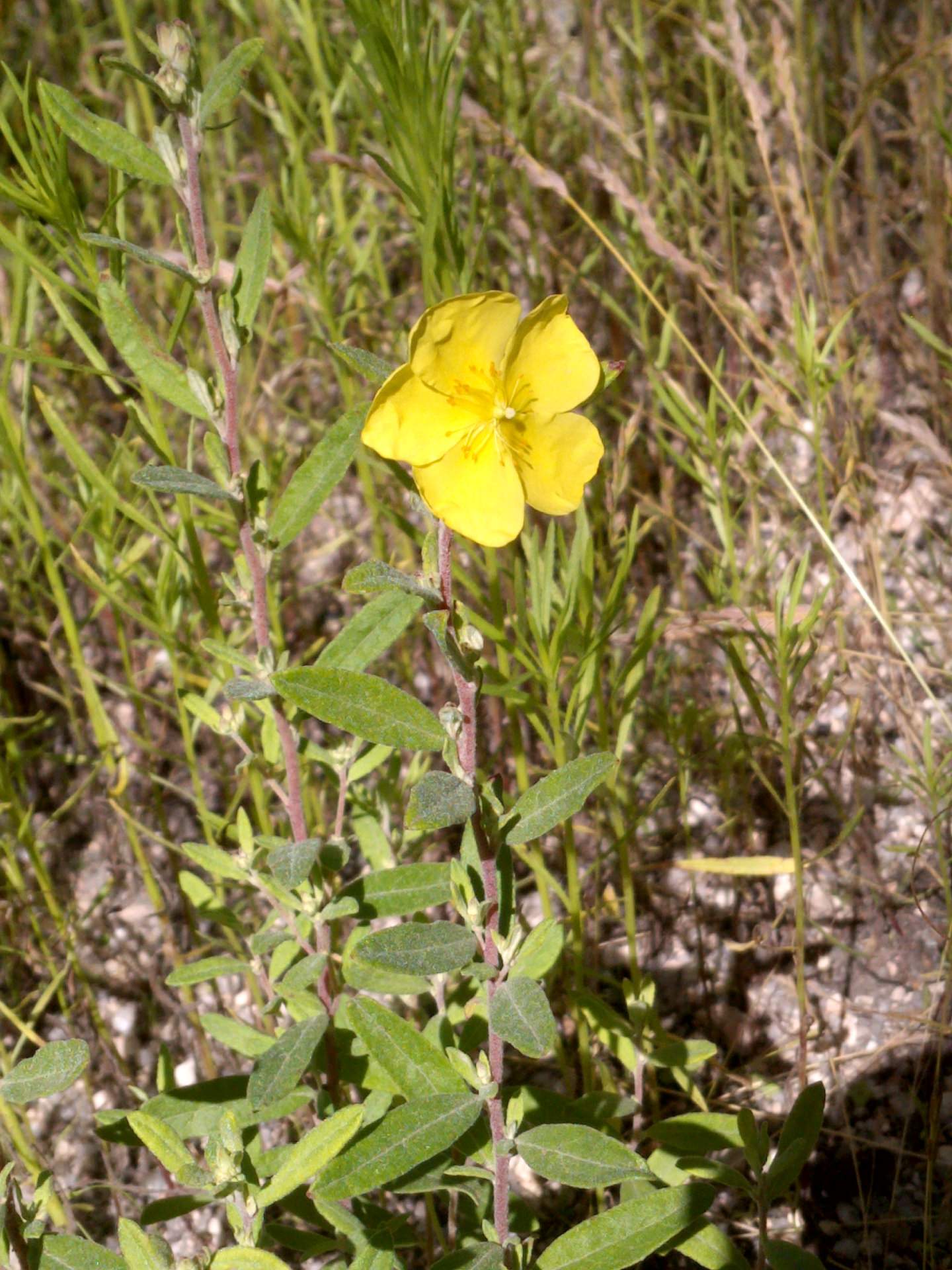
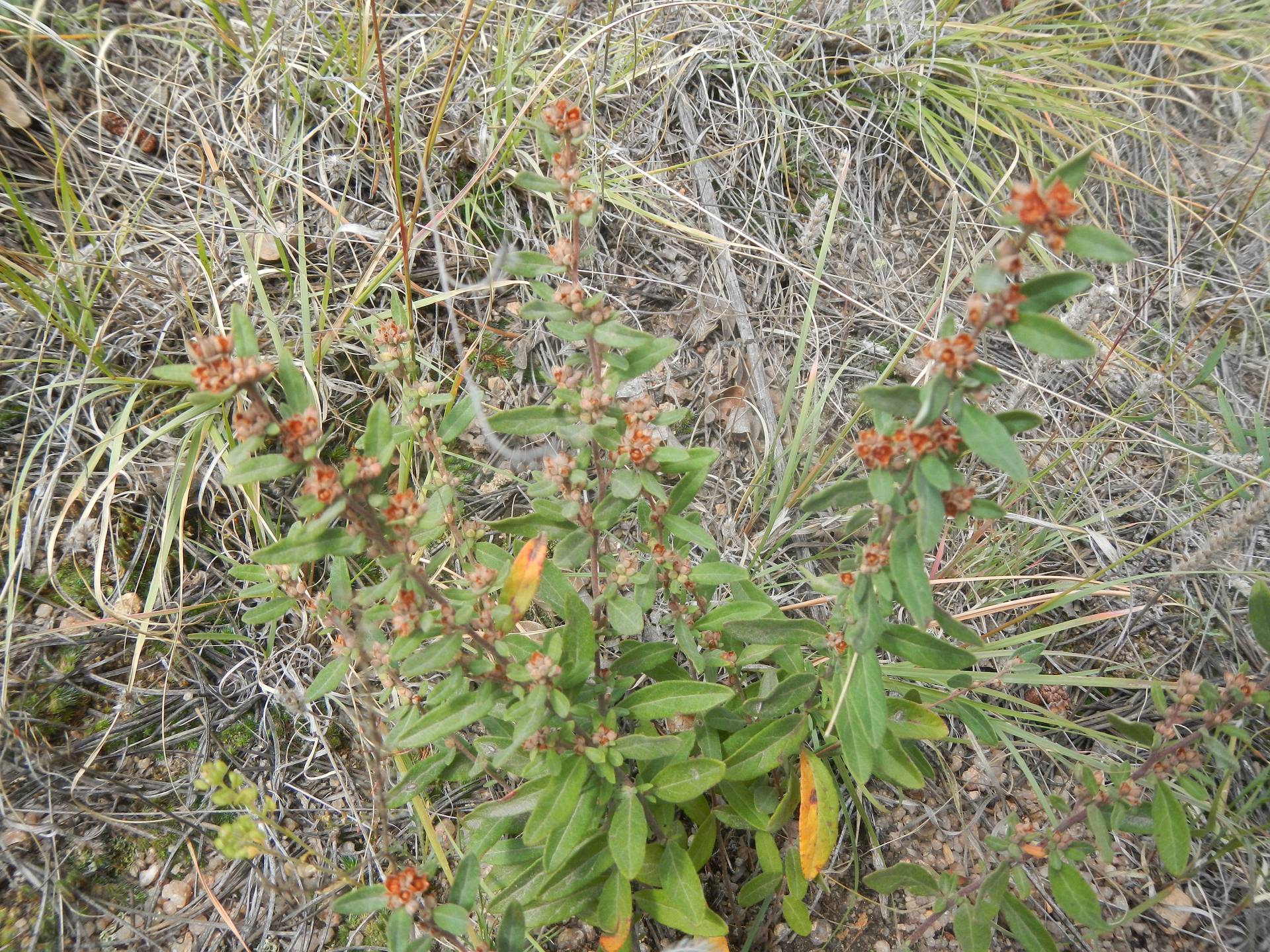
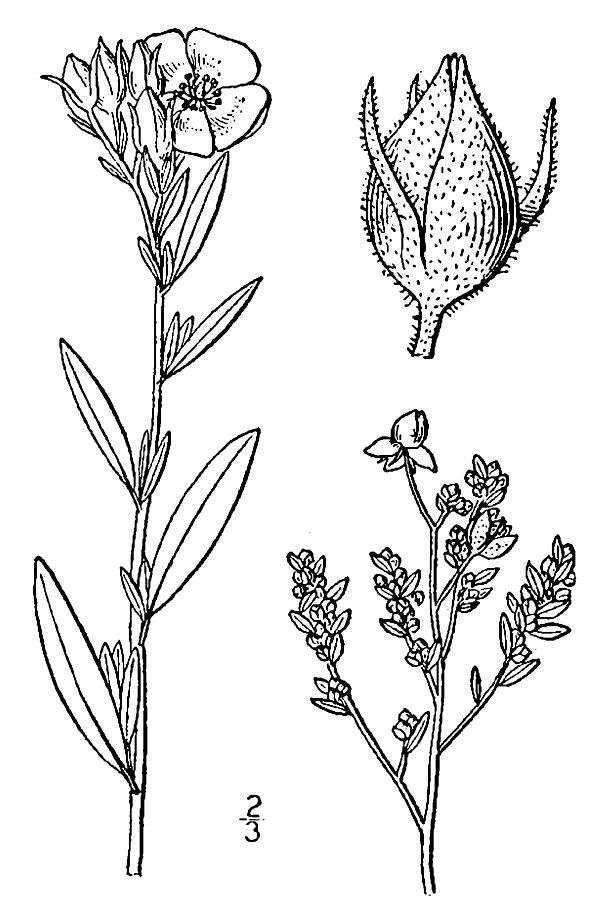
Herbaceous plants with erect stems, typically 2-6 dm tall, simple or branched, stellate-pubescent to stellate-tomentose. Leaves are simple, entire, and cauline; mostly 2-3 cm long; petiole 14 mm; blade narrowly elliptic to oblanceolate, surfaces stellate-tomentose abaxially, stellate-pubescent adaxially, without simple hairs. Inflorescences in terminal cymes, flowers yellow, and of two distinct types: chasmogamous flowers (showy and open for pollination) 618 per cyme; and cleistogamous flowers (flowers closed, self-pollinating) in glomerules (compact cymes of small, almost sessile flowers), 110 flowers per glomerule, flowering 13 months later than chasmogamous flowers. Chasmogamous flowers are large and showy with numerous stamens. Cleistogamous flowers are smaller with 3-10 stamens (Flora of North America 2015, Weber and Wittmann 2012, Ackerfield 2015).
Look Alikes:
Not likely to be confused with other taxa. Only species from this family in Colorado.
Phenology:
In Colorado, this species flowers June-August (Ackerfield 2015). The dense, often crowded, cleistogamous flowers on branches late in the season contrast strongly with the relatively few, terminal, petaliferous flowers early in the season (FNA 2015).
 |
Habitat
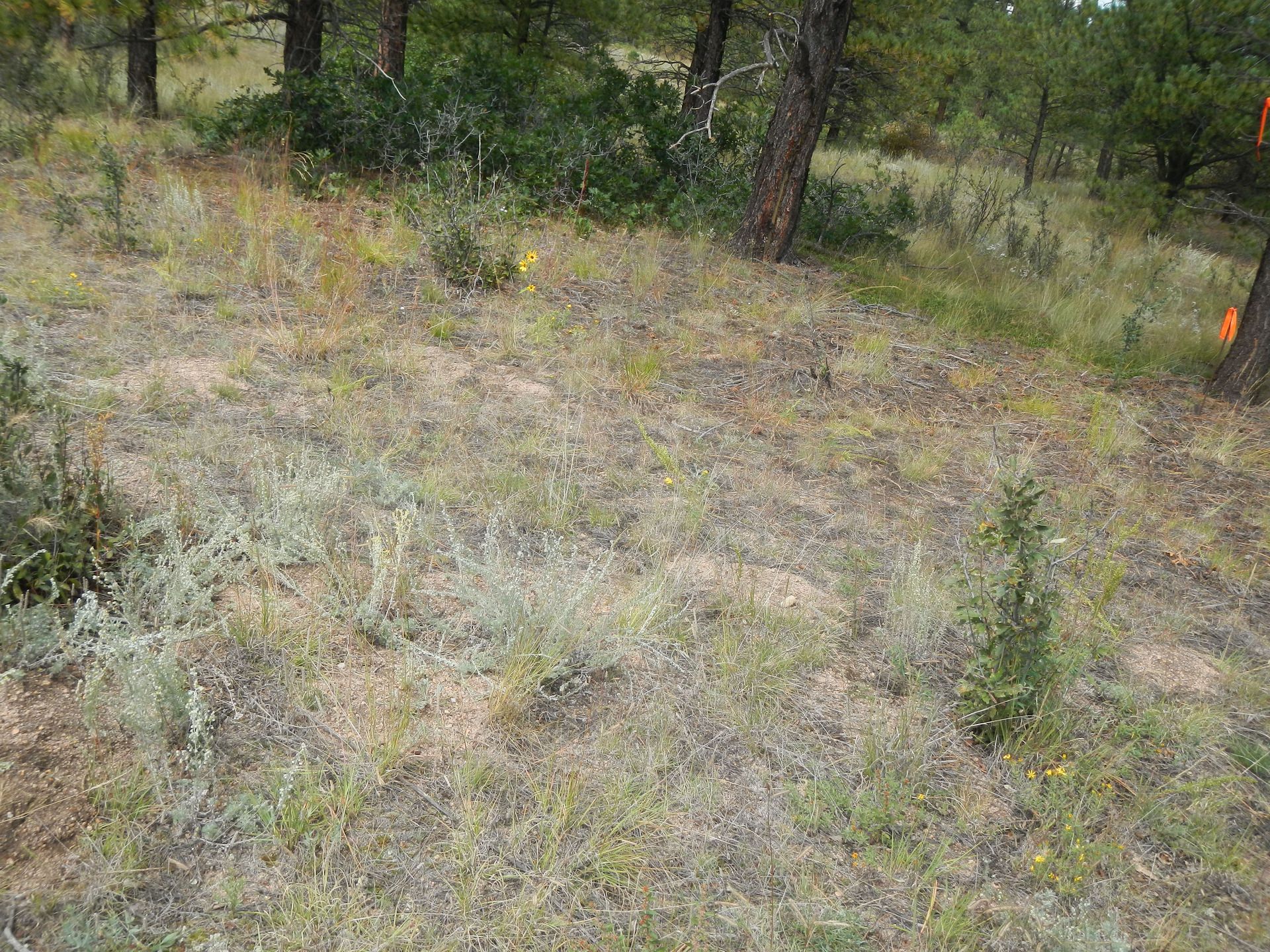
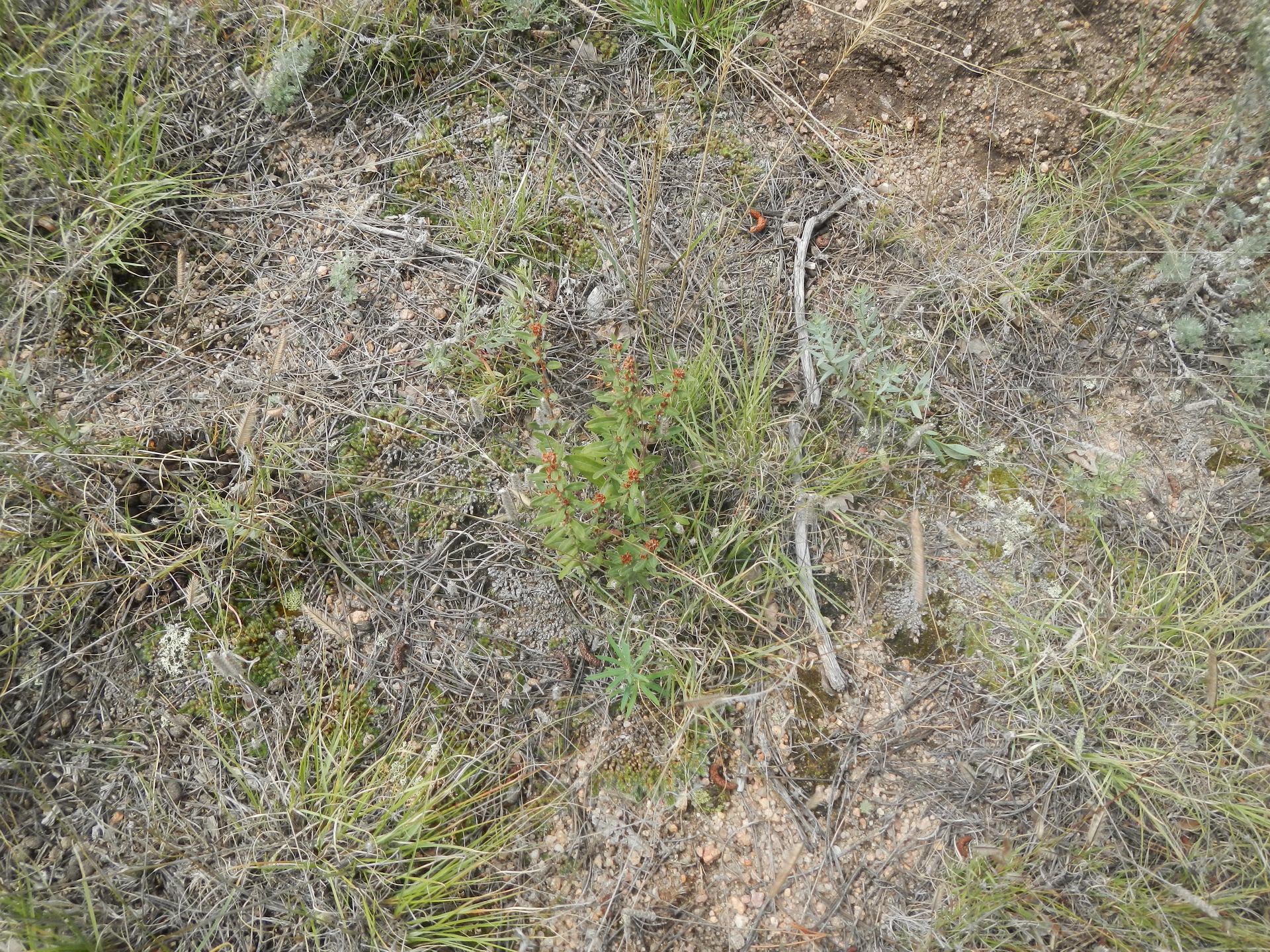
In Colorado, this species is found in dry pine forests and open meadows, sometimes in hotly burned areas that are no longer forested which also support Ceanothus fendleri, Danthonia spicata, Rhus glabra, Polygonum douglasii, and Hypericum perforatum. Soil texture is generally rocky, gravelly, and sandy. Terrain is gently sloping to flat. Plants have also been found in partially shaded areas dominated by Gambel’s oak with an understory of Bouteloua gracilis, Nassella viridula, Artemisia frigida, Artemisia ludociviana, and moss. Additional associated species documented with Colorado occurrences (2017) include: Koeleria macrantha, Schizachyrium scoparium, Heterotheca villosa, Pterogonum alatum, Ceanothus rubra, Vulpia octoflora, Oligosporus dracunculus, Dysphania graveolens, Agrostis scabra, Eriogonum annuum, Chrysothamnus nauseosus, Cercocarpus montanus, Liatris punctata, and Symphyotrichum falcatum.
click on image to enlarge
 |
 |
Elevation Range:
5,922 - 7,645 feet (1,805 - 2,330 meters)
Distribution
Colorado Endemic:
No
Range:
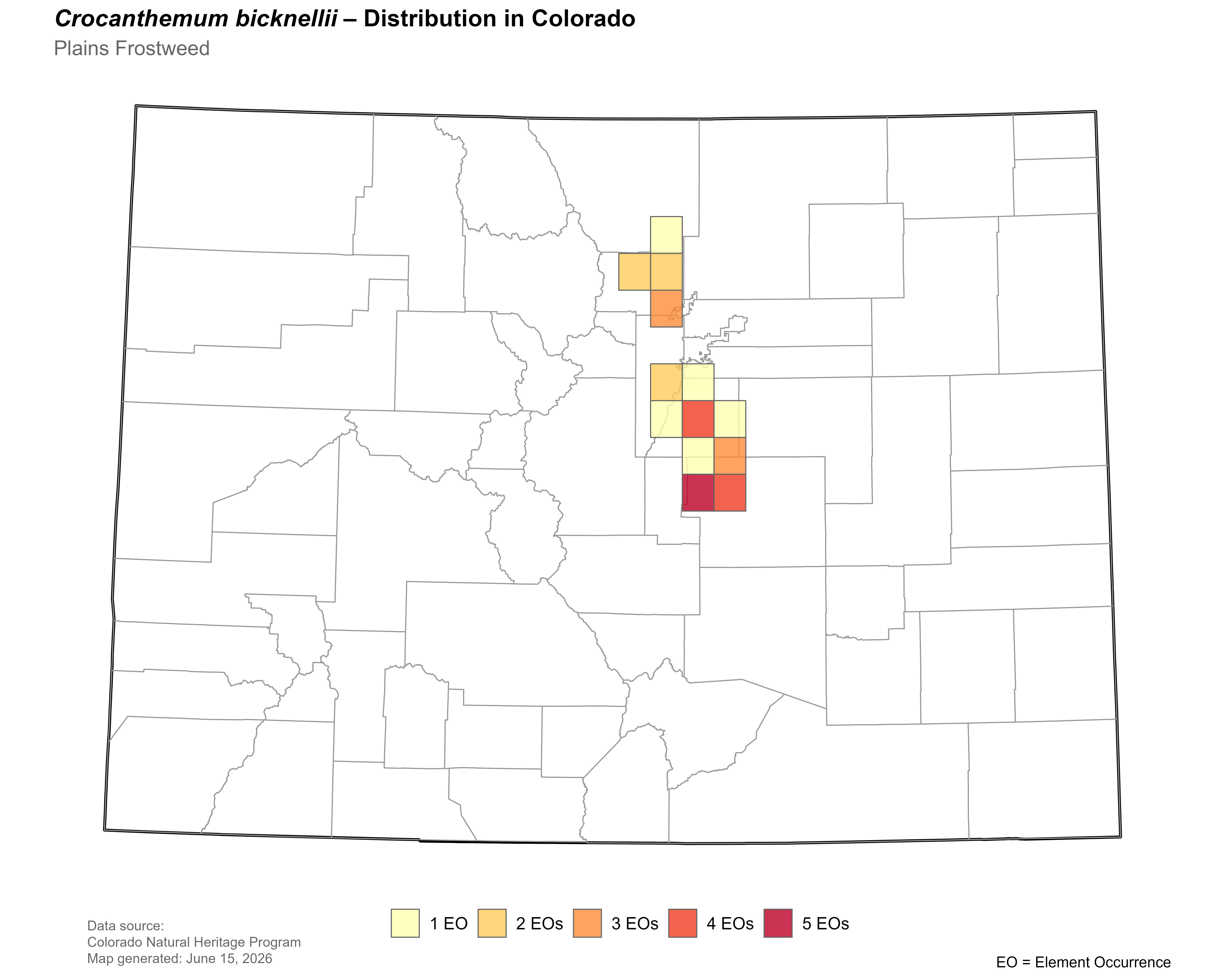
In Colorado, known from Boulder, Douglas, El Paso and Jefferson counties. This species can be found in Arkansas, Connecticut, Deleware, Georgia, Illinois, indiana, Iowa, Kansas, Kentucky, Maine, Maryland, Massachusetts, Michigan, Minnesota, Missouri, Montana, Nebraska, New Hampshire, New Jersey, New York, North Carolina, North Dakota, Ohio, Oklahoma, Pennsylvania, Rhode Island, South Dakota, Tennessee, Vermont, Virginia, West Virginia, Wisconsin, and Wyoming, USA. In Canada, this species can be found in Manitoba and Ontario (Flora of North America 2015; USDA NRCS 2017).
Click on map to enlarge |
Threats and Management Issues
Urban development may threaten the occurrences in Colorado. Colorado climate scenarios for 2050 suggest temperature will increase by 3-7 F and precipitation may decrease or increase. The impact to any given rare plant habitat is likely to vary. Long-term monitoring that includes weather and soil moisture data is critical to understanding climate impacts.
References
- Ackerfield, J. 2015. Flora of Colorado. BRIT Press, Botanical Research Institute of Texas, Fort Worth, TX. 818 pp.
- Ackerfield, J. 2022. Flora of Colorado. Second Edition. Bot. Misc. 60. BRIT Press, Fort Worth Botanic Garden/Botanical Research Institute of Texas, U.S.A. 861 pp.
- Britton, N. L. and A. Brown. 1913. An Illustrated Flora of the Northern United States and Canada. 3 vol. Dover Publications, Inc., N. Y. 2052 pp.
- Colorado Natural Heritage Program and the Geospatial Centroid. 2017. The Colorado Ownership and Protection Map (COMaP). Colorado State University, Ft. Collins, CO.
- Daoud, H.S. and R.L. Wilbur. 1965. A revision of the North American species of Helianthemum (Cistaceae). Rhodora 67: 63-314 (interrupted pagination).
- Fernald, M.L. 1919. Helianthemum bicknellii and H. propinqum. Rhodora 21: 36-37.
- Fernald, M.L. 1949. Gray's Manual of Botany, Eighth edition. American Book Co. New York.
- Great Plains Flora Association. 1986. Flora of the Great Plains. University Press of Kansas, Lawrence, KS. 1402 pp.
- Harrington, H. D. 1954. Manual of the Plants of Colorado. Sage Books, Denver, CO. 666 pp.
- USDA, NRCS. 2022. The PLANTS Database. National Plant Data Team, Greensboro, NC 27401-4901 USA.
- Weber, W. A. and R. C. Wittmann. 2012. Colorado Flora, Eastern Slope, A Field Guide to the Vascular Plants, Fourth Edition. Boulder, Colorado. 555 pp.