

Scientific Name : Lygodesmia grandiflora var. doloresensis
Author : (Tomb.) Welsh NatureServe Explorer
Common Name : Dolores River Skeletonplant
 Current Research Activities


☰ Click link below for details.
Taxonomy
Asteraceae (sunflower family)
Listed as Lygodesmia grandiflora var. doloresensis in Ackerfield (2015, 2022) and FNA (Flora of North America 1993+). It is not included in Weber and Wittmann (2012) except to mention the trivial variety of L. grandiflora considered by the Flora of North America. Plants from eastern Utah, previously identified as Lygodesmia grandiflora var. doloresensis, are now identified as Lygodesmia grandiflora var. dianthopsis (SEINet 2023, Welsh et al. 2015).
Ranks and Status
State Rank : S1S2
State Rank Reason : Lygodesmia doloresensis is known only from Mesa County in western Colorado (USA). There are 16 occurrences documented in the Colorado Natural Heritage Program database, but half of them are poorly documented or based on historical observations. The majority of the occurrences are found in disturbed habitat with threats arising from road maintenance activities, incompatible livestock grazing and competition from invasive plant species. Motorized and non-motorized recreation also occurs within several of the occurrences. This species is also considered to be extremely vulnerable to the effects of climate change.
U.S. Endangered Species Act : none
Colorado Threatened and Endangered List : none
Other Statuses : BLM, SWAP SGIN
Description and Phenology
General Description:
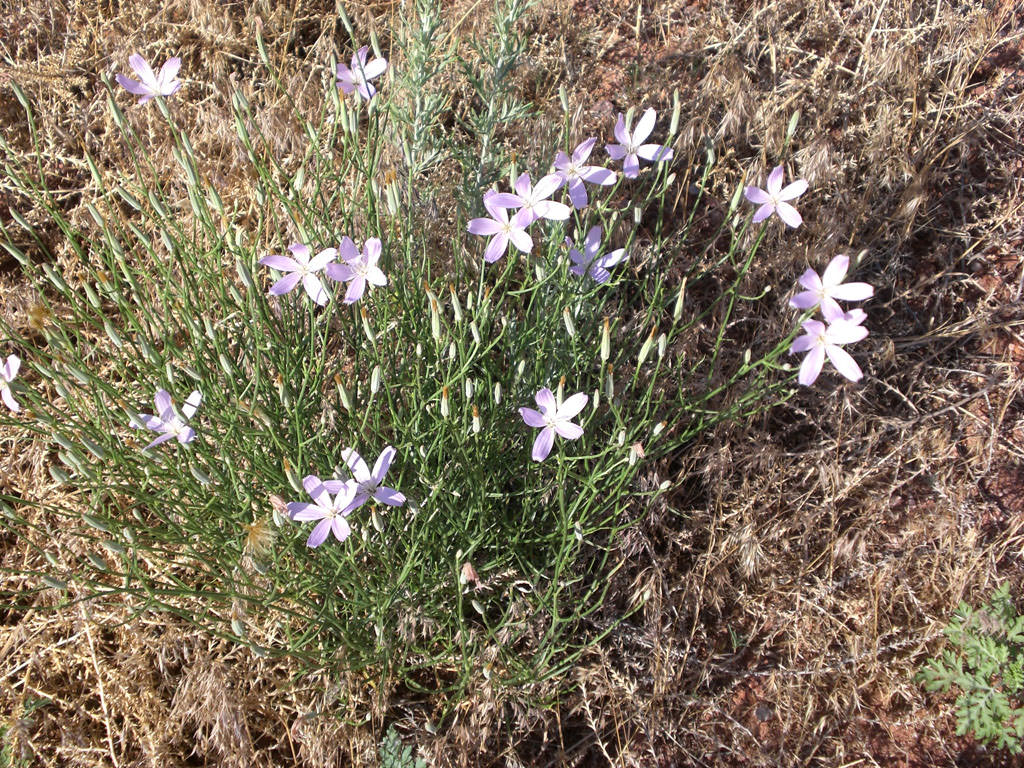
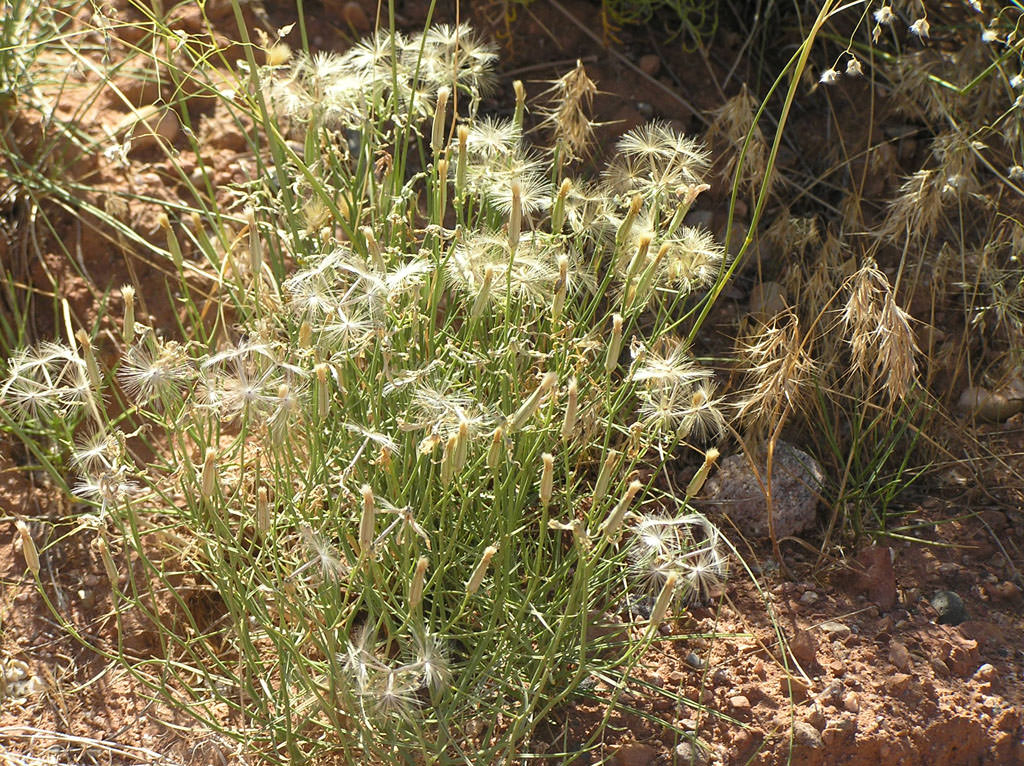
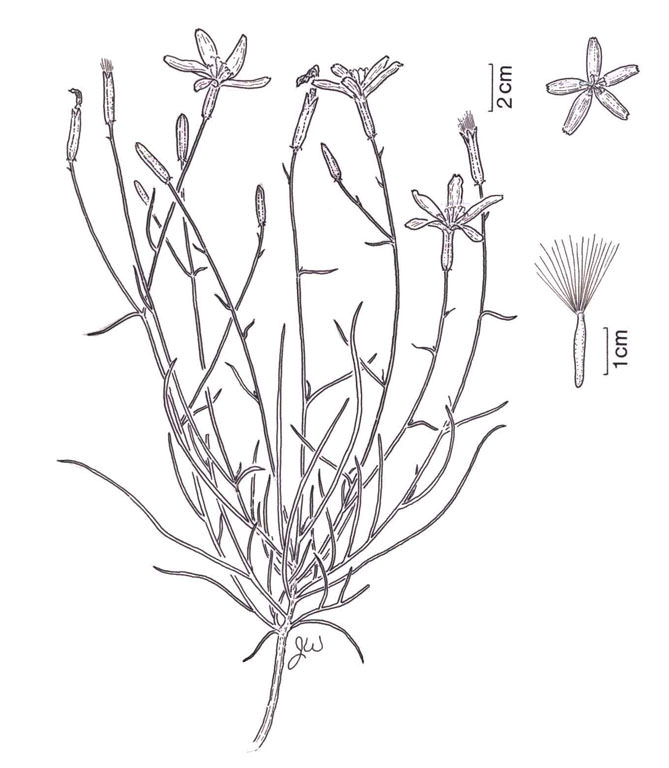
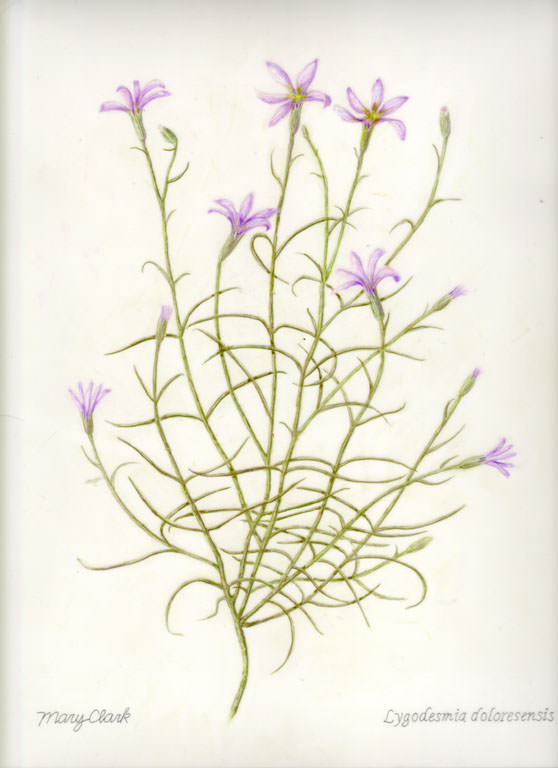
Lygodesmia doloresensis is a pink flowered, broomy plant with reduced leaves, appearing to be nearly all stem. Like other members of its tribe, it has milky juice. Each head has (usually) five ray flowers, which distinguish it from the closely related L. grandiflora with 8 or more rays. It is similar to L. grandiflora var. dianthopsis, which is distinguished by being less branched and by having broader leaves (FNA 2007).
Look Alikes:
L. grandiflora occurs at slightly higher elevations, is not as tall, and has darker flowers, usually with 9 ray flowers.
Phenology:
Plants begin flowering in late May and early June (Colorado Natural Heritage Program 2012).
 |  |
Habitat
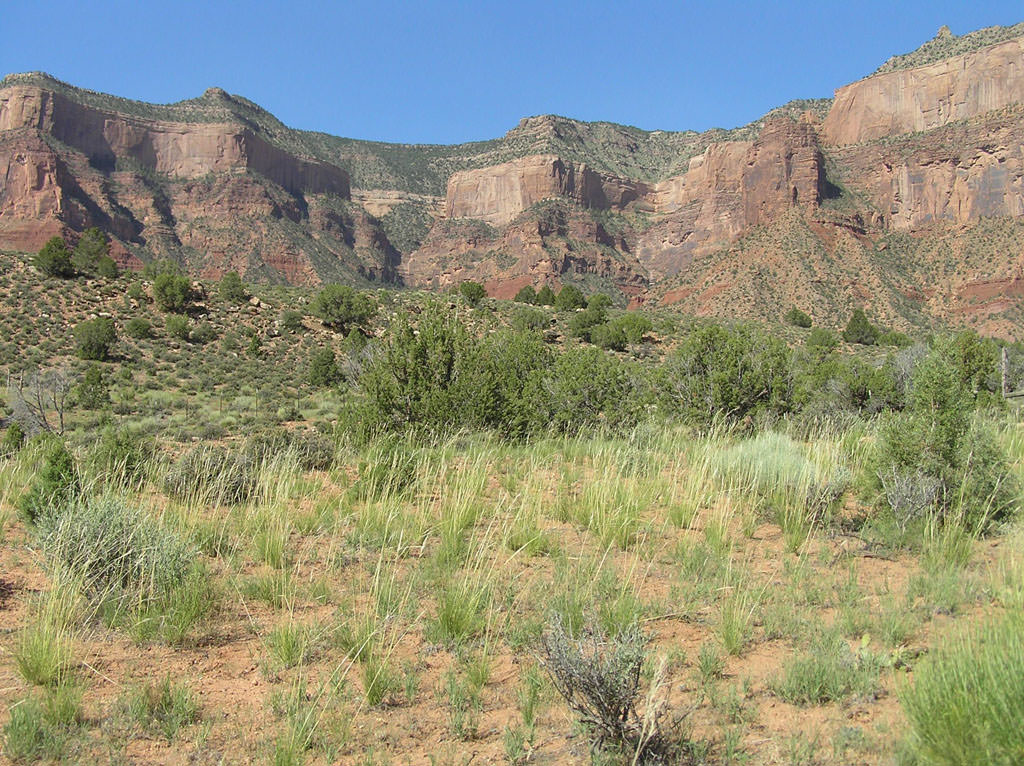
Reddish purple, sandy alluvium and colluvium of the Cutler Formation between the canyon walls and the river in juniper, shadscale, and sagebrush communities. Many of the known occurrences are along roads, and there are fewer plants away from disturbed roadsides.
click on image to enlarge
 |
Elevation Range:
4,474 - 6,668 feet (1,364 - 2,032 meters)
Distribution
Colorado Endemic:
Yes
Range:
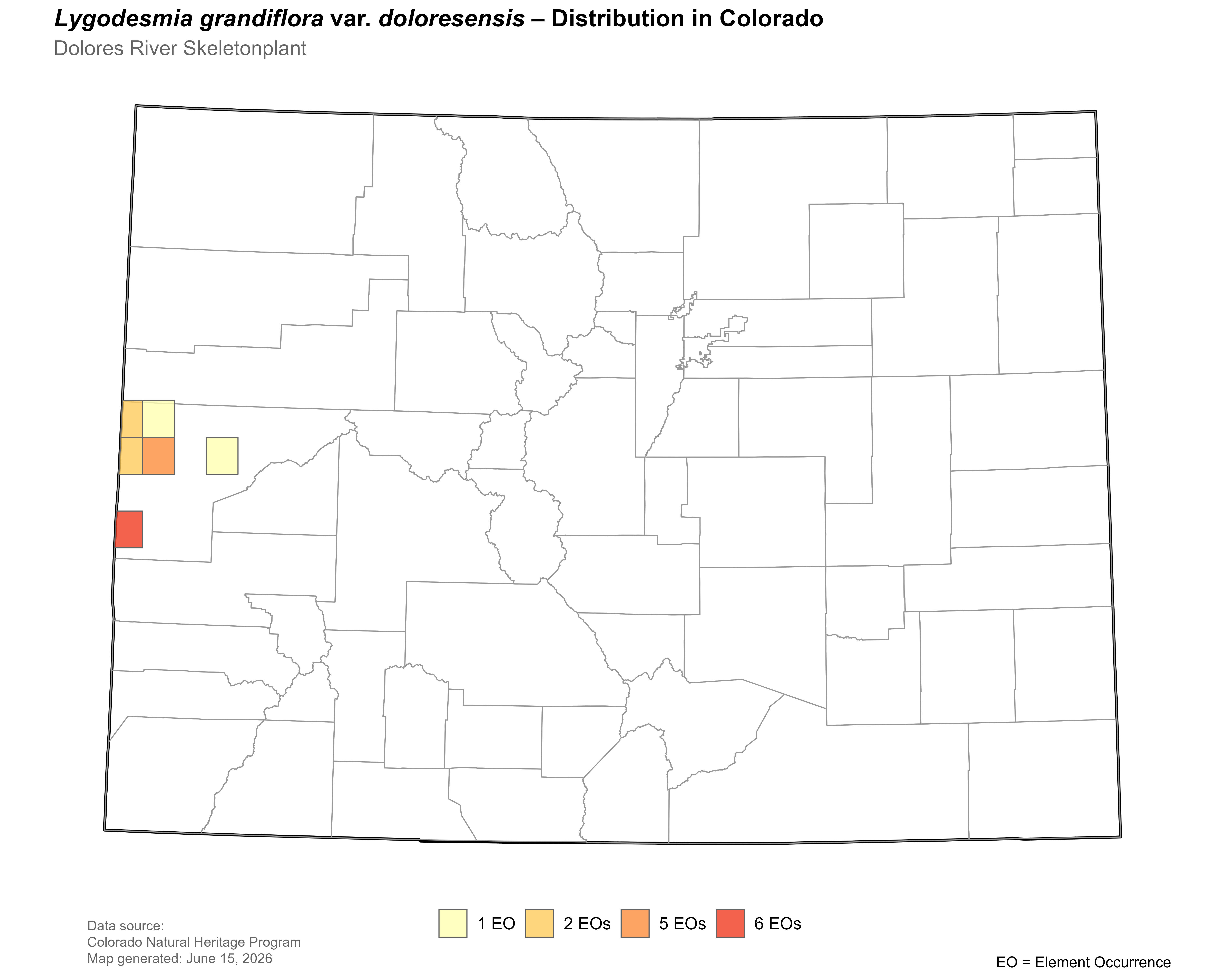
Lygodesmia doloresensis is a narrow endemic known only from Mesa County in western Colorado, USA. It occurs in sandy alluvium and colluvium of the Cutler Formation, in the Dolores River valley and escarpment edges north and south of the Grand Valley. The estimated range extent in Colorado of 3303 square kilometers was calculated in GeoCAT using occurrence data provided by the Colorado Natural Heritage Program (2023). There was an erroneous report from San Miguel County, CO, which has been removed from the database.
Click on map to enlarge |
Threats and Management Issues
As of 2023, 69% of the occurrences are found in habitat with moderate to high levels of landscape disturbance, the remainder are in areas with minimal to low levels of landscape disturbance (CNHP 2021, 2023). At the local level road maintenance activities are still considered to be a threat to the species (Rondeau et al. 2011). At least 30% of the Colorado occurrences are found along roadsides where they can be impacted by road maintenance activities. Incompatible livestock grazing and competition from invasive plant species including cheatgrass (Bromus tectorum), are additional threats and have been reported from 50-60% of the occurrences. Motorized and non-motorized recreation also occurs within several of the occurrences (CNHP 2023). This species is considered to be extremely vulnerable to climate change, which is likely to significantly reduce habitat for rare plants that demand very specific growing conditions, such as Lygodesmia doloresensis (Handwerk et al. 2015, Panjabi et al. 2011).
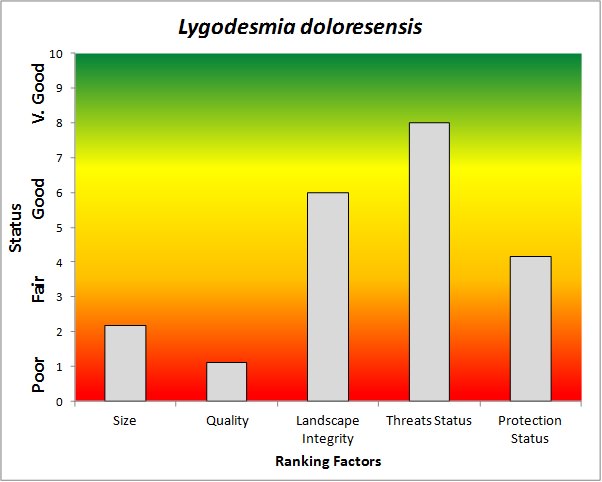
Summary results of an analysis of the status of Lygodesmia doloresensis based on several ranking factors. This species was concluded to be Moderately Conserved. From Rondeau et al. 2011. |
References
- Ackerfield, J. 2012. The Flora of Colorado. Colorado State University Herbarium. 433 pp.
- Atwood, D., J. Holland, R. Bolander, B. Frnaklin, D. E. House, L. Armstrong, K. Thorne, and L. England. 1991. Utah Threatened, Endangered, and Sensitive Plant Field Guide. US Forest Service Intermountain Region, National Park Service, Bureau of Land Management, Utah Natural Heritage Program, US Fish and Wildlife Service, Environmental Protection Agency, Navajo Nation, and Skull Valley Goshute Tribe.
- Colorado Native Plant Society. 1989. Rare plants of Colorado. Rocky Mountain Nature Association, Colorado Native Plant Society, Estes Park, Colorado. 73 pp.
- Flora of North America Editorial Committee, ed. (FNA). 1993+. Flora of North America North of Mexico. Oxford Univ. Press, New York, Oxford.
- Handwerk, J., L. Grunau, and S. Panjabi. 2015. Colorado Wildlife Action Plan: 2015 Rare Plant Addendum. Colorado Natural Heritage Program, Colorado State University, Fort Collins, Colorado, USA.
- Lavender, A.E., M.M. Fink, S.E. Linn, D.M. Theobald. 2011. Colorado Ownership, Management, and Protection v9 Database. Colorado Natural Heritage Program and Geospatial Centroid, Colorado State University, Fort Collins, CO. (30 September).
- Neely, B., S. Panjabi, E. Lane, P. Lewis, C. Dawson, A. Kratz, B. Kurzel, T. Hogan, J. Handwerk, S. Krishnan, J. Neale, and N. Ripley. 2009. Colorado Rare Plant Conservation Strategy, Developed by the Colorado Rare Plant conservation Initiative. The Nature Conservancy, Boulder, Colorado, 117 pp.
- O'Kane, S.L. 1988. Colorado's rare flora. Great Basin Naturalist 48(4): 434-484.
- Panjabi, S., B. Neely and P. Lyon. 2011. Preliminary Conservation Action Plan for Rare Plants in the Gateway Priority Action Areas. Prepared by The Nature Conservancy and the Colorado Natural Heritage Program. Unpublished report prepared for the National Fish and Wildlife Foundation. 29 pp.
- Rocky Mountain Society of Botanical Artists. 2009. RARE Imperiled Plants of Colorado, a traveling art exhibition. Exhibition catalogue developed by the Denver Botanic Gardens and Steamboat Art Museum.
- Rondeau, R., K. Decker, J. Handwerk, J. Siemers, L. Grunau, and C. Pague. 2011. The state of Colorado's biodiversity 2011. Prepared for The Nature Conservancy. Colorado Natural Heritage Program, Colorado State University, Fort Collins, Colorado.
- Southwest Environmental Information Network (SEINet). 2023. Collections Databases. Online. Available: https://swbiodiversity.org/seinet/collections/index.php (accessed 2023).
- Tomb, A.S. 1980. Taxonomy of Lygodesmia (Asteraceae). Systematic Botany Monographs 1: 48-49.
- USDA, NRCS. 2022. The PLANTS Database. National Plant Data Team, Greensboro, NC 27401-4901 USA.
- Weber, W. A. and R. C. Wittmann. 2012. Colorado Flora, Western Slope, A Field Guide to the Vascular Plants, Fourth Edition. Boulder, Colorado. 532 pp.
- Welsh, S.L., N.D. Atwood, S. Goodrich, and L.C. Higgins (eds.) 1993. A Utah flora. 2nd edition. Brigham Young Univ., Provo, Utah. 986 pp.
- Welsh, S.L., N.D. Atwood, S. Goodrich, and L.C. Higgins. (Eds). 2015. A Utah flora, fifth edition, revised 2015. Monte L. Bean Life Science Museum, Provo, Utah. 987 pp.