

Scientific Name : Heuchera richardsonii
Author : R. Br. NatureServe Explorer
Common Name : Richardson's Alum- root
 Current Research Activities


☰ Click link below for details.
Taxonomy
Saxifragaceae (saxifrage family)
Ranks and Status
State Rank : S2
State Rank Reason : Heuchera richardsonii is found only in pine forests of the Black Forest region northeast of Colorado Springs; there are about ten occurrences with low numbers of individuals.
U.S. Endangered Species Act : none
Colorado Threatened and Endangered List : none
Other Statuses : none
Description and Phenology
General Description:
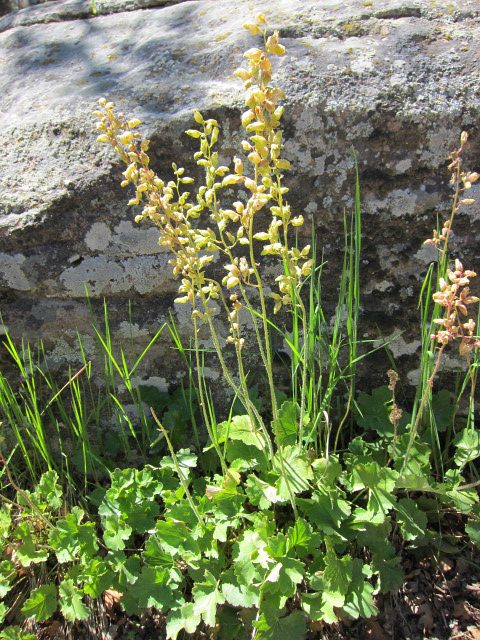
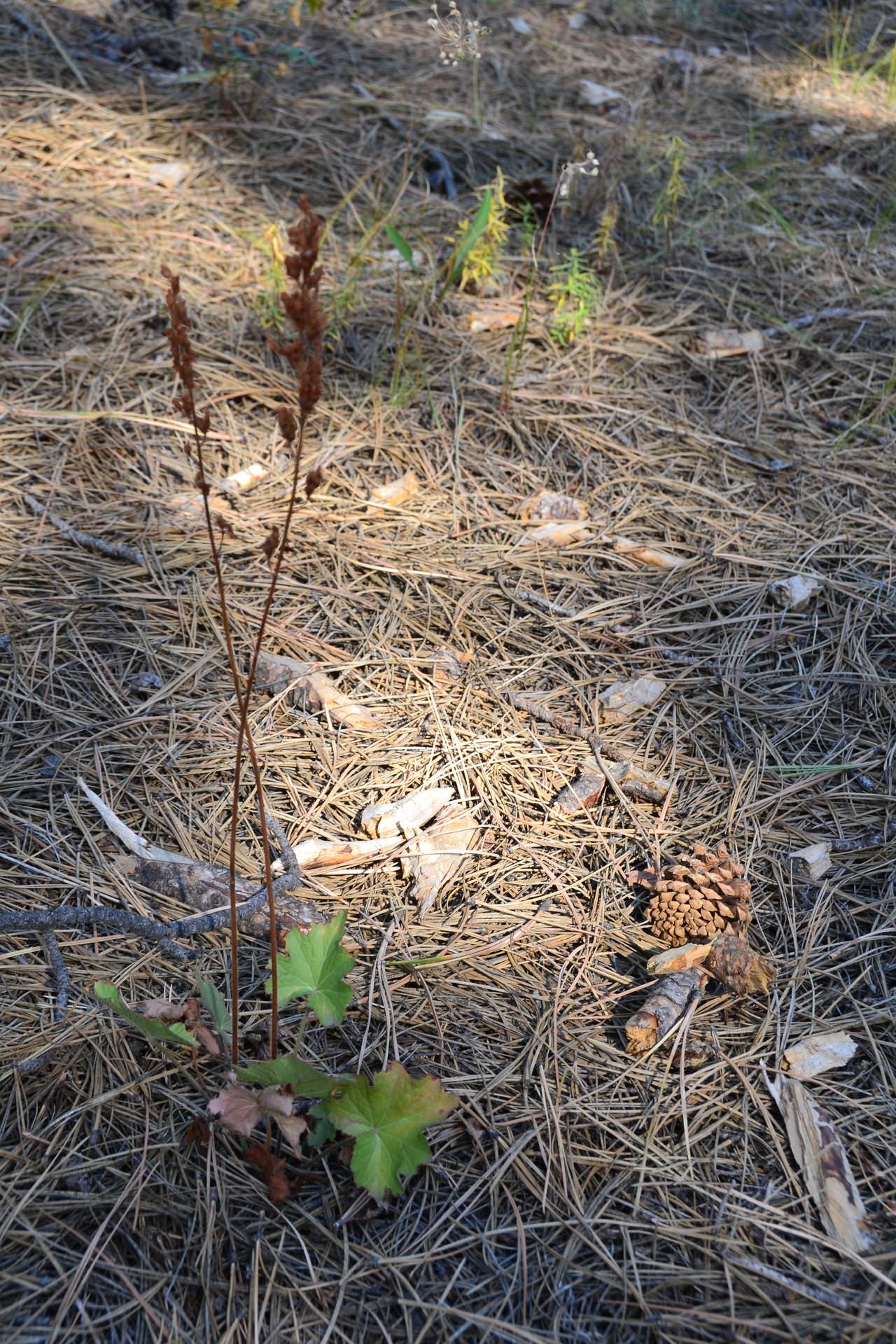
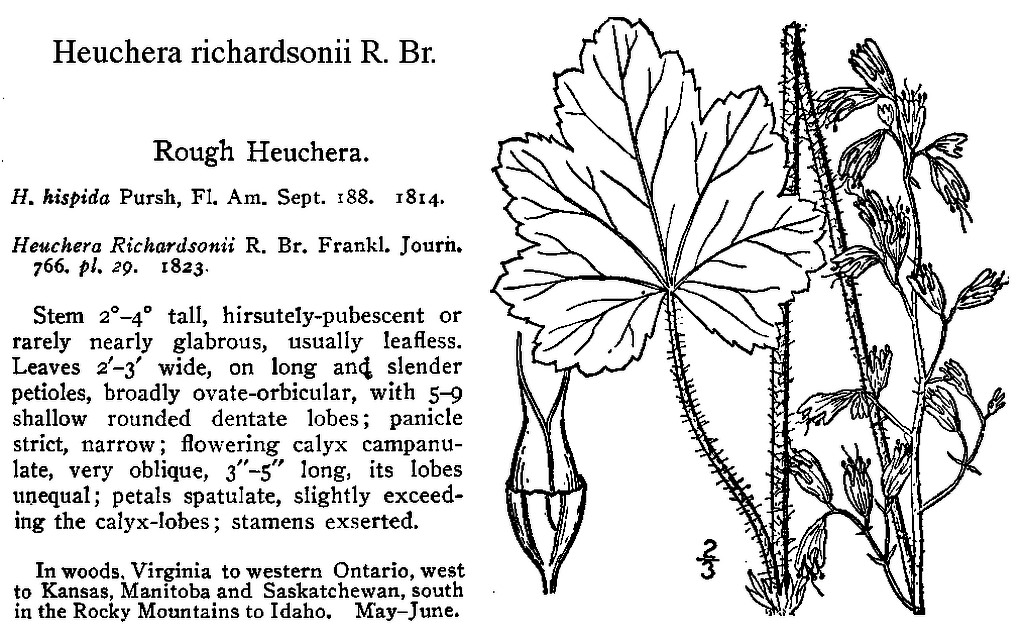
Herbaceous plants, acaulescent, with caudex branched. Flowering stems (7-) 20-95 cm, densely long stipitate-glandular. Leaves: petiole densely or sparsely long or short stipitate-glandular; blade broadly ovate or cordate, deeply 5-7-lobed, 2.5-10 cm, margins dentate, apex acute, surfaces long stipitate-glandular abaxially, glabrous or long stipitate-glandular adaxially. Inflorescences dense to spreading. Flowers: hypanthium strongly bilaterally symmetric, green, campanulate, 5-14 mm long, short stipitate-glandular; sepals erect, green-tipped, equal, apex rounded; petals erect, green or greenish white, rarely pink, narrowly spatulate, unlobed, 1.3-4.2 mm long, margins finely dentate, coarsely fimbriate, or moderately erose at the tips (Flora of North America 2009, Ackerfield 2015).
Look Alikes:
Other species in the genus Heuchera have entire petals, and more weakly zygomorphic (bilaterally symmetrical) or actinomorphic (radially symmetrical) flower shapes (Ackerfield 2015). Heuchera richardsonii flowers are strongly bilaterally symetrical.
Phenology:
Flowers from June through July (Ackerfield 2015).
 |
Habitat
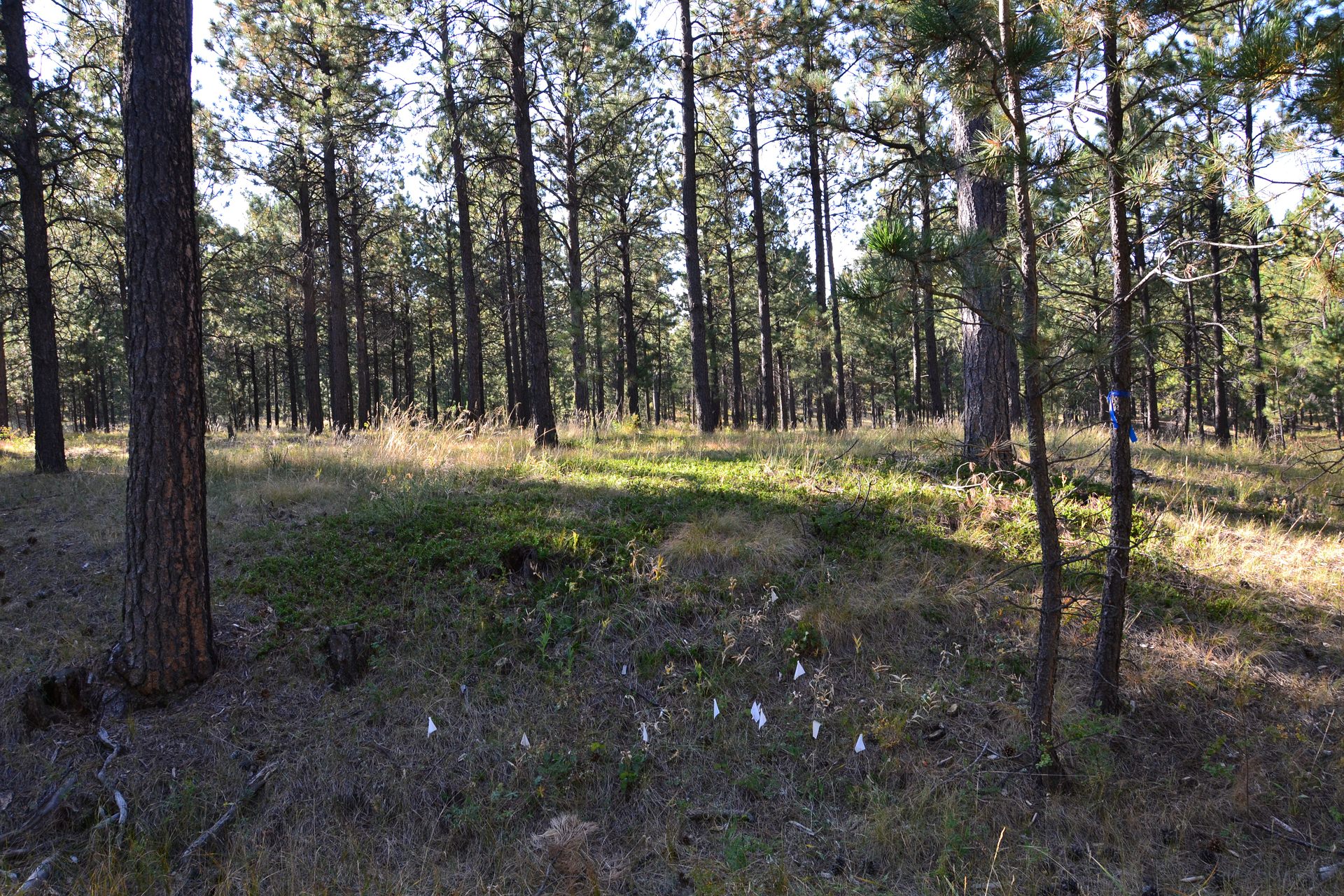
In Colorado, occurs in dry to moist sites in low elevation Ponderosa pine woodlands and meadows. Additional associated species include: Sporobolus heterolepis, Danthonia parryii, Andropogon gerardii, Stipa spartea, Chondrosum gracile, Oreobatus deliciosus, Cercocarpus montanus, Koeleria macrantha, Drymocallis fissa, Quercus gambellii, Prunus virginiana, Pseudotsuga menziesii, Jamesia americana, Cystopteris fragilis, Tortella tortuosa, Rosa woodsii, Arctostaphylos uva-ursi, Muhlenbergia montana, Blepharoneuron tricolepsis, Maianthemum stellatum, Iris missourensis, Thermopsis montana, Agrostis stolonifera, Salix exigua, Calamagrostis canadensis, Danthonia spicata, and Carex inops (Colorado Natural Heritage Program occurrence records 2017).
click on image to enlarge
 |
Elevation Range:
6,435 - 7,613 feet (1,961 - 2,320 meters)
Distribution
Colorado Endemic:
No
Range:
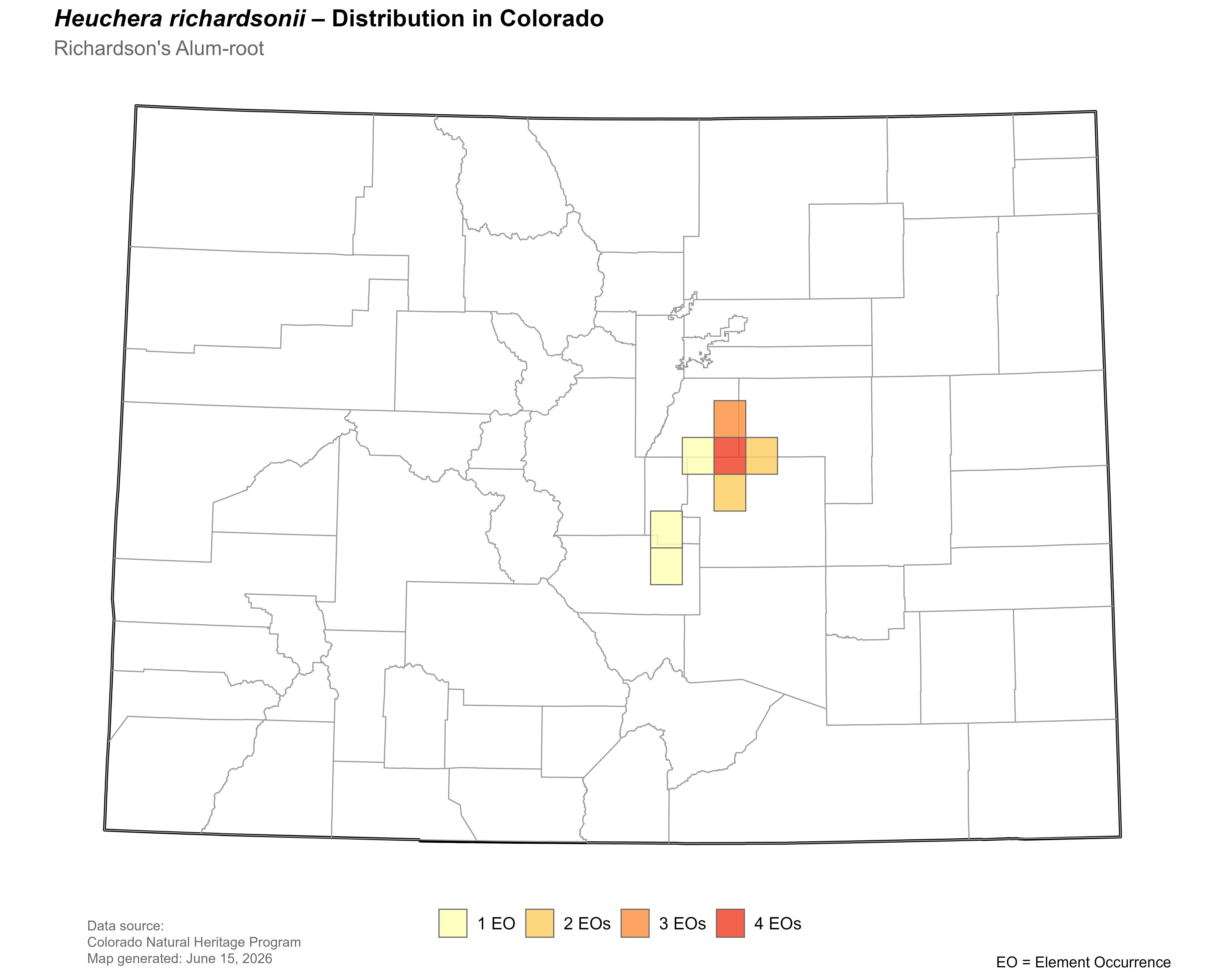
Heuchera richardsonii is known from Douglas and El Paso counties in Colorado, USA. An imprecise historic occurrence in Fremont County was disregarded in this analysis until the occurrence can be verified. Estimated range extent in Colorado of 835 square kilometers was calculated in GeoCAT using occurrence data provided by the Colorado Natural Heritage Program (2023). This species can also be found in Illinois, Indiana, Iowa, Kansas, Michigan, Minnesota, Missouri, Montana, Nebraska, North Dakota, Oklahoma, South Dakota, Wisconsin, and Wyoming, USA. Globally, this species can be found in Alberta, British Columbia, Manitoba, Northwest Territories, Ontario, and Saskatchewan, Canada (Flora of North America 2009, USDA NRCS 2017).
Click on map to enlarge |
Threats and Management Issues
The species is threatened by urban development, which may extirpate the species in Colorado (Weber and Wittmann 2012). In one area it is being trampled by hikers and management will probably be implemented to protect this area. Other sites report light cattle grazing and invasion of toadflax and other non-native plants (Colorado Natural Heritage Program occurrence records 2017). Colorado climate scenarios for 2050 suggest temperature will increase by 3-7 F and precipitation may decrease or increase. The impact to any given rare plant habitat is likely to vary. Long-term monitoring that includes weather and soil moisture data is critical to understanding climate impacts.
References
- Ackerfield, J. 2015. Flora of Colorado. BRIT Press, Botanical Research Institute of Texas, Fort Worth, TX. 818 pp.
- Britton, N. L. and A. Brown. 1913. An Illustrated Flora of the Northern United States and Canada. 3 vol. Dover Publications, Inc., N. Y. 2052 pp.
- Colorado Natural Heritage Program and the Geospatial Centroid. 2017. The Colorado Ownership and Protection Map (COMaP). Colorado State University, Ft. Collins, CO.
- Flora of North America Editorial Committee (FNA). 2009. Flora of North America north of Mexico. Vol. 8. Magnoliophyta: Paeoniaceae to Ericaceae. Oxford University Press, New York. xxiv + 585 pp.
- USDA, Natural Resources Conservation Service, PLANTS Database [USDA PLANTS]. http://plants.usda.gov/. Accessed 2017.
- USDA, NRCS. 2022. The PLANTS Database. National Plant Data Team, Greensboro, NC 27401-4901 USA.
- Weber, W. A. and R. C. Wittmann. 2012. Colorado Flora, Eastern Slope, A Field Guide to the Vascular Plants, Fourth Edition. Boulder, Colorado. 555 pp.