

Scientific Name : Oreocarya stricta
Author : Osterhout NatureServe Explorer
Common Name : Erect Cryptanth
 Current Research Activities


☰ Click link below for details.
Taxonomy
Boraginaceae (borage family)
=Cryptantha stricta
Ranks and Status
State Rank : S3
State Rank Reason : Oreocarya stricta is known from five counties in northwestern Colorado. Specific threats and management issues have not been documented.
U.S. Endangered Species Act : none
Colorado Threatened and Endangered List : none
Other Statuses : none
Description and Phenology
General Description:
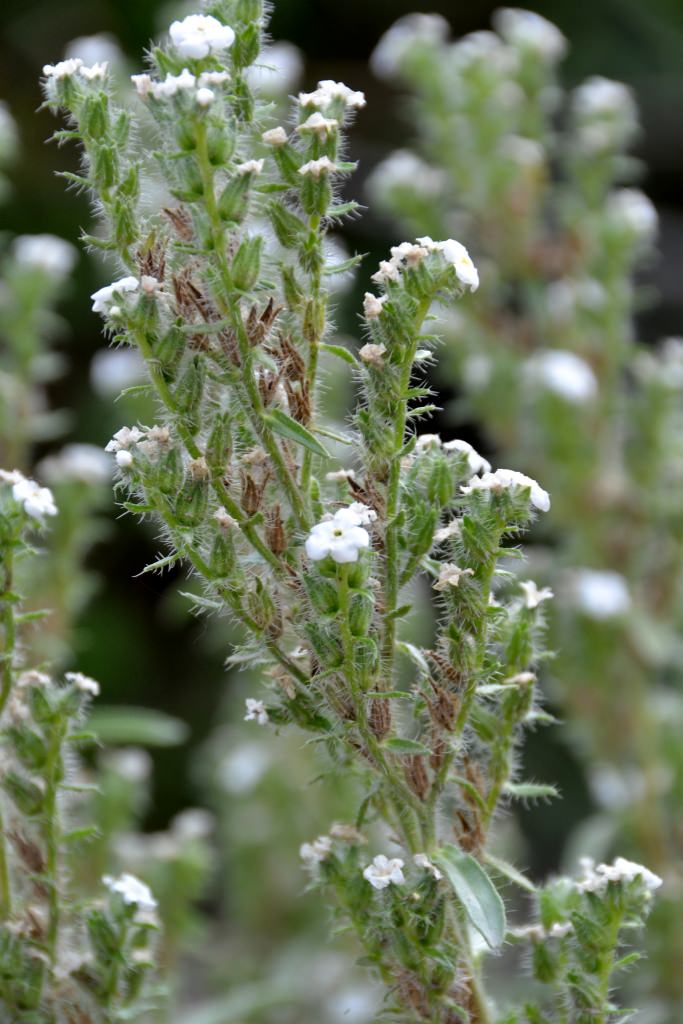
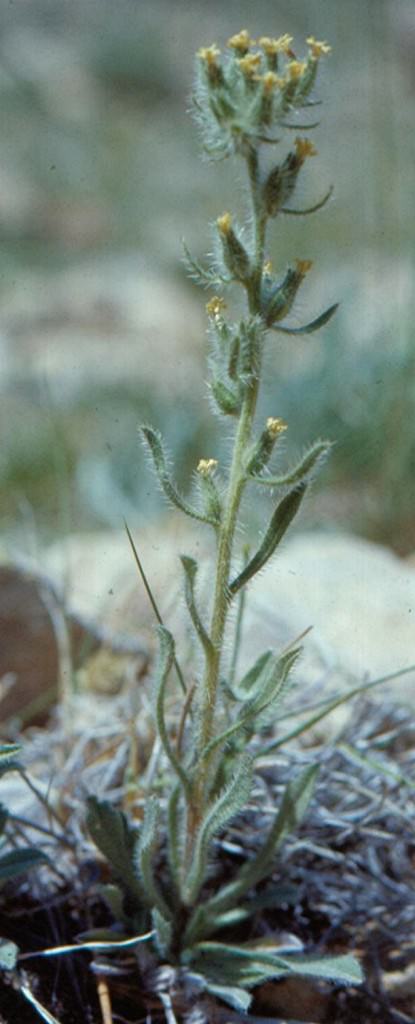
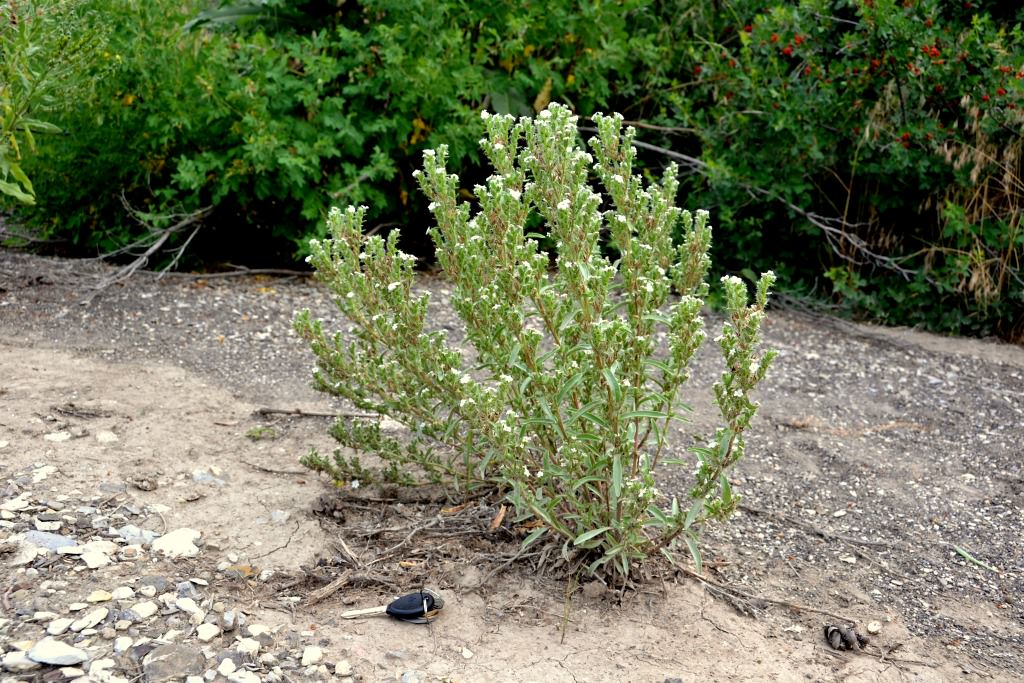
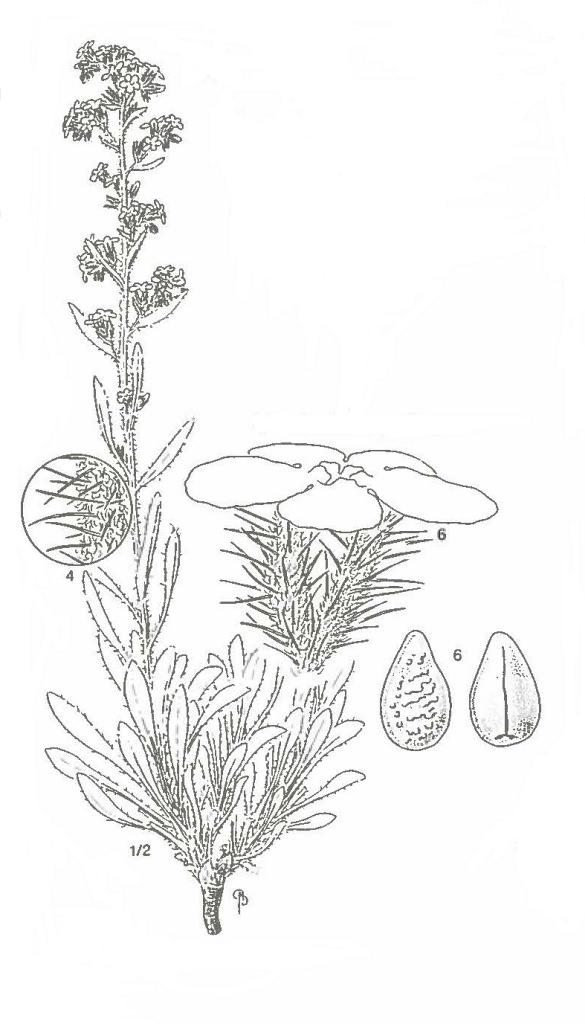
Perennial, 1-4 dm tall. Leaves oblanceolate or linear oblanceolate. Nutlets, 4, 3.5-4 mm long, the scar closed or narrowly linear and open only at the forked base. Corolla tube short, 2-6 mm long and 8-11 mm wide, white or ochroleucous. Calyx 4-5 mm long in flower, 6-9 mm long in fruit (Weber and Wittmann 2012, Ackerfield 2015).
Look Alikes:
Oreocarya sericea has densely silky-strigose hairs and few or no pustulate bristles on the upper leaf surface while O. stricta has rougher setose hairs with numerous spreading, pusulate bristles about equally numerous on both sides (Ackerfield 2015).
Phenology:
Flowering and fruiting May-August.
 |
Habitat
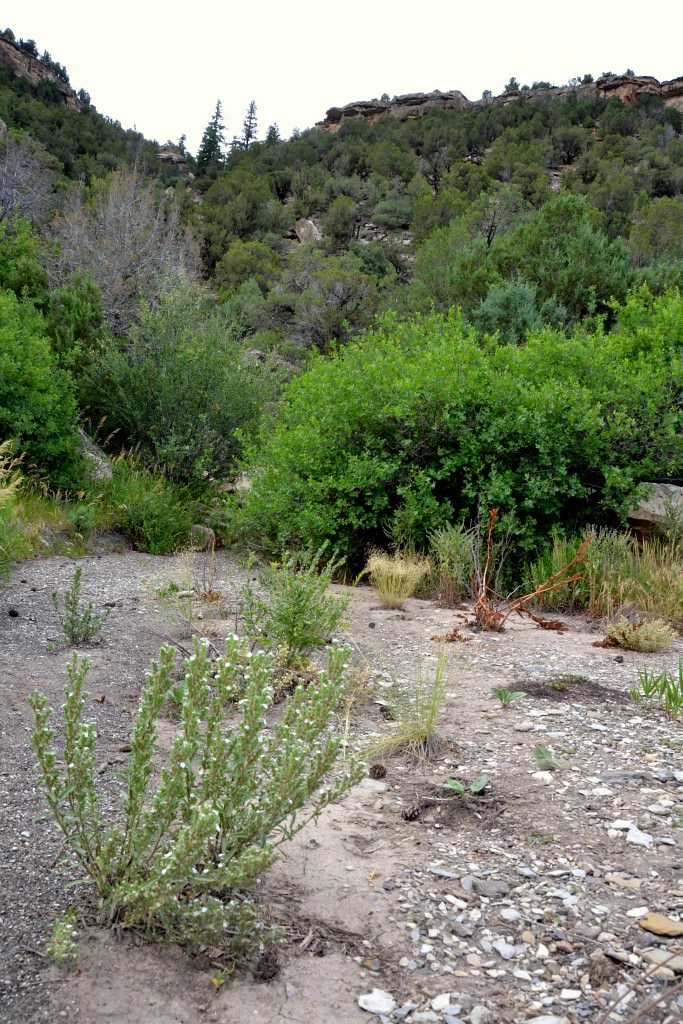
In Colorado, this species is found in open patches on sagebrush plateaus, often with pinyon-juniper communities, in sandy or clay soil on shale outcrops (Weber and Wittmann 2012, Ackerfield 2015). Associated species include Artemisia tridentata var. vaseyana, Symphoricarpos oreophilus, Penstemon caespitosus, Krascheninnikovia lanata, Comandra umbellata, Machaeranthera grindelioides, Oenothera caespitosa, Physaria acutifolia, and Koeleria macrantha (Colorado Natural Heritage Program occurrence records as of 2017).
click on image to enlarge
 |
Elevation Range:
5,386 - 9,017 feet (1,642 - 2,748 meters)
Distribution
Colorado Endemic:
No
Range:
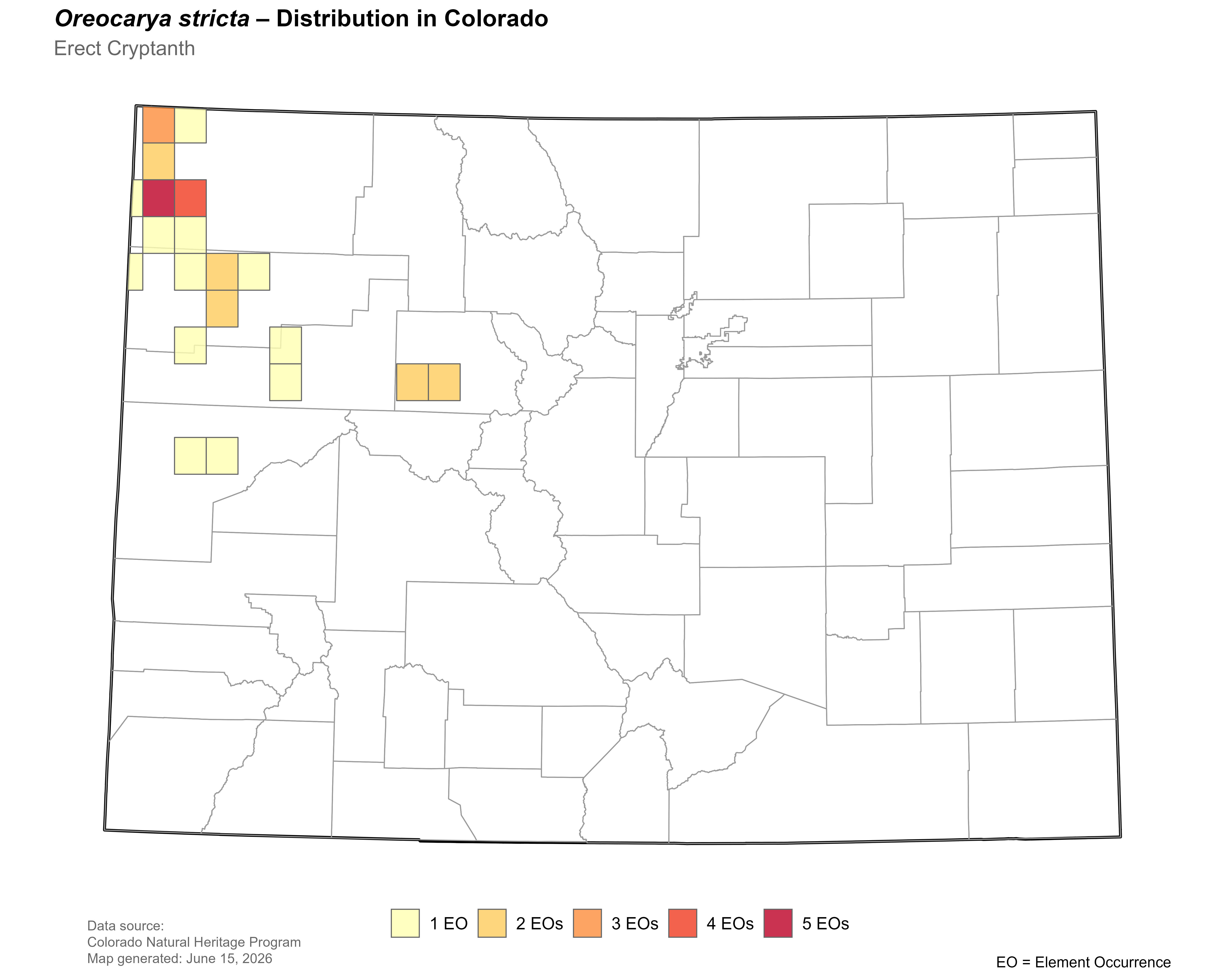
In Colorado, USA, Oreocarya stricta is known from Eagle, Garfield, Mesa, Moffat, Rio Blanco and Routt counties. Estimated range extent in Colorado of 17,475 square kilometers was calculated in GeoCAT using occurrence data provided by the Colorado Natural Heritage Program (2024). There are additional unmapped specimens in SEINet (2024) that increase the range in Colorado to 29,336 square kilometers. This species can also be found in Utah and Wyoming.
Click on map to enlarge |
Threats and Management Issues
Specific threats and management issues have not been documented for the Colorado locations. Colorado climate scenarios for 2050 suggest temperature will increase by 3-7 F and precipitation may decrease or increase. The impact to any given rare plant habitat is likely to vary. Long-term monitoring that includes weather and soil moisture data is critical to understanding climate impacts.
References
- Ackerfield, J. 2015. Flora of Colorado. BRIT Press, Botanical Research Institute of Texas, Fort Worth, TX. 818 pp.
- Colorado Natural Heritage Program and the Geospatial Centroid. 2017. The Colorado Ownership and Protection Map (COMaP). Colorado State University, Ft. Collins, CO.
- Harrington, H.D. 1954. Manual of the plants of Colorado. Sage Press, Chicago. 666 pp.
- USDA, NRCS. 2022. The PLANTS Database. National Plant Data Team, Greensboro, NC 27401-4901 USA.
- Weber, W. A. and R. C. Wittmann. 2012. Colorado Flora, Western Slope, A Field Guide to the Vascular Plants, Fourth Edition. Boulder, Colorado. 532 pp.
- Welsh, S.L., N.D. Atwood, S. Goodrich, and L.C. Higgins (eds.) 1993. A Utah flora. 2nd edition. Brigham Young Univ., Provo, Utah. 986 pp.