

Scientific Name : Astragalus molybdenus
Author : Barneby NatureServe Explorer
Common Name : Leadville Milkvetch
 Current Research Activities
 1997 profile
☰ Click link below for details.
Taxonomy
Fabaceae (pea family)
This is the record for Astragalus molybdenus in the strict sense, that is endemic to Colorado.
Ranks and Status
State Rank : S2S3
State Rank Reason : Astragalus molybdenus is endemic to a relatively small region in central Colorado, USA. Threats from motorized and non motorized recreation are on-going but low, with disturbance from past mining evident at some sites. Effects from climate change are also a concern.
U.S. Endangered Species Act : none
Colorado Threatened and Endangered List : none
Other Statuses : SWAP Tier 2
Description and Phenology
General Description:
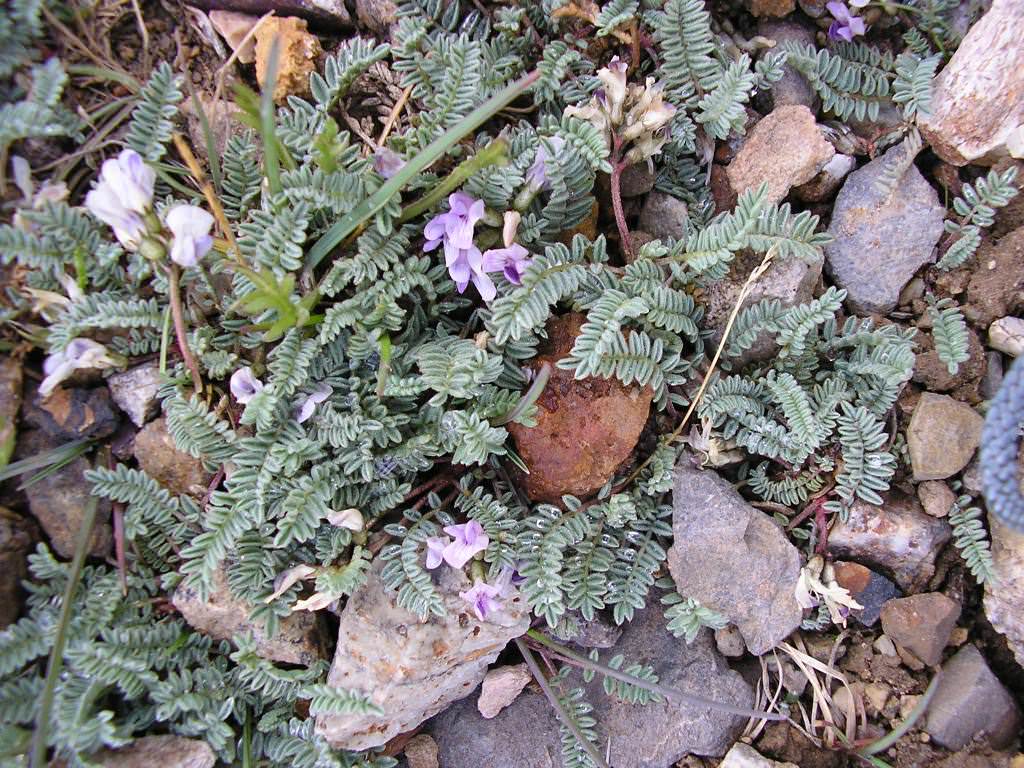
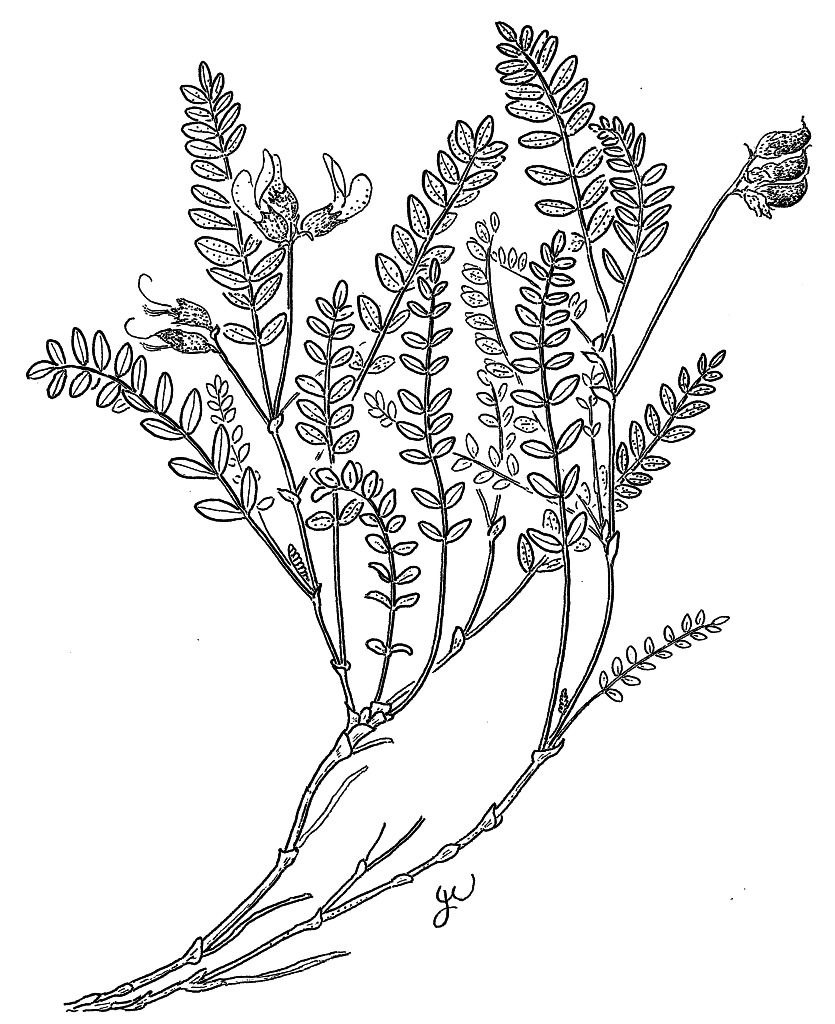
Astragalus molybdenus is a perennial herb. It is a low-growing, loosely tufted, rhizomatous plant (Ladyman 2003). It is typically 2.5 to 7.6 cm (1 to 3 inches) tall. Leaves are pinnately compound with 9 to 25 (usually 13-19) silvery-gray, oval-oblong leaflets (Ladyman 2003, Ray 2001). Flowers are pale purplish or pinkish, and may have whitish stripes (Ladyman 2003, Ray 2001). There are conspicuous black hairs on the calyx tube. Plants have one or two clusters of two or three flowers each (Ray 2001). The legumes are 7 to 10 mm (0.25 to 0.4 inch) long, and are slightly in-curved (Ladyman 2003).
Look Alikes:
Astragalus robbinsii and A. aboriginum var. glabriusculus are larger plants with stipitate pods (Spackman et al. 1997, Ladyman 2003, NatureServe 2011). Astragalus alpinus had bluer flowers, and reflexed stipitate pods (Ladyman 2003). Oxytropis deflexa has spreading or reflexed hairs on the stem (Ladyman 2003).
Phenology:
In Colorado, flowering of Astragalus molybdenus may begin in late June and continue through early August. Fruits are maturing through August and September (Ray 2001, Ladyman 2003).
 |
Habitat
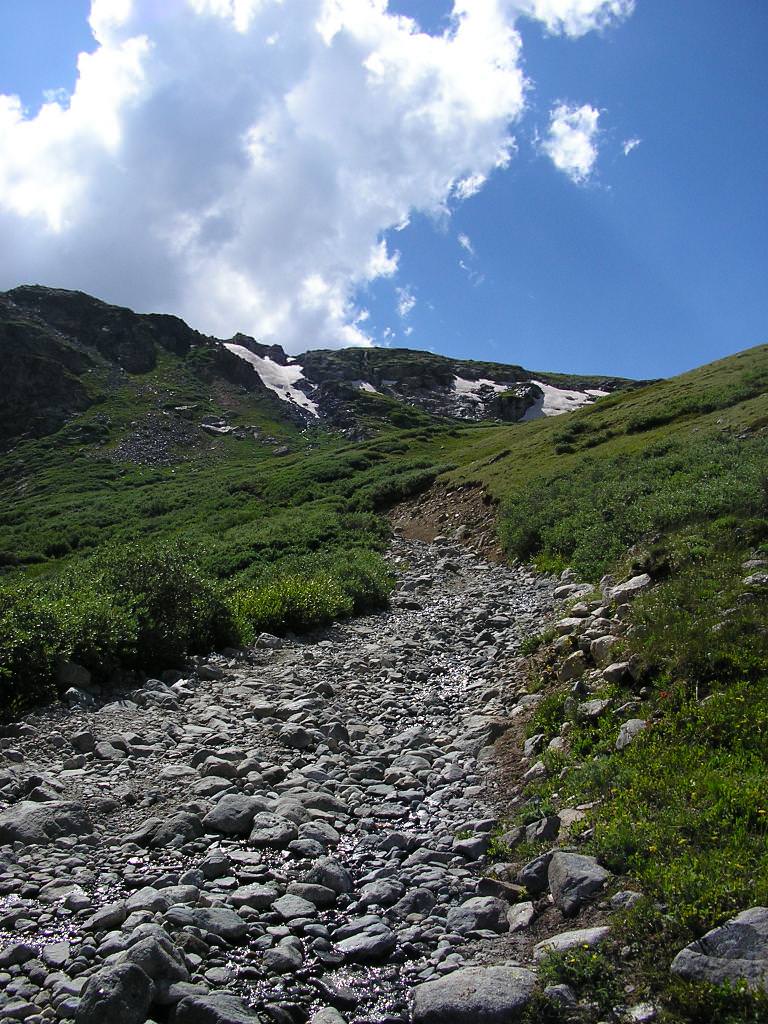
Astragalus molybdenus is one of a few alpine Astragalus species (Ladyman 2003). In Colorado, populations are found on sparsely vegetated, rocky slopes, and on turf-covered hillsides (Spackman, et al. 1997, Ladyman 2003). They occur on all aspects, with fewest facing northeast (Ladyman 2003). It is found on slopes of up to 70 percent, although most are less than 35 percent (Ladyman 2003). Populations are found on limestone or in calcareous soils (Spackman, et al., 1997, Ray 2001, Ladyman 2003). Stable habitats are preferred. Species associated with Astragalus molybdenus include Achillea millefolium, Zigadenus elegans, Astragalus alpinus, Besseya alpina, Carex rupestris, Claytonia megarhiza, Erigeron ursinus, Geum rossii, Silene acaulis, Smelowskia calycina, and Trisetum spicatum (Ray 2001, Ladyman 2003).
click on image to enlarge
 |
Elevation Range:
10,463 - 14,137 feet (3,189 - 4,309 meters)
Distribution
Colorado Endemic:
Yes
Range:
According to Lavin and Marriott (1997): Astragalus molybdenus in the strict sense is endemic to a relatively small region in central Colorado in Gunnison, Lake, Park, Pitkin, and Summit counties. This species is reported from one location in Hinsdale County; this location needs ID verification and was not included in the rank calculation - however including the Hinsdale location would not affect the rank. Estimated range extent in Colorado of 4,513 square kilometers (excluding Hinsdale County) was calculated in GeoCAT using occurrence data provided by the Colorado Natural Heritage Program (2024). Astragalus molybdenus in the broad sense occurs in Montana, Wyoming, and Colorado (USDA NRCS 2017).
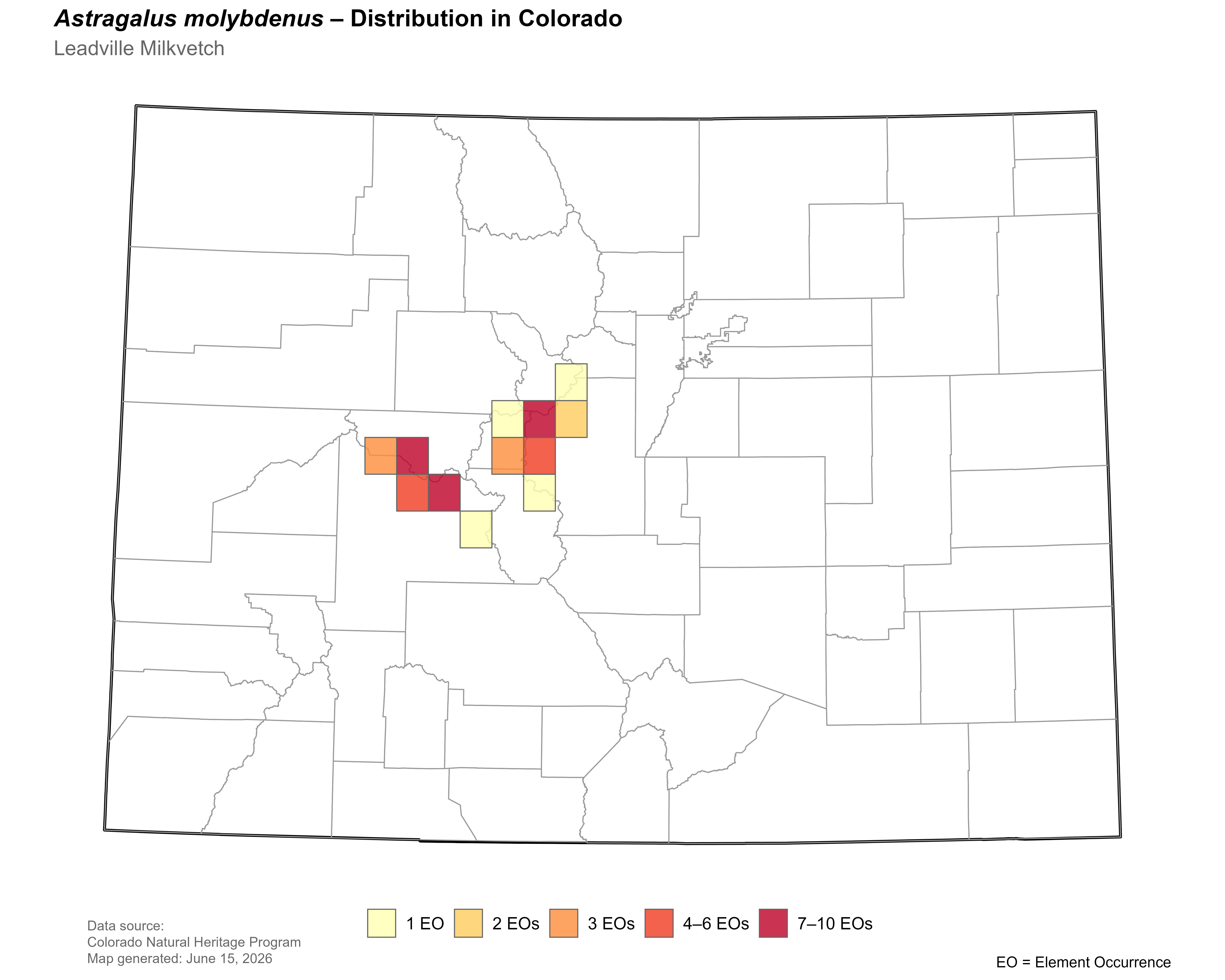
Click on map to enlarge |
Threats and Management Issues
The primary threat to the species is from non-motorized recreation, with several sites also disturbed by motorized recreation. Current and past mining activity is noted at seven occurrences, and livestock grazing, both cattle and sheep, have been observed at two sites. However, nearly half of the occurrences do not document site conditions or management concerns. This species is considered to have low adaptive capacity and is expected to be moderately vulnerable to climate change with an RCP 4.5 scenario and extremely vulnerable to climate change with an RCP 8.5 scenario, as assessed for the 2025 Colorado State Wildlife Action Plan (CNHP 2025).
References
- Ackerfield, J. 2015. Flora of Colorado. BRIT Press, Botanical Research Institute of Texas, Fort Worth, TX. 818 pp.
- Barneby, R. C. 1964. Atlas of North American Astragalus. Memoirs of New York Botanical Garden, vol. 13. New York Botanical Garden, Bronx, NY.
- Colorado Natural Heritage Program (CNHP). 2025. Climate Change Vulnerability Assessment of Colorado Tier 1 and Tier 2 Plant Species of Greatest Conservation Need (SCGN) for the 2025 Colorado State Wildlife Action Plan. Colorado Natural Heritage Program, Colorado State University, Fort Collins.
- Colorado Natural Heritage Program and the Geospatial Centroid. 2017. The Colorado Ownership and Protection Map (COMaP). Colorado State University, Ft. Collins, CO.
- Harrington, H. D. 1954. Manual of the Plants of Colorado. Sage Books, Denver, CO. 666 pp.
- Ladyman, J.A.R. (2003, September 30). Astragalus molybdenus Barneby (Leadville milkvetch): a technical conservation assessment. [Online]. USDA Forest Service, Rocky Mountain Region. Available: http:// www.fs.fed.us/r2/projects/scp/assessments/astragalusmolybdenus.pdf [March 2004]
- Lavin, M. and H. Marriott. 1997. Astragalus molybdenus s.l. (Leguminosae): Higher taxonomic relationships and identity of constituent species. Systematic Botany 22(2):199-217.
- Lavin, M., S. Mathews, C. Hughes, H. Marriott and S. Shelly. 1990. Intraspecific chloroplast DNA diversity is high in some wild species of Leguminosae. Amer. J. Bot. 77 (supplement):144 (abstract).
- Spackman, S., B. Jennings, J. Coles, C. Dawson, M. Minton, A. Kratz, and C. Spurrier. 1997. Colorado rare plant field guide. Prepared for Bureau of Land Management, U.S. Forest Service and U.S. Fish and Wildlife Service by Colorado Natural Heritage Program.
- USDA, NRCS. 2022. The PLANTS Database. National Plant Data Team, Greensboro, NC 27401-4901 USA.
- Weber, W. A. and R. C. Wittmann. 2012. Colorado Flora, Eastern Slope, A Field Guide to the Vascular Plants, Fourth Edition. Boulder, Colorado. 555 pp.
- Weber, W. A. and R. C. Wittmann. 2012. Colorado Flora, Western Slope, A Field Guide to the Vascular Plants, Fourth Edition. Boulder, Colorado. 532 pp.