

Scientific Name : Penstemon harringtonii
Author : Penl. NatureServe Explorer
Common Name : Harrington Beardtongue
 Current Research Activities
 1997 profile



☰ Click link below for details.
Taxonomy
Plantaginaceae (plantain family)
Ackerfield (2015, 2022) places this genus in the Plantaginaceae family.
Ranks and Status
State Rank : S3
State Rank Reason : Penstemon harringtonii is endemic to sagebrush shrublands of central Colorado, USA, where it can be locally common. However, it occurs in an area of high development and recreation pressures, and is subject to impacts from livestock grazing, road maintenance and competition from non-native plants species throughout its range. Penstemon harringtonii is expected to be slightly to moderately vulnerable to climate change.
U.S. Endangered Species Act : none
Colorado Threatened and Endangered List : none
Other Statuses : BLM, SWAP Tier 2, USFS
Description and Phenology
General Description:
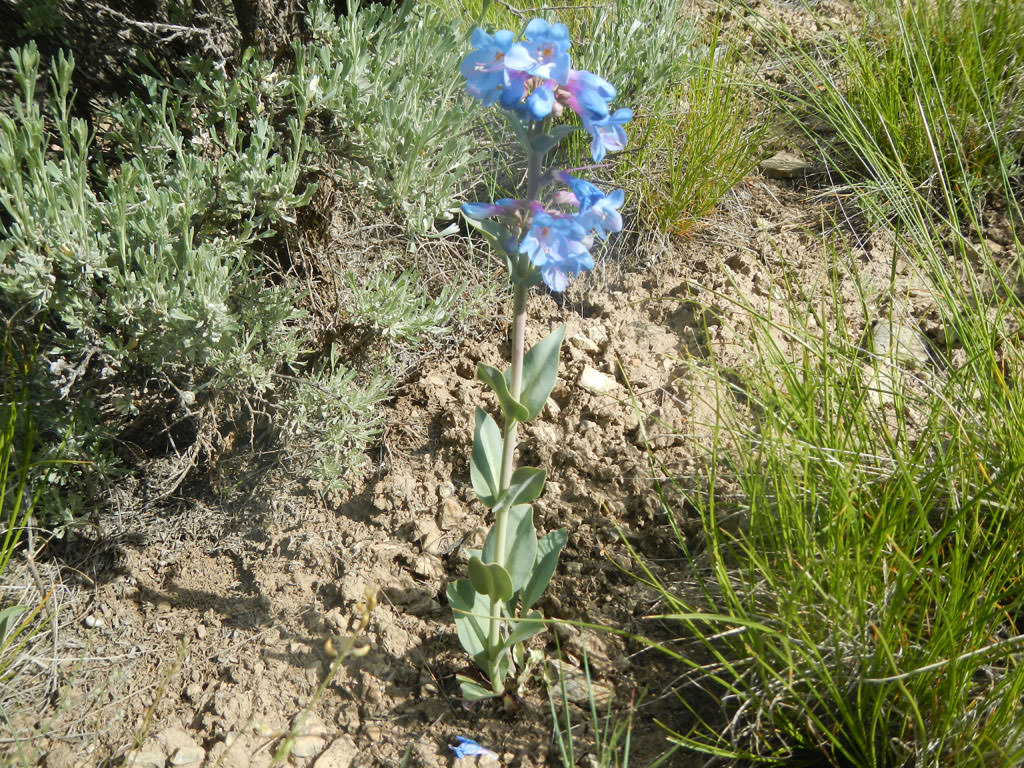
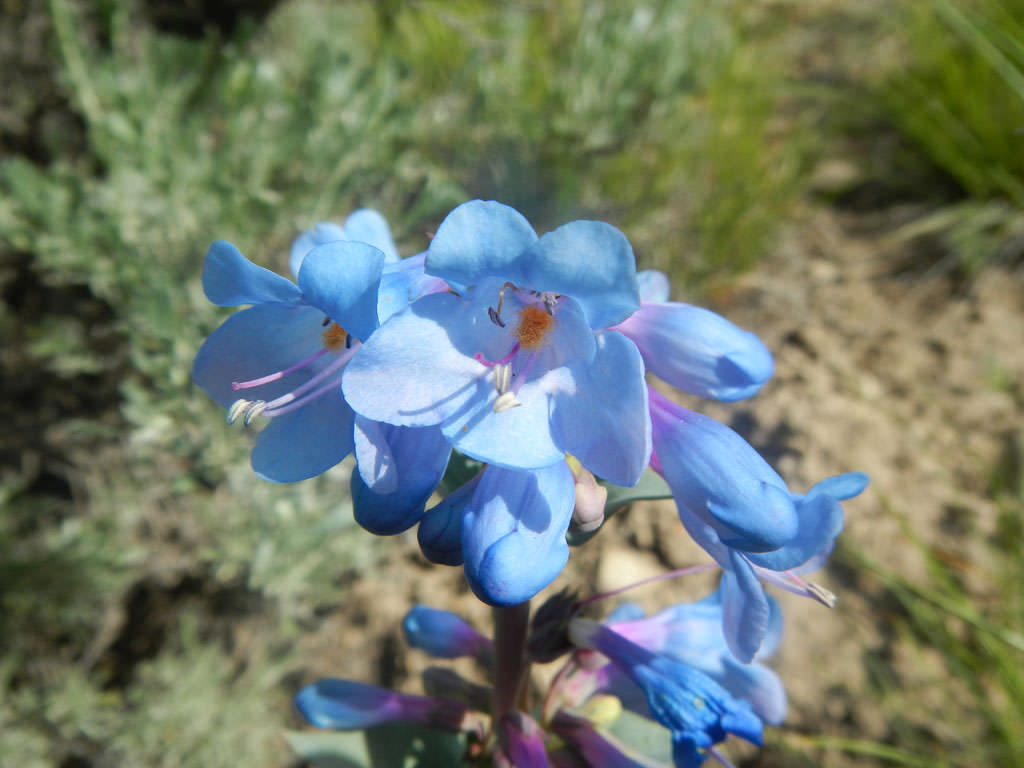
Plants perennial, 30-70 cm tall. Stems glabrous and glaucus. Flowers in loose spike with 2 exserted stamens. Corolla deep blue to pinkish lavender (Spackman et al. 1997, Ackerfield 2015).
Look Alikes:
Penstemon osterhoutii anther sacs are widely divaricate and stamens are not or scarcely exserted. Penstemon cyathophorus has 4 stamens exserted. Penstemon watsonii staminode is not or just exserted. Penstemon harringtonii has 2 exserted stamens, and anther sacs are sagittate with parallel sacs (Spackman et al. 1997).
Phenology:
Begins flowering in early June of most years and continues until late June at higher elevation sites. The development of fruit proceeds through late August; capsules dehise beginning at that time, and much seed seems to have been dispersed by September, but the capsules remain on the plant indefinitely (Buckner and Bunin 1992).
Habitat
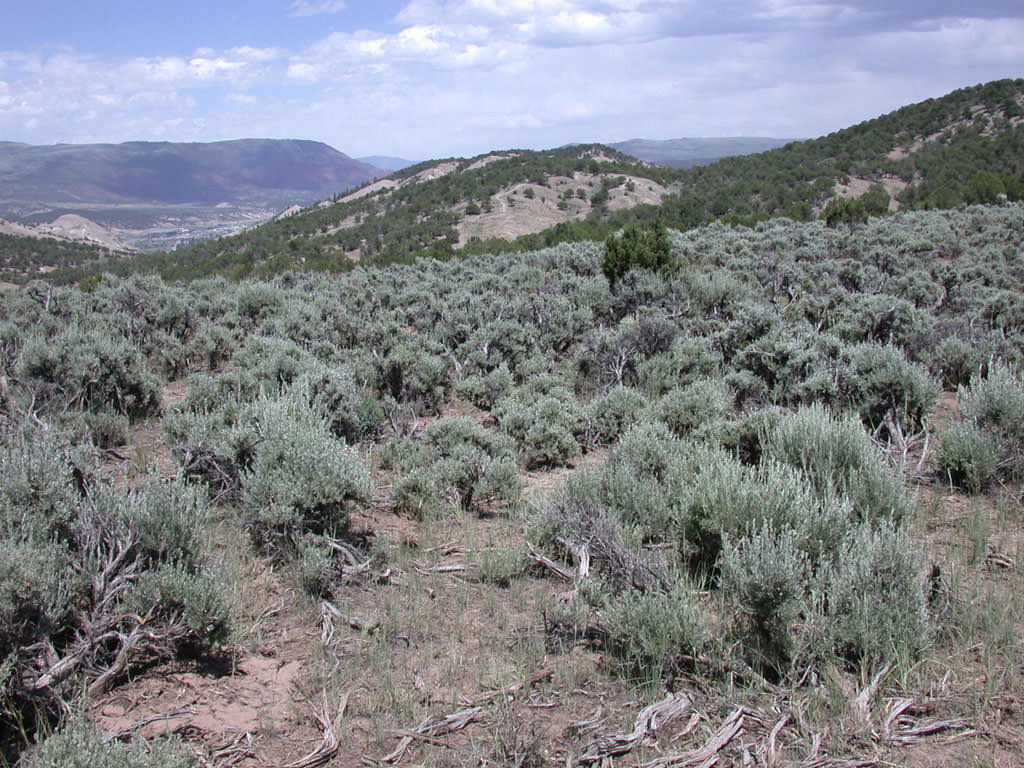
Open sagebrush or, less commonly, pinyon-juniper habitats, on gentle slopes. Soils are typically rocky loams and rocky clay loams derived from coarse calcareous parent materials (Spackman et al. 1997). Associated species include: Artemisia tridentata ssp. vaseyana, A. tridentata ssp. wyomingensis, Juniperus osteosperma, Cercocarpus montanus, Amelanchier utahensis, Quercus gambelii (Gambel's oak), Chrysothamnus viscidiflorus (yellow rabbitbrush), C. nauseosus (rubber rabbitbrush), Phlox hoodii (spiny phlox), Castilleja flava (yellow Indian paintbrush), Eriogonum umbellatum (sulphur flower buckwheat), Heterotheca villosa (hairy goldenaster), Mahonia repens (Oregon grape), Oreocarya flava (yellow cats-eye), Penstemon caespitosus (mat penstemon), P. strictus (Rocky Mountain penstemon), Poa fendleriana (muttongrass), Achnatherum hymenoides (Indian ricegrass), Pascopyrum smithii (western wheatgrass), Pseudoroegneria spicata (bluebunch wheatgrass), Koeleria macrantha (junegrass), Hesperostipa comata (needle and thread grass), and Elymus elymoides (Spackman and Anderson 2006).
click on image to enlarge
 |
Elevation Range:
6,063 - 10,019 feet (1,848 - 3,054 meters)
Distribution
Colorado Endemic:
Yes
Range:
Penstemon harringtonii is endemic to central Colorado, USA, where it is found in Garfield, Grand, Eagle, Pitkin, Routt, and Summit counties. The estimated range extent in Colorado of 5789 square kilometers was calculated in GeoCAT using occurrence data provided by the Colorado Natural Heritage Program (2022).
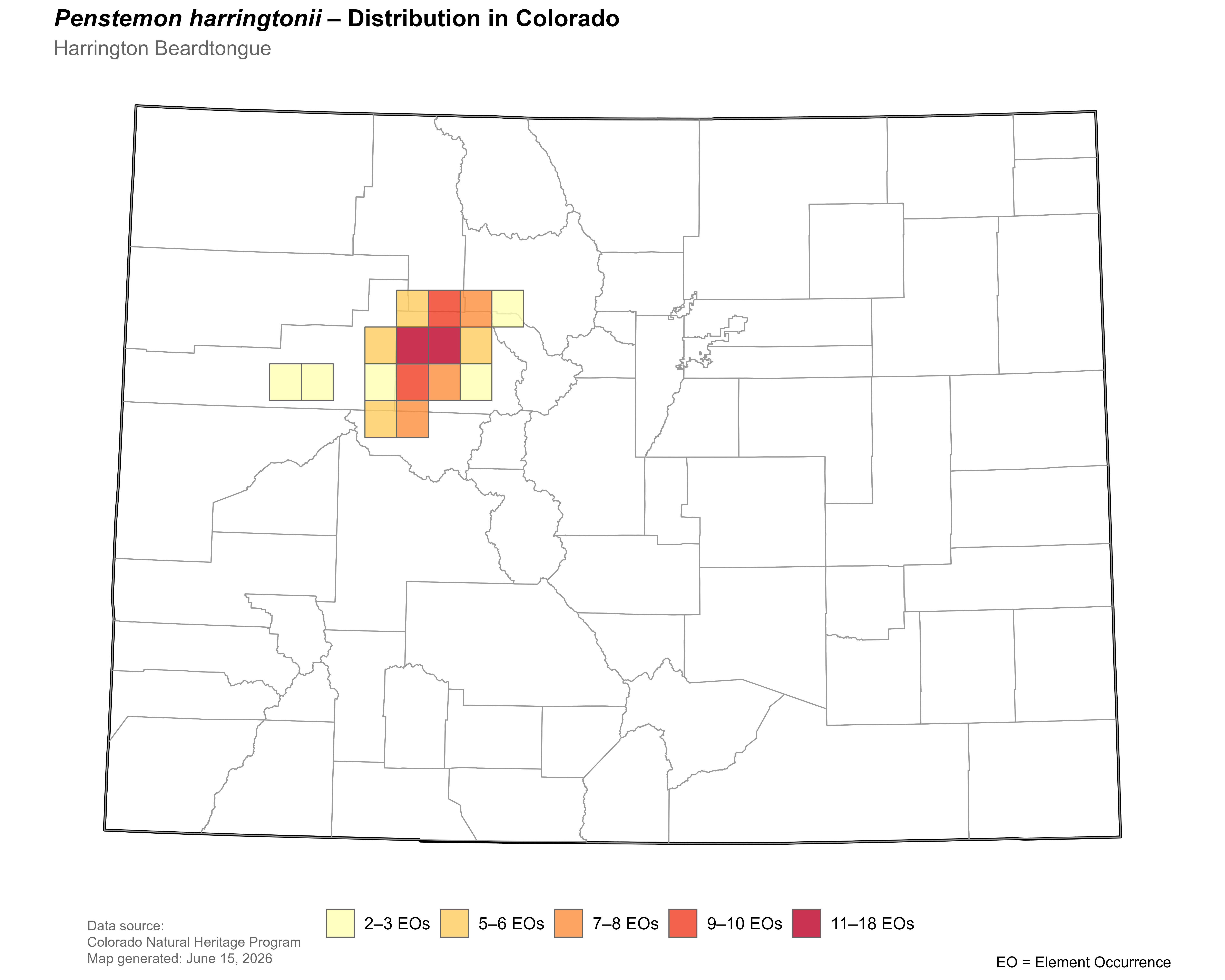
Click on map to enlarge |
Threats and Management Issues
Major threats to Penstemon harringtonii include grazing, recreation, roads, and development. Residential development was noted as a threat for roughly 15% of populations with potential impacts of fragmentation and loss of individuals. Twenty-nine percent of the mapped element occurrences are on private land (CNHP 2022), and the population of Eagle County alone is forecasted to grow 20% between 2020 and 2040 (DOLA 2021). Trampling of plants and browse of flowers has been documented in populations with heavy grazing. Plants are palatable, therefore grazing may have a negative effect, unless browse occurs on associated species and reduces competition (DBG 2021). Roadside populations may be impacted by highway widening, road grading, maintenance or dust on dirt roads impacting pollinators. Recreational activities threatening this species include motorized off-road use trails, mountain biking, firewood cutting, camping, and creation of infrastructure to support trail systems. Pinyon-juniper encroachment or management actions meant to address encroachment were documented in roughly a quarter of the populations. Declining sagebrush may reduce suitable habitat for this species (DBG 2021) and in some cases, cheatgrass (Bromus tectorum) or rabbitbrush (Chrysothamnus nauseosus) were documented after treatment. Invasive non-native plant species were frequently noted in element occurrence records with over a dozen different weed species recorded including Canada thistle (Cirsium arvense), smooth brome, musk thistle (Carduus nutans) and houndstongue (Cynoglossum officinale). This species is considered to have moderate adaptive capacity and is expected to be slightly to moderately vulnerable to climate change under both RCP 4.5 and 8.5 scenarios, as assessed for the 2025 Colorado State Wildlife Action Plan (CNHP 2025).
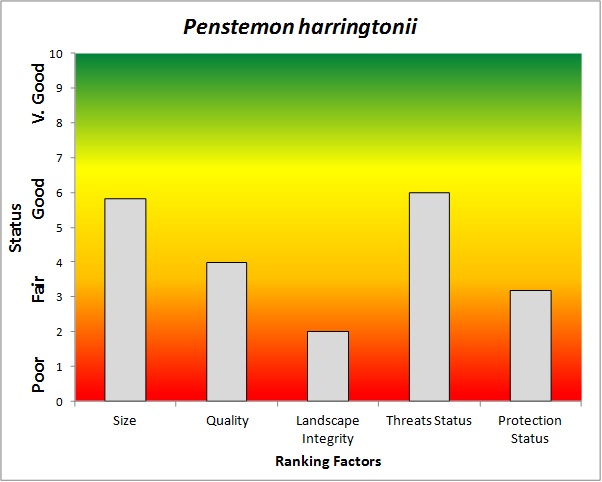
Summary results of an analysis of the status of Penstemon harringtonii based on several ranking factors. This species was concluded to be "Moderately Conserved. From Rondeau et al. 2011. |
References
- Ackerfield, J. 2015. Flora of Colorado. BRIT Press, Botanical Research Institute of Texas, Fort Worth, TX. 818 pp.
- Ackerfield, J. 2022. Flora of Colorado. Second Edition. Bot. Misc. 60. BRIT Press, Fort Worth Botanic Garden/Botanical Research Institute of Texas, U.S.A. 861 pp.
- Buckner, D. L. and J. E. Bunin. 1992. Final report: 1990/91 Status Report for Penstemon harringtonii. Unpublished Report Prepared for Colorado Natural Areas Program, Denver, CO by Esco Associates, Inc., Boulder, CO.
- Colorado Natural Heritage Program (CNHP). 2022. Biodiversity Tracking and Conservation System (Biotics 5). Colorado Natural Heritage Program, Colorado State University, Fort Collins.
- Colorado Natural Heritage Program (CNHP). 2025. Climate Change Vulnerability Assessment of Colorado Tier 1 and Tier 2 Plant Species of Greatest Conservation Need (SCGN) for the 2025 Colorado State Wildlife Action Plan. Colorado Natural Heritage Program, Colorado State University, Fort Collins.
- Denver Botanic Gardens Research and Conservation Department. 2021. Population Monitoring of Penstemon harringtonii (Plantaginaceae), an Endemic Species of Colorado, USA. Technical Report to Bureau of Land Management, Department of the Interio.
- Krening, P. 2020. Harrington's beardtounge (Penstemon harringtonii) 2020 Monitoring Summary and Status Report. Bureau of Land Management, U.S. Department of the Interior.
- O'Kane, S. L. 1988. Colorado's Rare Flora. Great Basin Naturalist. 48(4):434-484.
- Panjabi, S.S. and D.G. Anderson. (2006, June 30). Penstemon harringtonii Penland (Harrington's beardtongue): a technical conservation assessment. [Online]. USDA Forest Service, Rocky Mountain Region. Available: http://www.fs.fed.us/r2/projects/scp/assessments/penstemonharringtonii.pdf.
- Penland, C.W.T. 1958. Two New Species of Penstemon in Colorado. Madrono. 14:153-160.
- Rondeau, R., K. Decker, J. Handwerk, J. Siemers, L. Grunau, and C. Pague. 2011. The state of Colorado's biodiversity 2011. Prepared for The Nature Conservancy. Colorado Natural Heritage Program, Colorado State University, Fort Collins, Colorado.
- Spackman, S., B. Jennings, J. Coles, C. Dawson, M. Minton, A. Kratz, and C. Spurrier. 1997. Colorado rare plant field guide. Prepared for Bureau of Land Management, U.S. Forest Service and U.S. Fish and Wildlife Service by Colorado Natural Heritage Program.
- USDA, NRCS. 2022. The PLANTS Database. National Plant Data Team, Greensboro, NC 27401-4901 USA.
- Weber, W. A. and R. C. Wittmann. 2012. Colorado Flora, Western Slope, A Field Guide to the Vascular Plants, Fourth Edition. Boulder, Colorado. 532 pp.