


Scientific Name : Phacelia submutica
Author : J.T. Howell NatureServe Explorer
Common Name : DeBeque Phacelia
 Current Research Activities
 1997 profile
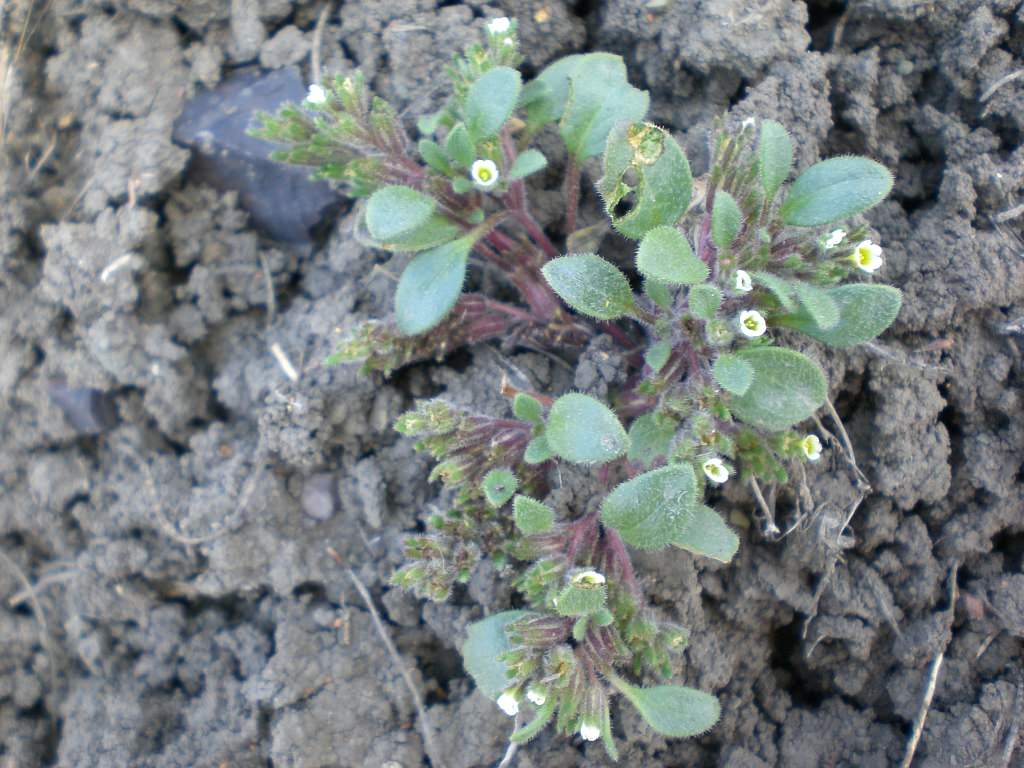
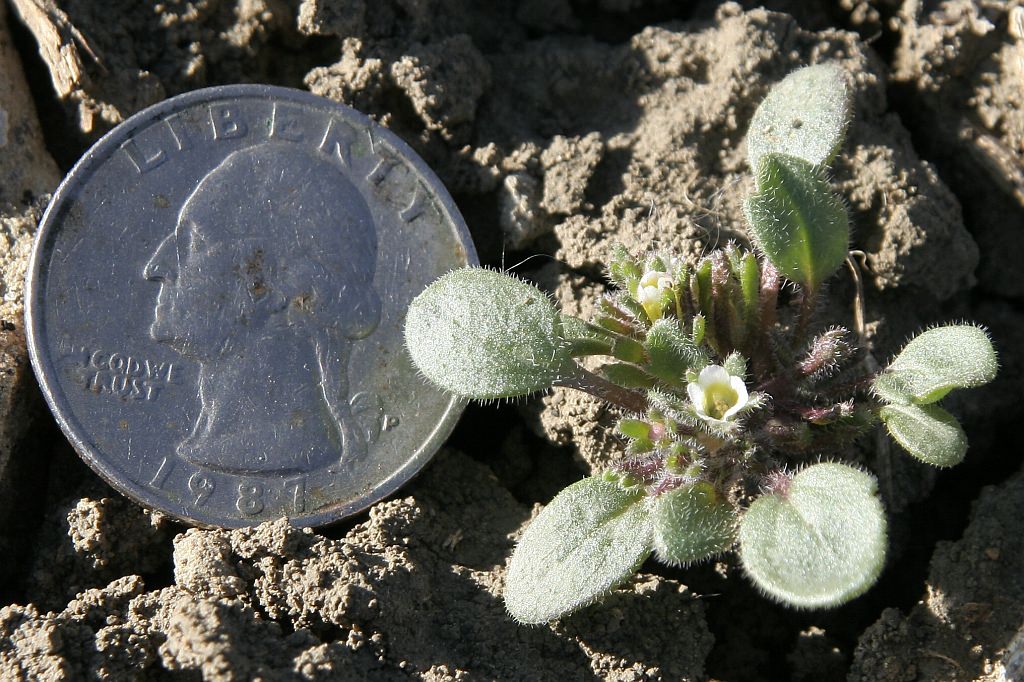


☰ Click link below for details.
Taxonomy
Hydrophyllaceae (waterleaf family)
There is variation in the species name shown in the Integrated Taxonomic Information System (ITIS), with some records listing the species as as P. scopulina (Halse 1981), but the weight of evidence indicates that Phacelia submutica is the appropriate species name, and it is listed under the ESA as such (USFWS 2010, 2021). A recent report provides genetic data supporting P. submutica as the correct taxonomic classification for DeBeque phacelia (Anderson and McGlaughlin 2020). Ackerfield (2022) lists this taxon as P. submutica and Ackerfield (2015) as P. scopulina var. submutica.
Ranks and Status
State Rank : S2
State Rank Reason : Phacelia submutica is endemic to Colorado, USA, where it is known only from Garfield and Mesa counties. Within this limited distribution it is threatened by inappropriate livestock grazing, off highway vehicle use, competition from invasive plant species, road development and maintenance for energy production and utility/communication lines, and the effects of prolonged drought. This species is expected to be extremely vulnerable to climate change.
U.S. Endangered Species Act : ESA Threatened
Colorado Threatened and Endangered List : none
Other Statuses : SWAP Tier 1
Description and Phenology
General Description:
A small tap rooted, summer annual. The stems are 2 to 8 cm long often branched at the base with a deep red color, and generally lay flat on the ground in a disc-shaped clump. The reddish-colored leaves are 5 to 15 mm long egg-shaped, or almost rectangular, with rounded corners, with the bases abruptly tapering to a wedge-shaped point; the leaf margins are smooth or toothed. The stems and leaves are covered by variable numbers of straight stiff hairs. The very small tube-shaped flowers are crowded and light-yellow or cream colored often with a purple tinge. Unlike many Phacelia species the stamens do not protrude beyond the petals. The elongated-egg shaped, blackish brown seeds tend to be iridescent, and are 1.5 to 2 mm long with 6 to 12 fine ridges or corrugations (Harrington 1954).
Look Alikes:
Not likely to be confused with other taxa. P. submutica's small rosette of reddish leaves, minute cream flowers, and specific habitat are distinctive.
Phenology:
Vegetative growth probably begins in early April (O'Kane 1987). Flowering occurs in late April to late June, and fruiting occurs from mid-May to late June (Colorado Natural Heritage Program 2012).
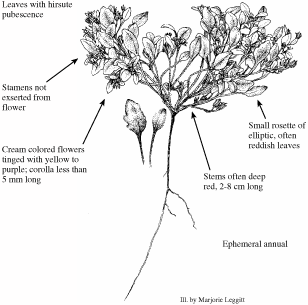 |
Habitat
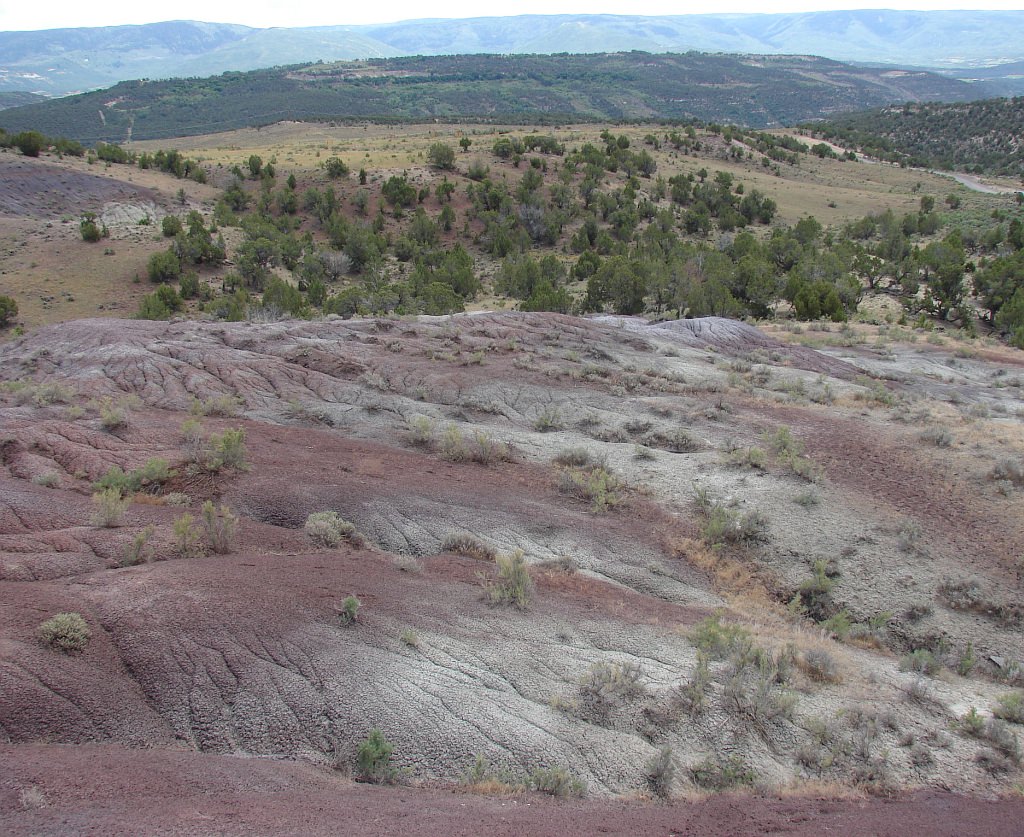
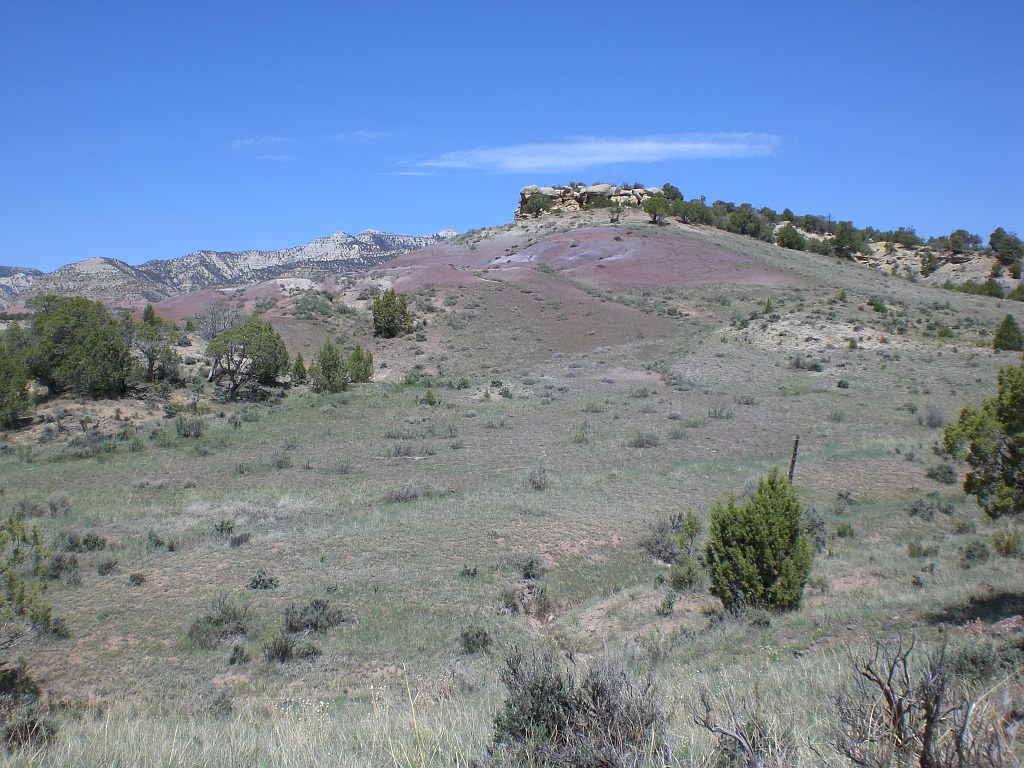
Occurs on steep slopes and ridge-tops on xeric sites in chocolate-brown or gray clay adobe badlands of Western Colorado which often have high shrink-swell potential (large cracks in the soil). The species is adapted to grow only in very early pioneer habitats with sparse vegetation cover (Scheck 1994). The species occurs on Atwell Gulch and Shire Members of Wasatch Formation (O'Kane 1987). Associated species are Grindelia fastigiata, Sarcobatus vermiculatus, Atriplex confertifolia, Eriogonum gordonii, Monolepis nuttalliana, Oenothera caespitosa, Astragalus flavus, Helianthus sp., Lepidium sp., Chenopodium sp., Rumex sp., Cymopterus planosus, Sitanion hystrix, Ceratocephala testiculata, Lactuca serriola, Euphorbia fendleri, Asceplias cryptoceras, Mentzelia sp., Thelypodiopsis sp., Oryzopsis hymenoides, Bromus tectorum, Sphaeralcea coccinea, Gutierrezia sarothrae (O'Kane 1987). Other rare species occuring in the area are Sclerocactus glaucus and Astragalus debequaeus.
click on image to enlarge
 |
 |
Elevation Range:
5,002 - 6,542 feet (1,525 - 1,994 meters)
Distribution
Colorado Endemic:
Yes
Range:
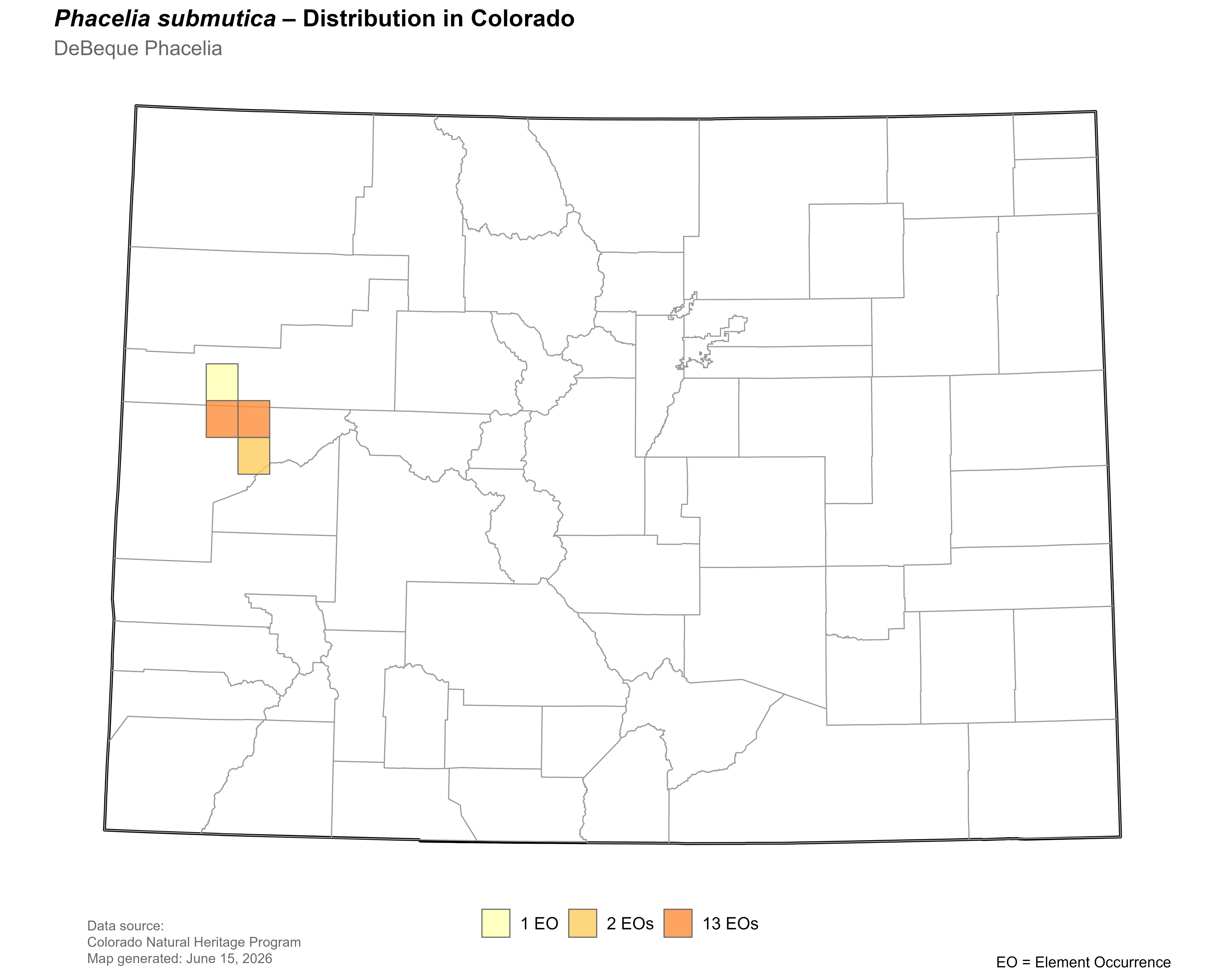
Phacelia submutica is endemic to Colorado, USA, and is known only from Garfield and Mesa counties. Estimated range extent in Colorado of 500 square kilometers was calculated in GeoCAT using occurrence data provided by the Colorado Natural Heritage Program (2022). Previous reports from Arizona were erroneous.
Click on map to enlarge |
Threats and Management Issues
Phacelia submutica is threatened by inappropriate livestock grazing, off highway vehicle use, competition from invasive plant species, and road development and maintenance for energy production and utility/communication lines. All of the aforementioned stressors are especially concerning on private lands where Endangered Species Act protections are limited and disturbance may be high (USFWS 2021). Phacelia scopulina var. submutica is inherently vulnerable to habitat loss by virtue of it being restricted to barren and semi-barren habitat on specific members of the Wasatch geological formation that has a limited distribution within the Piceance Basin. Activities that lead to significant soil disturbance, or progressive soil erosion, would likely eliminate or sharply reduce the seed bank, which appears to be the mechanism by which populations survive (Ladyman 2003). Therefore, all actions that cause significant disturbances, including mechanized vehicle traffic and livestock grazing, are threats. Livestock use has been reported in or near 42% of the occurrences (CNHP 2022). Cattle trailing can leave small trenches which can alter hydrological flow patterns directing water away from occupied habits. Trailing can also trample above ground plants causing direct mortality, reduced fitness, and decreased reproductive success (USFWS 2021). Invasive plant species, such as Bromus tectorum (cheatgrass) and Halogeton glomeratus (halogeton) have been observed within over 60% of the occurrences where competition for resources can reduce available suitable habitat for P. scopulina var. submutica (CNHP 2022). However, there is some uncertainty on the severity of impact to P. scopulina var. submutica resulting from competition with invasive plant species (USFWS 2021). Off highway vehicle (OHV) use becomes an issue when users travel off designated recreational or energy roads located near prime or potential habitat areas (USFWS 2021). While oil and gas development does not present a direct stressor to P. scopulina var. submutica, roads to oil and gas wells can create opportunities for recreationists to better access remote areas with P. scopulina var. submutica plants (USFWS 2021). This species is considered to have low adaptive capacity and is expected to be extremely vulnerable to climate change under both RCP 4.5 and 8.5 scenarios, as assessed for the 2025 Colorado State Wildlife Action Plan (CNHP 2025).
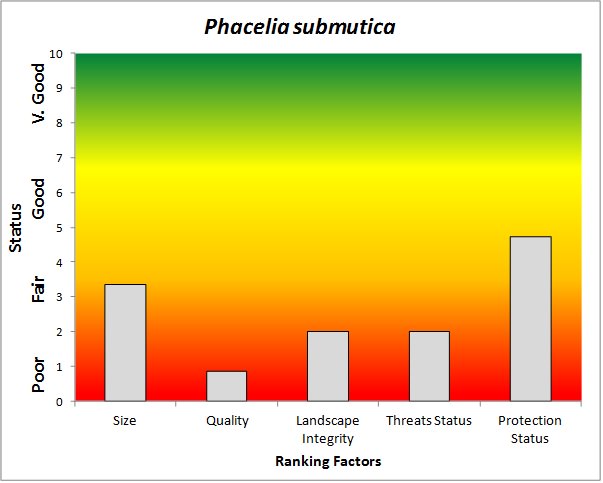
Summary results of an analysis of the status of Phacelia submutica based on several ranking factors. This species was concluded to be weakly conserved. From Rondeau et al. 2011. |
References
- Ackerfield, J. 2012. The Flora of Colorado. Colorado State University Herbarium. 433 pp.
- Ackerfield, J. 2015. Flora of Colorado. BRIT Press, Botanical Research Institute of Texas, Fort Worth, TX. 818 pp.
- Ackerfield, J. 2022. Flora of Colorado. Second Edition. Bot. Misc. 60. BRIT Press, Fort Worth Botanic Garden/Botanical Research Institute of Texas, U.S.A. 861 pp.
- Anderson, B. and M. McGlaughlin.2020. Genetic studies of Phacelia submutica (DeBeque phacelia). Prepared for Bureau of Land Management, Colorado State Office, Lakewood, CO.
- Burt, Julie. 1995. Status report for Phacelia submutica. Unpublished report prepared for the U.S. Fish and Wildlife by the Colorado Natural Heritage Program, Fort Collins, CO.
- Colorado Natural Heritage Program (CNHP). 2022. Biodiversity Tracking and Conservation System (Biotics 5). Colorado Natural Heritage Program, Colorado State University, Fort Collins.
- Colorado Natural Heritage Program (CNHP). 2025. Climate Change Vulnerability Assessment of Colorado Tier 1 and Tier 2 Plant Species of Greatest Conservation Need (SCGN) for the 2025 Colorado State Wildlife Action Plan. Colorado Natural Heritage Program, Colorado State University, Fort Collins.
- Elliott, B. A., S. Spackman Panjabi, B. Kurzel, B. Neely, R. Rondeau, M. Ewing. 2009. Recommended Best Management Practices for Plants of Concern. Practices developed to reduce the impacts of oil and gas development activities to plants of concern. Unpublished report prepared by the Rare Plant Conservation Initiative for the National Fish and Wildlife Foundation.
- Halse, R. R. 1981. Taxonomy of Phacelia sect. Miltitzia (Hydrophyllaceae). Madrono Vol. 28 (3):121-132.
- Handwerk, J., L. Grunau, and S. Panjabi. 2015. Colorado Wildlife Action Plan: 2015 Rare Plant Addendum. Colorado Natural Heritage Program, Colorado State University, Fort Collins, Colorado, USA.
- Harrington, H.D. 1954. Manual of the plants of Colorado. Sage Press, Chicago. 666 pp.
- Howell, J. T. 1944. A revision of Phacelia section Miltitzia. Proceedings of the California Academy of Science 25(15):357-376.
- Ireland, T. 2002. Candidate and listing priority assignment form: Phacelia submutica. U.S. Fish and Wildlife Service, Grand Junction, Colorado.
- Ladyman, J.A.R. (2003, December 19). Phacelia scopulina (A. Nels) J.T. Howell var. submutica (J.T. Howell) Halse (Debeque phacelia): a technical conservation assessment. [Online]. USDA Forest Service, Rocky Mountain Region. Available: http://www.fs.fed.us/r2/projects/scp/assessments/phaceliascopulinavarsubmutica.pdf [March 2006].
- Langton, A.M. 2015. Factors contributing to the conservation of Phacelia submutica (Boraginaceae), a threatened species in Western Colorado: reproductive biology and seed ecology. All Graduate Theses and Dissertations. 35-38 pp.
- Neely, B., S. Panjabi, E. Lane, P. Lewis, C. Dawson, A. Kratz, B. Kurzel, T. Hogan, J. Handwerk, S. Krishnan, J. Neale, and N. Ripley. 2009. Colorado Rare Plant Conservation Strategy, Developed by the Colorado Rare Plant conservation Initiative. The Nature Conservancy, Boulder, Colorado, 117 pp.
- O'Kane, S. L. 1987. Status Report for Phacelia submutica. Unpublished report prepared for the Colorado Natural Areas Program, Denver, CO.
- Rocky Mountain Society of Botanical Artists. 2009. RARE Imperiled Plants of Colorado, a traveling art exhibition. Exhibition catalogue developed by the Denver Botanic Gardens and Steamboat Art Museum.
- Rondeau, R., K. Decker, J. Handwerk, J. Siemers, L. Grunau, and C. Pague. 2011. The state of Colorado's biodiversity 2011. Prepared for The Nature Conservancy. Colorado Natural Heritage Program, Colorado State University, Fort Collins, Colorado.
- Spackman, S., B. Jennings, J. Coles, C. Dawson, M. Minton, A. Kratz, and C. Spurrier. 1997. Colorado rare plant field guide. Prepared for Bureau of Land Management, U.S. Forest Service and U.S. Fish and Wildlife Service by Colorado Natural Heritage Program.
- U.S. Fish and Wildlife Service (USFWS). 2010. Endangered and Threatened Wildlife and Plants; Listing Ipomopsis polyantha (Pagosa Skyrocket) as Endangered Throughout Its Range, and Listing Penstemon debilis (Parachute Beardtougue) and Phacelia submutica (DeBeque Phacelia) as Threatened Throughout Their Range. Proposed Rule. Federal Register 75(120):35721-35746.
- U.S. Fish and Wildlife Service (USFWS). 2021. DRAFT Species status assessment report for DeBeque phacelia (Phacelia submutica). Lakewood, Colorado.
- USDA, NRCS. 2022. The PLANTS Database. National Plant Data Team, Greensboro, NC 27401-4901 USA.
- Weber, W. A. and R. C. Wittmann. 2012. Colorado Flora, Western Slope, A Field Guide to the Vascular Plants, Fourth Edition. Boulder, Colorado. 532 pp.