

Scientific Name : Viola pedatifida
Author : G. Don NatureServe Explorer
Common Name : Prairie Violet
 Current Research Activities
 1997 profile


☰ Click link below for details.
Taxonomy
Violaceae (violet family)
Ranks and Status
State Rank : S2
State Rank Reason : There are over 30 occurrences within 13 counties in Colorado (USA), however, about 25% of the occurrences are considered historical. The occupied area documented for many of the occurrences is quite small. Rapid development along the Front Range is currently threatening this species and it's habitat. Imminent threats from grazing and residential developments include invasive pasture grasses, hydrological manipulations for flood control, cattle, roads and ditches.
U.S. Endangered Species Act : none
Colorado Threatened and Endangered List : none
Other Statuses : none
Description and Phenology
General Description:
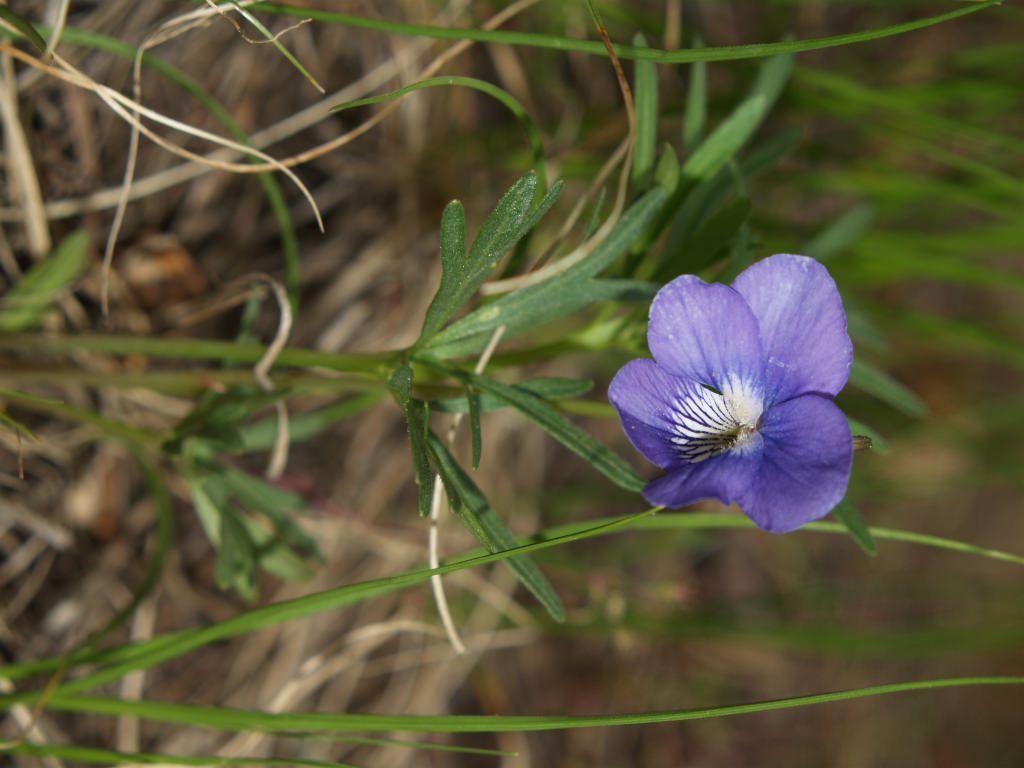
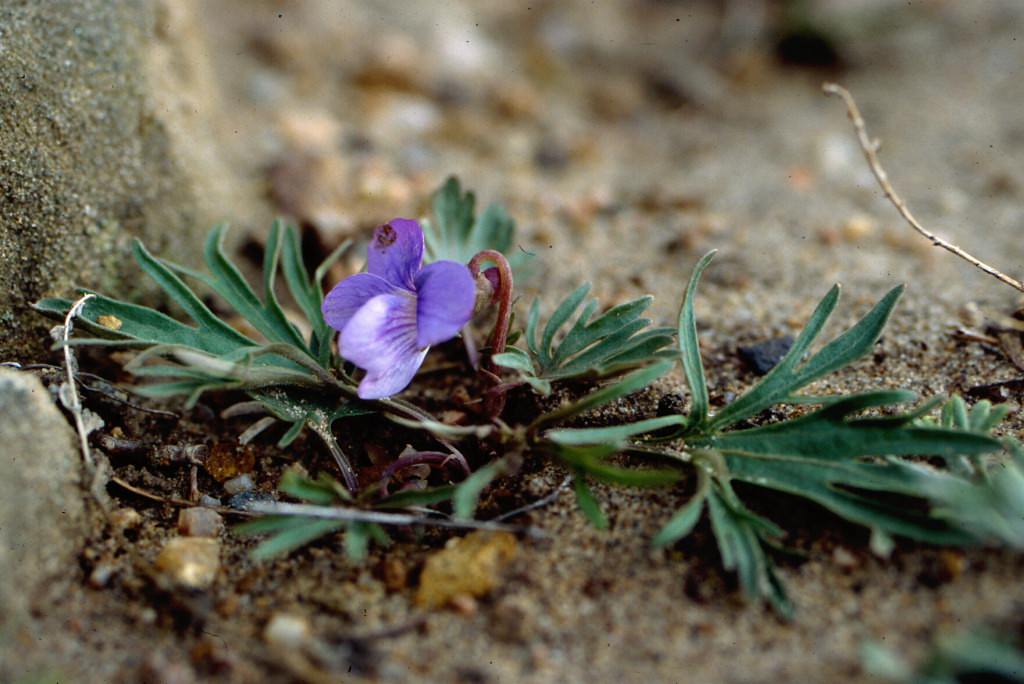
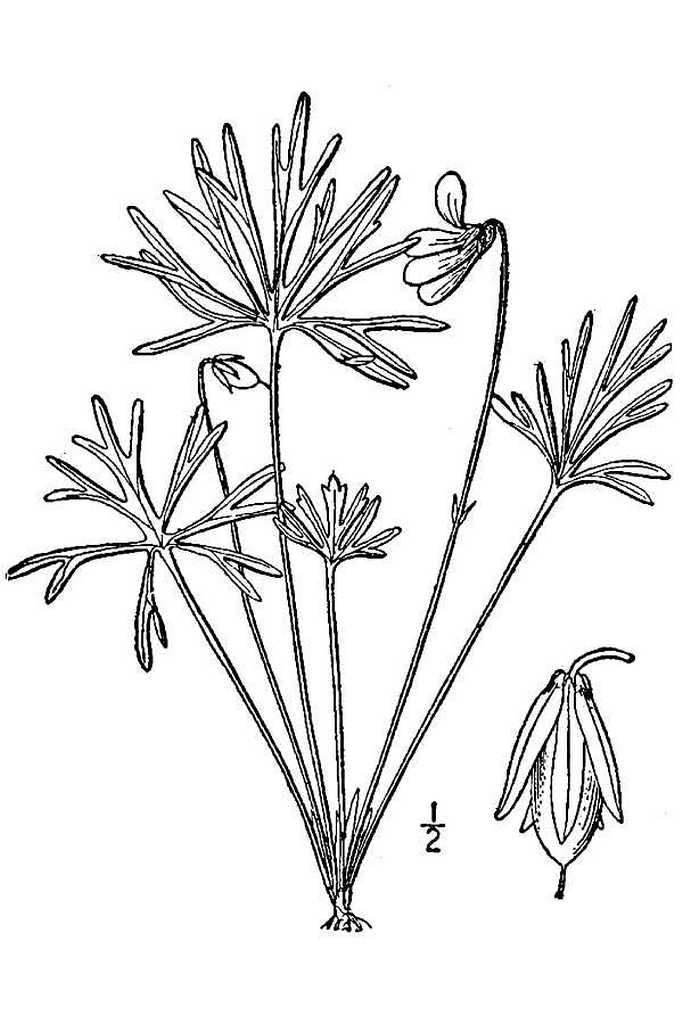
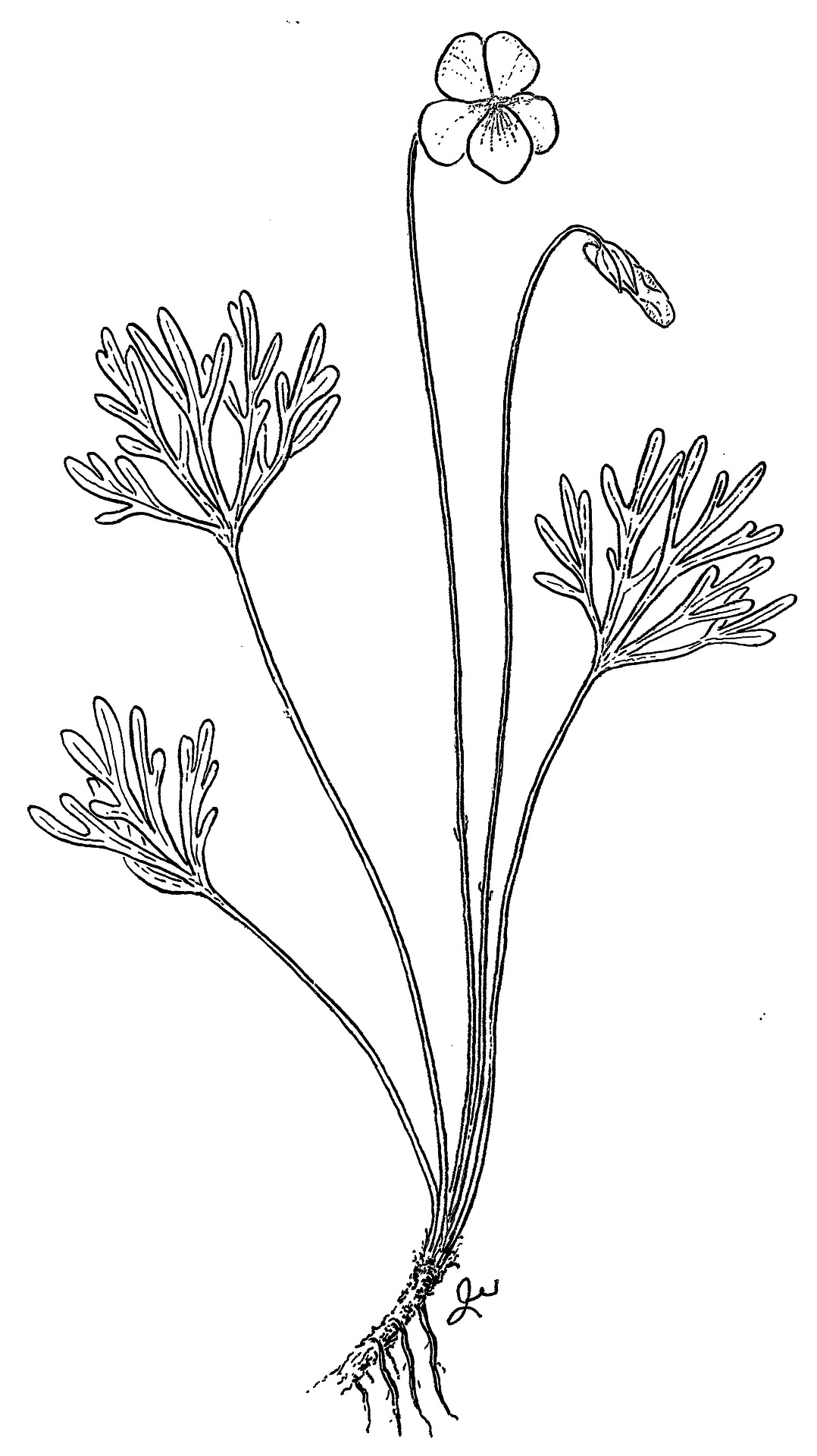
Plants perennial, acaulescent, not stoloniferous, 530 cm tall; rhizome thick, fleshy. Leaves basal, 211, ascending to erect, 59-lobed; stipules linear-lanceolate, margins entire, apex acute; petiole 316 cm, pubescent; blade similar in width and shape, lobes lanceolate, spatulate, falcate, or linear, 17 × 28 cm, base truncate to reniform, margins entire, ciliate, apex acute to obtuse, mucronulate, surfaces pubescent, hairs sometimes concentrated on veins. Peduncles erect, 518 cm, glabrous or pubescent. Flowers: sepals lanceolate to ovate, margins ciliate or eciliate, auricles 12 mm; petals light to soft reddish violet on both surfaces, lower 3 white basally, dark violet-veined, lateral 2 and lowest usually bearded, lowest 1025 mm, spur same color as petals, gibbous, 23 mm; style head beardless. Capsules ellipsoid, 1015 mm, glabrous. Seeds beige, mottled to bronze, 1.52.5 mm (Flora of North America 2015).
Look Alikes:
No other blue flowered Viola species in Colorado have leaves dissected into narrow lobes (Spackman et al. 1997).
Phenology:
Flowers April to June (Spackman et al. 1997, Ackerfield 2015).
 |  |
Habitat
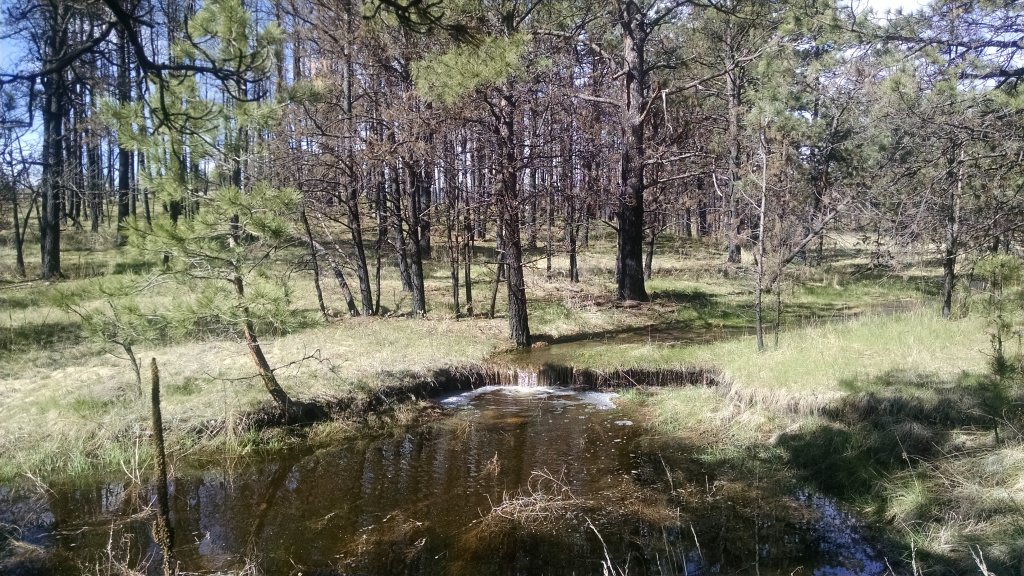
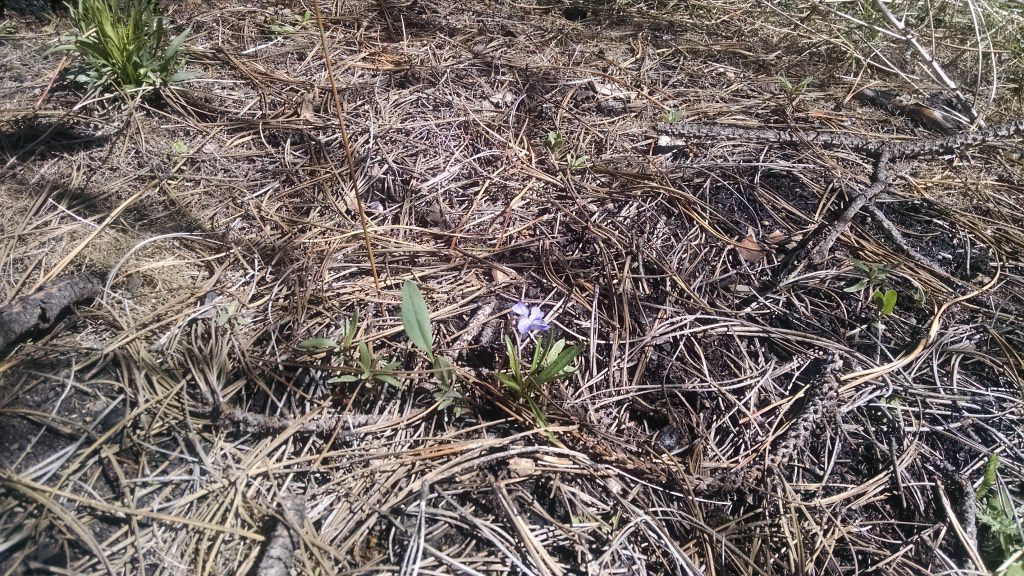
Prairies, open woodlands, and forest openings; rocky sites (Spackman et al. 1997, Ackerfield 2015). Associated taxa include Pinus ponderosa, Muhlenbergia montana, Yucca glauca, Opuntia, Artemisia ludoviciana, Poa compressa, Poa agassizensis, Pneumonathe affinis, Stipa comata, Schizachyrium scoparium, Koeleria macrantha, Bouteloua curtipendula, Scutellaria, Lithospermum, Pulsatilla ludoviciana.
click on image to enlarge
 |
 |
Elevation Range:
5,197 - 8,954 feet (1,584 - 2,729 meters)
Distribution
Colorado Endemic:
No
Range:
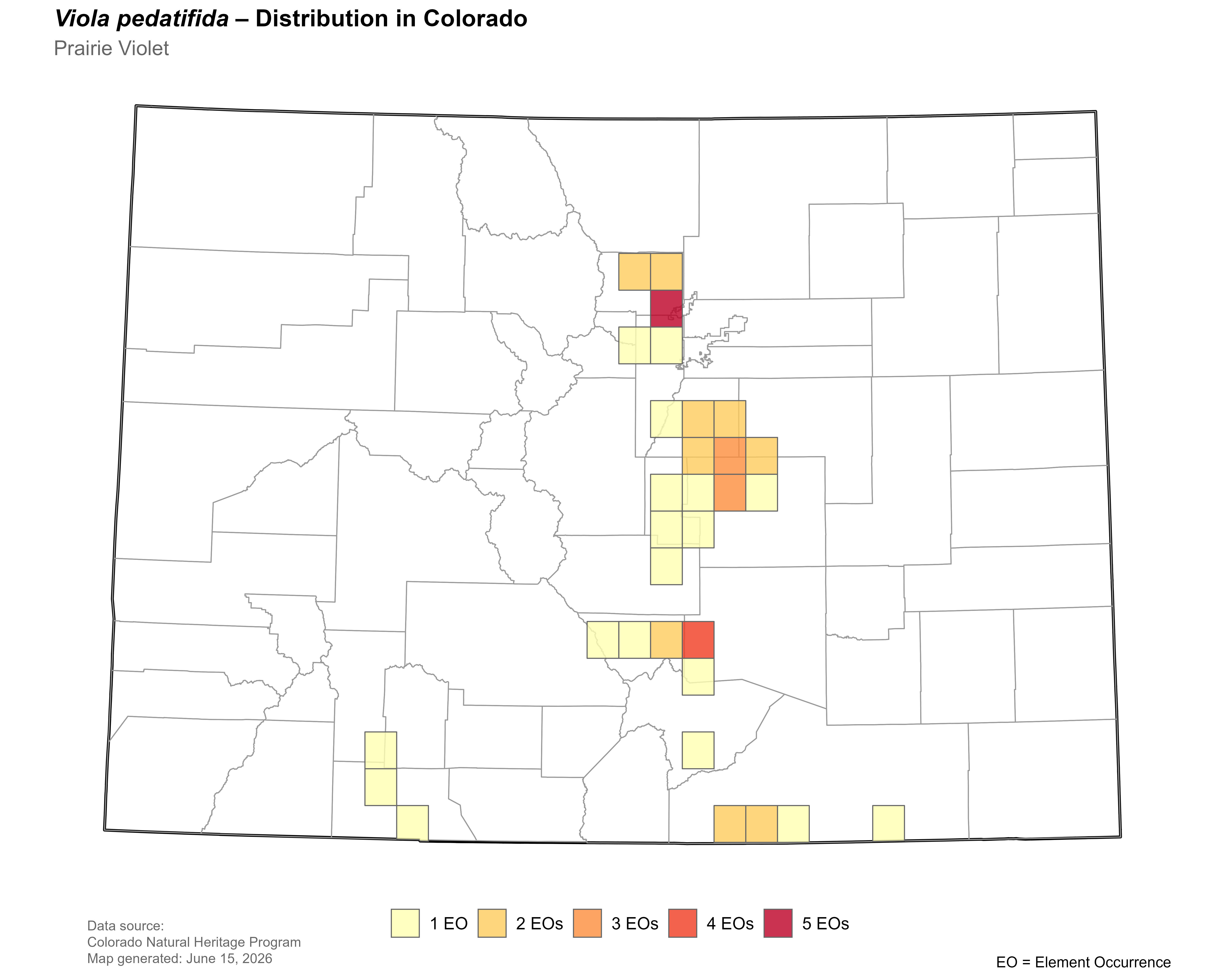
In Colorado, known from Archuleta, Boulder, Custer, Douglas, Elbert, El Paso, Fremont, Huerfano, Jefferson, Las Animas and Pueblo counties, primarily along the Front Range and plains.This species can also be found in Arizona, Arkansas, Illinois, Indiana, Iowa, Kansas, Michigan, Minnesota, Missouri, Montana, Nebraska, New Mexico, North Carolina, North Dakota, Ohio, Oklahoma, South Dakota, Tennessee, Wisconsin, and Wyoming, USA. Globally, this species can be found in Alberta, manitoba, Ontario, and Saskatchewan, Canada (USDA NRCS 2017).
Click on map to enlarge |
Threats and Management Issues
Rapid development along the Front Range may threaten this species and its habitat. Imminent threats from invasive pasture grasses, hydrological manipulations for flood control, cattle, roads and ditches. Colorado climate scenarios for 2050 suggest temperature will increase by 3-7 F and precipitation may decrease or increase. The impact to any given rare plant habitat is likely to vary. Long-term monitoring that includes weather and soil moisture data is critical to understanding climate impacts.
References
- Ackerfield, J. 2015. Flora of Colorado. Botanical Research Institute of Texas, Fort Worth, TX. 818 pp.
- Baird, V. B. 1942. Wild Violets of North America. University of California Press, Berkeley, CA.
- Brainerd, E. 1921. Violets of North America. Free Press Printing Company, Burlington, VT.
- Colorado Natural Heritage Program and the Geospatial Centroid. 2017. The Colorado Ownership and Protection Map (COMaP). Colorado State University, Ft. Collins, CO.
- Flora of North America Editorial Committee (FNA). 2015. Flora of North America north of Mexico. Vol. 6. Magnoliophyta: Cucurbitaceae to Droserceae. Oxford University Press, New York. 496 pp + xxiv.
- Great Plains Flora Association. 1986. Flora of the Great Plains. University Press of Kansas, Lawrence, KS. 1402 pp.
- Little, R.J. and L.E. McKinney. 2010. Four nomenclatural changes in Viola (Violaceae). Journal of the Botanical Research Institute of Texas 4(1):225-226.
- Spackman, S., B. Jennings, J. Coles, C. Dawson, M. Minton, A. Kratz, and C. Spurrier. 1997. Colorado rare plant field guide. Prepared for Bureau of Land Management, U.S. Forest Service and U.S. Fish and Wildlife Service by Colorado Natural Heritage Program.
- USDA, NRCS. 2022. The PLANTS Database. National Plant Data Team, Greensboro, NC 27401-4901 USA.
- Weber, W. A. and R. C. Wittmann. 2012. Colorado Flora, Eastern Slope, A Field Guide to the Vascular Plants, Fourth Edition. Boulder, Colorado. 555 pp.
- Weber, W. A. and R. C. Wittmann. 2012. Colorado Flora, Western Slope, A Field Guide to the Vascular Plants, Fourth Edition. Boulder, Colorado. 532 pp.