

Scientific Name : Astragalus eastwoodiae
Author : M.E. Jones NatureServe Explorer
Common Name : Eastwood Milkvetch
 Current Research Activities


☰ Click link below for details.
Taxonomy
Fabaceae (pea family)
The white-flowered Astragalus debequaeus may be a color form of purple-flowered A. eastwoodiae (Weber and Wittmann 2012).
Ranks and Status
State Rank : S3
State Rank Reason : Astragalus eastwoodiae is known from about 30 occurrences from five counties in southwestern Colorado, USA. Threats include incompatible livestock grazing, recreation, competition from invasive exotic species, and impacts from climate change, particularly long-term drought.
U.S. Endangered Species Act : none
Colorado Threatened and Endangered List : none
Other Statuses : SWAP Tier 2
Description and Phenology
General Description:
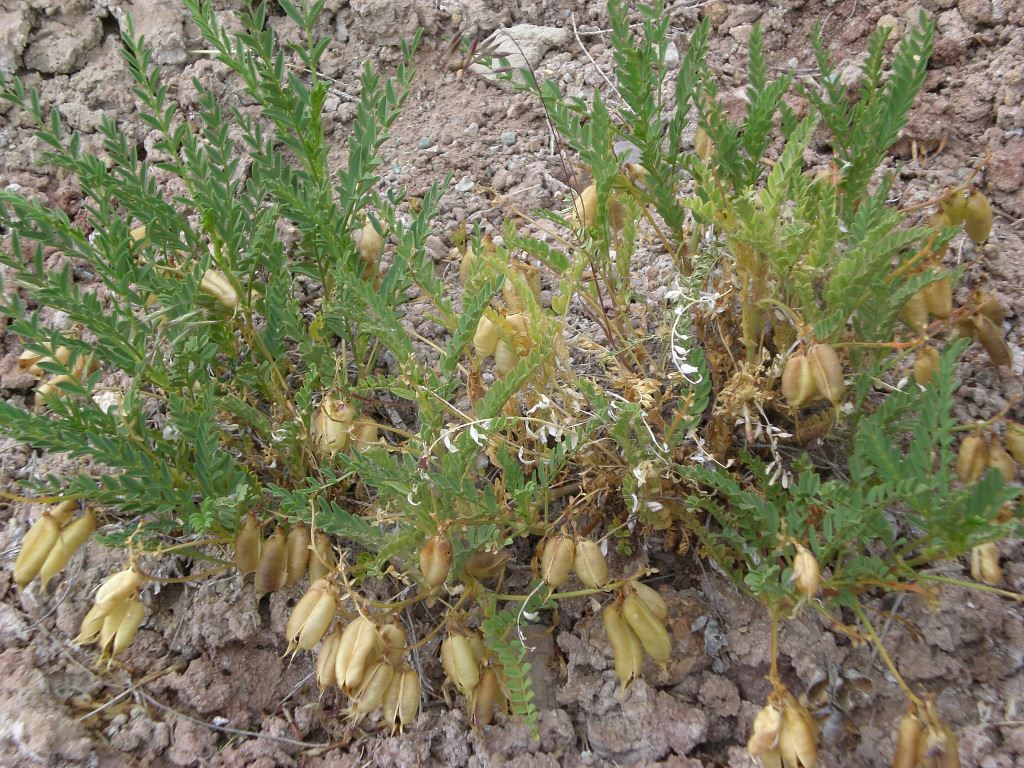
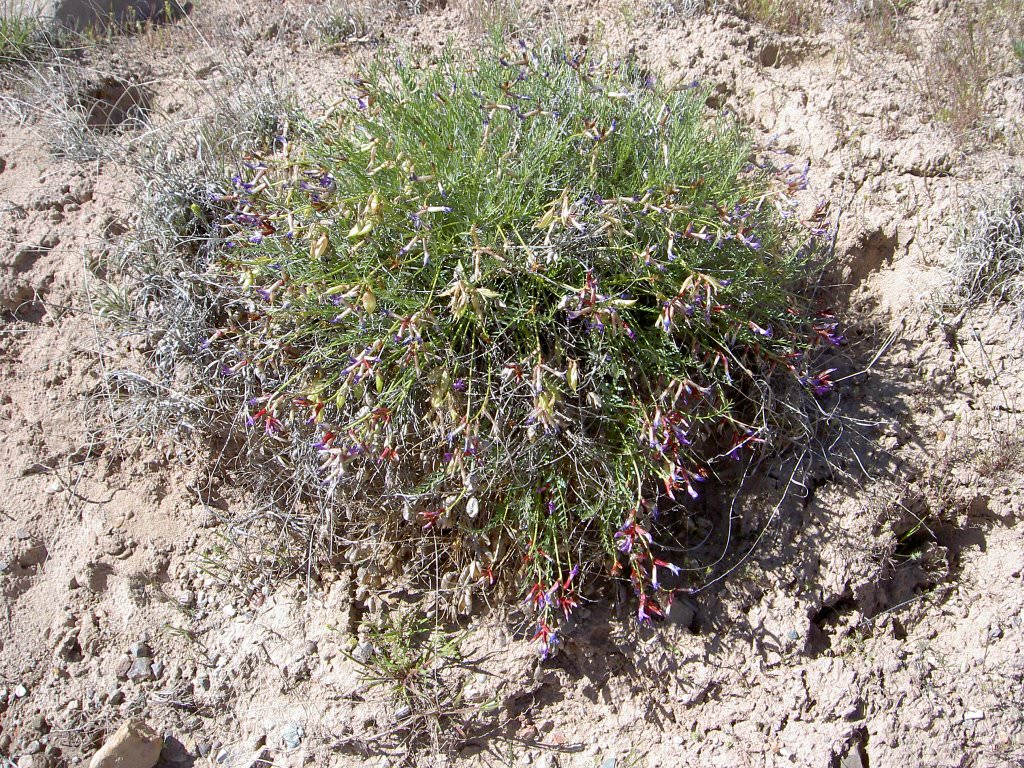
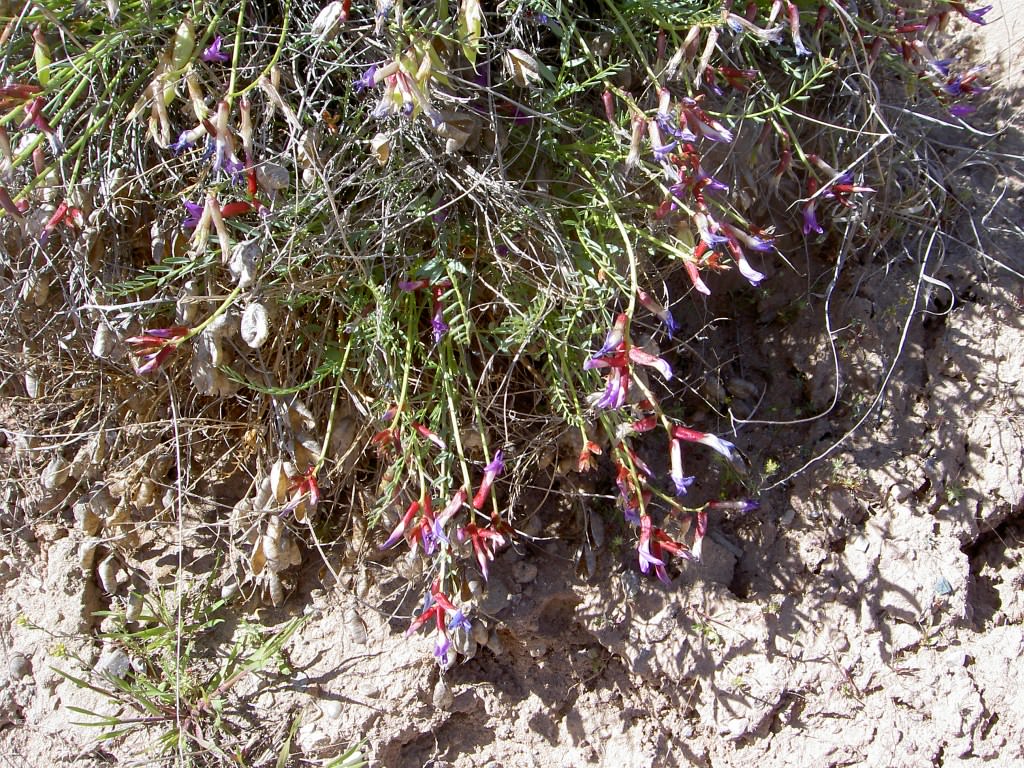
Caulescent perennials, forming neat rounded mounds, 3-20 cm tall. Leaves are light green, 3-13 cm long, and are pinnately compound with numerous small leaflets, 1-15 mm long. Inflorescence included or shortly exserted, 4-8 flowered. Flowers pink-purple. Pods are ovoid to oblong-ellipsoid, subterete or slightly obcompressed, glabrate or minutely hairy. Foliage, pods, and corolla are glabrous; calyx has very short, sharp, appressed hairs (Ackerfield 2015, Schneider 2017).
Look Alikes:
Astragalus debequaeus flowers are white or yellowish-white, mostly 7-9 (11) per raceme, and calyx tubes are 5-6 mm; A. eastwoodiae flowers are pink-purple, mostly 4-8 flowers per raceme, and the calyx tube is (6) 8-9 mm long.
Phenology:
Flowering April-May (Ackerfield 2015). Fruiting May-June (Colorado Natural Heritage Program 2016).
Habitat
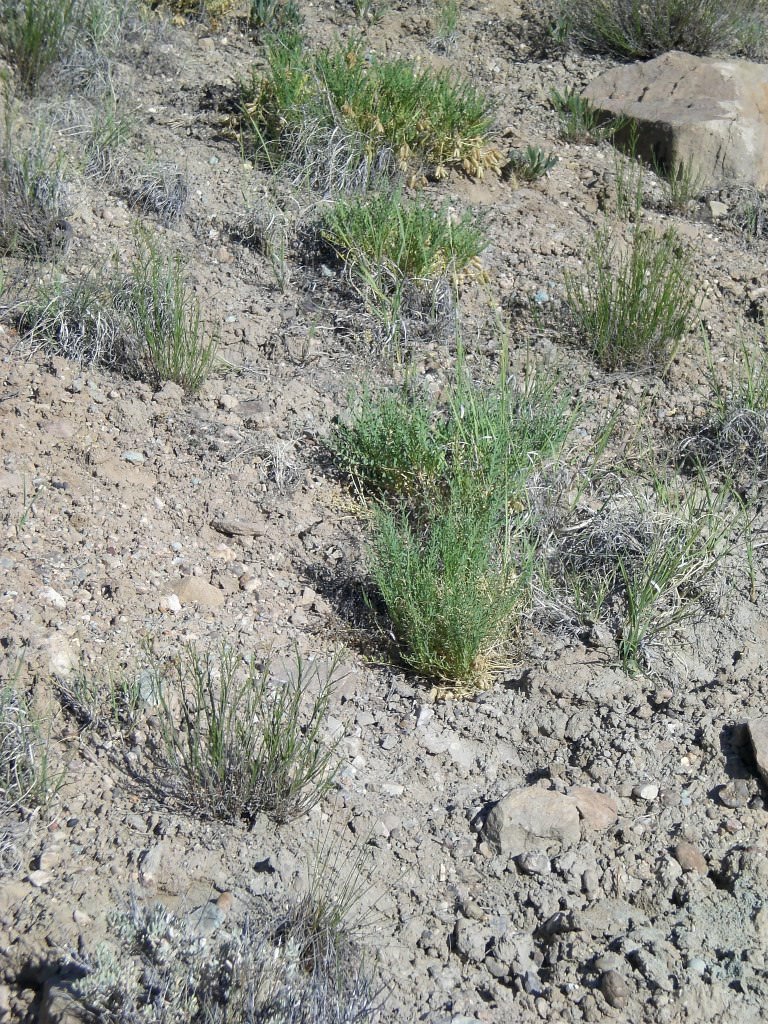
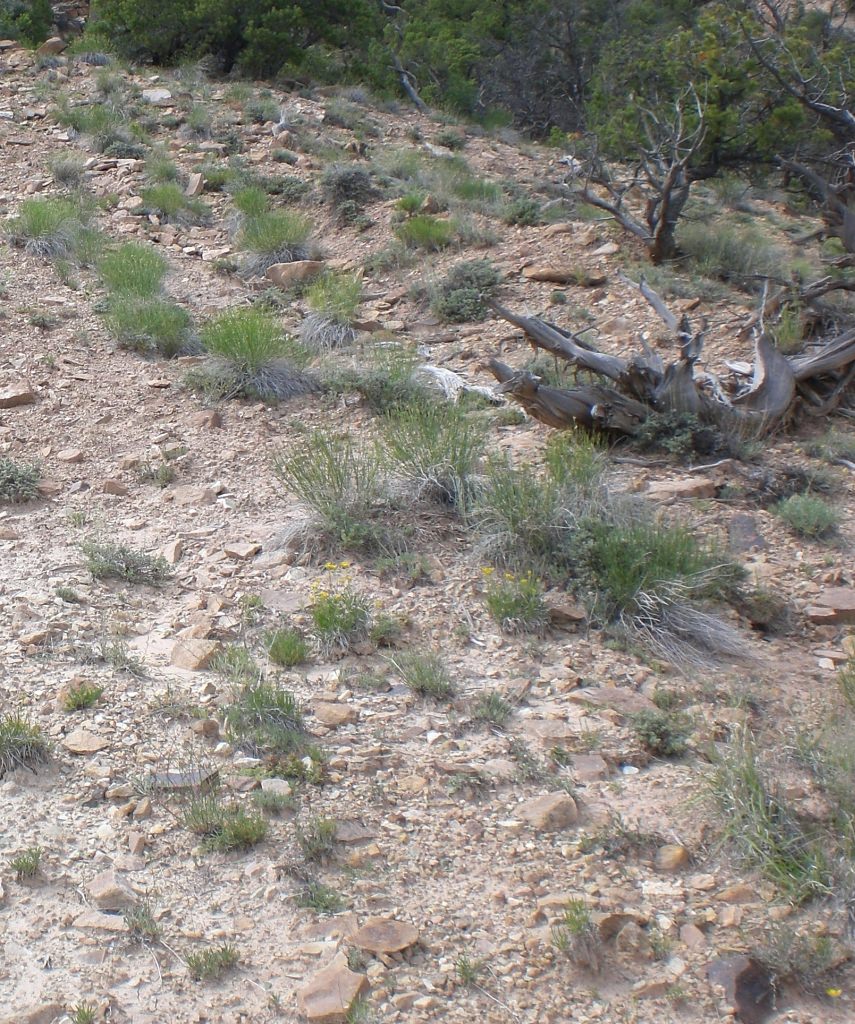
Dry slopes and in dry creek beds, often on clay soil, usually with pinyon-juniper (Ackerfield 2015). Desert gulches (Weber and Wittmann 2012). Sparsely vegetated, rocky hillsides, dominated by pinyon-juniper; assocated species also include Atriplex confertifolia, Platyschkuhria integrifolia, Astragalus rafaelensis, Gutierrezia sarothrae, Tetraneuris ivesiana, Gilia haydenii, Pediomelum megalanthum, Cercocarpus montanus, Artemisia nova, Astragalus linifolius, Astragalus lonchocarpus, Chrysothamnus nauseosus, Opuntia fragilis, Oryzopsis hymenoides, and Erigeron flagellaris.
click on image to enlarge
 |
 |
Elevation Range:
4,801 - 6,238 feet (1,463 - 1,901 meters)
Distribution
Colorado Endemic:
No
Range:
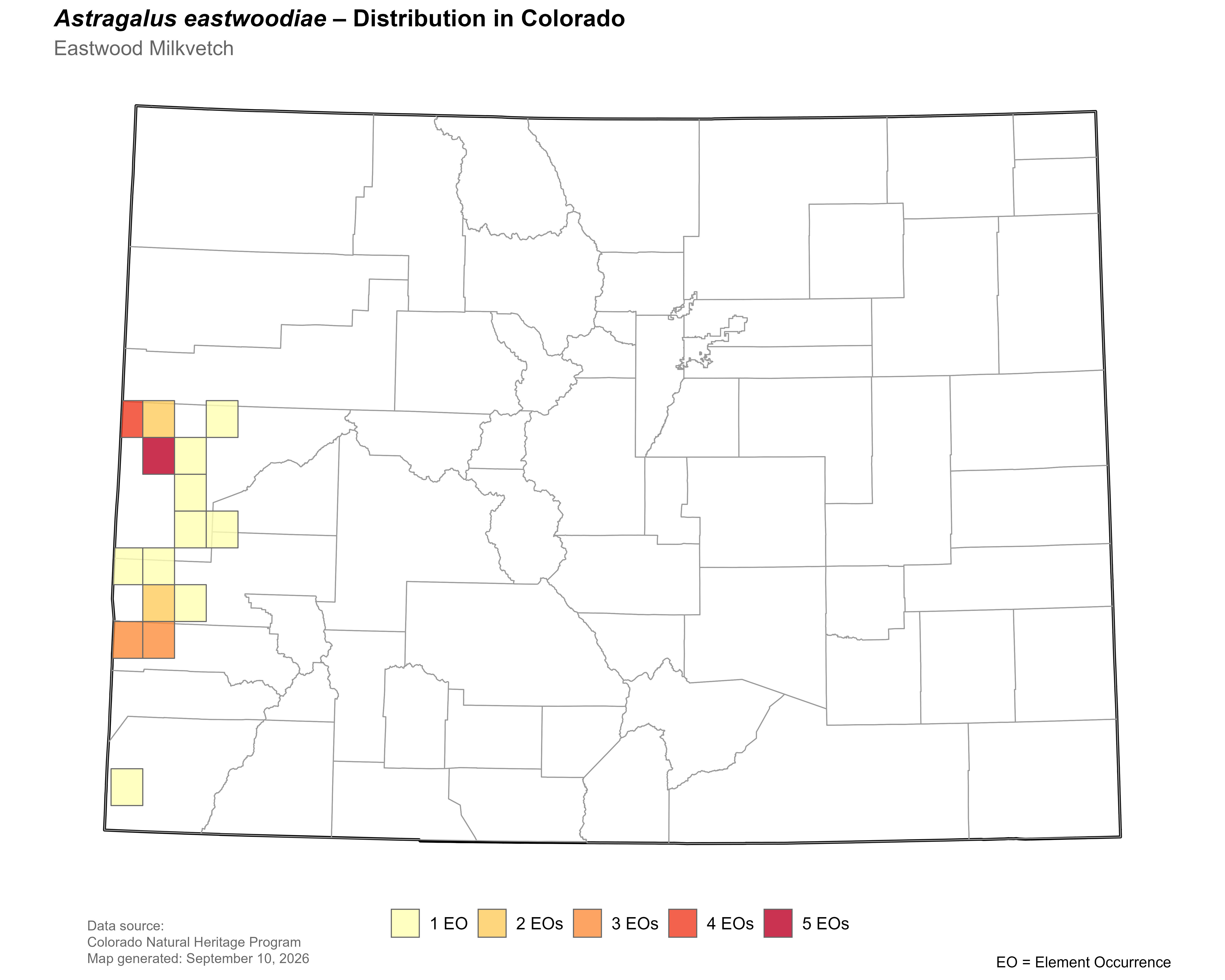
Astragalus eastwoodiae is known from Delta, Mesa, Montezuma, Montrose and San Miguel counties in Colorado, USA. Estimated range extent in Colorado of 9,119 square kilometers was calculated in GeoCAT using occurrence data provided by the Colorado Natural Heritage Program (2024). This taxon is also known from Utah.
Click on map to enlarge |
Threats and Management Issues
The majority of the occurrences have not been visited in over 20 years and do not report on the condition or management concerns of individual sites. Of those that have been visited recently the primary threats are competition from invasive non-native plant species, incompatible livestock grazing and recreation activities. This species is considered to have moderate adaptive capacity and is expected to be moderately vulnerable to climate change under both RCP 4.5 and 8.5 scenarios, as assessed for the 2025 Colorado State Wildlife Action Plan (CNHP 2025).
References
- Ackerfield, J. 2015. Flora of Colorado. BRIT Press, Botanical Research Institute of Texas, Fort Worth, TX. 818 pp.
- Colorado Natural Heritage Program (CNHP). 2025. Climate Change Vulnerability Assessment of Colorado Tier 1 and Tier 2 Plant Species of Greatest Conservation Need (SCGN) for the 2025 Colorado State Wildlife Action Plan. Colorado Natural Heritage Program, Colorado State University, Fort Collins.
- Colorado Natural Heritage Program and the Geospatial Centroid. 2017. The Colorado Ownership and Protection Map (COMaP). Colorado State University, Ft. Collins, CO.
- Heil, K.D, S.L. O'Kane Jr., L.M. Reeves, and A. Clifford. 2013. Flora of the Four Corners Region. Vascular Plants of the San Juan River Drainage: Arizona, Colorado, New Mexico, and Utah. Monographs in systematic botany from the Missouri Botanical Garden, Vol. 124, Missouri Botanical Garden Press, St. Louis, MO. xvi + 1098 pp.
- Kartesz, J.T. 1994. A synonymized checklist of the vascular flora of the United States, Canada, and Greenland. 2nd edition. 2 vols. Timber Press, Portland, OR.
- Schneider, A. 2017. Wildflowers, ferns, and trees of the Four Corners regions of Colorado, New Mexico, Arizona, and Utah. Online: http://www.swcoloradowildflowers.com.
- USDA, NRCS. 2022. The PLANTS Database. National Plant Data Team, Greensboro, NC 27401-4901 USA.
- Weber, W. A. and R. C. Wittmann. 2012. Colorado Flora, Western Slope, A Field Guide to the Vascular Plants, Fourth Edition. Boulder, Colorado. 532 pp.
- Welsh, S.L., N.D. Atwood, S. Goodrich, and L.C. Higgins (eds.) 1993. A Utah flora. 2nd edition. Brigham Young Univ., Provo, Utah. 986 pp.