

Scientific Name : Astragalus debequaeus
Author : Welsh NatureServe Explorer
Common Name : DeBeque Milkvetch
 Current Research Activities
 1997 profile


☰ Click link below for details.
Taxonomy
Fabaceae (pea family)
Weber and Wittmann (2012) note that this is regarded by some as a color form of Astragalus eastwoodiae.
Ranks and Status
State Rank : S2
State Rank Reason : Astragalus debequaeus is known only from the Colorado River Valley near the town of DeBeque, Colorado, USA. There are 24 occurrences documented in the Colorado Natural Heritage Program database, only 9 of which are considered to have good viability/ecological integrity. Data from long-term monitoring shows the species to be in decline. Primary threats include loss of plants and disturbance from oil and gas development, proliferation and maintenance of roads, competition with non-native invasive plant species, and drought and habitat shifting and alteration from climate change.
U.S. Endangered Species Act : none
Colorado Threatened and Endangered List : none
Other Statuses : BLM, SWAP Tier 1
Description and Phenology
General Description:
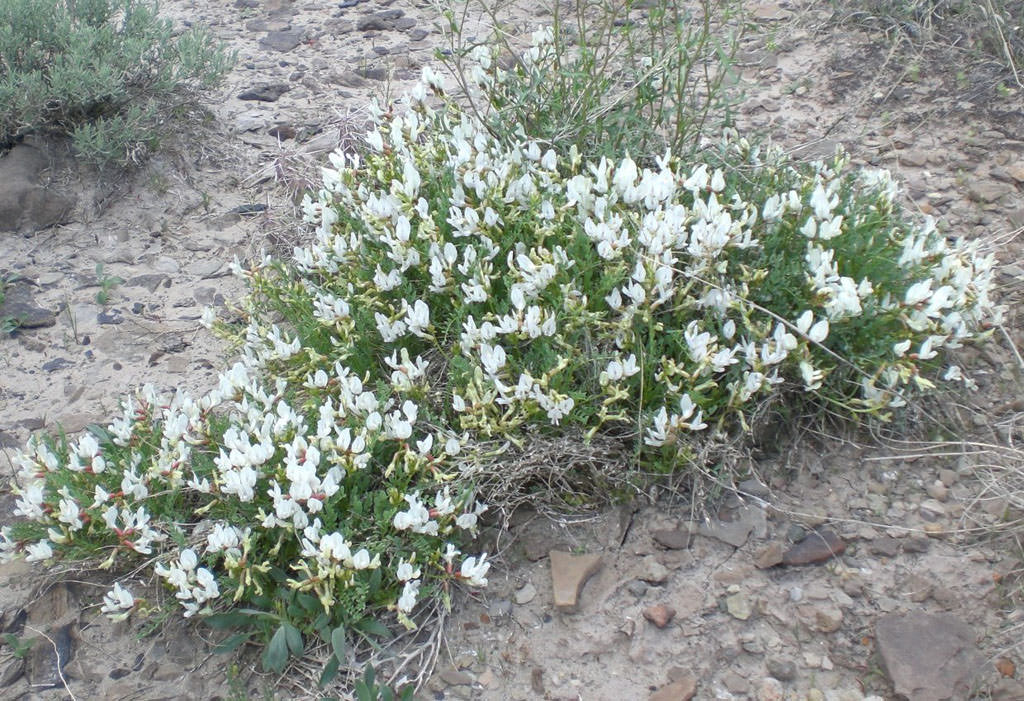
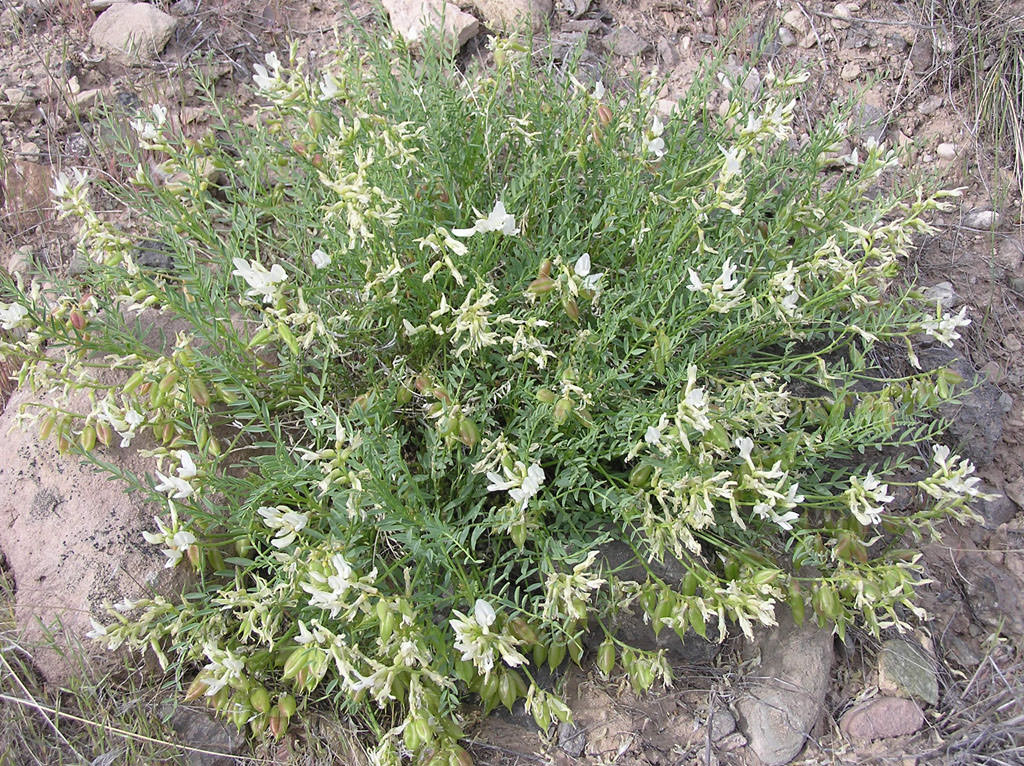
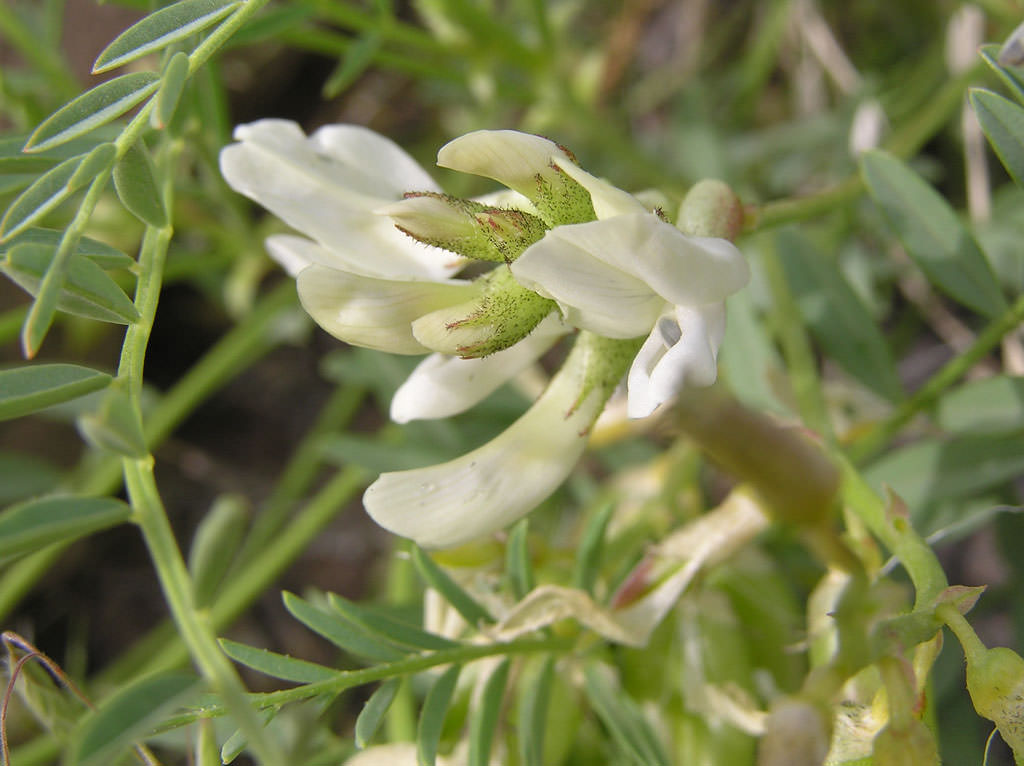
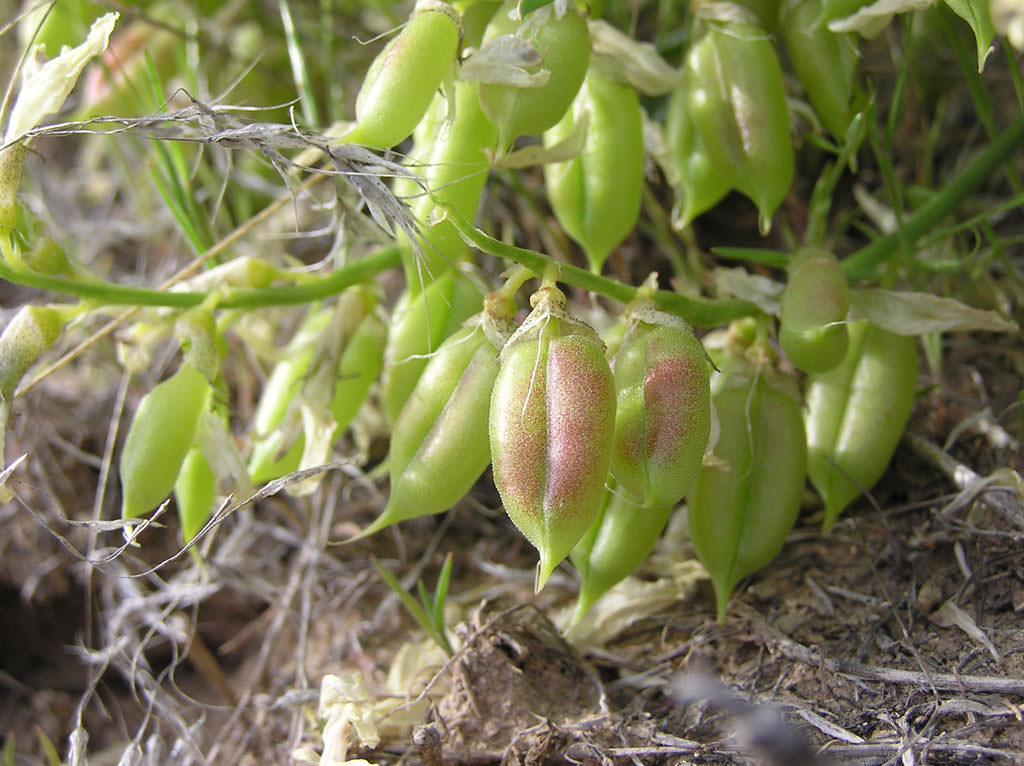
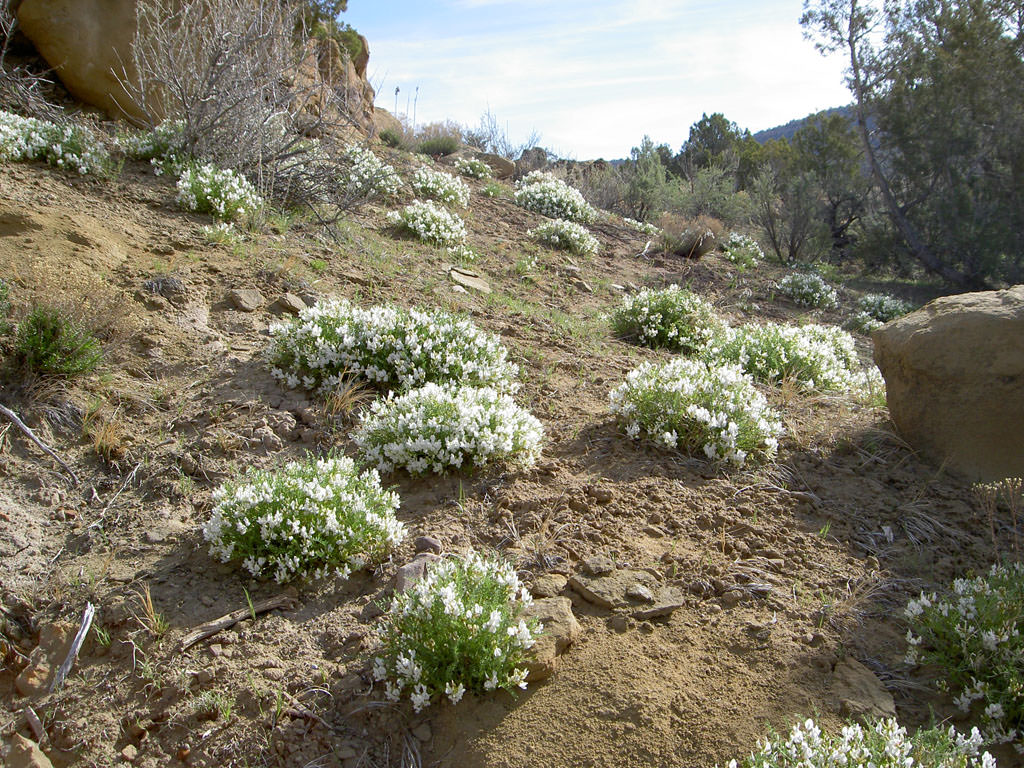
Perennial plants forming multi-branched clumps, up to roughly 2 dm. in height. Flowers are white or yellowish-white, mostly 7-9 (11) per raceme; calyx tubes have short black hairs and are 5-6 long. Stems and pod are glabrous (Spackman et al. 1997, Ackerfield 2012).
Look Alikes:
Astragalus eastwoodiae flowers are pink-purple, mostly 3-7 per raceme; and the calyx tubes are mostly 8-9 mm long (Ackerfield 2012).
Phenology:
Astragalus debequaeus flowers April-May and produces fruit May-July (Colorado Natural Heritage Program 2013).
Habitat
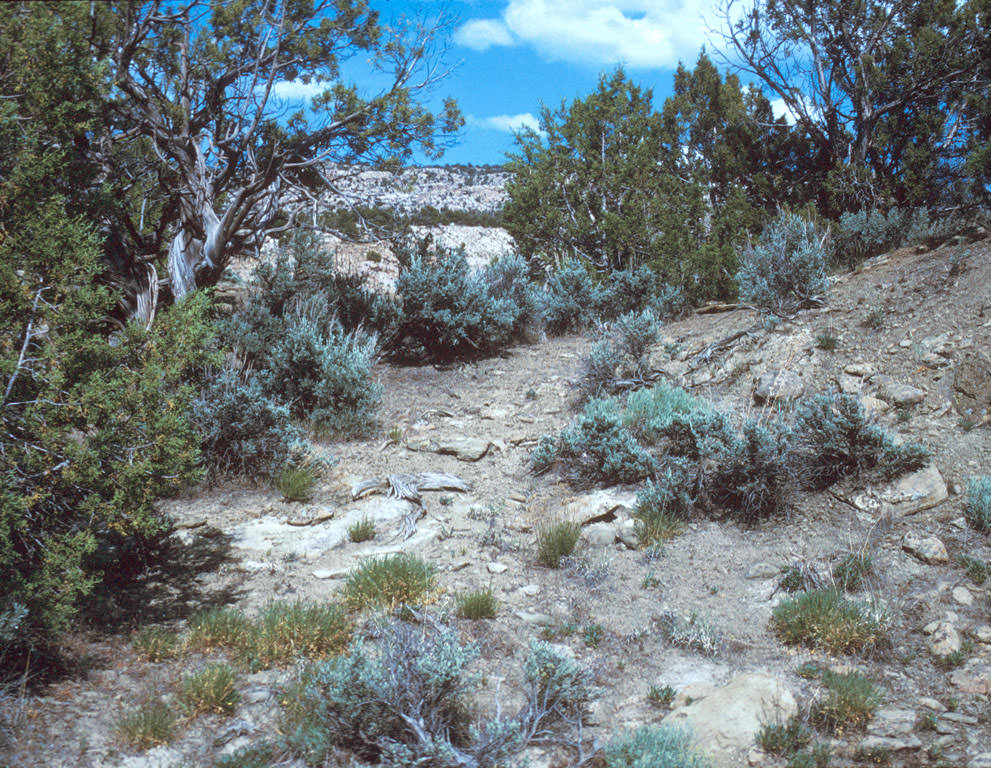
Astragalus debequaeus is found in varicolored, fine-textured, seleniferous, saline soils of the Atwell Gulch Member of the Wasatch Formation, in areas surrounded by pinyon-juniper woodlands and desert shrub. Plants are mostly clustered on toe slopes and along drainages, but many occur on steep sideslopes. Soils are clayey but littered with sandstone fragments. Associated taxa include Achnatherum hymenoides, Artemisia tridentata ssp. wyomingensis, Astragalus flavus, Atriplex confertifolia, Atriplex gardneri, Cercocarpus montanus, Chrysothamnus depressus, Ephedra viridis, Gutierrezia sarothrae, Pediomelum megalanthum, Opuntia polyacantha, Physaria acutifolia, Platyschkuhria integrifolia, and Tetraneuris ivesiana (Welsh 1985, O'Kane 1986, Spackman et al. 1997, Colorado Natural Heritage Program 2014).
click on image to enlarge
 |  |
Elevation Range:
4,946 - 7,467 feet (1,508 - 2,276 meters)
Distribution
Colorado Endemic:
Yes
Range:
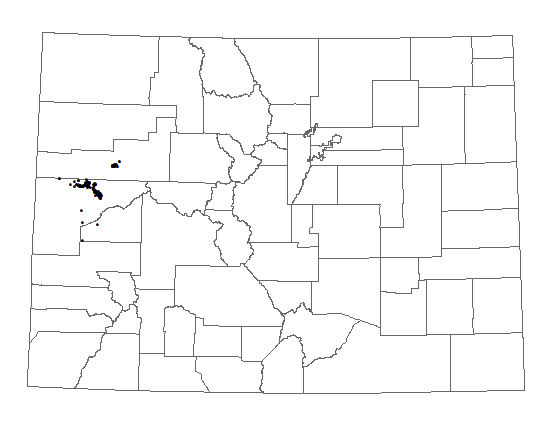
Astragalus debequaeus is endemic to the Colorado River Valley in Delta, Garfield and Mesa counties, Colorado, USA . The plant's range evidently corresponds to the extent of the Atwell Gulch Member of the Wasatch Formation. The estimated range extent in Colorado of 3,736 square kilometers was calculated in GeoCAT using occurrence data provided by the Colorado Natural Heritage Program (2022).
 Click on map to enlarge |
Threats and Management Issues
Oil and gas development continues to be a threat to Astragalus debequaeus; many occurrences are on public land where oil and gas leasing is occurring. Many populations are bisected or adjacent to roads; road maintenance activities such as herbicide spraying and dust from road usage impact populations and pollinators (Smith 2021). Grazing is not a high threat for this species as it accumulates selenium and likely is not an important forage plant; however, trampling by cattle and subsequent soil erosion has been observed. Exotic species, including cheatgrass, have been reported in many populations as well as impacts of degraded soils resulting from off-road motorized vehicle use. This species is considered to have low adaptive capacity and is expected to be extremely vulnerable to climate change under both RCP 4.5 and 8.5 scenarios, as assessed for the 2025 Colorado State Wildlife Action Plan (CNHP 2025).
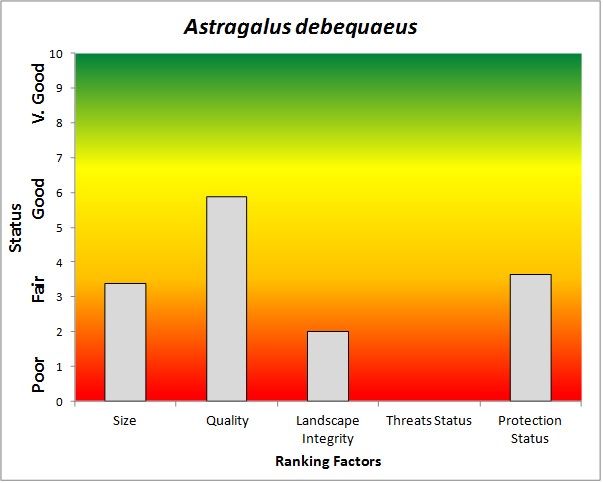 Summary results of an analysis of the status of Astragalus debequaeus based on several ranking factors. This species was concluded to be weakly conserved. From Rondeau et al. 2011. |
References
- Ackerfield, J. 2015. Flora of Colorado. BRIT Press, Botanical Research Institute of Texas, Fort Worth, TX. 818 pp.
- Colorado Native Plant Society. 1989. Rare plants of Colorado. Rocky Mountain Nature Association, Colorado Native Plant Society, Estes Park, Colorado. 73 pp.
- Colorado Natural Heritage Program (CNHP). 2025. Climate Change Vulnerability Assessment of Colorado Tier 1 and Tier 2 Plant Species of Greatest Conservation Need (SCGN) for the 2025 Colorado State Wildlife Action Plan. Colorado Natural Heritage Program, Colorado State University, Fort Collins.
- Cronquist A. 1989. Intermountain Flora Vascular Plants of the Intermountain West, USA. Vol. 3, Part B. New York Botanical Garden, Bronx, NY.
- Dawson, C. 2009. Personal communication with Colorado Natural Heritage Program staff regarding BLM rare plant monitoring in Colorado.
- Elliott, B. A., S. Spackman Panjabi, B. Kurzel, B. Neely, R. Rondeau, M. Ewing. 2009. Recommended Best Management Practices for Plants of Concern. Practices developed to reduce the impacts of oil and gas development activities to plants of concern. Unpublished report prepared by the Rare Plant Conservation Initiative for the National Fish and Wildlife Foundation.
- Handwerk, J., L. Grunau, and S. Panjabi. 2015. Colorado Wildlife Action Plan: 2015 Rare Plant Addendum. Colorado Natural Heritage Program, Colorado State University, Fort Collins, Colorado, USA.
- Kartesz, J.T. 1994. A synonymized checklist of the vascular flora of the United States, Canada, and Greenland. 2nd edition. 2 vols. Timber Press, Portland, OR.
- Krening, P. 2019. Demographic Monitoring of DeBeque Milkvetch (Astragalus debequaeus). 2019 Monitoring Summary and Status Report. Bureau of Land Management (BLM). U.S. Department of the Interior.
- Neely, B., S. Panjabi, E. Lane, P. Lewis, C. Dawson, A. Kratz, B. Kurzel, T. Hogan, J. Handwerk, S. Krishnan, J. Neale, and N. Ripley. 2009. Colorado Rare Plant Conservation Strategy, Developed by the Colorado Rare Plant conservation Initiative. The Nature Conservancy, Boulder, Colorado, 117 pp.
- O'Kane, S. L. 1988. Noteworthy Collections, Colorado. Madrono, 35(4):353-359.
- Rondeau, R., K. Decker, J. Handwerk, J. Siemers, L. Grunau, and C. Pague. 2011. The state of Colorado's biodiversity 2011. Prepared for The Nature Conservancy. Colorado Natural Heritage Program, Colorado State University, Fort Collins, Colorado.
- Scheck, C. 1994. Special Status Plants Handbook Glenwood Springs Resource Area. Unpublished report prepared for the Bureau of Land Management, Glenwood Springs, CO.
- Spackman, S., B. Jennings, J. Coles, C. Dawson, M. Minton, A. Kratz, and C. Spurrier. 1997. Colorado rare plant field guide. Prepared for Bureau of Land Management, U.S. Forest Service and U.S. Fish and Wildlife Service by Colorado Natural Heritage Program.
- U.S. Fish and Wildlife Service (USFWS). 2007. Endangered and Threatened Wildlife and Plants; 90-Day Finding on A Petition to List Astragalus debequaeus (DeBeque milkvetch) as Threatened or Endangered. Federal Register 72(30): 6998-7005.
- USDA, NRCS. 2022. The PLANTS Database. National Plant Data Team, Greensboro, NC 27401-4901 USA.
- Weber, W. A. and R. C. Wittmann. 2012. Colorado Flora, Western Slope, A Field Guide to the Vascular Plants, Fourth Edition. Boulder, Colorado. 532 pp.
- Welsh, S.L. 1985. New species of Astragalus (Leguminosae) from Mesa County, Colorado. Great Basin Naturalist 45(1): 31-33.
- Welsh, S.L. 2007. North American Species of Astragalus Linnaeus (Leguminosae) A Taxonomic Revision. Brigham Young University, Provo, Utah. 932 pp.