

Scientific Name : Ribes americanum
Author : P. Mill. NatureServe Explorer
Common Name : American Currant
 Current Research Activities


☰ Click link below for details.
Taxonomy
Grossulariaceae (currant family)
Ranks and Status
State Rank : S2
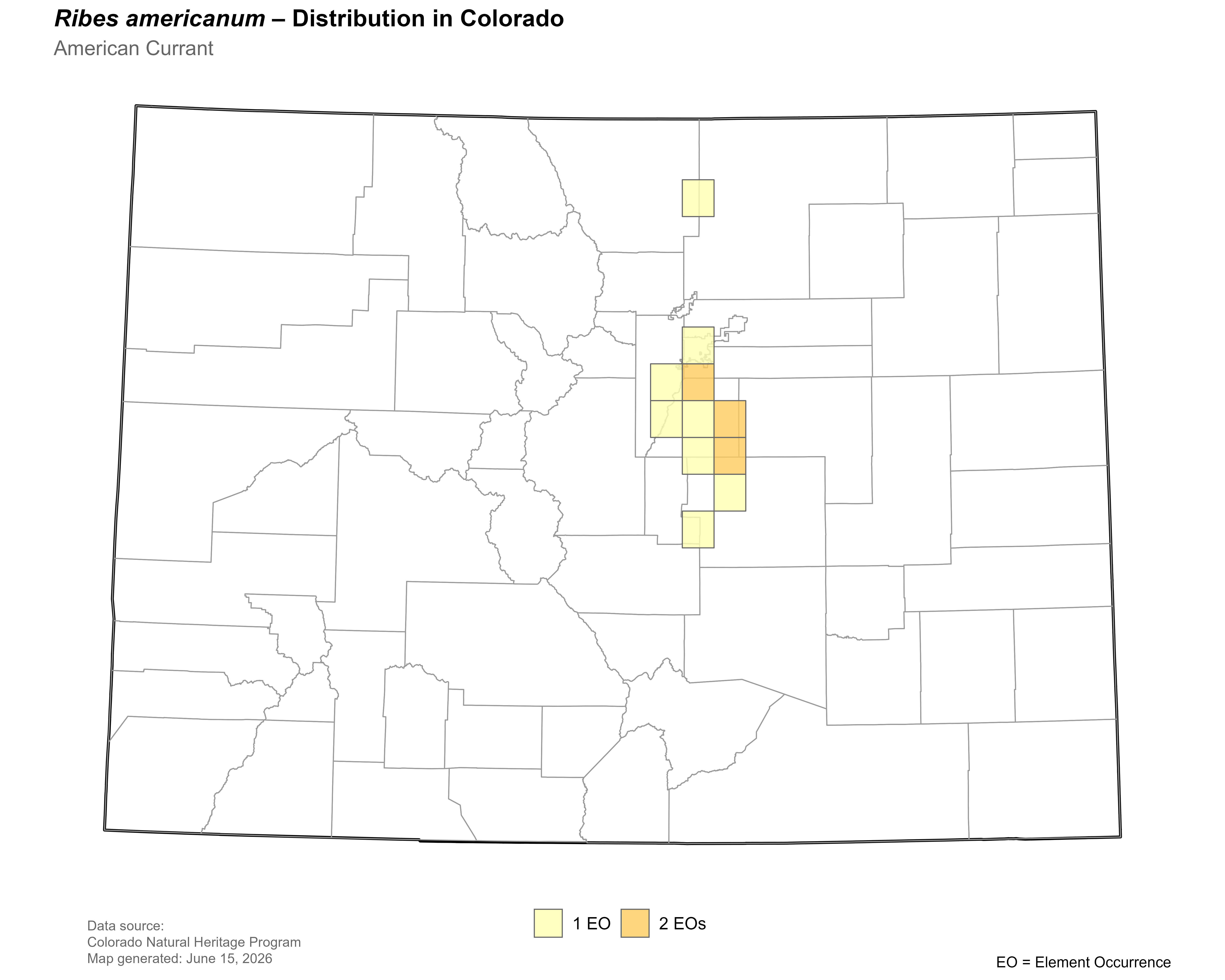
State Rank Reason : There are twelve known occurrences in the foothills of Arapaho, Douglas, Jefferson, and El Paso counties, Colorado (USA). The primary threat to the species is competition from non-native invasive plant species and potentially hydrologic alterations related to climate change or anthropogenic activities.
U.S. Endangered Species Act : none
Colorado Threatened and Endangered List : none
Other Statuses : none
Description and Phenology
General Description:
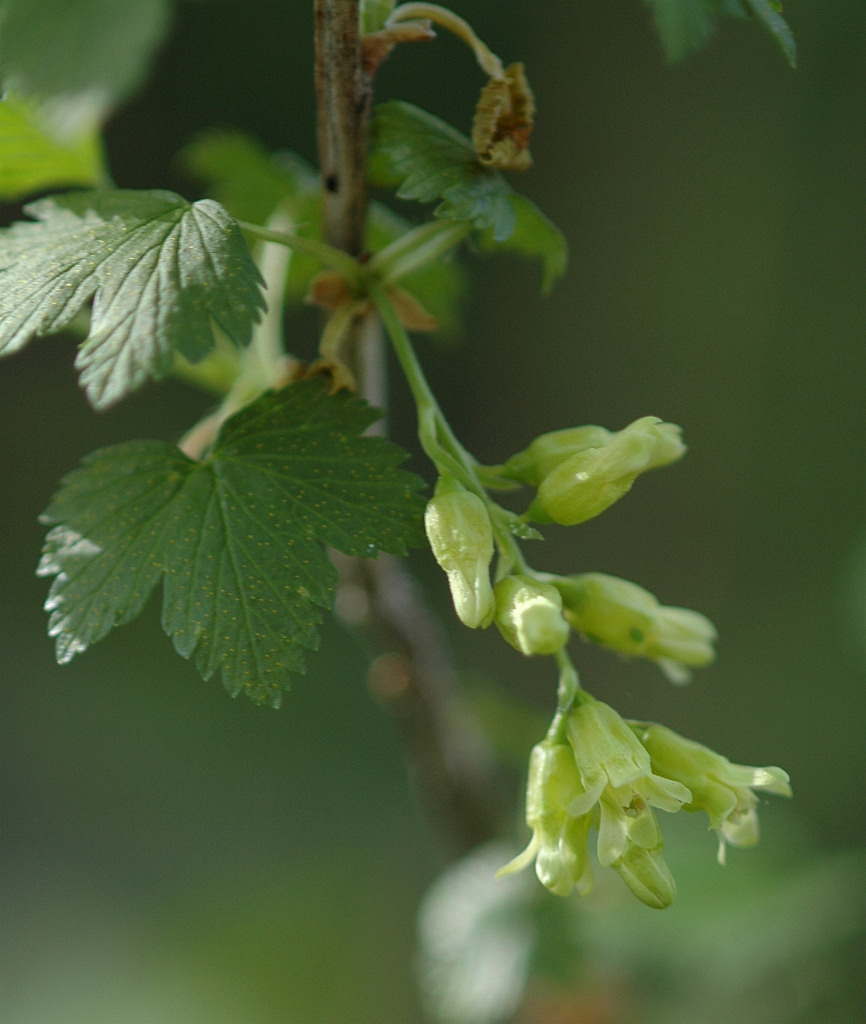
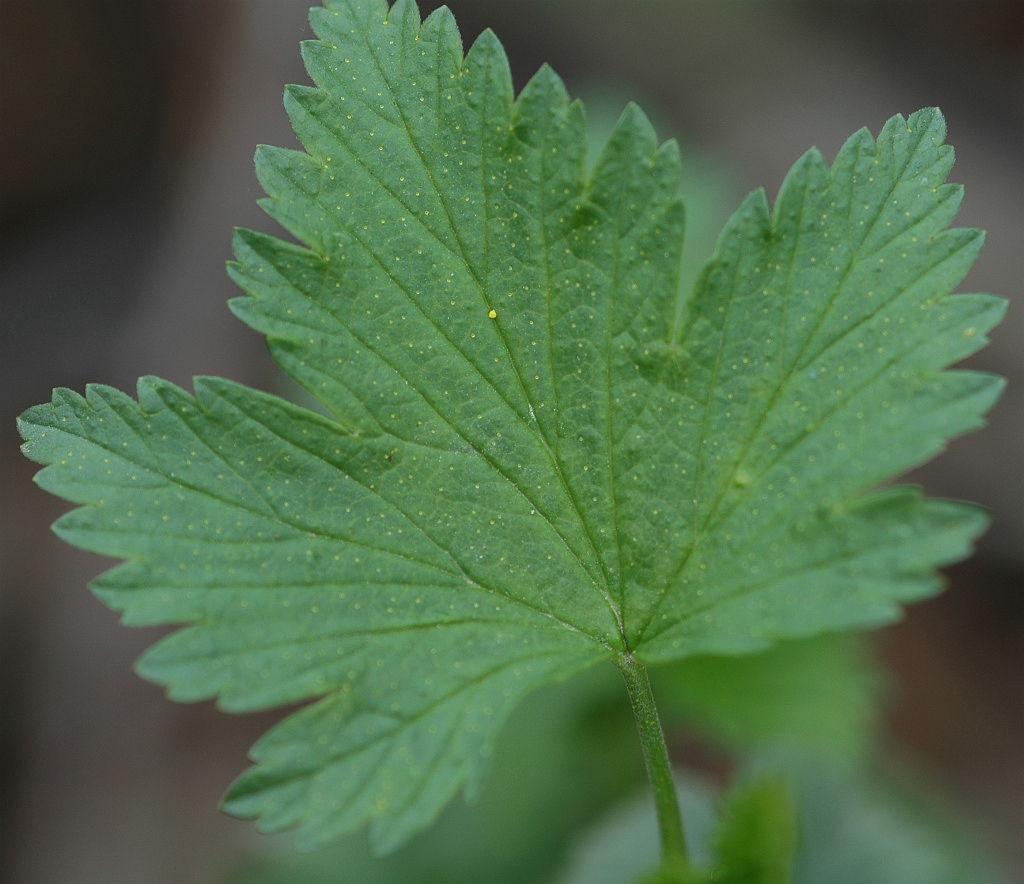
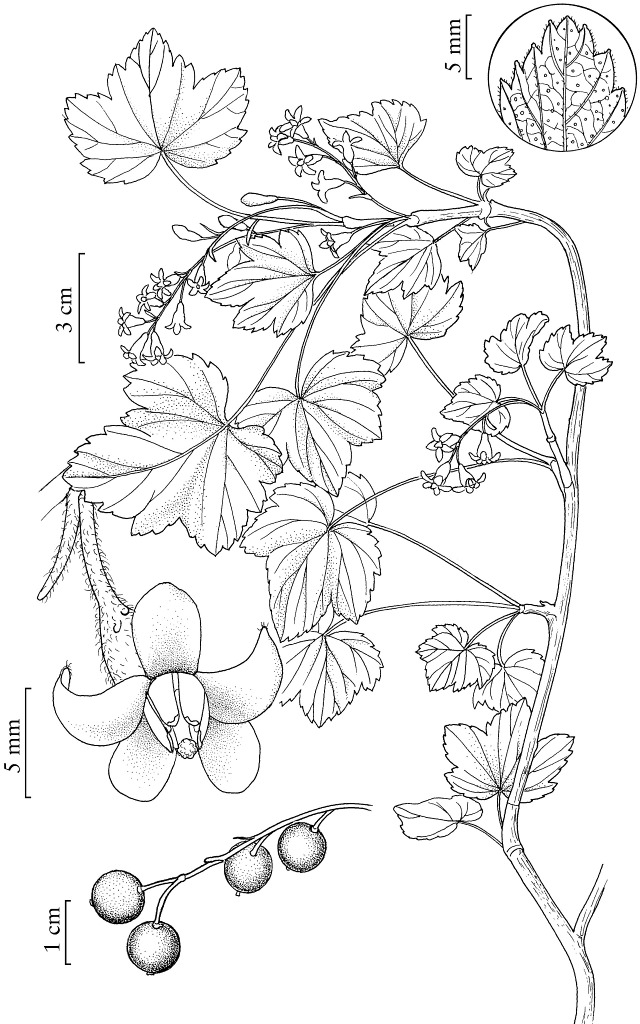
Unarmed shrubs, leaves suborbicular, 3-5 lobed, 3-8 cm long, glabrate above and yellow gland-dotted below. Hypanthium campanulate, hairy, tawny to greenish-white. Sepals 4-5 mm long, greenish-white. Petals 2-3 mm long, white. Berries 6-10 mm in diameter, black (Ackerfield 2015).
Look Alikes:
The yellow glands on the underside of the leaves are quite distinctive.
Phenology:
Flowers from mid-May through June, and retains fruits through early September.
 |
Habitat
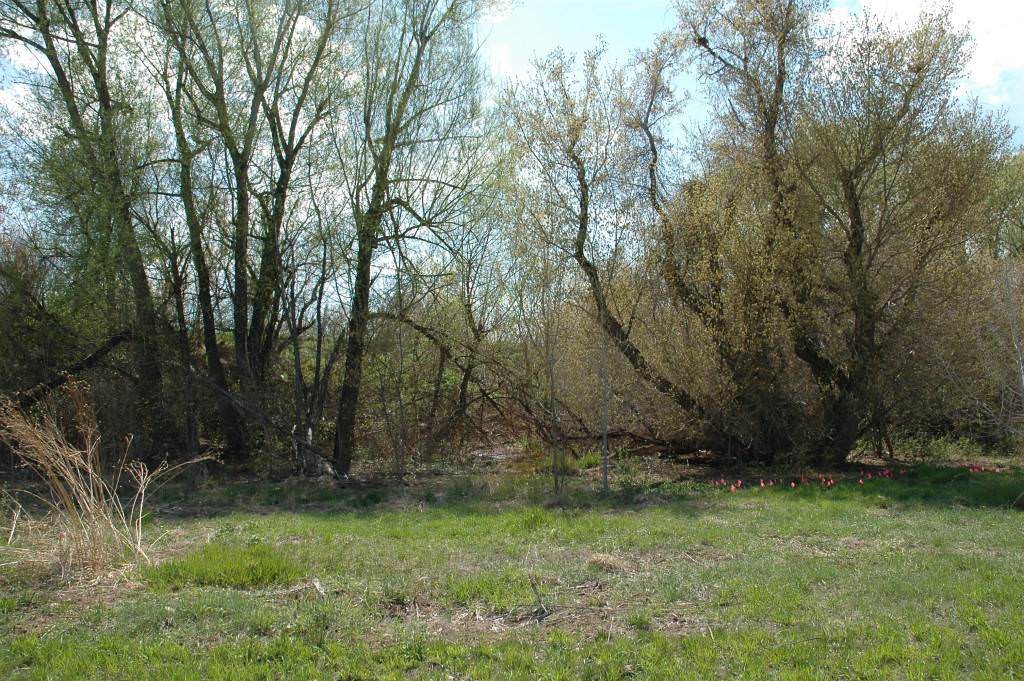
In Colorado, this species is found in shady places along streams and in moist meadows at lower elevations along the Front Range (Ackerfield 2015). Associated species include: Salix amygdaloides, S. exigua, Populus deltoides, P. angustifolia, Typha latifolia, Symphoricarpos occidentalis, S. rotundifolius, Ribes aureum, Rosa woodsia, Prunus virginiana, Solidago serotinoides, and abundant exotic weeds such as Bromus tectorum, Breea arvensis, Linaria vulgaris, Melilotus officinale, M. alba, Thlaspi arvense, Verbascum thapsus, Dipsacus fullonum, Lonicera tatarica. Also found at one location with the non-native Crack willow (Salix x. fragilis) and little other vegetation (Colorado Natural Heritage Program occurrence records 2017).
click on image to enlarge
 |
Elevation Range:
4,921 - 6,513 feet (1,500 - 1,985 meters)
Distribution
Colorado Endemic:
No
Range:
In Colorado this species has been documented in Araphoe, Douglas, El Paso, Jefferson, and Larimer counties. This species can also be found in Connecticut, Deleware, Illinois, Indiana, Iowa, Kentucky, Maine, Maryland, Massachusetts, Michigan, Minnesota, Missouri, Montana, Nebraska, New Hampshire, New Jersey, New Mexico, New York, North Dakota, Ohio, Pennsylvania, Rhode Island, South Dakota, Tennessee, Vermont, Virginia, Wisconsin, and Wyoming, US. Globally, this species can also be found in Alberta, Manitoba, New Brunswick, Nova Scotia, Ontario, Quebec, and Saskatchewan, Canada (USDA NRCS 2017).
Click on map to enlarge |
Threats and Management Issues
Infestations of numerous invasive weeds is a concern due to their potential to dominate the few known sites at the exclusion of R. americanum. All sites are also vulnerable to hydrologic alteration, herbicide spraying, and human disturbance and destruction of habitat. Recreational use is a concern at some locations. Colorado climate scenarios for 2050 suggest temperature will increase by 3-7 F and precipitation may decrease or increase. The impact to any given rare plant habitat is likely to vary. Long-term monitoring that includes weather and soil moisture data is critical to understanding climate impacts.
References
- Ackerfield, J. 2015. Flora of Colorado. BRIT Press, Botanical Research Institute of Texas, Fort Worth, TX. 818 pp.
- Colorado Natural Heritage Program (CNHP). 2023. Biodiversity Tracking and Conservation System (Biotics 5). Colorado Natural Heritage Program, Colorado State University, Fort Collins.
- Colorado Natural Heritage Program and the Geospatial Centroid. 2017. The Colorado Ownership and Protection Map (COMaP). Colorado State University, Ft. Collins, CO.
- Great Plains Flora Association. 1986. Flora of the Great Plains. University Press of Kansas, Lawrence, KS. 1402 pp.
- Harrington, H. D. 1954. Manual of the Plants of Colorado. Sage Books, Denver, CO. 666 pp.
- USDA, NRCS. 2022. The PLANTS Database. National Plant Data Team, Greensboro, NC 27401-4901 USA.
- Weber, W. A. and R. C. Wittmann. 2012. Colorado Flora, Eastern Slope, A Field Guide to the Vascular Plants, Fourth Edition. Boulder, Colorado. 555 pp.