


Scientific Name : Cirsium ownbeyi
Author : Welsh NatureServe Explorer
Common Name : Ownbey's Thistle
 Current Research Activities
 1997 profile


☰ Click link below for details.
Taxonomy
Asteraceae (sunflower family)
Ranks and Status
State Rank : S2
State Rank Reason : Cirsium ownbeyi is known from less than 20 occurrences in the northwest corner of Colorado. Although populations are small, most are not threatened by recreational activities or livestock grazing due to their inaccessibility but misidentification of thistles prior to weed treatments, weed management with bio-controls and long-term drought are of concern.
U.S. Endangered Species Act : none
Colorado Threatened and Endangered List : none
Other Statuses : SWAP Tier 2
Description and Phenology
General Description:
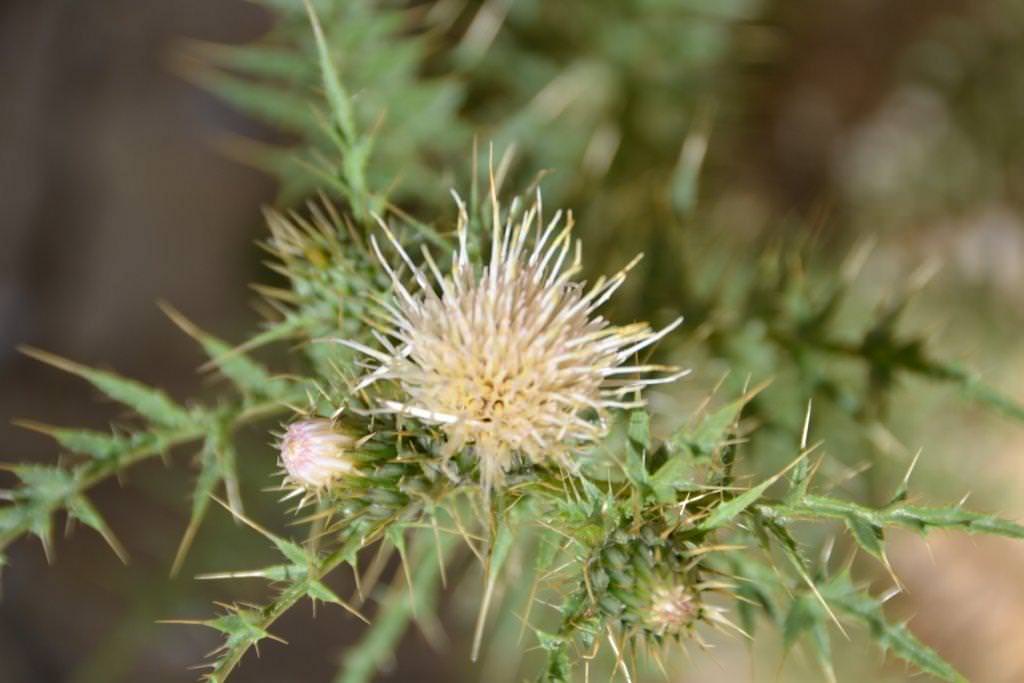
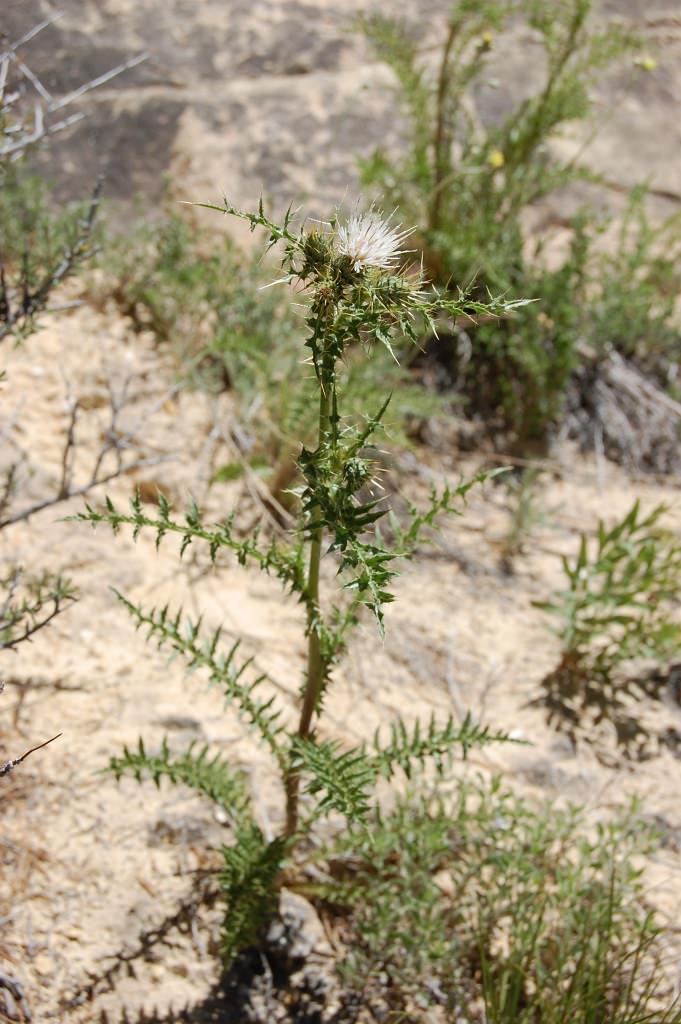
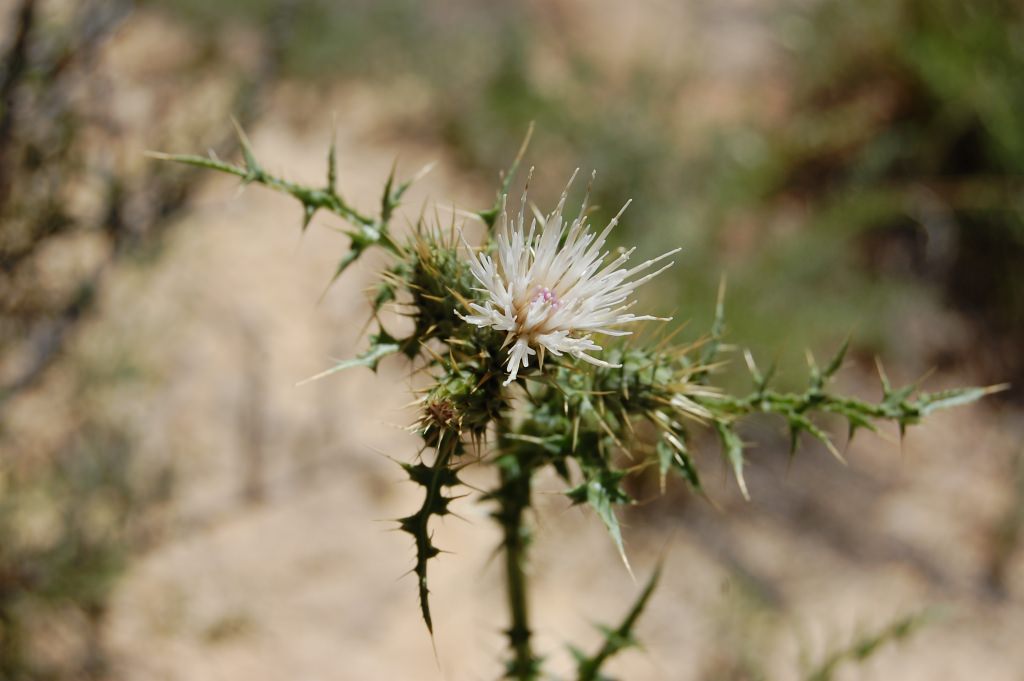
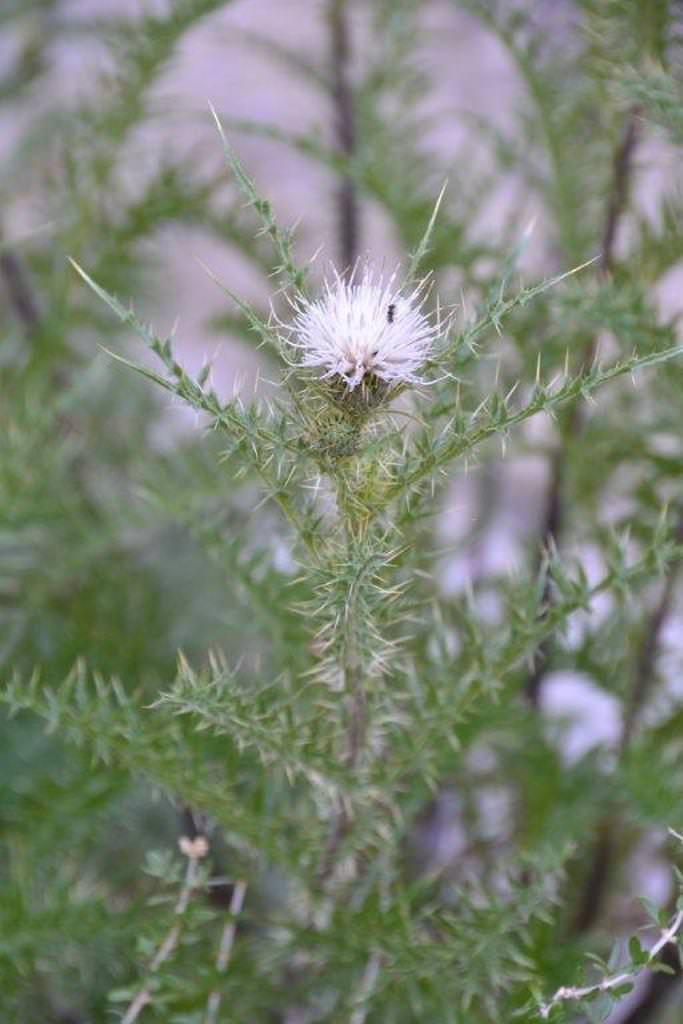
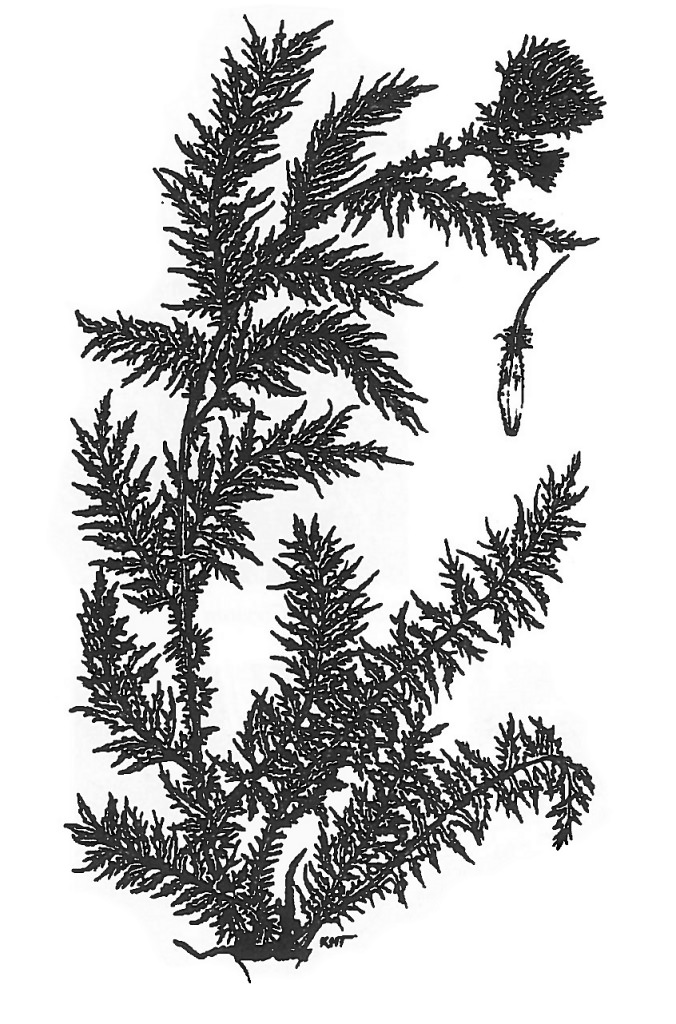
Taprooted perennial, 3-7 dm tall. Stems are lightly pubescent, spiny winged along internodes. Leaves are strongly decurrent, green, glabrous, thrice-compound into spiny, finely divided lobes. Upper-most leaves are reduced to spines. Involucre 1.8-2.5 cm high, bracts lightly pubescent on margins only, spine-tipped. Flower heads at tip of stem, not densely clustered, but hidden in a mass of spines. Flowers white to rose pink or lavender (Spackman et al. 1997, Weber and Wittmann 2012, Ackerfield 2015).
Look Alikes:
Cirsium calcareum leaves are tomentose at least beneath, rarely almost glabrous. Cirsium eatonii has densely cobwebby-pubescent involucre bracts (Spackman et al. 1997).
Phenology:
June-August (Spackman et al. 1997).
 |
Habitat
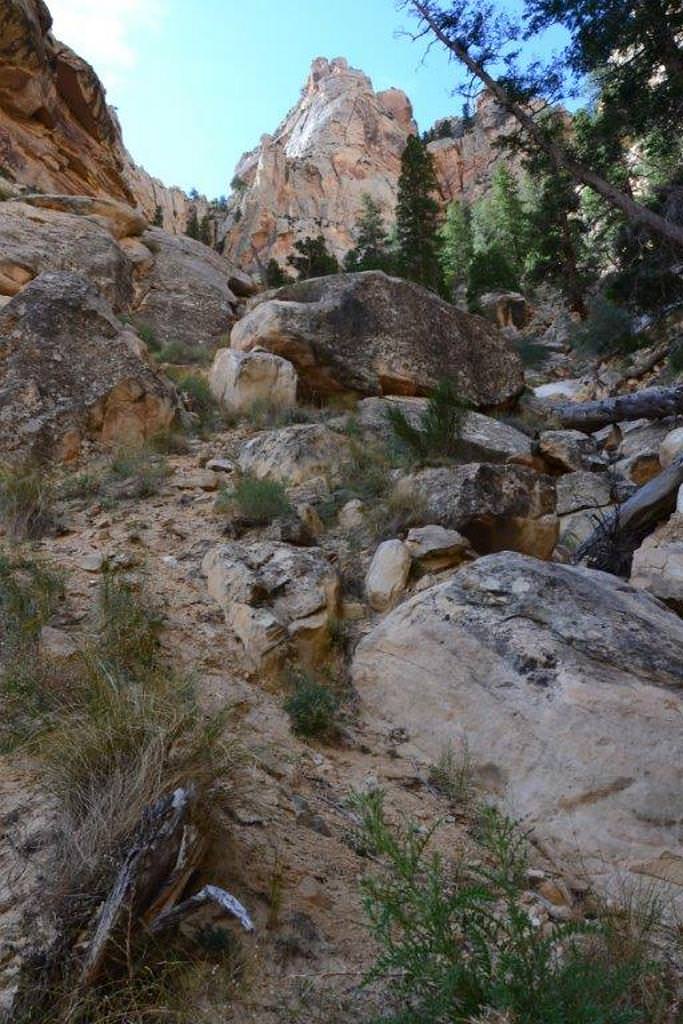
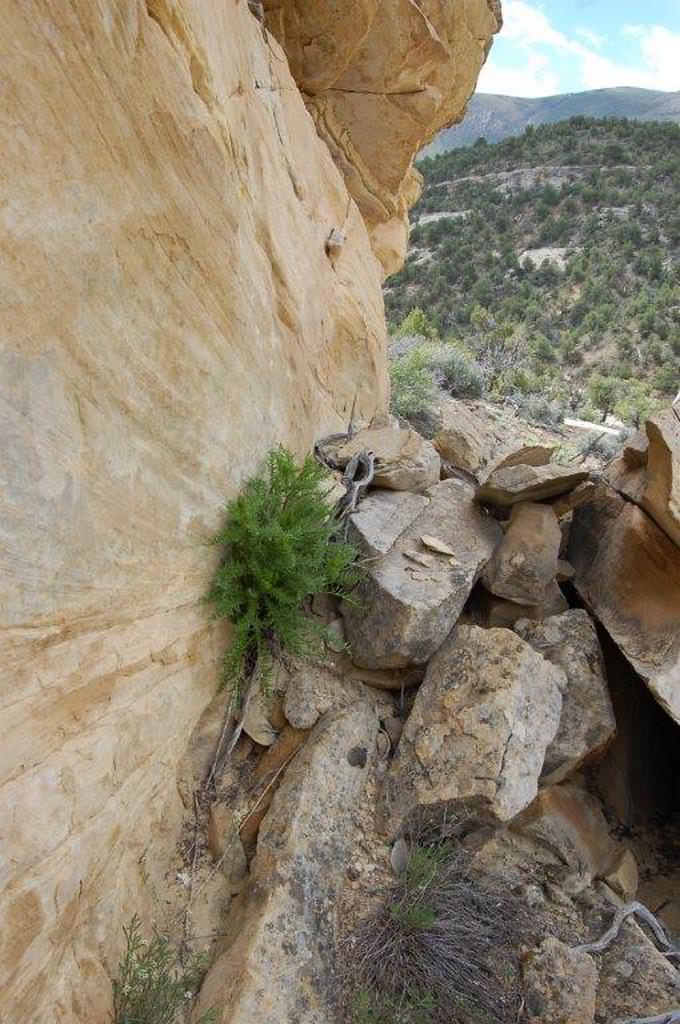
In Colorado, this species is found in pinyon-juniper, sagebrush, and riparian communities in open places in rocky, sandy, or clay soils. Found on gravelly alluvium, talus, or sandy slopes; usually on sandstone and occasionally on limestone of the Weber and Morgan formations. Often associated with alcove seeps and abandoned channels (Spackman et al. 1997, Ackerfield 2015). Associated taxa include Zigadenus vaginatus, Limnorchis zothecina, Aquilegia micrantha, Erigeron wilkenii, Fendlerella utahensis, Petrophyton caespitosum. Ephedra viridis, Heterotheca villosa, Cercocarpus montanus, Dodecatheon pulchellum, Clematis ligusticifolia, Carex lanuginosa, Chrysothamnus viscidiflorus, Rhus trilobata, Acer negundo, Senecio integerrimus, Cryptantha flava, Cirsium tracyi, Hymenopappus filifolius, Amelanchier utahensis, Mahonia repens, Stenotus acaulis, Tetraneuris acaulis, Pellaea glabella, Chrysothamnus nauseosus, Castilleja chromosa, Fraxinus anomala, and Pseudoroegneria spicata.
click on image to enlarge
 |
 |
Elevation Range:
5,081 - 7,400 feet (1,549 - 2,256 meters)
Distribution
Colorado Endemic:
No
Range:
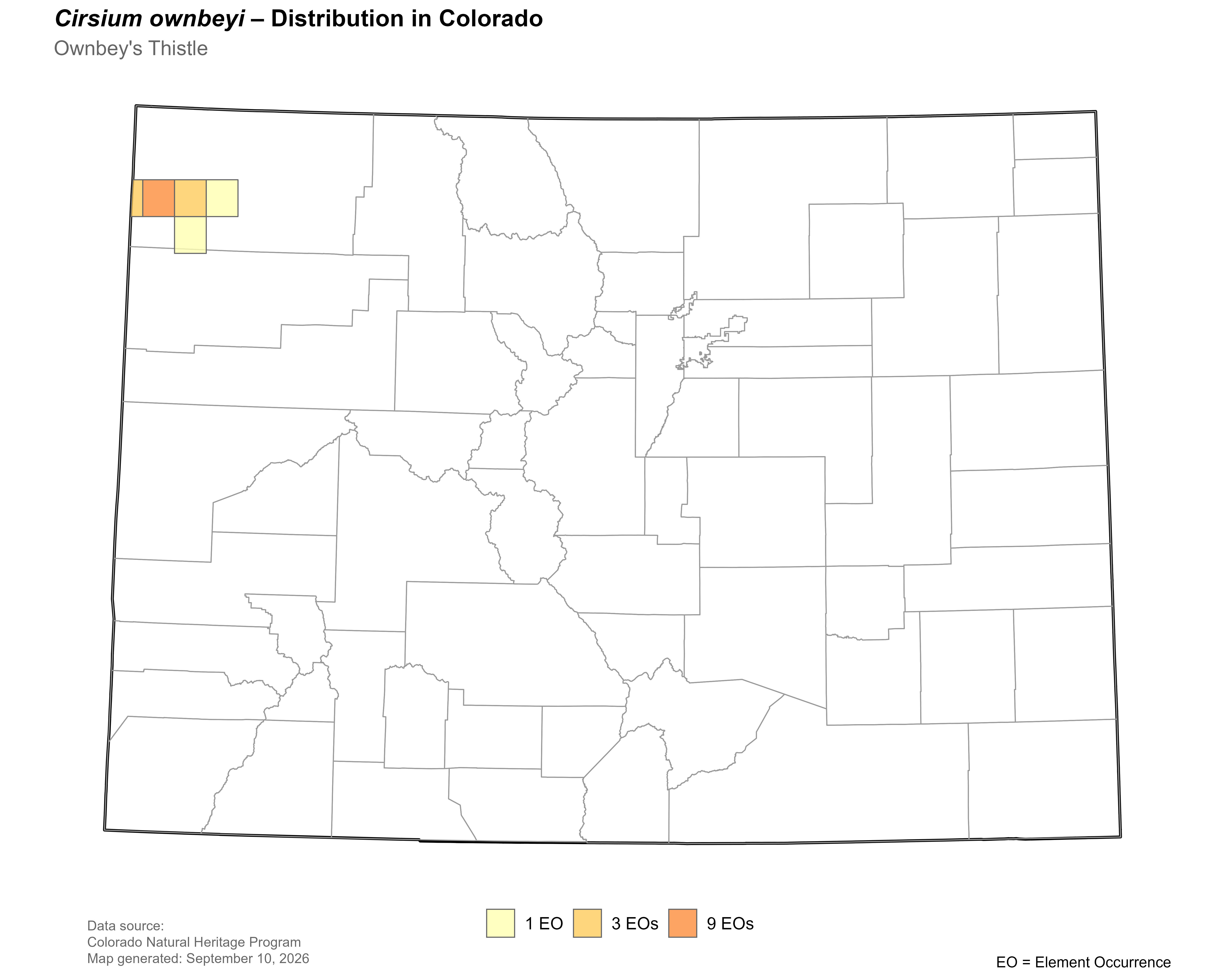
Cirsium ownbeyi is known from Moffat County in Colorado, USA. Estimated range extent in Colorado of 995 square kilometers was calculated in GeoCAT using occurrence data provided by the Colorado Natural Heritage Program (2024). This taxon is also known from a limited distribution in Utah and Wyoming.
Click on map to enlarge |
Threats and Management Issues
Although much of Cirsium ownbeyi's habitat is relatively inaccessible, it can still be impacted at some sites by non-motorized recreation, including hiking and camping activities within Dinosaur National Monument, and localized livestock grazing impacts. Cheatgrass (Bromus tectorum) is widespread throughout its range and competes with native vegetation. Additionally, C. ownbeyi could be mistaken for a non-native thistle and subject to weed treatments including inadvertent effects from bio-control measures targeting other thistle species. The effects of long-term drought on local hydrology are also a concern. This species is considered to have moderate adaptive capacity and is expected to be moderately vulnerable to climate change under both RCP 4.5 and 8.5 scenarios, as assessed for the 2025 Colorado State Wildlife Action Plan (CNHP 2025).
References
- Ackerfield, J. 2015. Flora of Colorado. BRIT Press, Botanical Research Institute of Texas, Fort Worth, TX. 818 pp.
- Colorado Native Plant Society. 1989. Rare plants of Colorado. Rocky Mountain Nature Association, Colorado Native Plant Society, Estes Park, Colorado. 73 pp.
- Colorado Natural Heritage Program (CNHP). 2025. Climate Change Vulnerability Assessment of Colorado Tier 1 and Tier 2 Plant Species of Greatest Conservation Need (SCGN) for the 2025 Colorado State Wildlife Action Plan. Colorado Natural Heritage Program, Colorado State University, Fort Collins, CO.
- Colorado Natural Heritage Program and the Geospatial Centroid. 2017. The Colorado Ownership and Protection Map (COMaP). Colorado State University, Ft. Collins, CO.
- Cronquist, A., A. H. Holmgren, N. H. Holmgren, J. L. Reveal, P. K. Holmgren. 1994. Intermountain Flora Vascular Plants of the Intermountain West, USA: Vol. 5. New York Botanical Garden, Bronx, NY.
- Fletcher, R., B. Isaacs, P. Knight, W. Martin, D. Sabo, R. Spellenberg, and T. Todsen. 1984. A Handbook of Rare and Endemic Plants of New Mexico. University of New Mexico Press, Alburquerque, NM.
- Flora of North America Editorial Committee, ed. (FNA). 1993+. Flora of North America North of Mexico. Oxford Univ. Press, New York, Oxford.
- O'Kane, S. L. 1988. Colorado's Rare Flora. Great Basin Naturalist. 48(4):434-484.
- O'Kane, S.L. 1986. Plant species of special concern for the State of Colorado. Unpublished report.
- Spackman, S., B. Jennings, J. Coles, C. Dawson, M. Minton, A. Kratz, and C. Spurrier. 1997. Colorado rare plant field guide. Prepared for Bureau of Land Management, U.S. Forest Service and U.S. Fish and Wildlife Service by Colorado Natural Heritage Program.
- USDA, NRCS. 2022. The PLANTS Database. National Plant Data Team, Greensboro, NC 27401-4901 USA.
- Weber, W. A. and R. C. Wittmann. 2012. Colorado Flora, Western Slope, A Field Guide to the Vascular Plants, Fourth Edition. Boulder, Colorado. 532 pp.
- Welsh, S.L. 1982. New taxa of thistles (Cirsium, Asteraceae) in Utah. Great Basin Naturalist. 42:199-202.
- Welsh, S.L., N.D. Atwood, L.C. Higgins and S. Goodrich. 1987. Utah Flora, Great Basin Naturalist Memoirs, No. 9. Brigham Young University, Provo, Utah. 986 pp.


