

Scientific Name : Carex saximontana
Author : Mackenzie NatureServe Explorer
Common Name : Rocky Mountain Sedge
 Current Research Activities


☰ Click link below for details.
Taxonomy
Cyperaceae (sedge family)
Synonyms include: Carex backii Boott var. saximontana (Mackenzie) B. Boivin; C. backii var. subrostrata (Bates) Dorn; C. durifolia L. H. Bailey var. subrostrata Bates
Ranks and Status
State Rank : S2
State Rank Reason : Carex saximontana is known from about 20 occurrences in four Front Range counties in northern Colorado, USA. However, only one occurrence is documented as having good viability and about half of the occurrences have not been visited within the last 20 years.
U.S. Endangered Species Act : none
Colorado Threatened and Endangered List : none
Other Statuses : none
Description and Phenology
General Description:
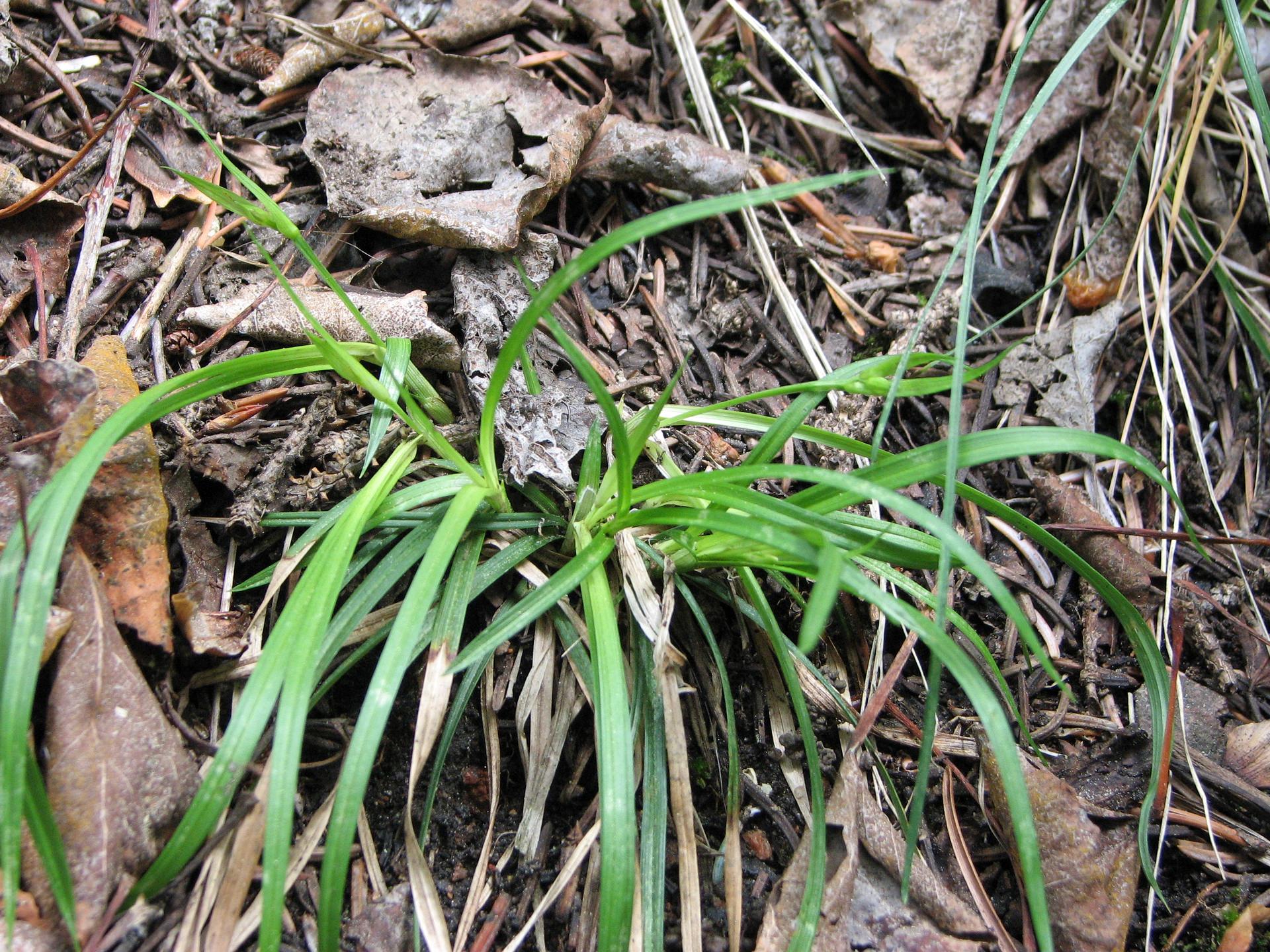
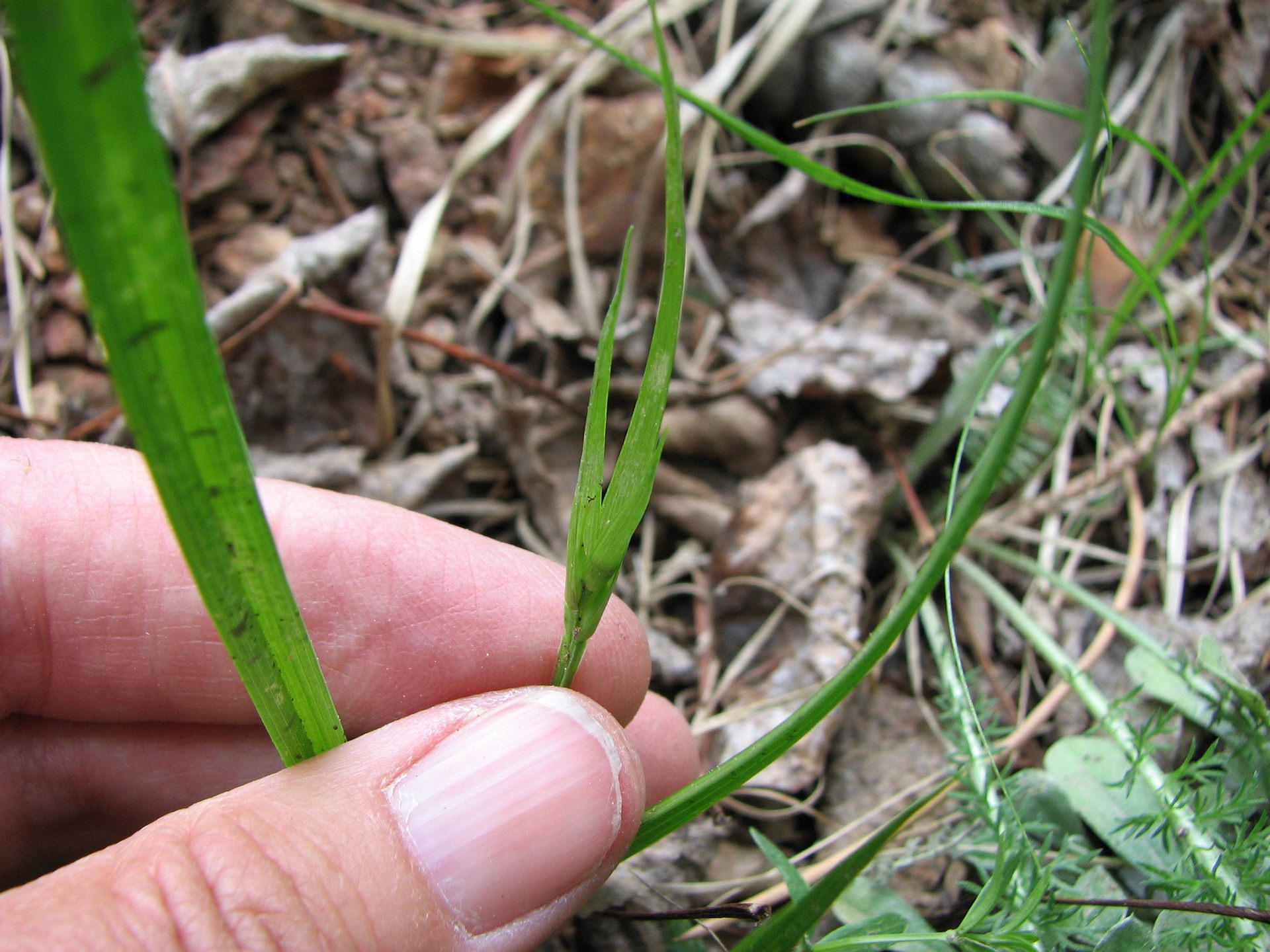
Culms 2.5â35 cm tall, caespitose. Leaves flat, 2-5 mm wide; basal sheaths pale to medium brown; blades dark green to greenish glaucous, longer than stems, leathery, with margins white-hyaline, smooth or scabrous. Bracts leaf-like, longer than the inflorescence. Lateral spikes 0â2, basal, on erect peduncles. Terminal spikes with staminate portion 2â3-flowered; pistillate portion 2â6-flowered (Ackerfield says: spikes solitary, androgynous, few-flowered). Pistillate scales green, leaf-like and essentially concealing perigynia, apex acute; distal scales lanceolate to ovate, apex awned to acute. Staminate scales green or white, ovate to oblong, margins connate near base or for entire length, enfolding scales above, white or with brown subapical band, apex obtuse. Anthers 1â1.5 mm. Perigynia 4-5 mm long, pale green, obovoid, tightly enveloping achenes, apex abruptly tapered, papillose on distal 1/3; beak 0.6â1.2 mm, scabrous. Stigmas 3, club-shaped, erect, short, thick, minutely papillose. Achenes pale to dark brown, 2.5â3 Ã 1.6â2.4 mm (Flora of North America 2002, Ackerfield 2015). Please see photographs of perigynium in Ackerfield (2015).
Look Alikes:
Carex backii has longer perigynia, 5-6 mm long, with the upper third of the body empty, beaks stout, 2-3 mm long, and smooth margined. Carex saximontana perigynia are 4-5 mm long, the upper part of the body filled by the achene, beaks 0.5-1 mm long, with more or less serrulate margins (Weber and Wittmann 2012).
Phenology:
Information on collections from Colorado indicates that this species flowers in May and produces fruits in June and early July.
Habitat
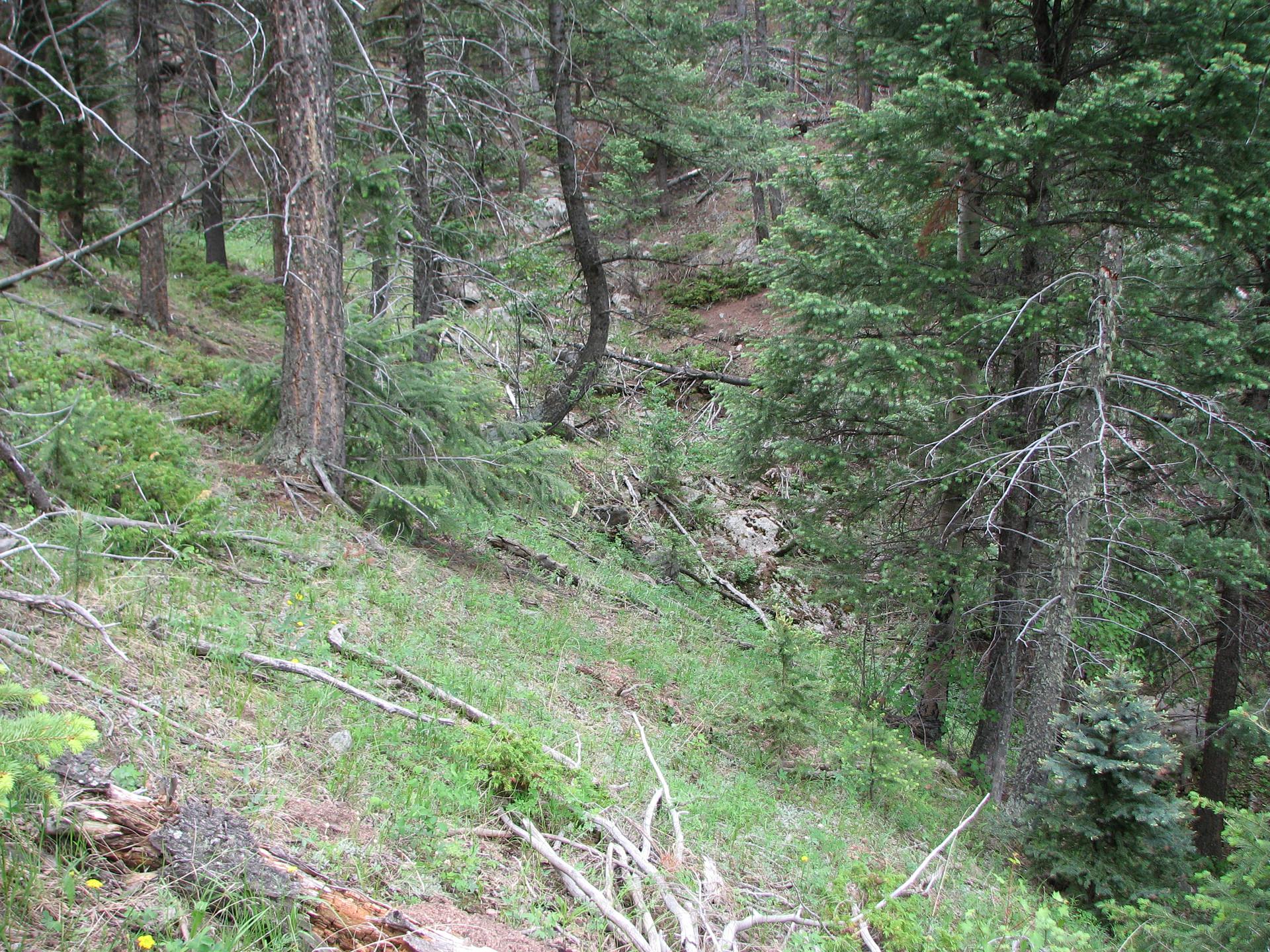
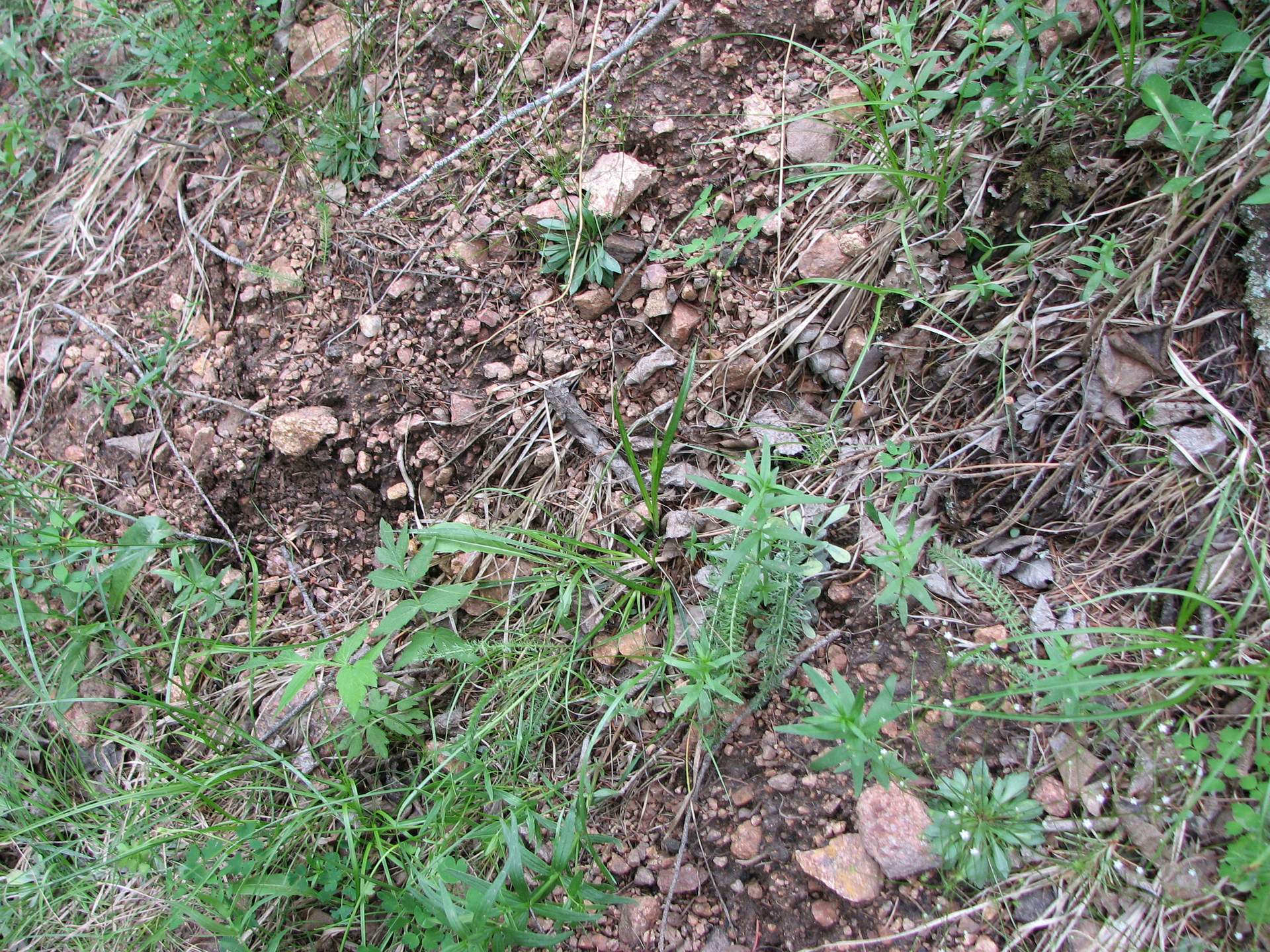
In Colorado, Carex saximontana is found in dry to mesic, sandy to rocky soils in mixed conifer forests, thickets, woodlands, and canyons (Weber and Wittmann 2012, Ackerfield 2015, Colorado Natural Heritage Program Occurrence Records 2017). Associated species include: Pseudotsuga menziesii, Pinus ponderosa, Populous tremmuloides, Jamesia americana, Ribes cereum, Quercus gambellii, Mahonia repens, Galium boreale, Carex pennsylvanica, Leucopoa kingii, Muhlenbergia montana, Koeleria macrantha. Helianthus pumilus, Carex geophila, Carex rossii, Leymus ambiguous, Ceanothus fendleri, Carex geyeri, Carex rosii, Smilax lasionerura, Viola rydbergii, Galium aparine, Toxicodendron radicans, Rhus trilobata, Smilacena stellata, Delphinium geyeri, Carex inops ssp. heliophila, Prunus virginiana, Rhus trilobata, Amelanchier utahensis, Penstemon vierns, Allium cernuum, Artemisia ludoviciana, Delphinium nuttallianum, Drymocallis fissa, Heuchera parviflora, Hesperostipa comata, Hesperostipa nelsonii, Elymus elymoides, Carex pennsylvanica (Colorado Natural Heritage Program Occurrence Records 2017).
click on image to enlarge
 |
 |
Elevation Range:
5,394 - 8,443 feet (1,644 - 2,573 meters)
Distribution
Colorado Endemic:
No
Range:
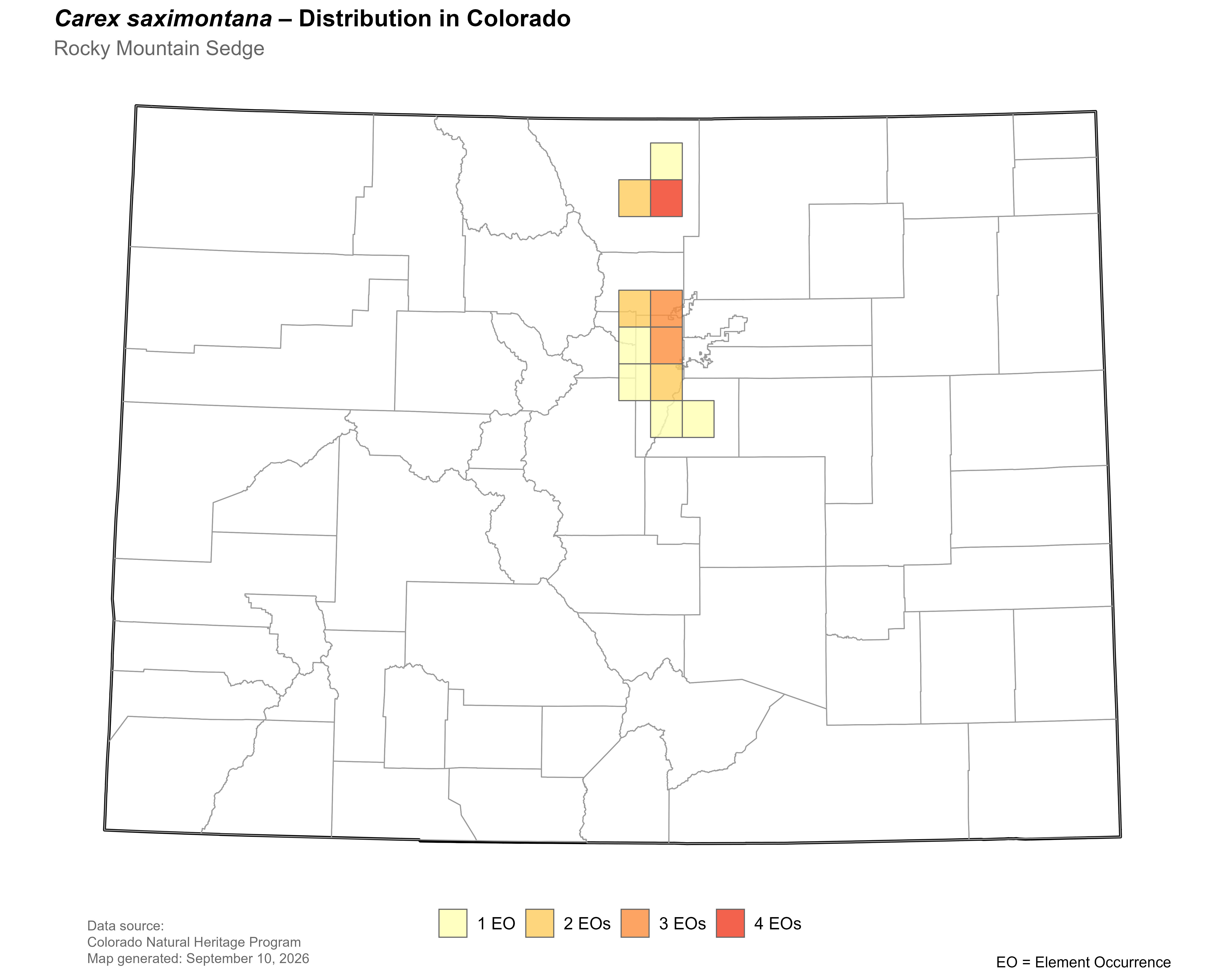
Carex saximontana is known from Boulder, Douglas, Jefferson, and Larimer counties in Colorado, USA. Estimated range extent in Colorado of 2598 square kilometers was calculated in GeoCAT using occurrence data provided by the Colorado Natural Heritage Program (2026). This species is also known from Idaho, Iowa, Minnesota, Montana, Nebraska, Nevada, North Dakota, Oregon, South Dakota, Washington, and Wyoming, USA. Globally, this species can also be found in Alberta, Manitoba, Ontario, and Saskatchewan, Canada.
Click on map to enlarge |
Threats and Management Issues
In Colorado, the primary concerns appear to be incompatible grazing, recreational use, and competition from non-native plants (CNHP 2023). Colorado climate scenarios for 2050 suggest temperature will increase by 3-7 F and precipitation may decrease or increase. The impact to any given rare plant habitat is likely to vary. Long-term monitoring that includes weather and soil moisture data is critical to understanding climate impacts.
References
- Ackerfield, J. 2015. Flora of Colorado. BRIT Press, Botanical Research Institute of Texas, Fort Worth, TX. 818 pp.
- Colorado Natural Heritage Program (CNHP). 2026. Biodiversity Tracking and Conservation System (Biotics 5). Colorado Natural Heritage Program, Colorado State University, Fort Collins.
- Colorado Natural Heritage Program and the Geospatial Centroid. 2017. The Colorado Ownership and Protection Map (COMaP). Colorado State University, Ft. Collins, CO.
- Cronquist, A., A. H. Holmgren, N. H. Holmgren, J. L. Reveal and P. K. Holmgren. 1977. Intermountain Flora Vascular Plants of the Intermountain West, USA: vol. 6. New York Botanical Garden, Bronx, NY.
- Harrington, H. D. 1954. Manual of the Plants of Colorado. Sage Books, Denver, CO. 666 pp.
- Hermann, F. J. 1970. Manual of the Carices of the Rocky Mountains and Colorado Basin. U.S.D.A. Forest Service Agriculture Handbook No. 374.
- Southwest Environmental Information Network (SEINet). 2017. Collections Databases. Online. Available: http://swbiodiversity.org/seinet/. Acessed 2017.
- USDA, NRCS. 2022. The PLANTS Database. National Plant Data Team, Greensboro, NC 27401-4901 USA.
- Weber, W. A. and R. C. Wittmann. 2012. Colorado Flora, Eastern Slope, A Field Guide to the Vascular Plants, Fourth Edition. Boulder, Colorado. 555 pp.
- Weber, W. A. and R. C. Wittmann. 2012. Colorado Flora, Western Slope, A Field Guide to the Vascular Plants, Fourth Edition. Boulder, Colorado. 532 pp.
- Welsh, S.L., N.D. Atwood, S. Goodrich, and L.C. Higgins (eds.) 1993. A Utah flora. 2nd edition. Brigham Young Univ., Provo, Utah. 986 pp.