


Scientific Name : Calochortus ciscoensis
Author : S.L. Welsh & N.D. Atwood NatureServe Explorer
Common Name : Cisco Sego Lily
 Current Research Activities


☰ Click link below for details.
Taxonomy
Liliaceae (lily family)
Listed as Calochortus ciscoensis in Ackerfield (2022) and not included in the first edition of Ackerfield (2015).
Ranks and Status
State Rank : S1
State Rank Reason : Calochortus ciscoensis is known from less than five occurrences in two western Colorado counties (USA). Rangewide motorized recreation and livestock grazing are a concern, as is competition from invasive plant species such as Bromus tectorum and Eremopyrum triticeum. Calochortus ciscoensis is also considered to be vulnerable to the effects of climate change.
U.S. Endangered Species Act : none
Colorado Threatened and Endangered List : none
Other Statuses : none
Description and Phenology
General Description:
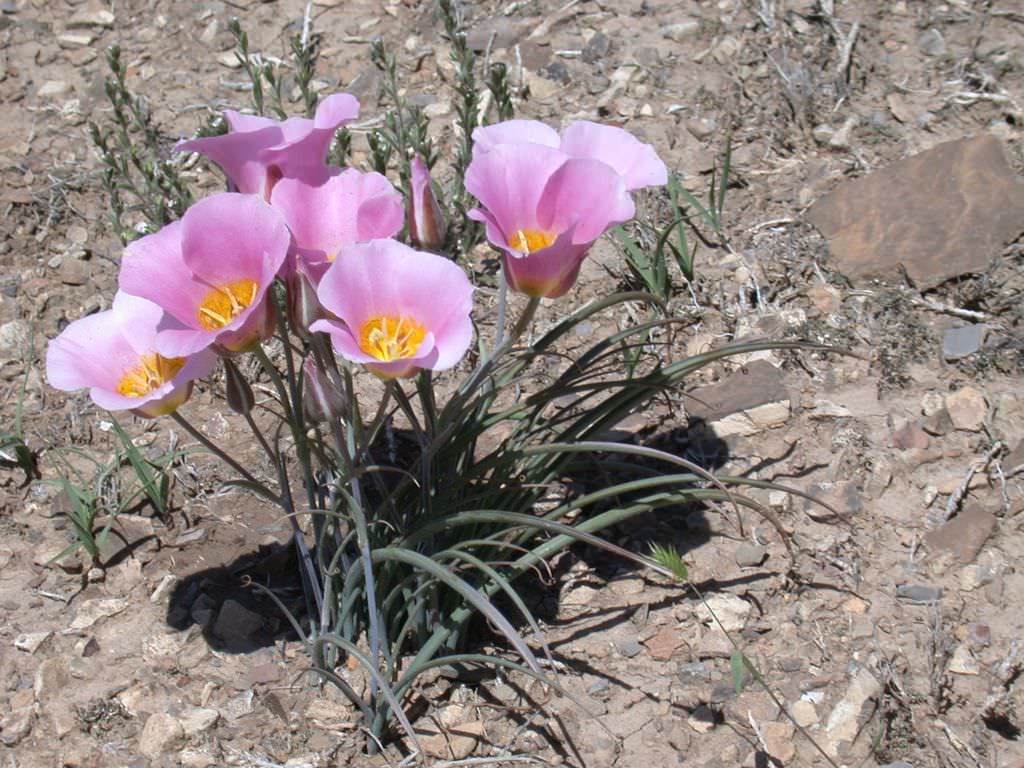
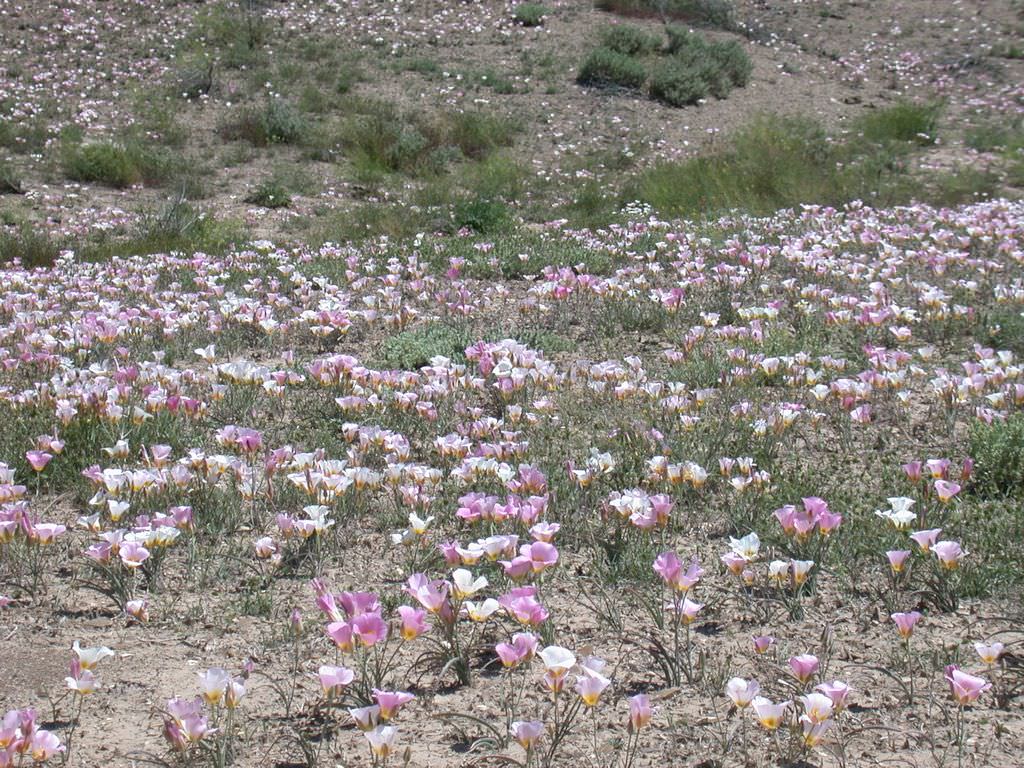
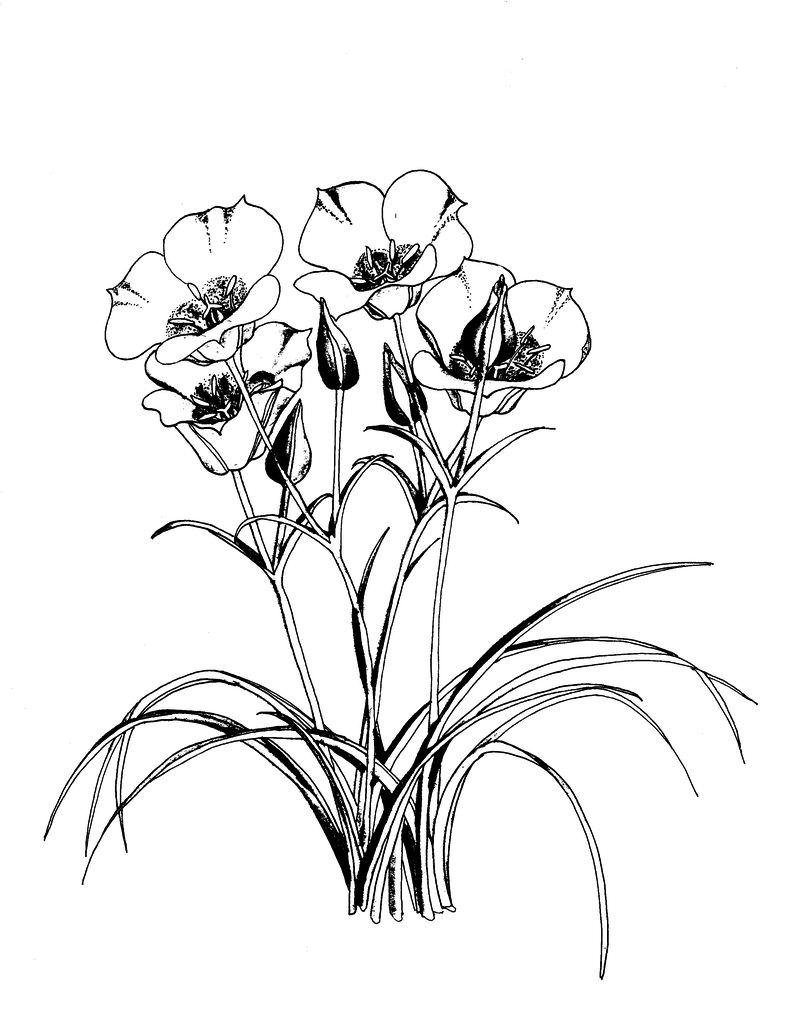
Plants are 15-25 (40) cm tall, often with several plants arising as offsets from the parent plant, appearing bunched and usually many plants blooming at the same time in profusion. Each stem has 2-3 (5) flowers. Flowers are white to pink/lavender, petals lacking a distinctive chevron or with a faded/faint purple blotch or one that is very narrowly restricted above the inner base. Leaves: long, drooping basal leaves present at the time of flowering (Utah Native Plant Society 2019).
Look Alikes:
Similar to C. nuttallii but differs in having a bunched appearance usually with 2-3 flowers per stem, typically taller, and chevron lacking or mostly lacking or narrowly restricted often with a purple blotch above the inner yellow base of the inflorescence, acuminate petal tips typically less pronounced; persistent, long drooping basal leaves (Utah Native Plant Society 2019).
Phenology:
Flowers in mid-May (Colorado Natural Heritage Program 2022).
 |
Habitat
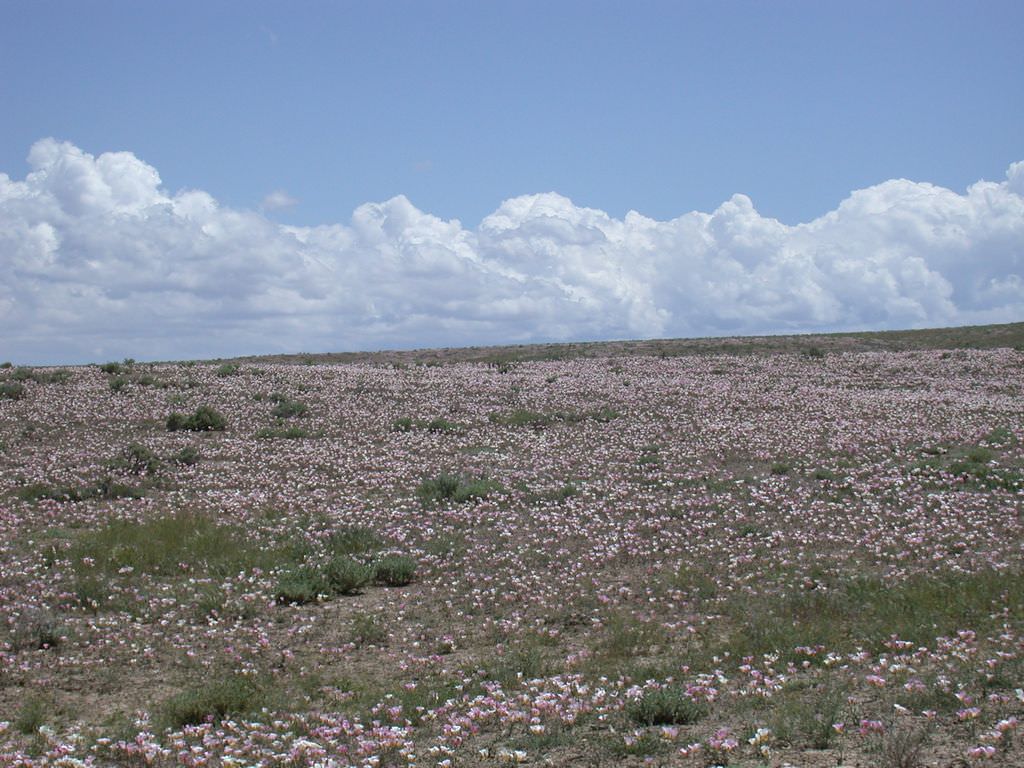
Rolling desert shrublands and grasslands with adobe soils. Associated plant species include: Artemisia tridentata, Pleuraphis jamesii, Atriplex confertifolia, A. canescens, A. gardneri, Achnatherum hymenoides, Hesperostipa comata, Sarcobatus vermiculatus, Gutierrezia sarothrae, Phlox longiflora, Eremopyrum triticeum, Tetradymia spinosa, Abronia elliptica, Delphinium scaposum, and Sphaeralcea coccinea (Colorado Natural Heritage Program 2022).
click on image to enlarge
 |
Elevation Range:
4,660 - 5,088 feet (1,420 - 1,551 meters)
Distribution
Colorado Endemic:
No
Range:
Calochortus ciscoensis is known from Mesa and Garfield counties in Colorado. Estimated range extent in Colorado of 190 square kilometers was calculated in GeoCAT using occurrence data provided by the Colorado Natural Heritage Program (2023).It is also known from Duchesne, Grand, and Uinta Counties in Utah, USA.
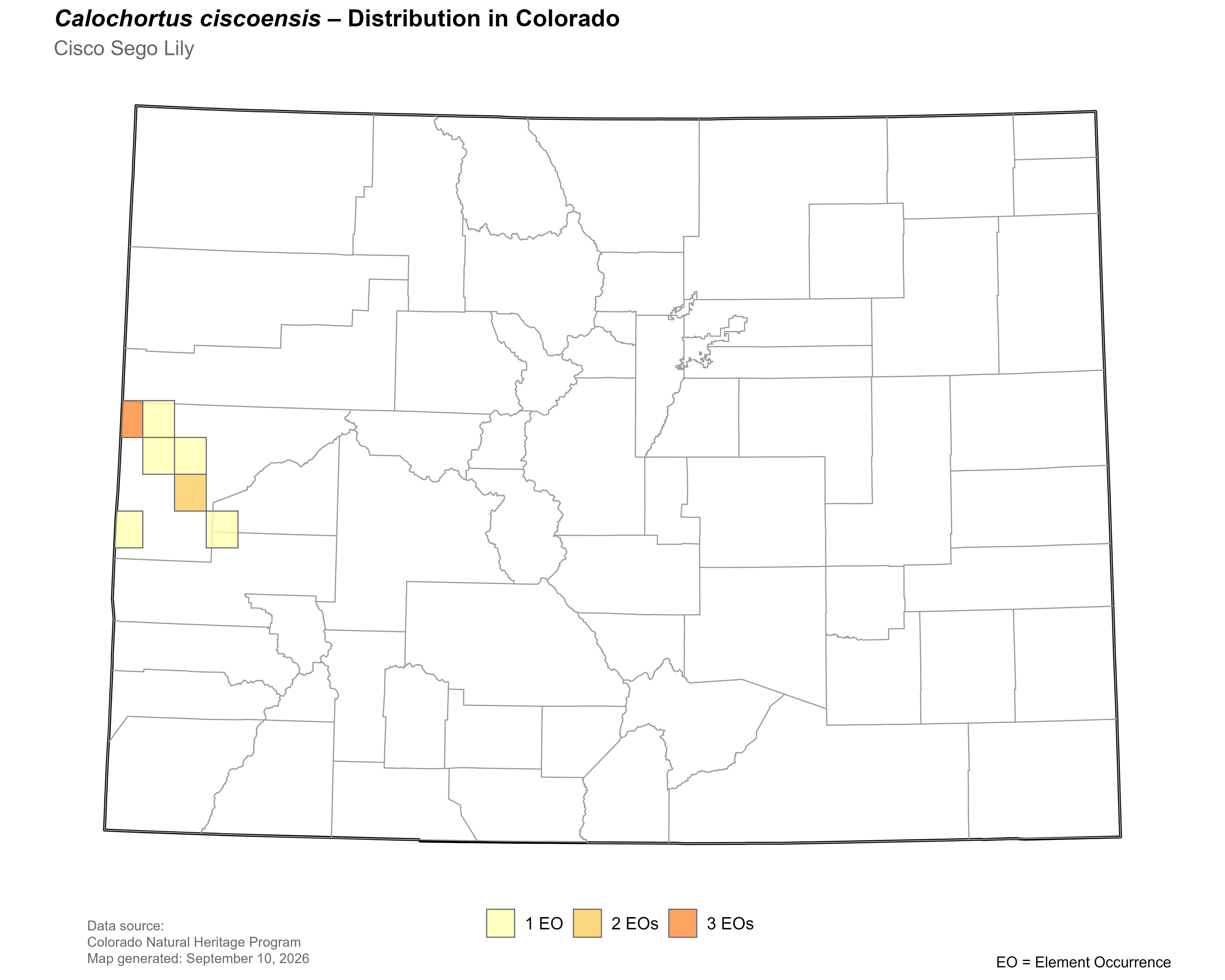
Click on map to enlarge |
Threats and Management Issues
Parts of one occurrence are within a BLM Special Management Area. Livestock grazing impacts have altered vegetation and soil hydrology at another site. Another occurrence mentions roads, some in potential oil and gas development areas. Rangewide motorized recreation and livestock grazing are a concern, as is competition from invasive plant species such as Bromus tectorum and Eremopyrum triticeum (CNHP 2022). This species is also considered to be extremely vulnerable to climate change (Handwerk et al. 2015).
References
- Colorado Natural Heritage Program (CNHP). 2022. Biodiversity Tracking and Conservation System (Biotics 5). Colorado Natural Heritage Program, Colorado State University, Fort Collins.
- Handwerk, J., L. Grunau, and S. Panjabi. 2015. Colorado Wildlife Action Plan: 2015 Rare Plant Addendum. Colorado Natural Heritage Program, Colorado State University, Fort Collins, Colorado, USA.
- Utah Native Plant Society. 2003-2019. Utah rare plant guide. A.J. Frates editor/coordinator. Salt Lake City, UT. Utah Native Plant Society. Online. Available: http://www.utahrareplants.org (accessed 2019).
- Welsh, S.L., N.D. Atwood, S. Goodrich, and L.C. Higgins [eds]. 2008. A Utah flora, fourth edition, revised. 2004-2008 summary monograph. Provo, Utah: Brigham Young University. 1019 pp.