

Scientific Name : Aulospermum duchesnense
Author : (Jones) Tidestrom NatureServe Explorer
Common Name : Uinta Basin Spring- parsley
 Current Research Activities
 1997 profile


☰ Click link below for details.
Taxonomy
Apiaceae (carrot family)
Cymopterus duchesnensis M.E. Jones is the accepted name in Plants of the World Online (2026) and the Flora of North America (Vol. 13, 2024). The Colorado Natural Heritage Program follows Ackerfield (2022) which uses the synonym Aulospermum duchesnensis Tidestr.
Ranks and Status
State Rank : S1S2
State Rank Reason : Aulospermum duchesnense is known from a limited distribution in northwest Colorado, USA. Individual occurrences are generally small and some sites may be impacted by livestock grazing or motorized recreation; long-term drought is also a concern as this species is considered to have low adaptive capacity and is expected to be extremely vulnerable to climate change.
U.S. Endangered Species Act : none
Colorado Threatened and Endangered List : none
Other Statuses : BLM, SWAP Tier 2
Description and Phenology
General Description:
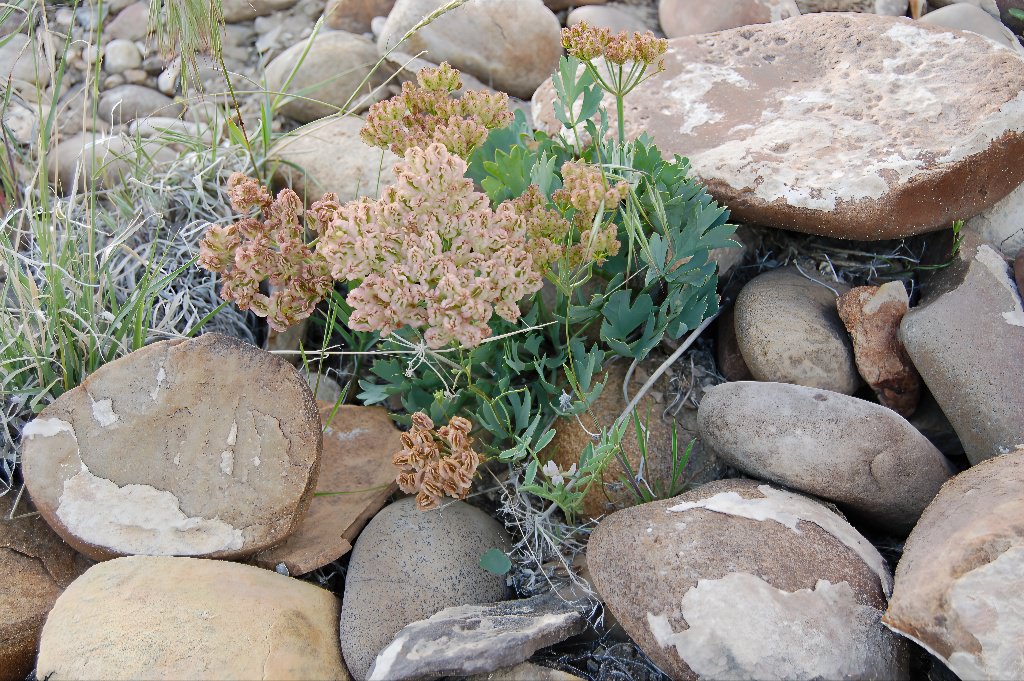
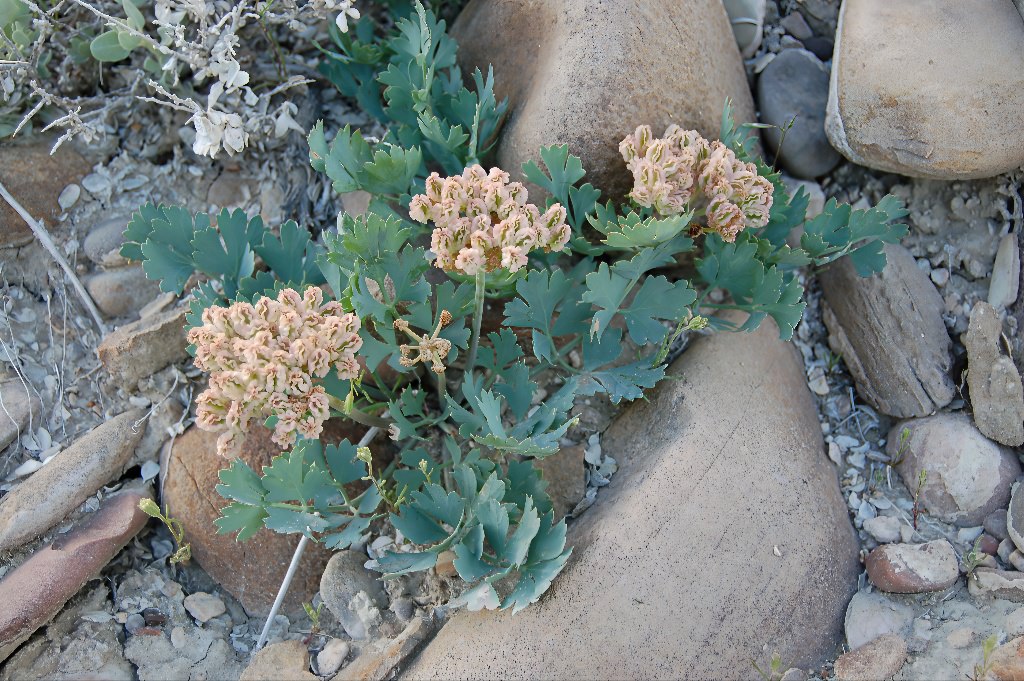
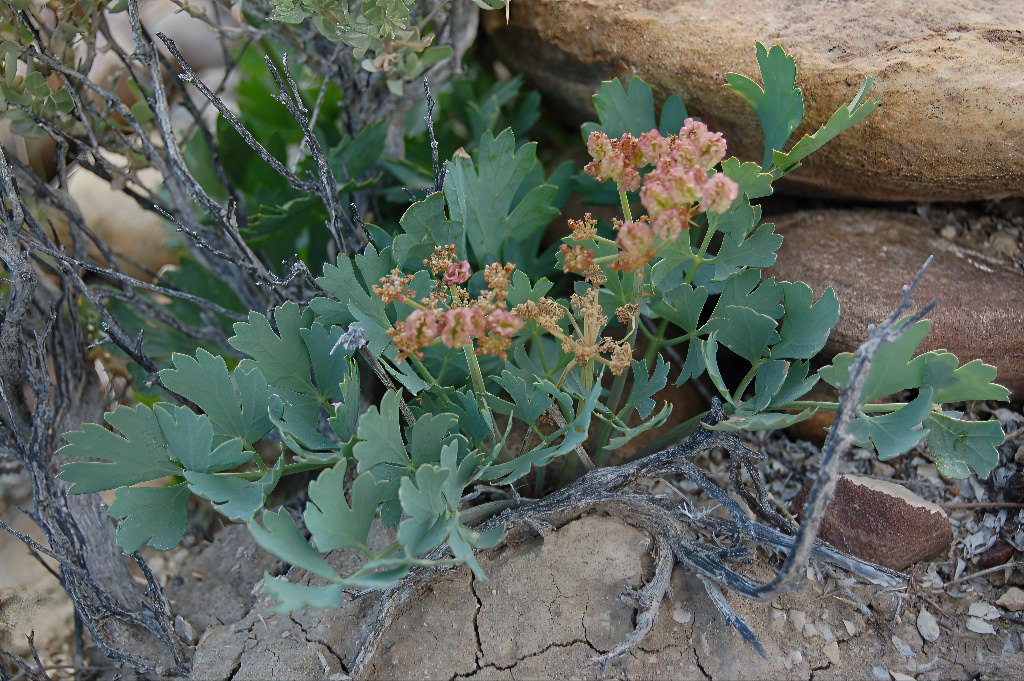
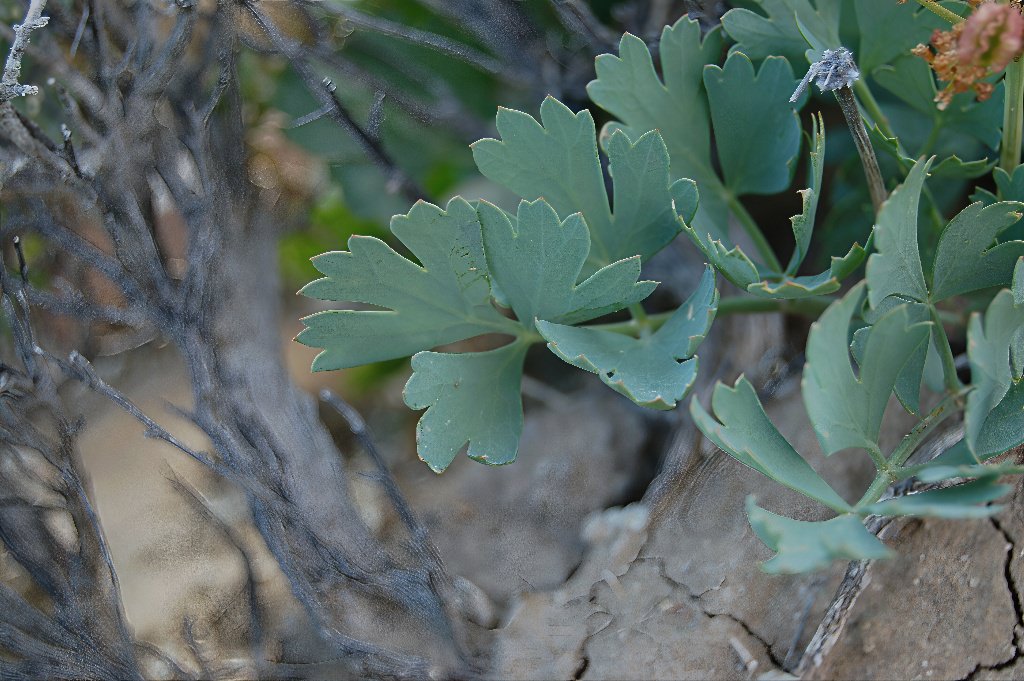
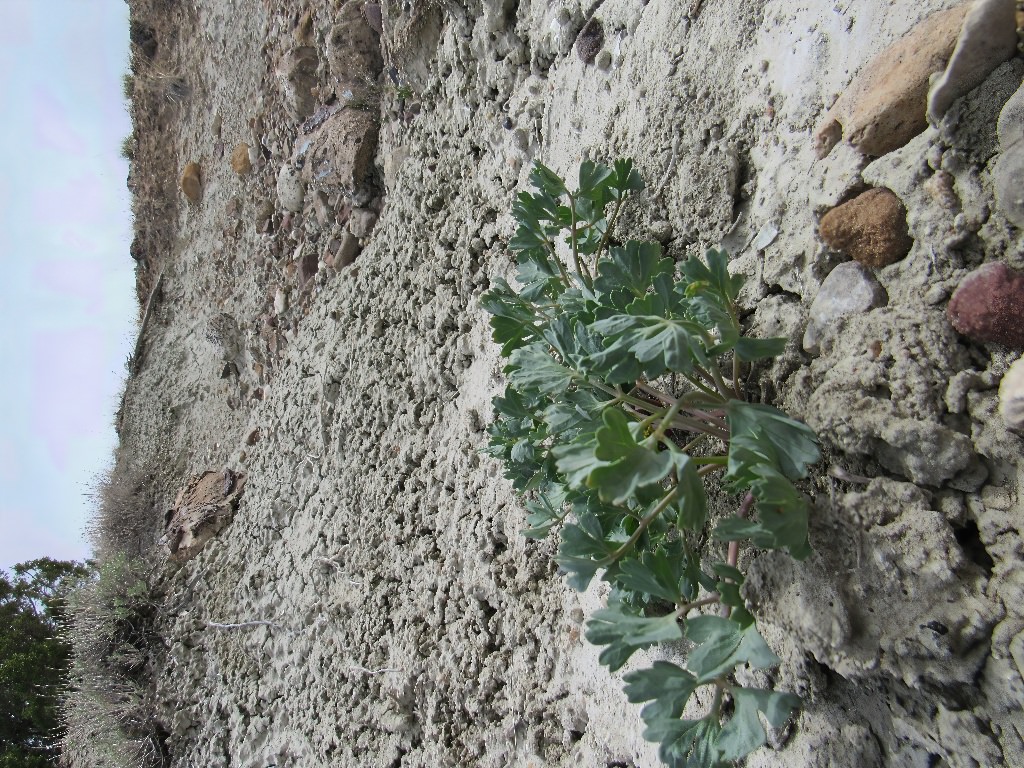
Perennial; 7-30 cm tall from a stout tap root, pseudoscape absent. Leaves glaucous, thick and fleshy, basal, or a few cauline, pinnate, the ultimate divisions three toothed at the apex, appearing as acute, mucronate lobes of a broad leaflet; inflorescence an umbel, involucel bractlets absent or inconspicuous (1-5 mm long), stylopodium lacking, flower petals yellow; fruit a schizocarp 5-9 mm long with papery, ribbed dorsal and lateral wings (Ackerfield 2022, Spackman et al. 1997).
Look Alikes:
This taxon can be distinguished by its glaucous, pinnately compound leaves with two opposite pairs of lateral primary leaflets that are deeply toothed to lobed (Spackman et al. 1997).
Phenology:
Flowering occurs in late April to May; fruiting in late May to early July (CNHP 2026).
Habitat
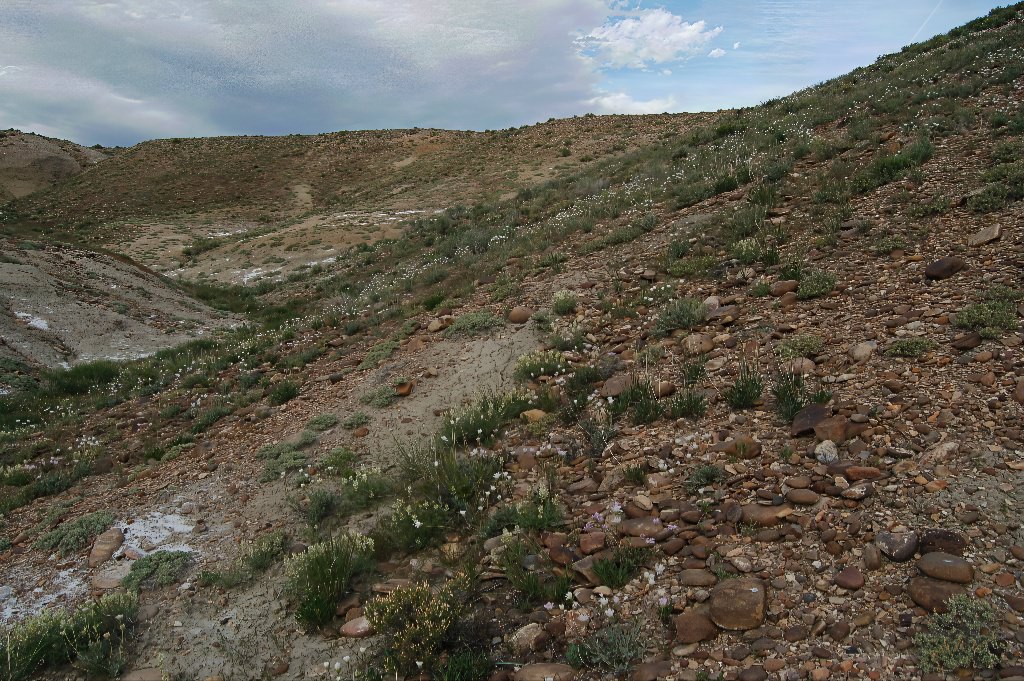
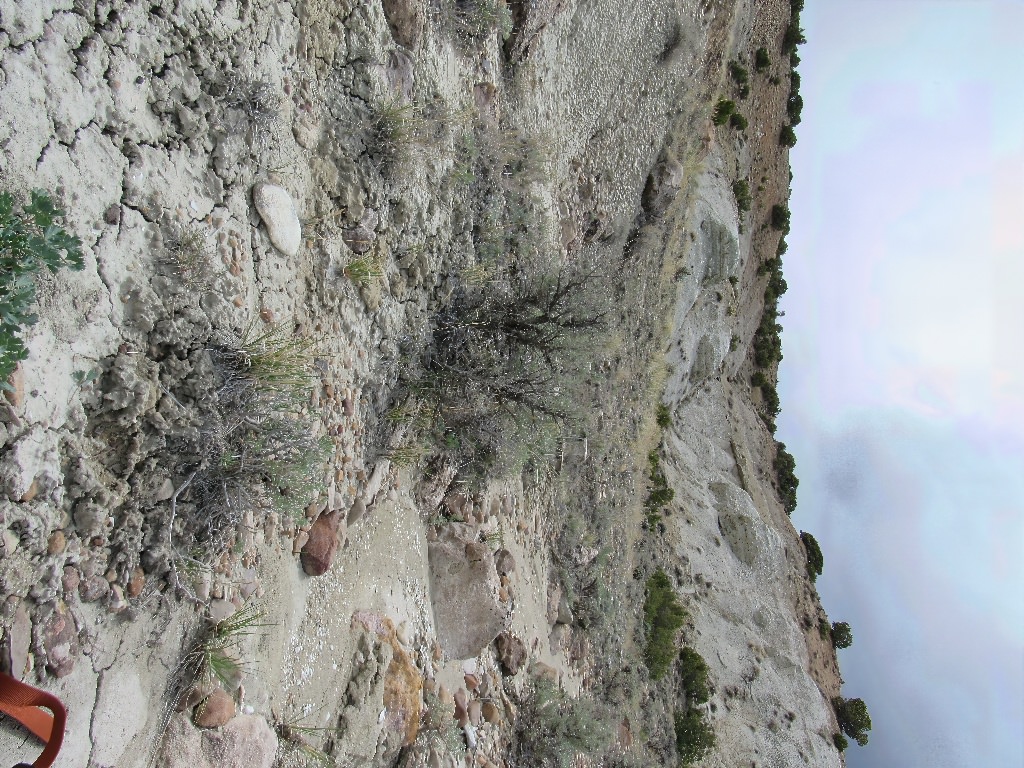
In Colorado, this taxon is found on shale barrens or in sandy clay and clay soils derived from Mancos Shale, and it is often found in red clay soils of the Morrison and Wasatch formations (FNA 2024, Welsh et al. 2015). The dominant plant communities in its habitat are cold desert shrub, sagebrush, and juniper woodlands. Associated plant species include Juniperus osteosperma, Artemisia nova, Artemisia tridentata, Atriplex confertifolia, Sarcobatus vermiculatus, Hillaria jamesii, Pascopyrum smithii, Poa secunda, Pseudoroegneria spicata, Castilleja chromosa, Petradoria pumila, Lomatium macrocarpum, Stenotus acaulis, Townsendia incana and Vesper bulbosus (CNHP 2026).
click on image to enlarge
 |
 |
 |
Elevation Range:
4,823 - 6,896 feet (1,470 - 2,102 meters)
Distribution
Colorado Endemic:
No
Range:
Aulospermum duchesnense is known from Moffat and Rio Blanco counties, Colorado, USA. Estimated range extent in Colorado of 1,789 square kilometers was calculated in GeoCAT using occurrence data provided by the Colorado Natural Heritage Program (2026). This species can also be found in Utah, USA.
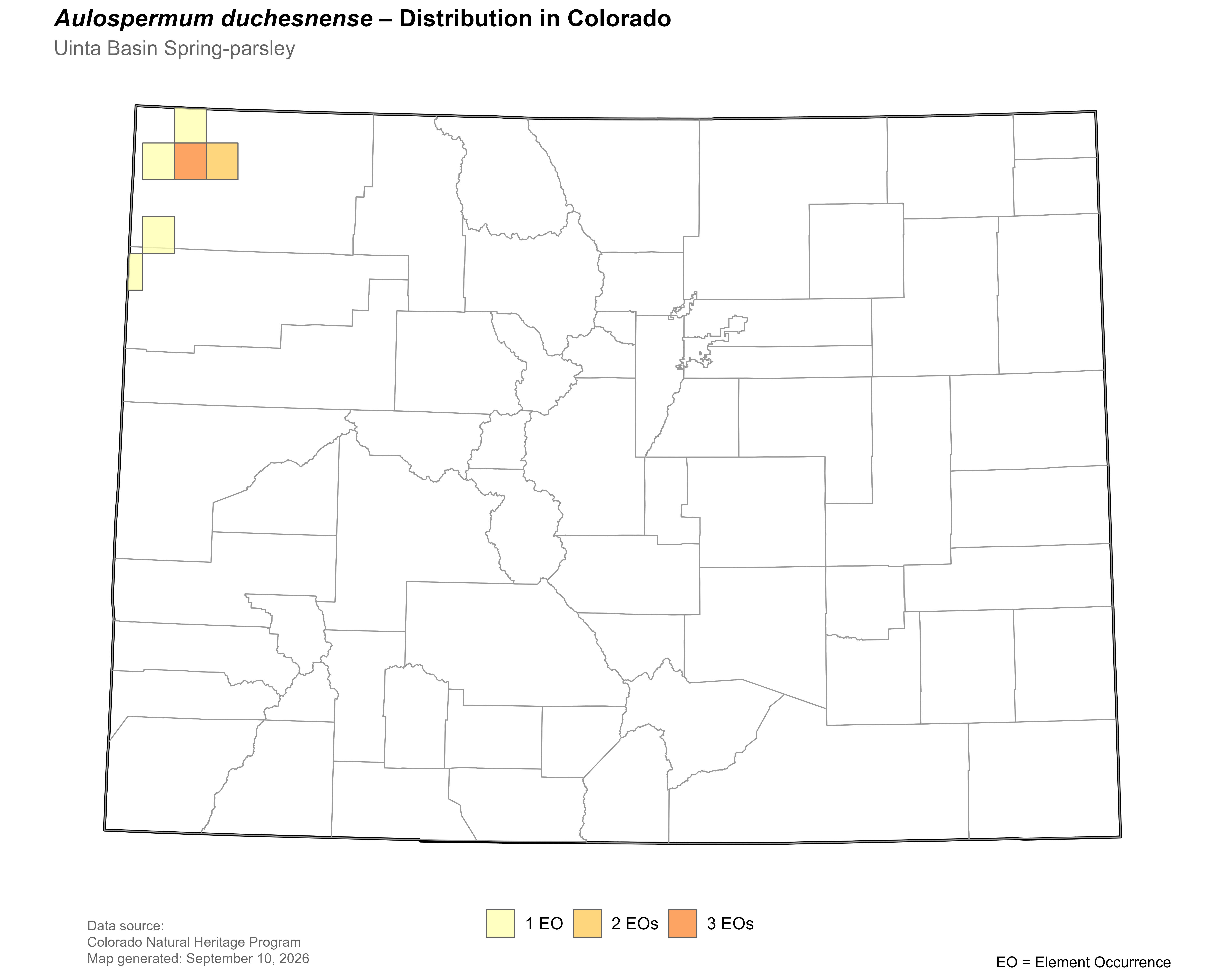
Click on map to enlarge |
Threats and Management Issues
As of 2022, 89% of the occurrences are found in habitat with minimal to low levels of landscape disturbance (CNHP 2021). At the local level one occurrence is disturbed by livestock grazing and one by motorized recreation; threats to the remainder of the occurrences are minimal or not known. Long term drought and potential browsing or trampling by wild horses are also a concern. This species is considered to have low adaptive capacity and is expected to be extremely vulnerable to climate change under both RCP 4.5 and 8.5 scenarios, as assessed for the 2025 Colorado State Wildlife Action Plan (CNHP 2025).
References
- Ackerfield, Jennifer. 2022. Flora of Colorado. Second Edition. Bot. Misc. 60. BRIT Press, Fort Worth Botanic Garden/Botanical Research Institute of Texas, U.S.A. 861 pp.
- Colorado Natural Heritage Program (CNHP). 2025. Climate Change Vulnerability Assessment of Colorado Tier 1 and Tier 2 Plant Species of Greatest Conservation Need (SCGN) for the 2025 Colorado State Wildlife Action Plan. Colorado Natural Heritage Program, Colorado State University, Fort Collins, CO.
- Colorado Natural Heritage Program (CNHP). 2026. Biodiversity Tracking and Conservation System (Biotics 5). Colorado Natural Heritage Program, Colorado State University, Fort Collins.
- Flora of North America Editorial Committee (FNA). 2024. Flora of North America north of Mexico. Vol. 13. Magnoliophyta: Geraniaceae to Apiaceae. Oxford Univ. Press, New York. xxiv + 566 pp.
- Plants of the World Online (POWO). 2026. Plants of the World Online. Facilitated by the Royal Botanic Gardens, Kew. Published on the Internet; http://www.plantsoftheworldonline.org/ (accessed 2026).
- Welsh, S.L., N.D. Atwood, S. Goodrich, and L.C. Higgins. (Eds). 2015. A Utah flora, fifth edition, revised 2015. Monte L. Bean Life Science Museum, Provo, Utah. 987 pp.