

Scientific Name : Astragalus sparsiflorus
Author : Gray NatureServe Explorer
Common Name : Front Range Milkvetch
 Current Research Activities


☰ Click link below for details.
Taxonomy
Fabaceae (pea family)
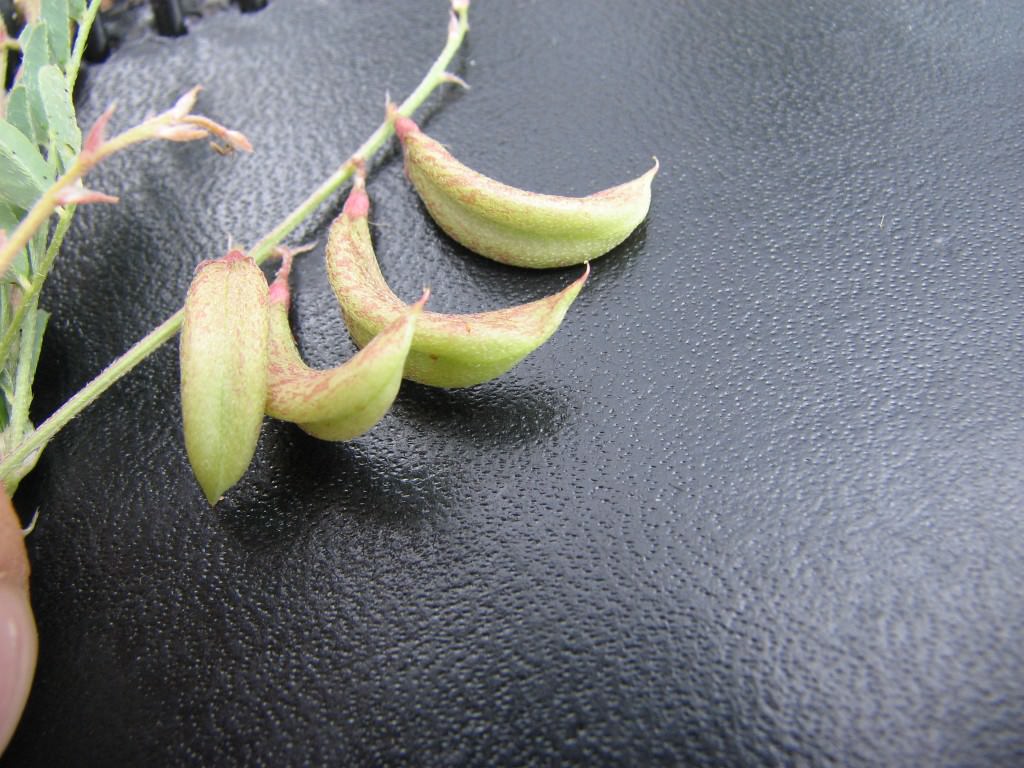
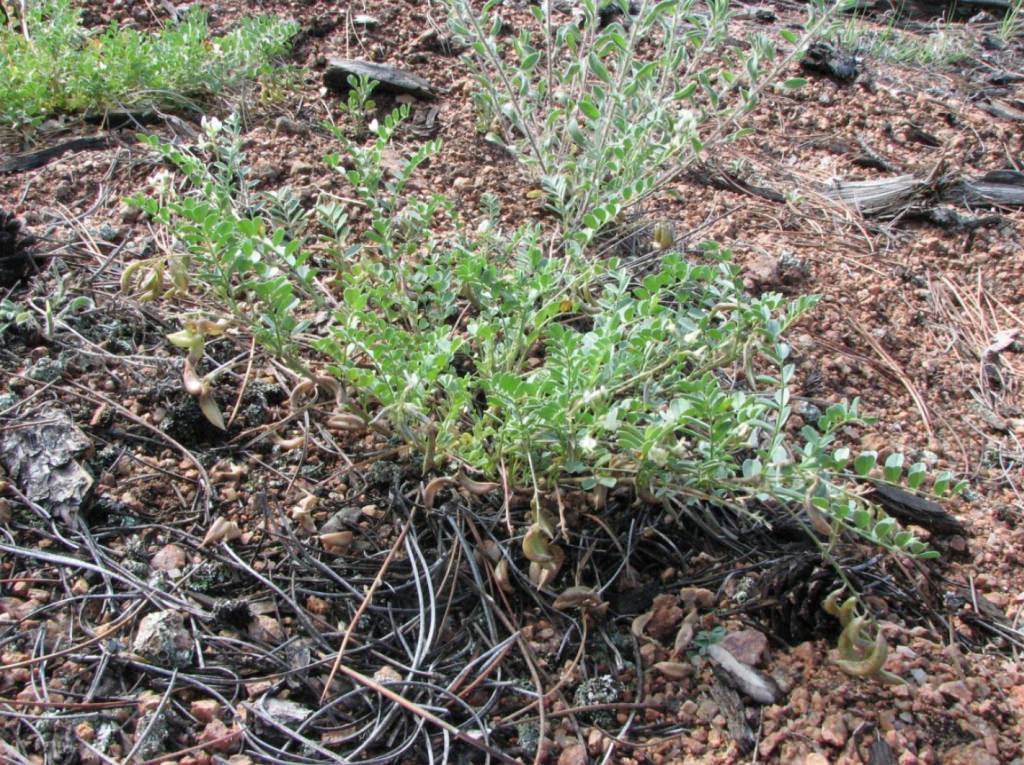
Ackerfield (2015, 2022) recognizes two varieties, var. majusculus and var. sparsiflorus, based on differences in the leaflets of upper leaves, calyx tubes, and fruit, noting that they are sometimes found at the same locality. Weber and Wittmann (2012) mention the same, emphasizing the difference in pod size with var. sparsiflorus smaller, and less than 1 cm long. Both varieties are endemic to Colorado (USDA, NRCS 2022).
Ranks and Status
State Rank : S2
State Rank Reason : Astragalus sparsiflorus is endemic to the Front Range mountains of Colorado, USA. There are 28 known occurrences, however, over half of the occurrences have not been observed in over 20 years. Threats to the species include non-motorized recreation (hiking, biking, and fishing), fire and fire management activities, and competition from non-native invasive plant species. Prolonged drought and habitat alteration due to climate change within the species range also threaten Astragalus sparsiflorus.
U.S. Endangered Species Act : none
Colorado Threatened and Endangered List : none
Other Statuses : SWAP Tier 1
Description and Phenology
General Description:
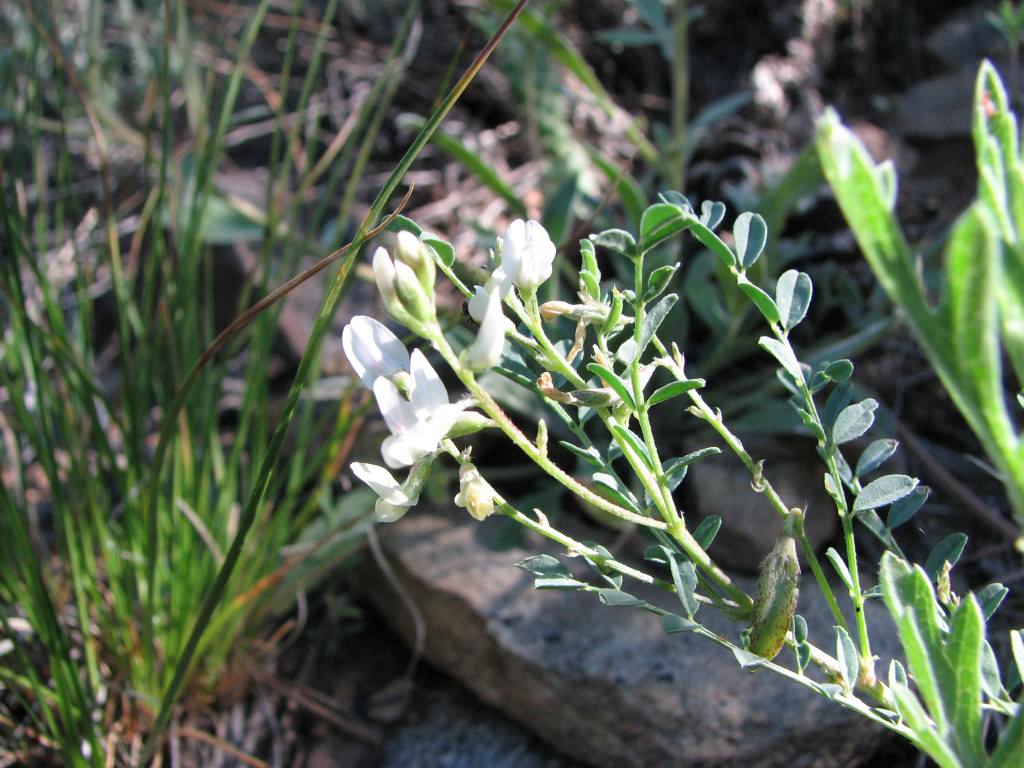
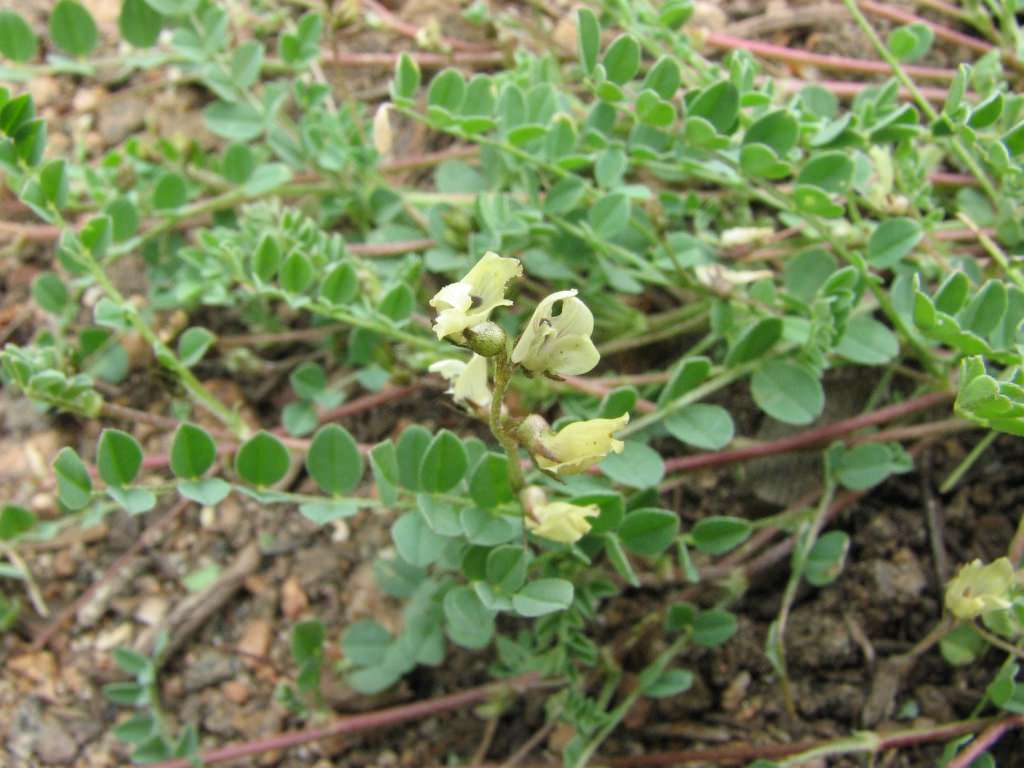
Perennial, prostrate to decumbent, 0.5-3.5 dm tall. Leaves pinnately compound with 9-17 leaflets. Inflorescence 2-9 flowered (sparsiflorus=few flowered), calyx tube with mixed black and white hairs. Flowers whitish with a spotted or blotched keel. Pods are up to 2.5 cm long (less than 1 cm in var. sparsiflorus), three angled, mottled, and covered with small, sharp, appressed hairs (Ackerfield 2015).
Look Alikes:
Could be confused with A. tenellus, but the leaves are very different from that species. Could also be confused with Astragalus alpinus when it is not in fruit (pers. comm. Pam Smith, CNHP, 2017).
Phenology:
Flowers and fruit May-August (Ackerfield 2015).
Habitat
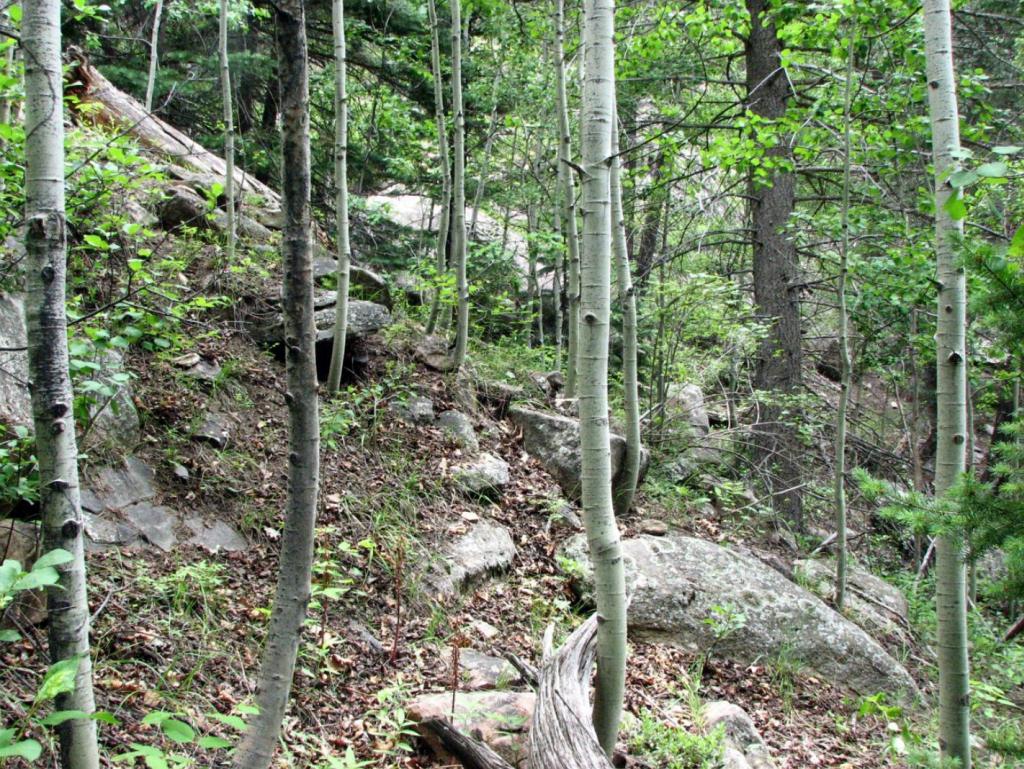
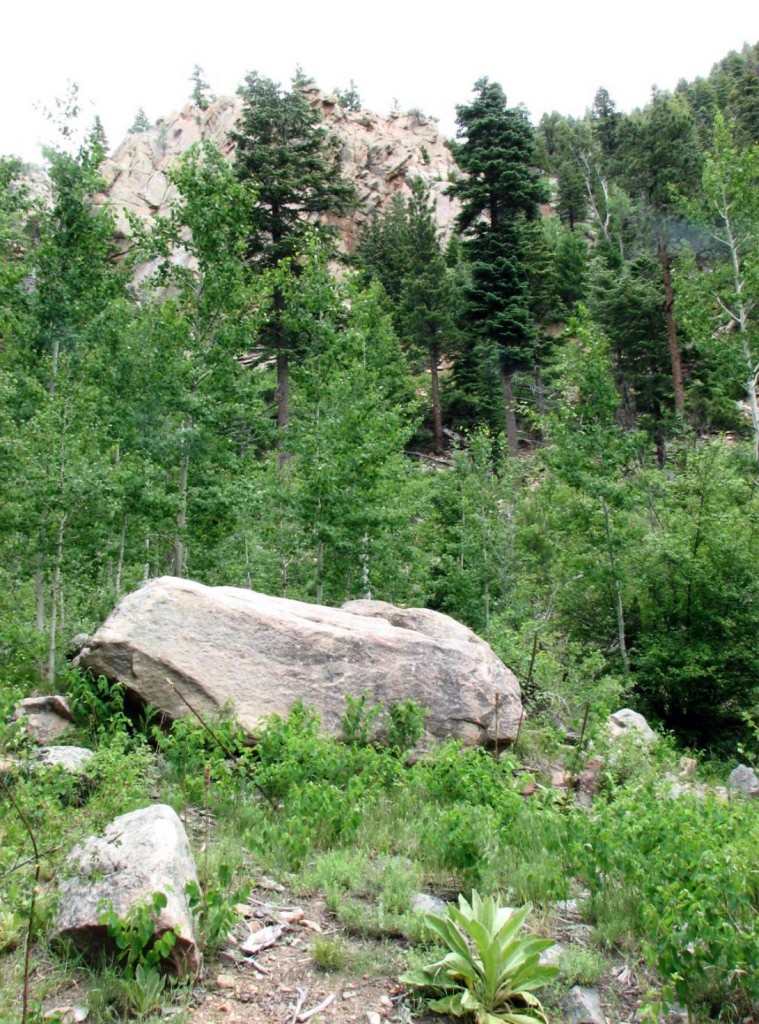
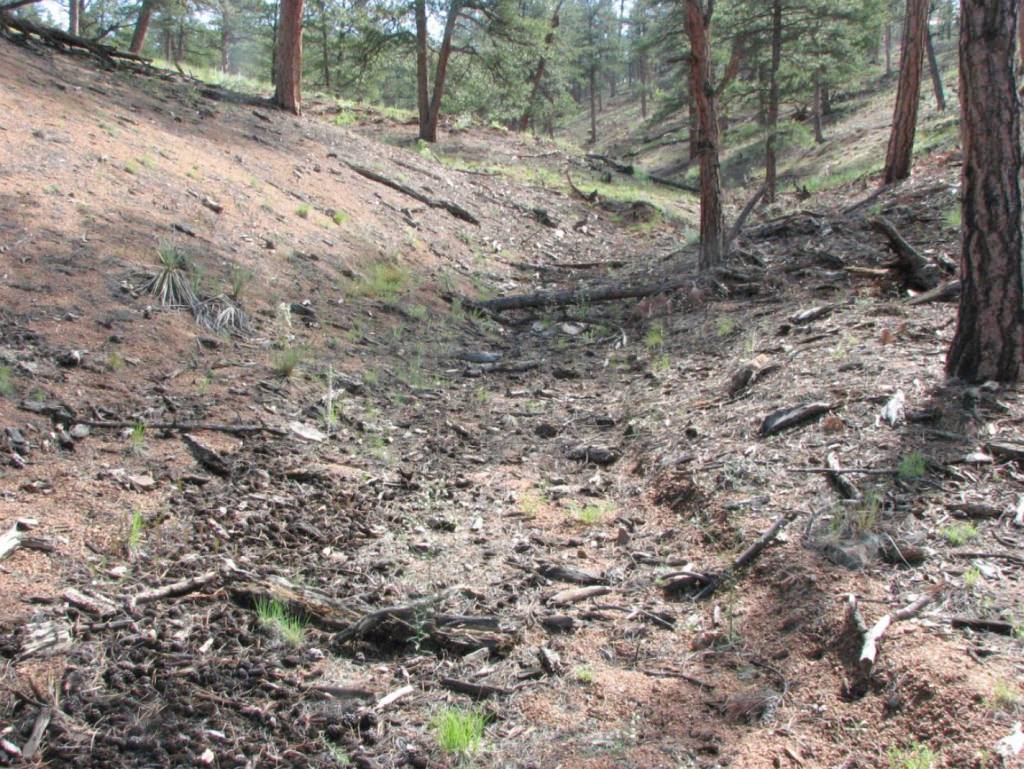
Evergreen forests, dry gravelly banks, meadows, open hillsides and sandy canyon bottoms, sometimes on road cuts or natural talus (Barneby 1964, Ackerfield 2015). Some associated species include: Pinus ponderosa, Populus tremuloides, Pseudotsuga menziesii, Muhlenbergia montana, Phacelia heterophylla, Heterotheca villosa, Verbascum thapsus, Artemisia frigida, Aliciella pinnatifida, Chondrosum gracile.
click on image to enlarge
 |
 |
 |
Elevation Range:
5,473 - 9,974 feet (1,668 - 3,040 meters)
Distribution
Colorado Endemic:
Yes
Range:
Astragalus sparsiflorus is endemic to Colorado (USA), where it is known from Boulder, Custer, Douglas, El Paso, Fremont, Jefferson, Park, Grand, and Teller counties. The estimated range extent in Colorado of 14,680 square kilometers was calculated in GeoCAT using occurrence data provided by the Colorado Natural Heritage Program (2022).
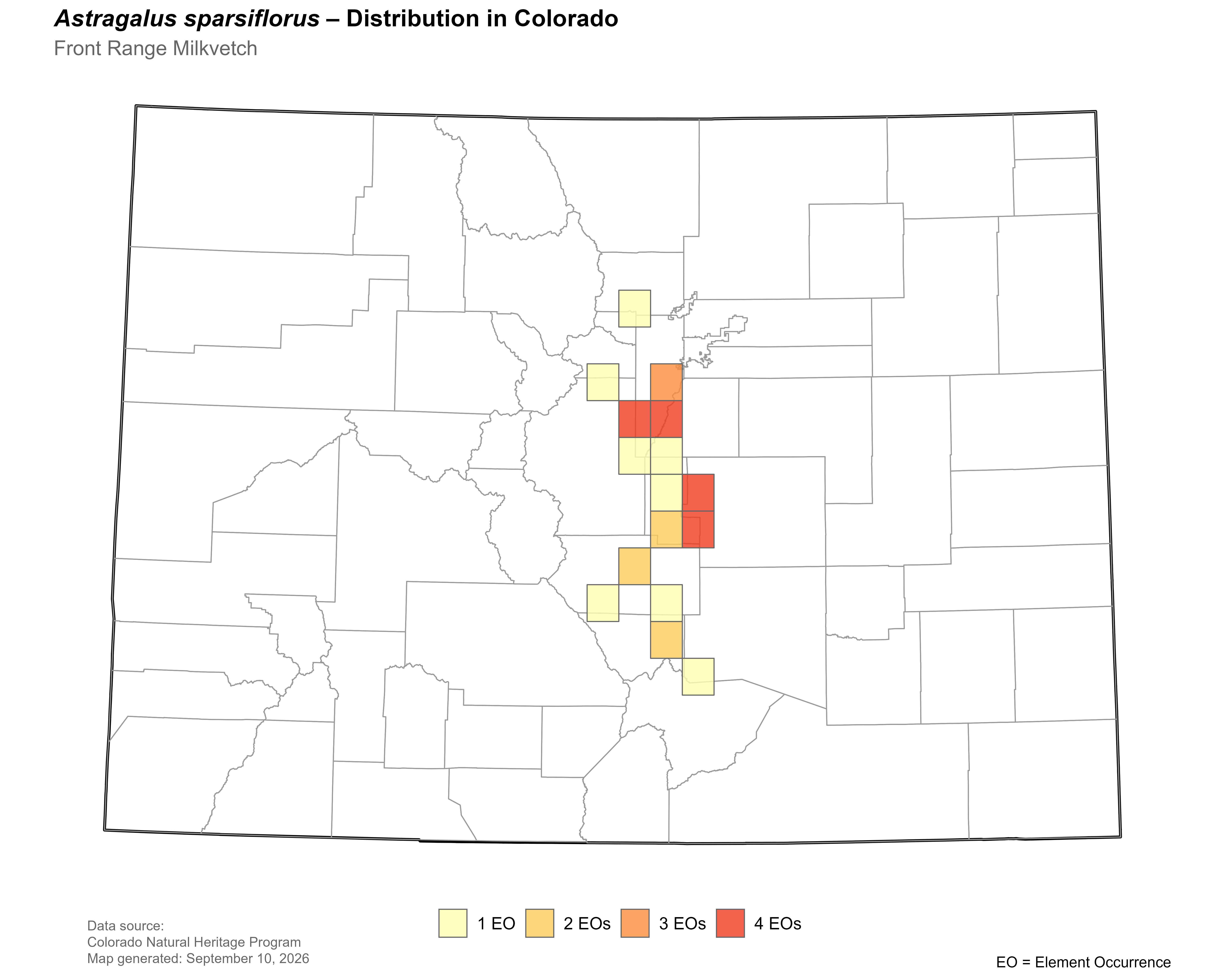
Click on map to enlarge |
Threats and Management Issues
Non-motorized recreation (hiking, biking, and fishing), fire and fire management activities, and competition from non-native invasive plant species are the main threats to this species. Four of the most recently visited occurrences report impacts from recreation such as trampling and soil disturbance and it is likely to be occurring at other locations in close proximity to the populous Front Range (CNHP 2022). Many of the occurrences fall within the South Platte River Basin where habitat modifications from past fire activity have increased the potential for competition from invasive plant species such as mullein (Verbascum thapsus) (CNHP 2022). Further, fire mitigation that involves clearing vegetation for fuel reduction can impact A. sparsiflorus by removing aboveground stems, and reducing available moisture by exposing soils to increased amounts of sun and wind. Prolonged drought and habitat alteration due to climate change within the species range also threaten Astragalus sparsiflorus (Handwerk et al. 2015). This species is considered to have moderate adaptive capacity and is expected to be slightly to moderately vulnerable to climate change under both RCP 4.5 and 8.5 scenarios, as assessed for the 2025 Colorado State Wildlife Action Plan (CNHP 2025).
References
- Ackerfield, J. 2015. Flora of Colorado. BRIT Press, Botanical Research Institute of Texas, Fort Worth, TX. 818 pp.
- Colorado Natural Heritage Program (CNHP). 2022. Biodiversity Tracking and Conservation System (Biotics 5). Colorado Natural Heritage Program, Colorado State University, Fort Collins.
- Colorado Natural Heritage Program (CNHP). 2025. Climate Change Vulnerability Assessment of Colorado Tier 1 and Tier 2 Plant Species of Greatest Conservation Need (SCGN) for the 2025 Colorado State Wildlife Action Plan. Colorado Natural Heritage Program, Colorado State University, Fort Collins, CO.
- Colorado Natural Heritage Program and the Geospatial Centroid. 2017. The Colorado Ownership and Protection Map (COMaP). Colorado State University, Ft. Collins, CO.
- Handwerk, J., L. Grunau, and S. Panjabi. 2015. Colorado Wildlife Action Plan: 2015 Rare Plant Addendum. Colorado Natural Heritage Program, Colorado State University, Fort Collins, Colorado, USA.
- Harrington, H.D. 1954. Manual of the plants of Colorado. Sage Press, Chicago. 666 pp.
- USDA, NRCS. 2022. The PLANTS Database. National Plant Data Team, Greensboro, NC 27401-4901 USA.
- Weber, W. A. and R. C. Wittmann. 2012. Colorado Flora, Eastern Slope, A Field Guide to the Vascular Plants, Fourth Edition. Boulder, Colorado. 555 pp.