

Scientific Name : Astragalus iodopetalus
Author : (Rydb.) Barneby NatureServe Explorer
Common Name : Violet Milkvetch
 Current Research Activities


☰ Click link below for details.
Taxonomy
Fabaceae (pea family)
Ranks and Status
State Rank : S2
State Rank Reason : Astragalus iodopetalus is known from four counties in southwest Colorado, USA. As of 2021 there are 15 occurrences, with over half considered historical. Threats to the species include non-motorized recreation and the effects of climate change.
U.S. Endangered Species Act : none
Colorado Threatened and Endangered List : none
Other Statuses : SWAP SGIN, USFS
Description and Phenology
General Description:
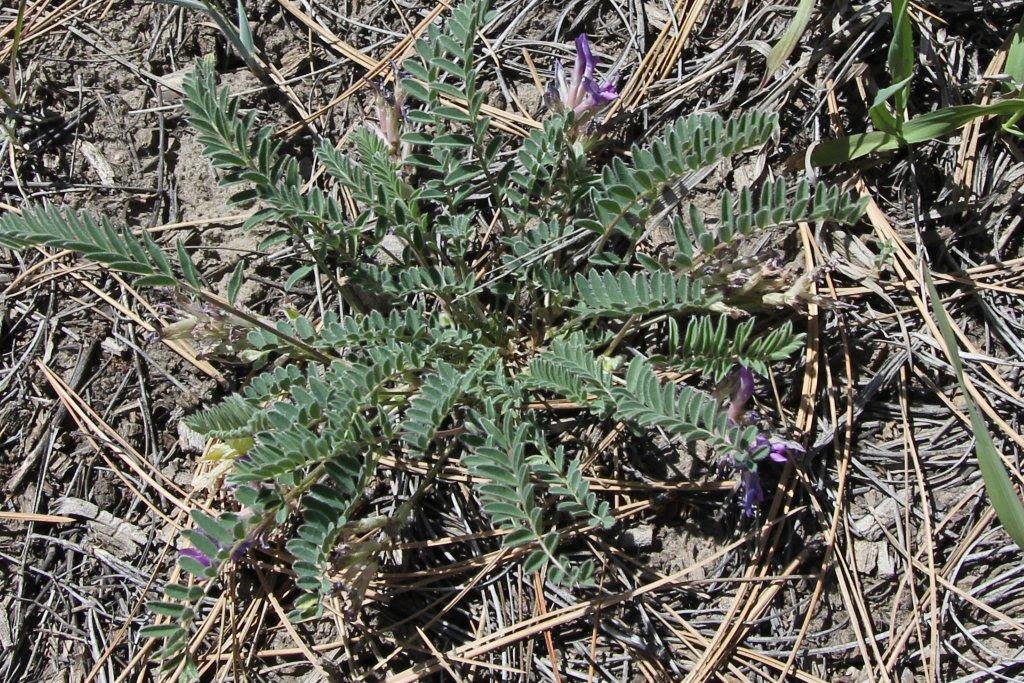
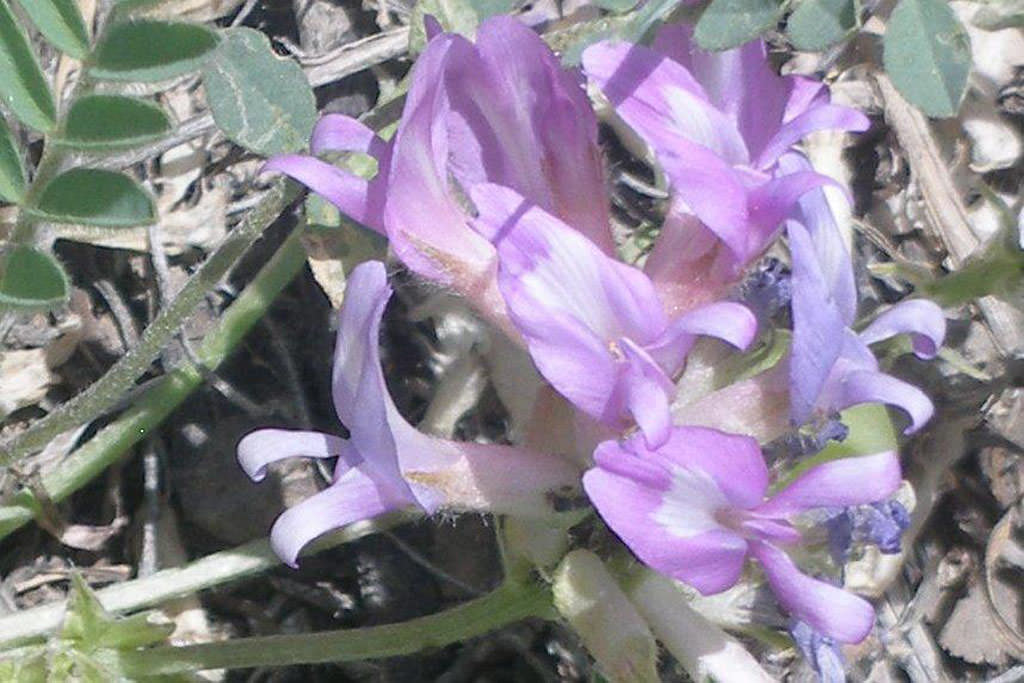
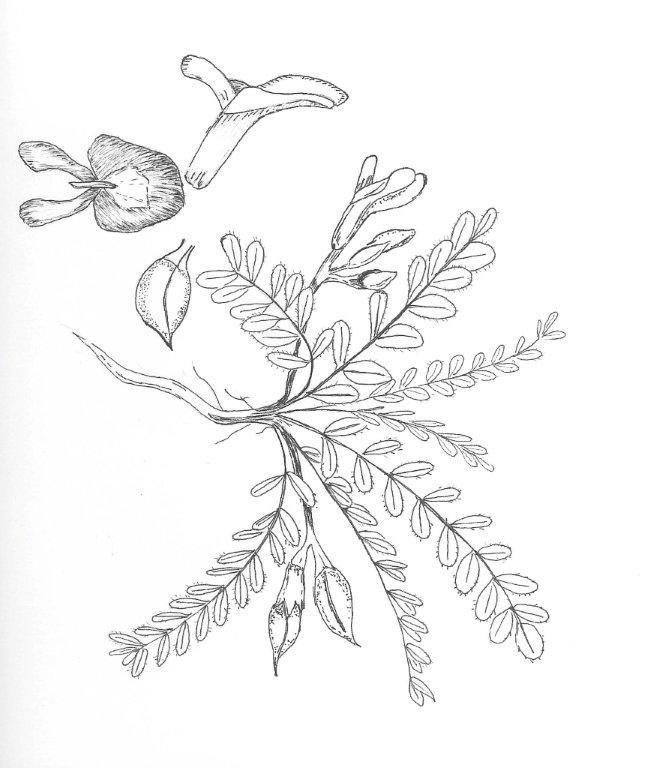
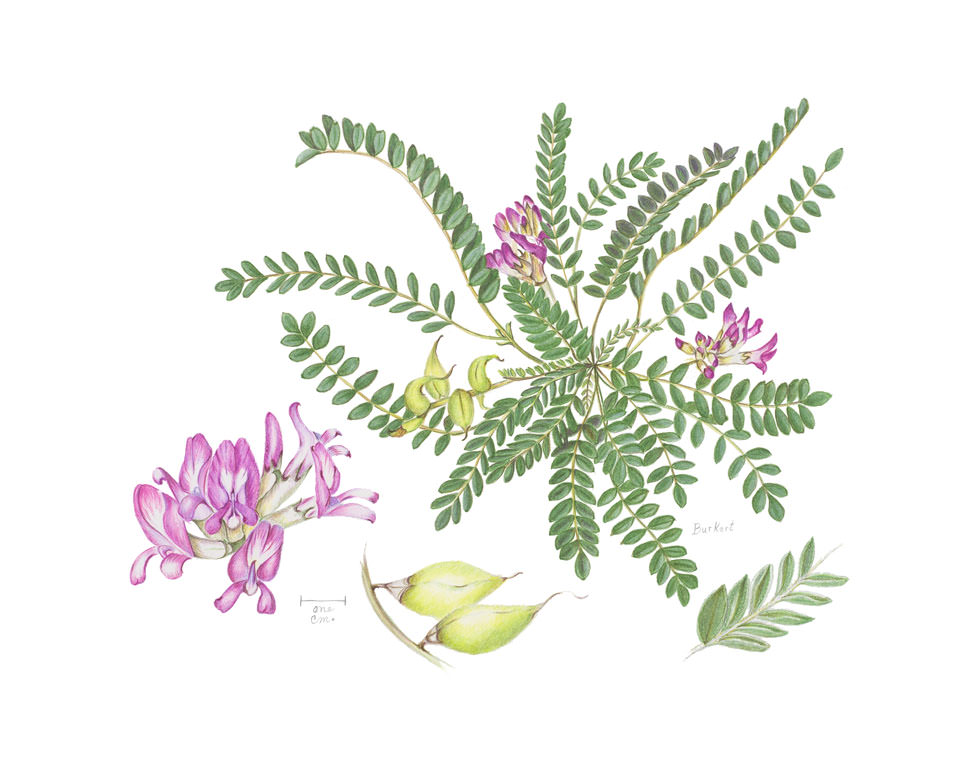
Astragalus iodopetalus is a perennial legume that grows to 10 to 20 cm tall and has reddish violet flowers that are 18-23 mm long. The leaves are pinnate with 8-15 elliptic to ovate leaflets (5-15 mm long) that are variably pubescent. Its crescent-shaped pods are about 20-30 mm long, and glabrous (Harrington 1979, Weber and Wittmann 2012, pers. comm. Burkert 2012).
Look Alikes:
No look-alikes have been noted for this species. Available habitat descriptions do not include any other species of Astragalus.
Phenology:
Flowers in late May and June (Colorado Natural Heritage Program 2012).
 |  |
Habitat
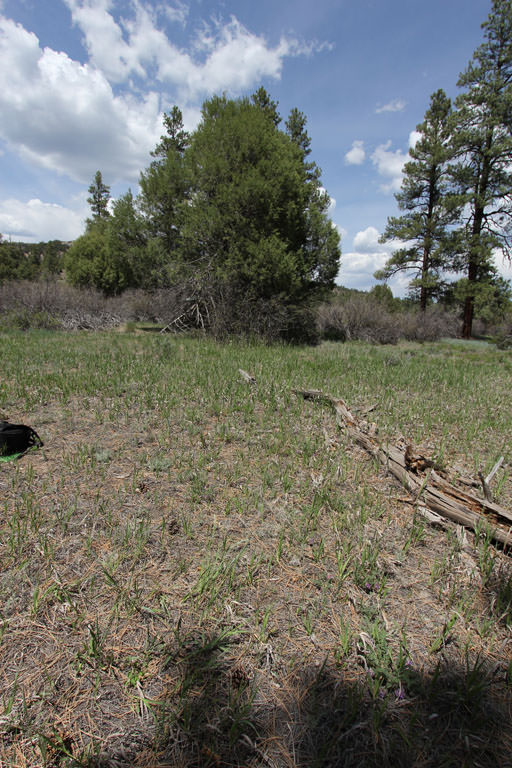
This species occurs on dry stony hillsides and benches, commonly on granite, often about oak thickets, in the pinyon-juniper and ponderosa pine zones, in oak-pinyon forests, or among sagebrush (Barneby 1964). Weber and Wittmann (2012) report that this species is found in sagebrush habitat in Colorado.
click on image to enlarge
 |
Elevation Range:
6,611 - 10,218 feet (2,015 - 3,115 meters)
Distribution
Colorado Endemic:
No
Range:
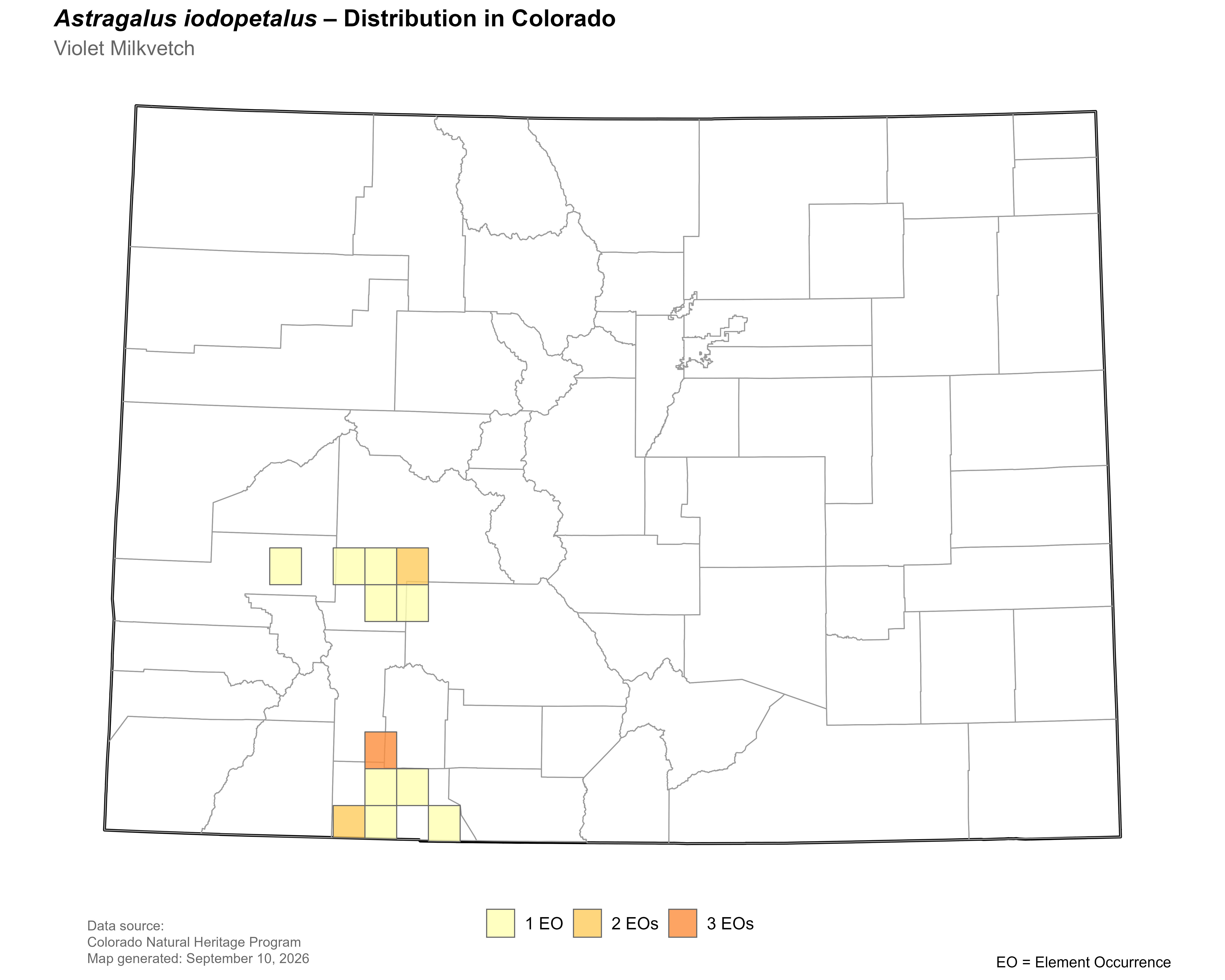
Astragalus iodopetalus is known from Archuleta, Gunnison, Hinsdale and Montrose counties in Colorado, USA. Estimated range extent in Colorado of 11,272 square kilometers was calculated in GeoCAT using occurrence data provided by the Colorado Natural Heritage Program (2021). This species is also known from New Mexico, USA.
Click on map to enlarge |
Threats and Management Issues
The primary threat at this time is considered to be recreation/hiking (Rondeau et al. 2011). It is not known if all of the occurrences are or are not threatened by these activities. The most well documented occurrence is within an archeological area, and may be threatened there by recreationist's. This species is considered to be extremely vulnerable to climate change (Handwerk et al. 2015).
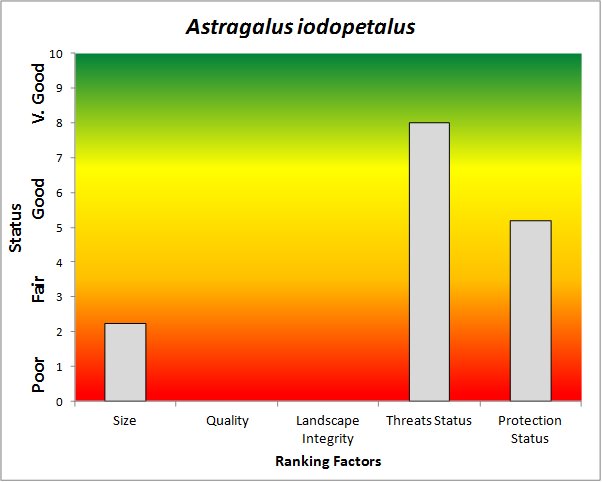
Summary results of an analysis of the status of Astragalus iodopetalus based on several ranking factors. This species was concluded to be Moderately Conserved. From Rondeau et al. 2011. |
References
- Ackerfield, J. 2015. Flora of Colorado. BRIT Press, Botanical Research Institute of Texas, Fort Worth, TX. 818 pp.
- Barneby, R.C. 1964. Atlas of North American Astragalus. 2 Vols. New York Botanical Garden, Bronx, New York. 1188 pp.
- Colorado Natural Heritage Program. 2008. The Fifth Annual Colorado Rare Plant Symposium: G2 Plants of Colorado. Symposium Minutes. Available on-line http://www.cnhp.colostate.edu/teams/botany.asp#symposia.
- Colorado Natural Heritage Program. 2012. Biodiversity Tracking and Conservation System. Colorado State University, Fort Collins, CO.
- Colorado Natural Heritage Program. 2021. Biodiversity Tracking and Conservation System (BIOTICS). Colorado Natural Heritage Program, Colorado State University, Fort Collins.
- Handwerk, J., L. Grunau, and S. Panjabi. 2015. Colorado Wildlife Action Plan: 2015 Rare Plant Addendum. Colorado Natural Heritage Program, Colorado State University, Fort Collins, Colorado, USA.
- Harrington, H. D. 1964. Manual of the plants of Colorado. Sage Books, Swallow Press, Chicago. Second edition. 666 pp.
- Heil, K.D., S.L. O'Kane Jr., L.M. Reeves, and A. Clifford, 2013. Flora of the Four Corners Region, Vascular Plants of the San Juan River Drainage; Arizona, Colorado, New Mexico, and Utah. Missouri Botanical Garden Press, St. Louis, Missouri. 1098 pp.
- Kartesz, J., and the Biota of North America Program (BONAP). 1998. A Synonymized Checklist of the Vascular Flora of the United States, Puerto Rico, and the Virgin Islands. http://plants.usda.gov.
- Neely, B., S. Panjabi, E. Lane, P. Lewis, C. Dawson, A. Kratz, B. Kurzel, T. Hogan, J. Handwerk, S. Krishnan, J. Neale, and N. Ripley. 2009. Colorado Rare Plant Conservation Strategy, Developed by the Colorado Rare Plant conservation Initiative. The Nature Conservancy, Boulder, Colorado, 117 pp.
- Rondeau, R., K. Decker, J. Handwerk, J. Siemers, L. Grunau, and C. Pague. 2011. The state of Colorado's biodiversity 2011. Prepared for The Nature Conservancy. Colorado Natural Heritage Program, Colorado State University, Fort Collins, Colorado.
- USDA, NRCS. 2022. The PLANTS Database. National Plant Data Team, Greensboro, NC 27401-4901 USA.
- USDI United States Geological Survey. 2003. National Assessment of Oil and Gas Project - San Juan Basin Province (022) Boundary. Vector digital data. U.S. Geological Survey, Central Eneergy Resources Team. Denver, CO.
- Weber, W. A. and R. C. Wittmann. 2012. Colorado Flora, Western Slope, A Field Guide to the Vascular Plants, Fourth Edition. Boulder, Colorado. 532 pp.
- Welsh, S.L. 2007. North American Species of Astragalus Linnaeus (Leguminosae) A Taxonomic Revision. Brigham Young University, Provo, Utah. 932 pp.