


Scientific Name : Astragalus duchesnensis
Author : M.E. Jones NatureServe Explorer
Common Name : Duchesne Milkvetch
 Current Research Activities
 1997 profile
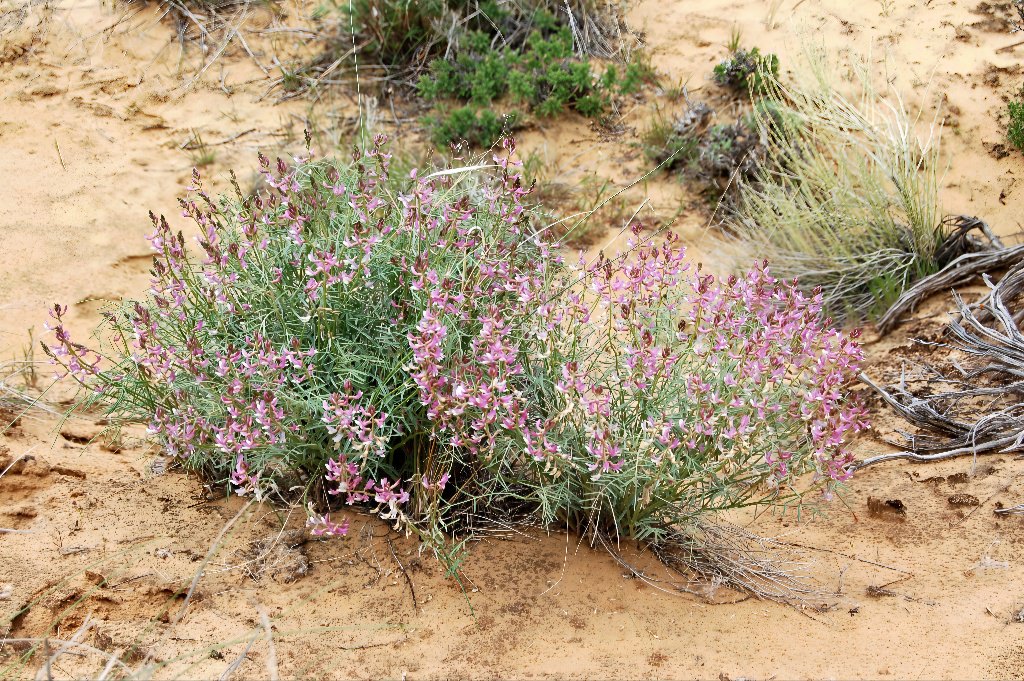
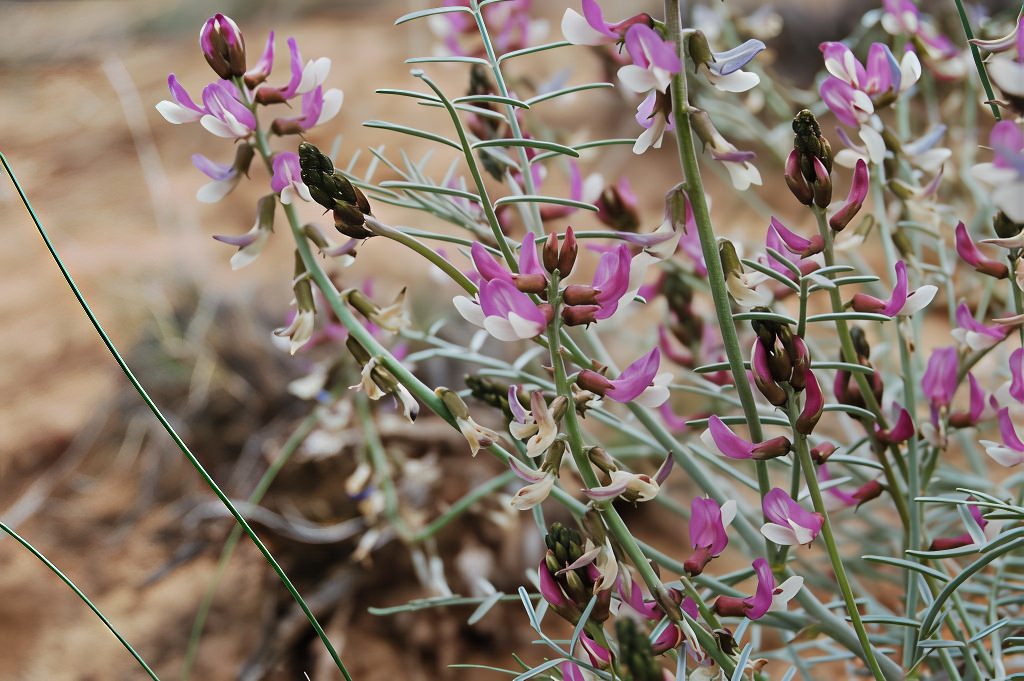
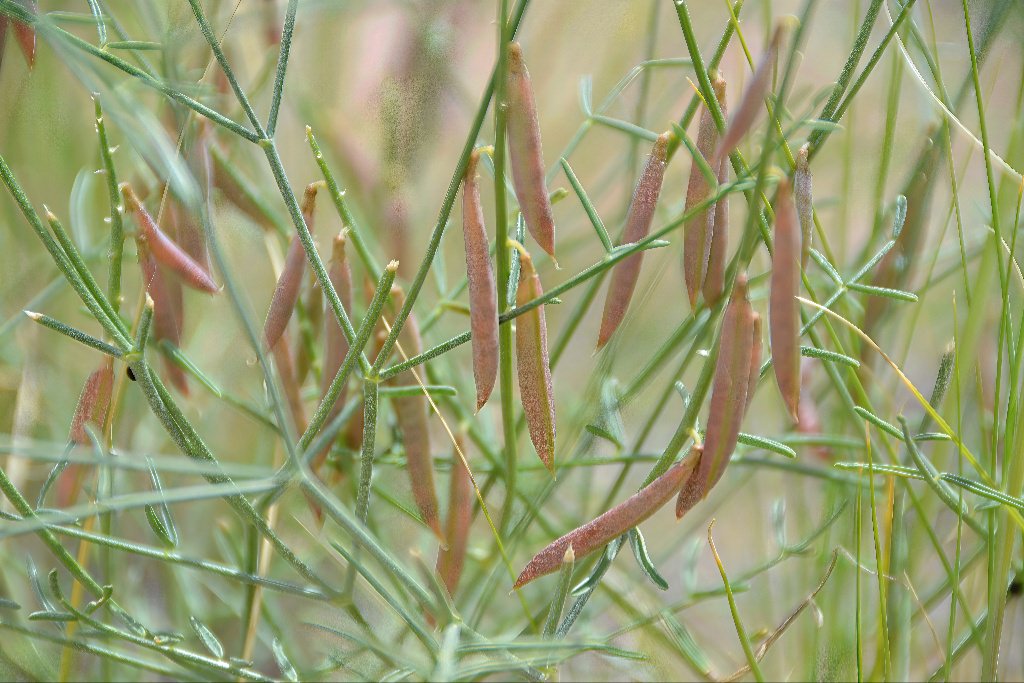


☰ Click link below for details.
Taxonomy
Fabaceae (pea family)
Ranks and Status
State Rank : S1S2
State Rank Reason : Astragalus duchesnensis is known from ten occurrences in northwestern Colorado, USA. Potential threats include road maintenance, livestock grazing and energy development. Long-term drought is also a concern as the species is expected to be moderately to extremely vulnerable to climate change.
U.S. Endangered Species Act : none
Colorado Threatened and Endangered List : none
Other Statuses : BLM, SWAP Tier 2
Description and Phenology
General Description:
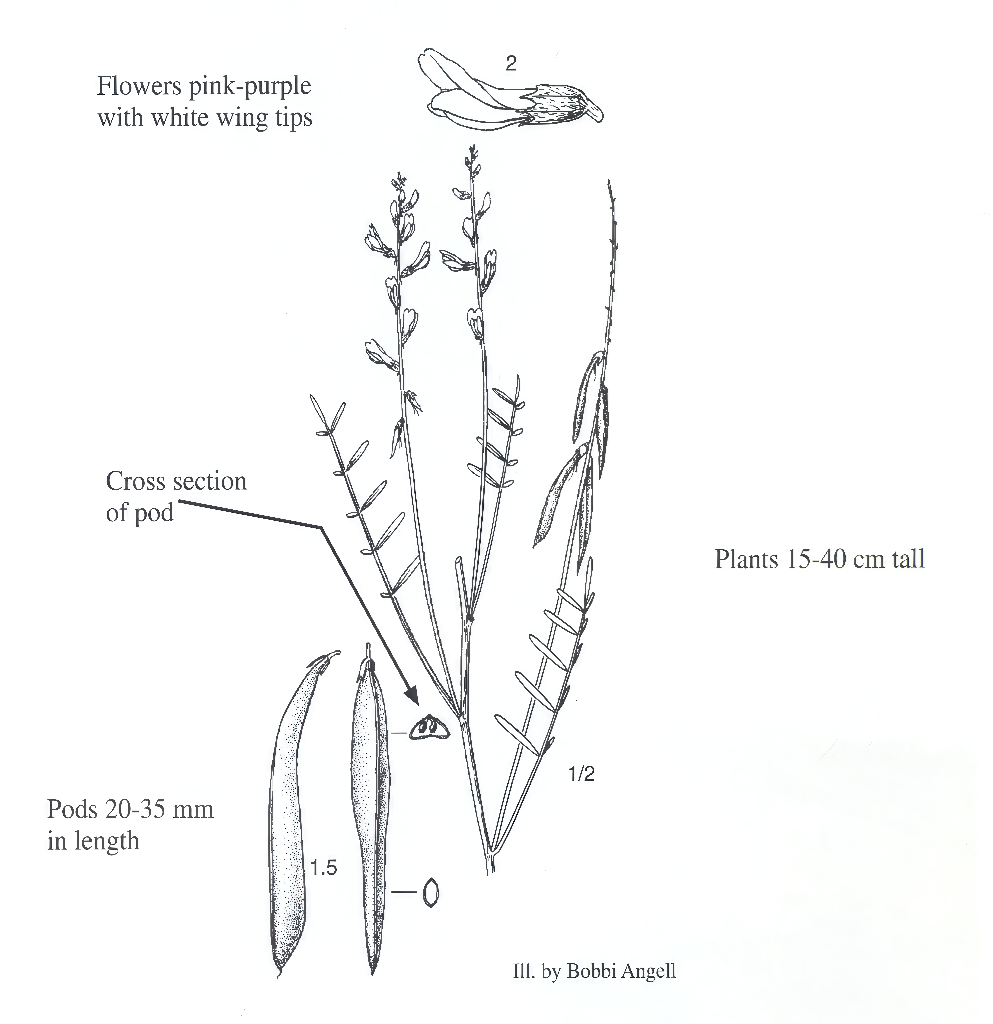
Perennial; shortly rhizomatous ascending to 30 cm, cinereous; leaves pinnately compound with 7-11 leaflets; leaflets oblong-lanceolate or linear, 5-25 mm long, often glabrate above. Inflorescence a raceme loosely comprised of 6-20 reddish purple flowers with white wings, the banner 10-12 mm long. Fruit a legume, pods 20-35 mm long, oblong to oblong-oblanceolate, obcompressed, or 3-angled at the base and laterally compressed apically, strigulose (Ackerfield 2022).
Look Alikes:
Similar in appearance to A. convallarius which has shorter pods (10-12 mm in length) and flowers that are greenish white and tinged with purple. Also similar to A. osterhoutii which is taller (50-100 cm in height) and has creme colored flowers, although the ranges do not overlap (Spackman et al. 1997).
Phenology:
Flowers late April through June (Ackerfield 2022, Spackman et al. 1997).
 |
Habitat
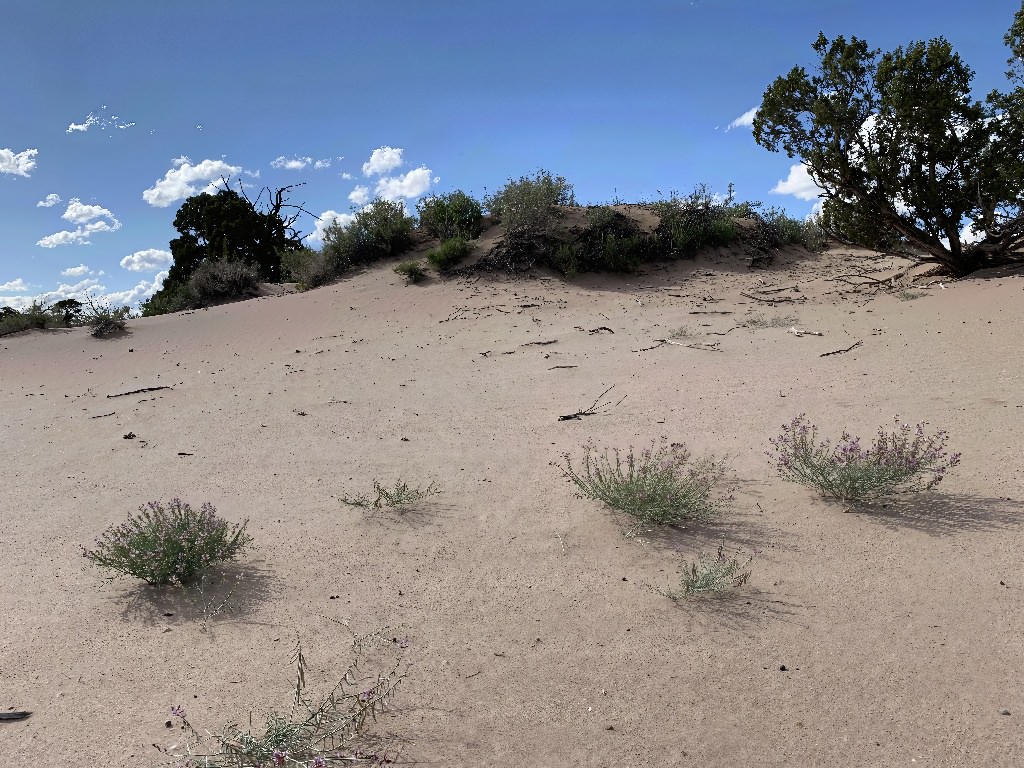
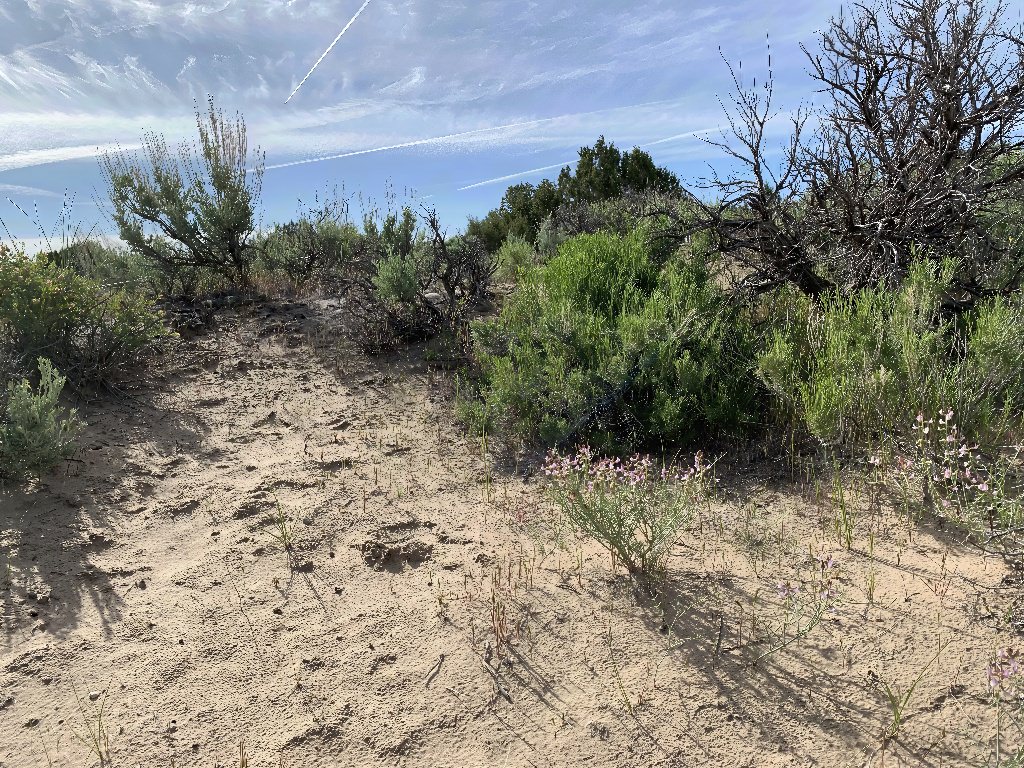
Found in salt desert shrub and pinon-juniper communities on sandy and gravelly pediments such as sandy mesas or around sandstone or shale outcrops (Goodrich 1986). In Colorado, A. duchesnensis has been found in pinyon-juniper woodlands that are interspersed with sage shrublands and stable sand dunes dominated by Muhlenbergia pungens which provides micro habitat for A. duchesnensis. Associated plant species: Pinus edulis, Artemisia tridentata ssp. wyomingensis, Chrysothamnus nauseosus, Atriplex confertifolia, Grayia spinosa, Gutierrezia sarothrae, Sarcobatus vermiculatus, Achnatherum hymenoides, Hesperostipa comata, Muhlenbergia pungens, Lupinus pusillus, Oreocarya flavoculata, Opuntia fragilis, O. polycantha, Penstemon angustifolius, Sphaeralcea coccinea, and Townsendia incana (CNHP 2026).
click on image to enlarge
 |
 |
Elevation Range:
5,161 - 7,024 feet (1,573 - 2,141 meters)
Distribution
Colorado Endemic:
No
Range:
Astragalus duchesnensis is known from Moffat and Rio Blanco counties, Colorado, USA. Estimated range extent in Colorado of 637 square kilometers was calculated in GeoCAT using occurrence data provided by the Colorado Natural Heritage Program (2026). This species is also known from Utah, USA.
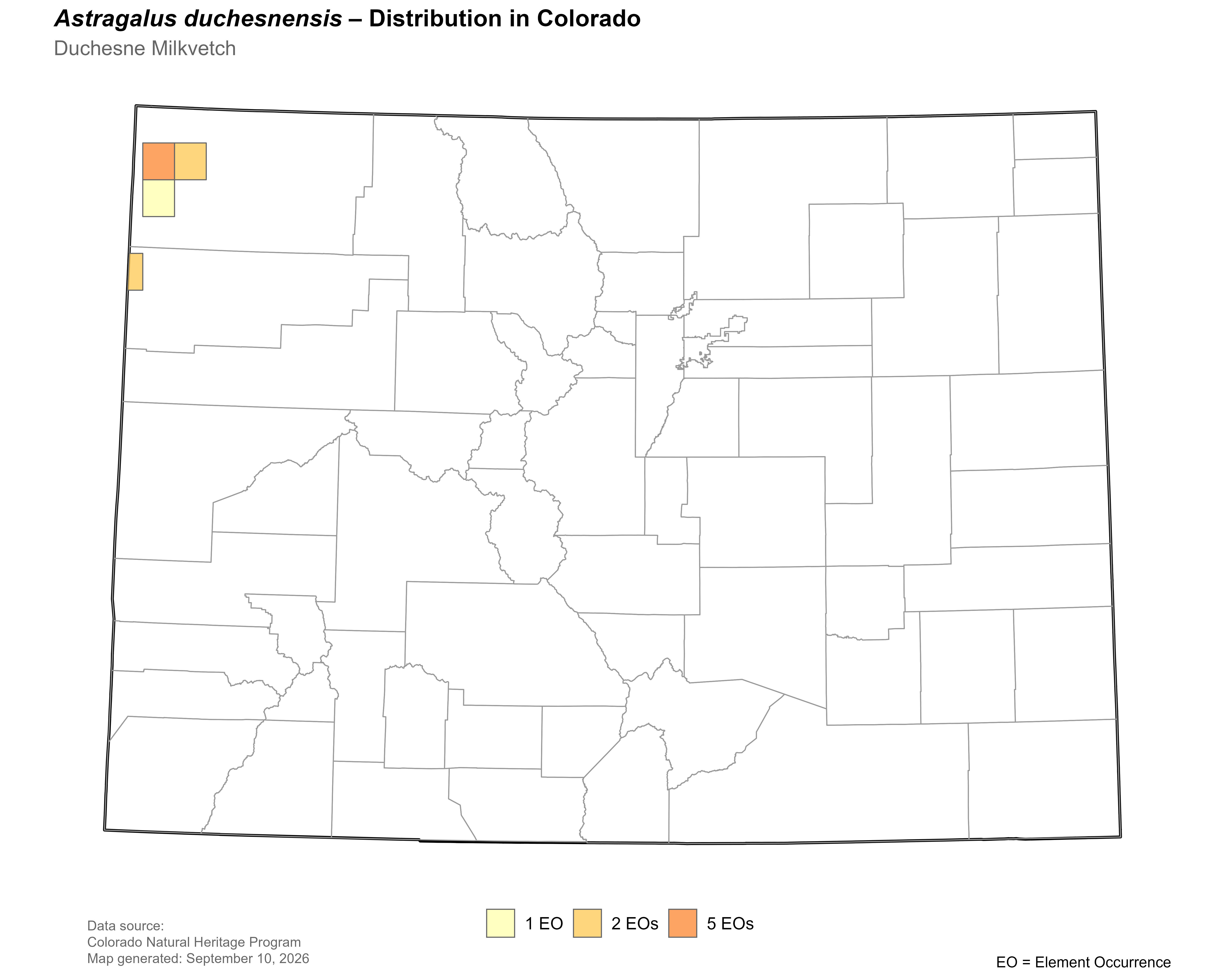
Click on map to enlarge |
Threats and Management Issues
Incompatible livestock grazing and competition from invasive plant species are the primary threats to this species. Livestock grazing and the presence of Bromus tectorum have been documented as a management concern at half of the occurrences. Additional threats include crushing of plants and surface disturbance from OHV activity, oil and gas development, and utility transmission lines. This species also grows in a restricted habitat that may have potential for oil shale mining. Astragalus duchesnensis is considered to have low adaptive capacity and is expected to be moderately vulnerable to climate change with an RCP 4.5 scenario and extremely vulnerable to climate change with an RCP 8.5 scenario, as assessed for the 2025 Colorado State Wildlife Action Plan (CNHP 2025).
References
- Ackerfield, J. 2022. Flora of Colorado. Second Edition. Bot. Misc. 60. BRIT Press, Fort Worth Botanic Garden/Botanical Research Institute of Texas, U.S.A. 861 pp.
- Colorado Natural Heritage Program (CNHP). 2025. Climate Change Vulnerability Assessment of Colorado Tier 1 and Tier 2 Plant Species of Greatest Conservation Need (SCGN) for the 2025 Colorado State Wildlife Action Plan. Colorado Natural Heritage Program, Colorado State University, Fort Collins.
- Colorado Natural Heritage Program (CNHP). 2026. Biodiversity Tracking and Conservation System (Biotics 5). Colorado Natural Heritage Program, Colorado State University, Fort Collins.
- Goodrich, S., and E. Neese. 1986. Uinta Basin flora. U.S. Forest Service, Intermountain Region, Ogden, Utah. 320 pp.
- Spackman, S., B. Jennings, J. Coles, C. Dawson, M. Minton, A. Kratz, and C. Spurrier. 1997. Colorado rare plant field guide. Prepared for Bureau of Land Management, U.S. Forest Service and U.S. Fish and Wildlife Service by Colorado Natural Heritage Program.


