

Scientific Name : Astragalus anisus
Author : M.E. Jones NatureServe Explorer
Common Name : Gunnison Milkvetch
 Current Research Activities
 1997 profile


☰ Click link below for details.
Taxonomy
Fabaceae (pea family)
Ranks and Status
State Rank : S3
State Rank Reason : Although Astragalus anisus is locally common and appears to have a stable population, only four occurrences are considered to be of good viability. The species entire global range is contained within the upper Gunnison Basin, in Gunnison and Saguache counties, Colorado, USA. Threats are thought to be low to moderate, but are poorly documented, however, best management practices have been developed to help off-set impacts from roads and road construction within the species limited range. Astragalus anisus is also considered vulnerable to the effects of climate change.
U.S. Endangered Species Act : none
Colorado Threatened and Endangered List : none
Other Statuses : BLM, SWAP Tier 2, USFS GMUG
Description and Phenology
General Description:
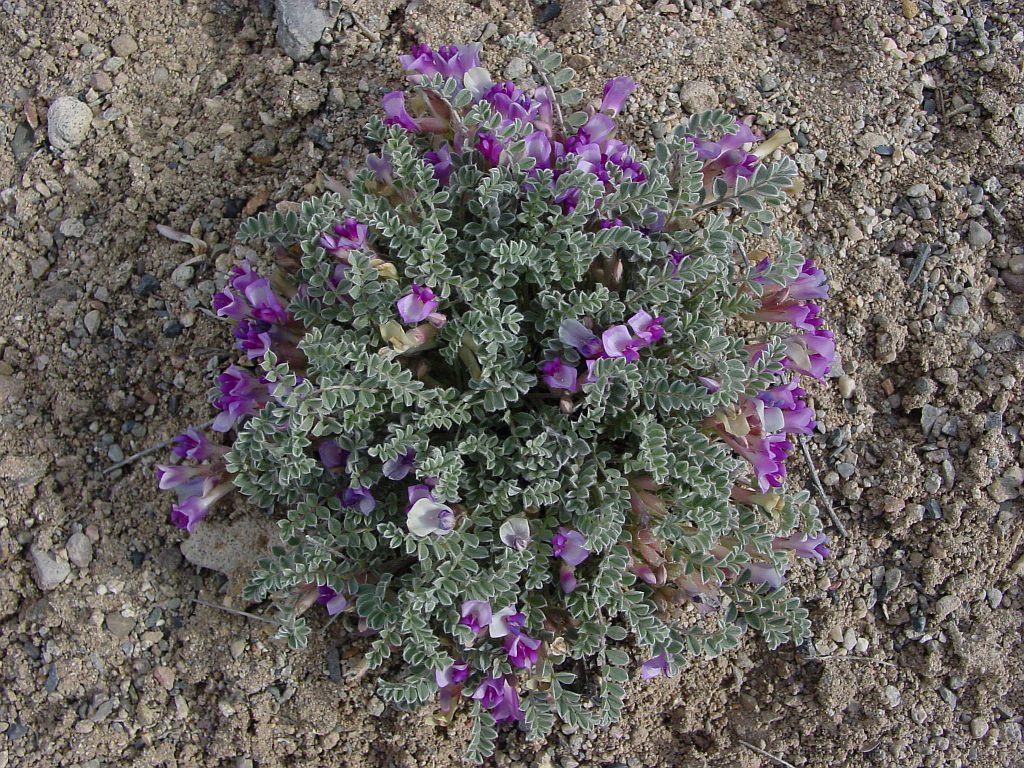
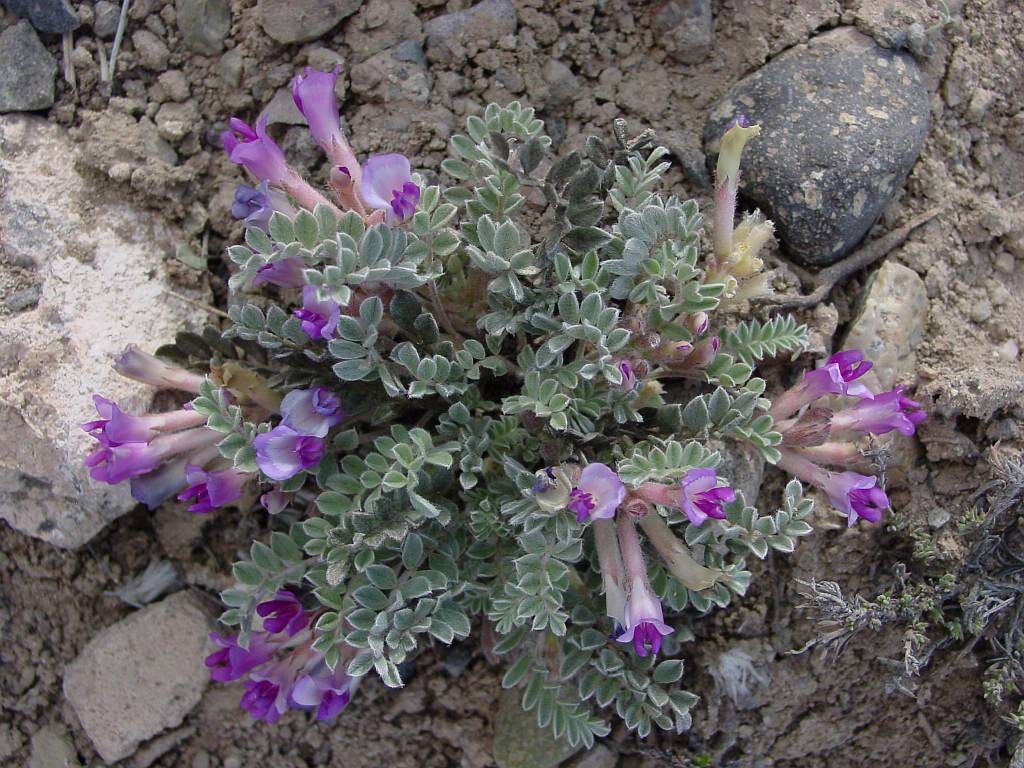
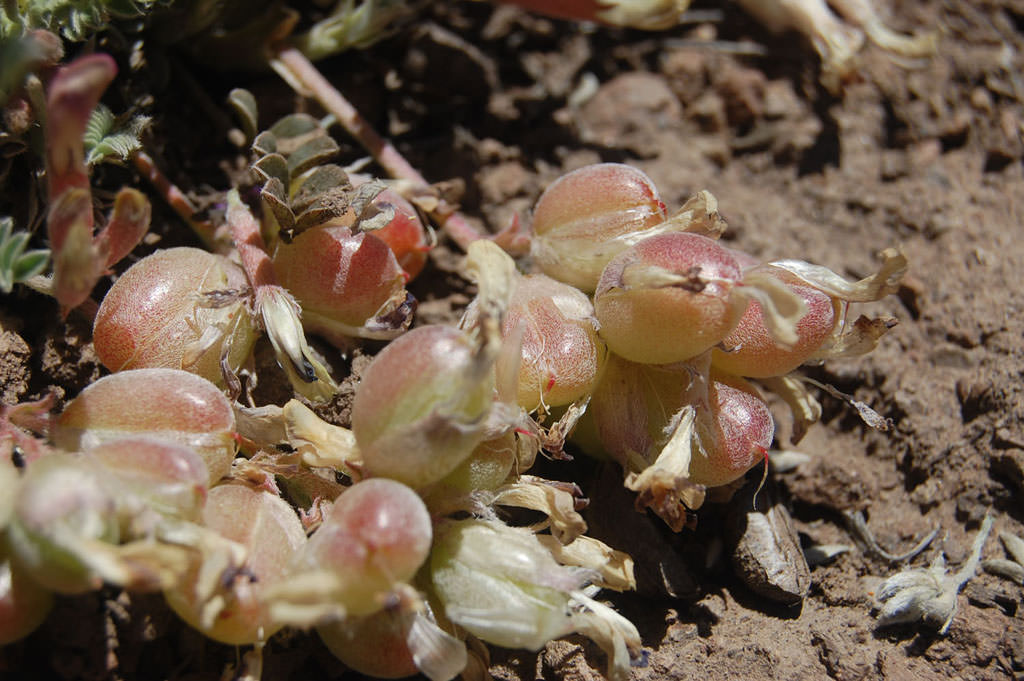
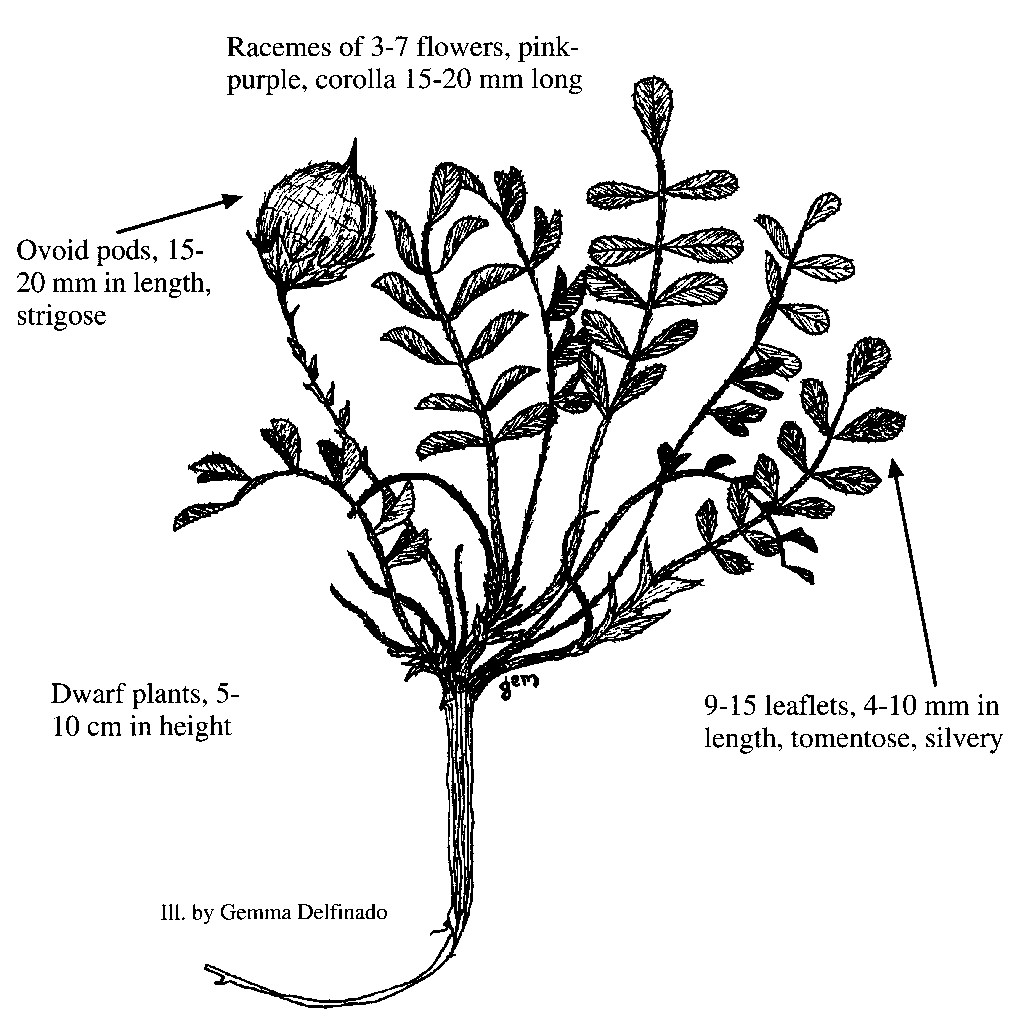
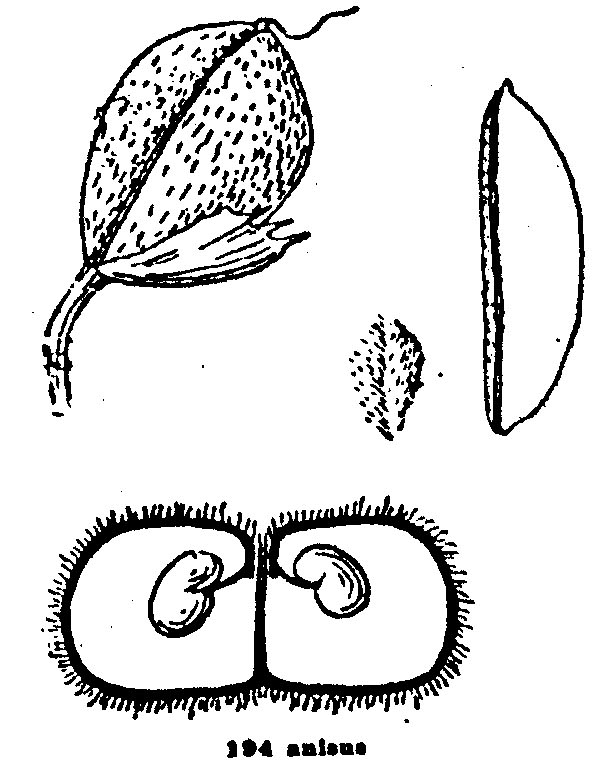
Astragalus anisus is a short, tufted perennial with basal leaves that arise from a very short stem above a woody taproot. The caudex, or stem base, often shows the thatched remains of old leaves. The leaves are pinnately compound, up to 7 cm long, with 11 to 15 leaflets. The entire plant appears silvery-gray due to the presence of numerous hairs of a characteristic dolabriform (ax or pick-shaped) shape. Flowers are borne on short racemes and are typically pink-purple in color. The pods (fruits) are short (1.3 to 1.8 cm in length) and almost round, though somewhat compressed from front to back, and of a fleshy texture with flat-lying hairs. Fruits are originally green in color, becoming brown with maturity. Each fruit contains 28 to 40 ovules. Seeds are smooth, black, and small (2.0 to 2.4 mm in length). The fruit is bilocular (has two chambers), often appears red or orange when inflated, and splits into two sections when dry (Decker and Anderson 2004).
Look Alikes:
Astragalus anisus could be confused with A. missouriensis which also grows in the Gunnison Basin, but has a mottled pod. The two species can only be distinguished by their fruit.
Phenology:
Flowers May-June (Spackman et al. 1997, Ackerfield 2012).
 |  |
Habitat
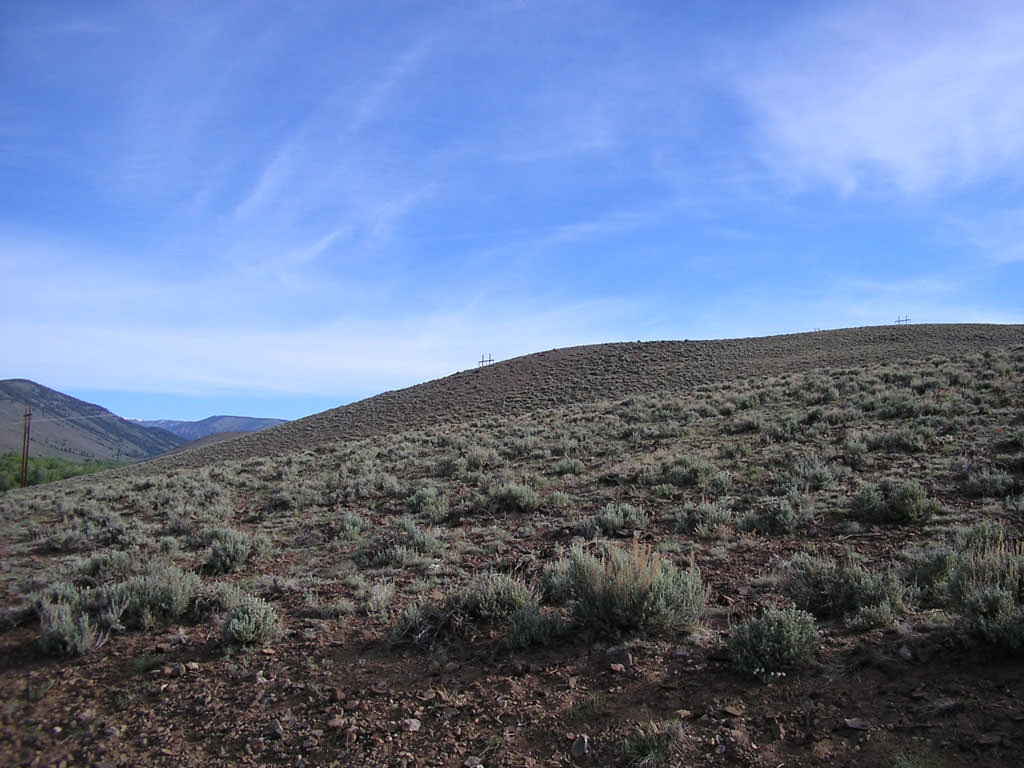
Found within Sagebrush Shrubland (dominated by Artemisia tridentata ssp. tridentata, Artemisia tridentata ssp. vaseyana, Artemisia tridentata ssp. wyomingensis, or Artemisia cana) and Sagebrush Shrub Steppe (dominated by Artemisia nova or Artemisia arbuscula) ecological system types; primarily within the Dry Sagebrush Shrubland type. Usually found in fairly open sites where sagebrush shrubs do not form a closed canopy, but sometimes shelters under low sagebrush plants. Sites are characterized by the absence of trees, moderate shrub cover, moderate understory cover, and extensive bare ground. Found on flats on the floor of the Gunnison Basin and on hillsides. Usually on sandy clay to gravelly soils overlying granitic bedrock; parent materials include rhyolite, tuff, gneiss, and schist. Slopes range 0 - 34% (average 17.3%) and aspects are usually west-facing. Other associated species include Phlox hoodii, Bouteloua gracilis, Poa fendleriana, and Stipa pinetorum (Decker and Anderson 2004).
click on image to enlarge
 |
Elevation Range:
7,524 - 9,741 feet (2,293 - 2,969 meters)
Distribution
Colorado Endemic:
Yes
Range:
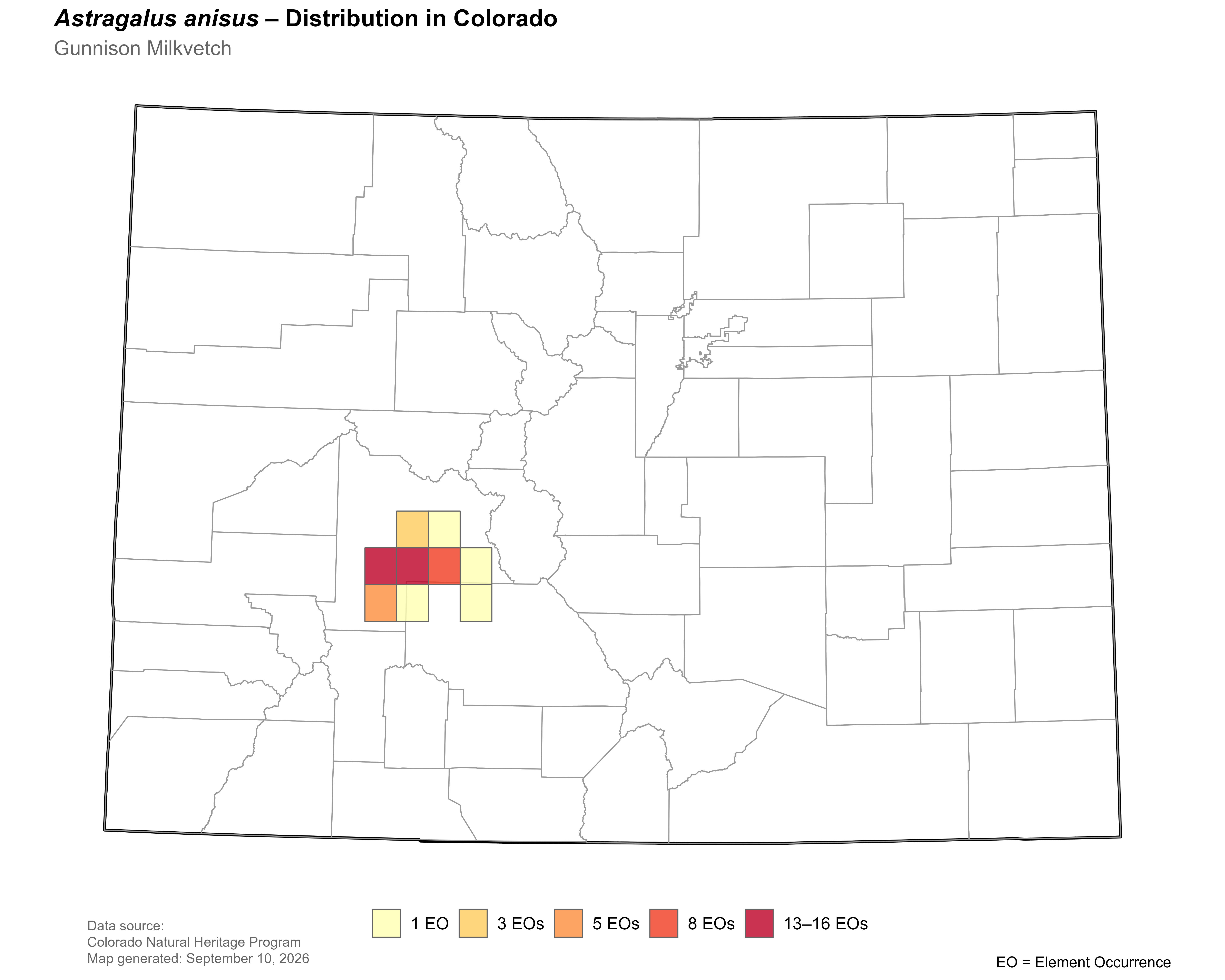
The species entire global range is contained within the upper Gunnison Basin, in Gunnison and Saguache counties, Colorado. Estimated range extent in Colorado of 1978 square kilometers was calculated in GeoCAT using occurrence data provided by the Colorado Natural Heritage Program (2023).
Click on map to enlarge |
Threats and Management Issues
A primary threat to this species and its conservation is a lack of awareness that it exists, and its narrow-endemic status. However, to increase awareness and protection Best Management Practices have been developed (Panjabi and Smith 2014). As of 2022, 73% of the occurrences are found in habitat with minimal to low levels of landscape disturbance (CNHP 2021). Other threats are from off-road vehicle use, non-motorized recreation, non-native species invasion, grazing, residential development, fire suppression, resource extraction, and global climate change. Long term drought is occurring throughout the range of this species, and climate change has shifted the blooming time for this species to more than a month earlier than it bloomed in the 1800s (Munson and Sher 2015). A lack of systematic tracking of population trends and conditions and a lack of knowledge about the species' basic life cycle also contribute to the possibility that one or more of these factors will threaten its long term persistence (Decker and Anderson 2004). This species is considered to have moderate adaptive capacity and is expected to be moderately vulnerable to climate change with an RCP 4.5 scenario and extremely vulnerable to climate change with an RCP 8.5 scenario, as assessed for the 2025 Colorado State Wildlife Action Plan (CNHP 2025).
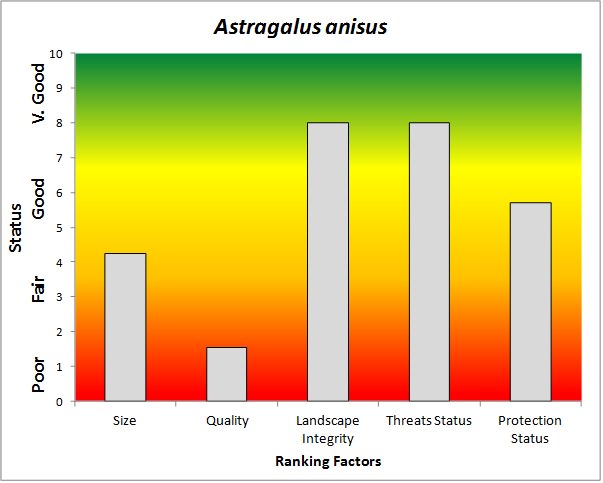
Summary results of an analysis of the status of Astragalus anisus based on several ranking factors. This species was concluded to be effectively conserved. From Rondeau et al. 2011. |
References
- Ackerfield, J. 2015. Flora of Colorado. BRIT Press, Botanical Research Institute of Texas, Fort Worth, TX. 818 pp.
- Barneby, R. C. 1964. Atlas of North American Astragalus. Memoirs of New York Botanical Garden, vol. 13. New York Botanical Garden, Bronx, NY.
- Colorado Natural Heritage Program (CNHP). 2023. Biodiversity Tracking and Conservation System (Biotics 5). Colorado Natural Heritage Program, Colorado State University, Fort Collins.
- Colorado Natural Heritage Program (CNHP). 2025. Climate Change Vulnerability Assessment of Colorado Tier 1 and Tier 2 Plant Species of Greatest Conservation Need (SCGN) for the 2025 Colorado State Wildlife Action Plan. Colorado Natural Heritage Program, Colorado State University, Fort Collins.
- Decker, K. and D.G. Anderson. 2004. Astragalus anisus M.E. Jones (Gunnison milkvetch): a technical conservation assessment. USDA Forest Service, Rocky Mountain Region. Online. Available: http://www.fs.fed.us/r2/projects/scp/assessments/astragalusanisus.pdf (Accessed 2006).
- Isely, D. 1998. Native and naturalized Leguminosae (Fabaceae) of the United States (exclusive of Alaska and Hawaii). Monte L. Bean Life Science Museum, Brigham Young University; MLBM Press, Provo, Utah. 1007 pp.
- Jones, M.E. 1923. Revision of North-American Species of Astragalus. Salt Lake City, UT.
- Kartesz, J.T. 1994. A synonymized checklist of the vascular flora of the United States, Canada, and Greenland. 2nd edition. 2 vols. Timber Press, Portland, OR.
- Munson, S. M. and A. A. Sher. 2015. Long-term shifts in the phenology of rare and endemic Rocky Mountain plants. American Journal of Botany 102: 1268-1276.
- Neely, B., R. Rondeau, J. Sanderson, C. Pague, B. Kuhn, J. Siemers, L. Grunau, J. Robertson, P. McCarthy, J. Barsugli, T. Schulz, and C. Knapp. Editors. 2011. Gunnison Basin: Vulnerability Assessment for the Gunnison Climate Working Group by The Nature Conservancy, Colorado Natural Heritage Program, Western Water Assessment, University of Colorado, Boulder, and University of Alaska, Fairbanks. Project of the Southwest Climate Change Initiative.
- Neely, B., S. Panjabi, E. Lane, P. Lewis, C. Dawson, A. Kratz, B. Kurzel, T. Hogan, J. Handwerk, S. Krishnan, J. Neale, and N. Ripley. 2009. Colorado Rare Plant Conservation Strategy, Developed by the Colorado Rare Plant conservation Initiative. The Nature Conservancy, Boulder, Colorado, 117 pp.
- Panjabi, S.S. and G. Smith, 2014. Recommended best management practices for Gunnison milkvetch (Astragalus anisus): practices developed to reduce the impacts of road maintenance activities to plants of concern. Colorado Natural Heritage Program, Colorado State University, Fort Collins, Colorado. Accessed online on: Dec 7, 2015 at https://www.codot.gov/programs/environmental/wildlife/guidelines/rare-plant-bmps/astragalus-anisus
- Rondeau, R., K. Decker, J. Handwerk, J. Siemers, L. Grunau, and C. Pague. 2011. The state of Colorado's biodiversity 2011. Prepared for The Nature Conservancy. Colorado Natural Heritage Program, Colorado State University, Fort Collins, Colorado.
- Spackman, S., B. Jennings, J. Coles, C. Dawson, M. Minton, A. Kratz, and C. Spurrier. 1997. Colorado rare plant field guide. Prepared for Bureau of Land Management, U.S. Forest Service and U.S. Fish and Wildlife Service by Colorado Natural Heritage Program.
- The Colorado Native Plant Society. 1997. Rare Plants of Colorado, second edition. Falcon Press Publishing Co.,Inc. Helena, Montana. 105pp.
- USDA, NRCS. 2022. The PLANTS Database. National Plant Data Team, Greensboro, NC 27401-4901 USA.
- Wasson, A. 1998. Astragalus anisus in the Gunnison Basin: A Demographic Study.
- Welsh, S.L. 2007. North American Species of Astragalus Linnaeus (Leguminosae) A Taxonomic Revision. Brigham Young University, Provo, Utah. 932 pp.