

Scientific Name : Artemisia parryi
Author : Gray NatureServe Explorer
Common Name : Parry's Wormwood
 Current Research Activities


☰ Click link below for details.
Taxonomy
Asteraceae (sunflower family)
The Flora of North America Editorial Committee (Vol. 19 2006) includes Artemisia parryi as a subspecies of A. laciniata.
Ranks and Status
State Rank : S2
State Rank Reason : Artemisia parryi is known from less than 20 occurrences in the southern mountains of Colorado. Long term drought is a concern for this species, however, it is considered to have moderate adaptive capacity and is therefore expected to be less vulnerable to climate change.
U.S. Endangered Species Act : none
Colorado Threatened and Endangered List : none
Other Statuses : SWAP Tier 2
Description and Phenology
General Description:
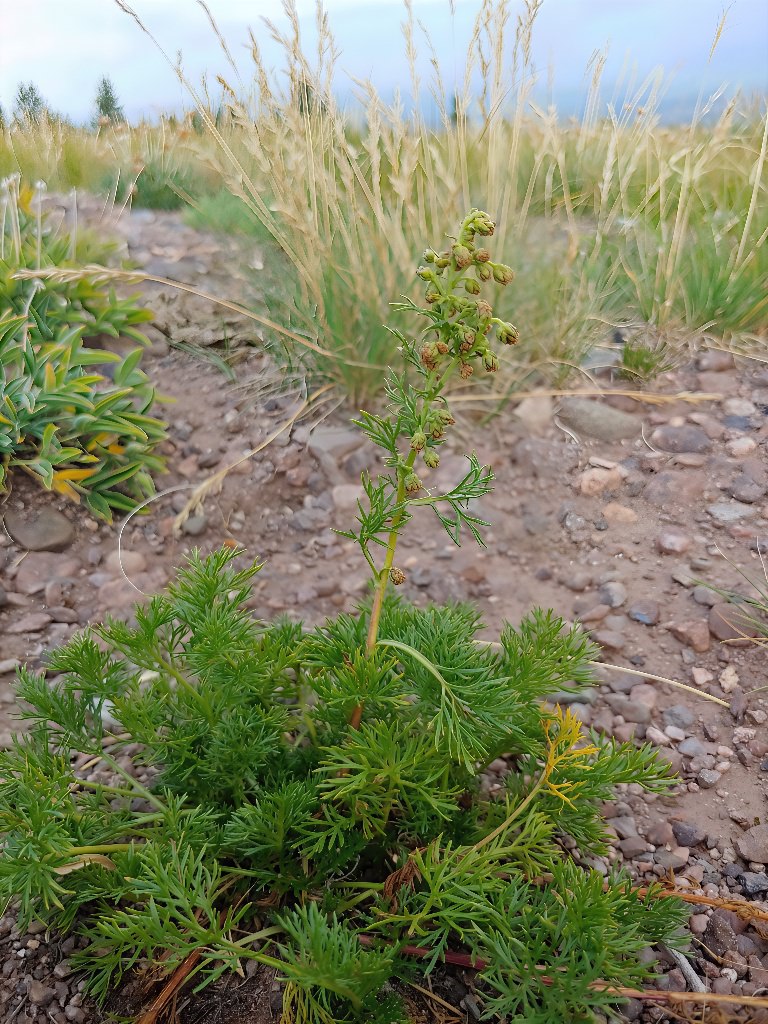
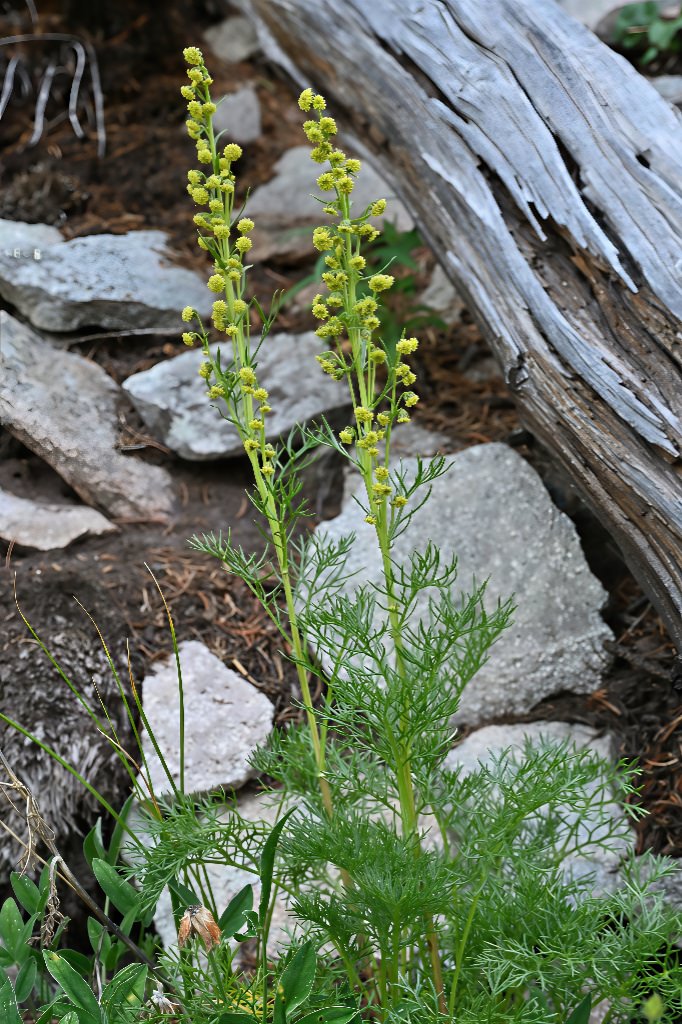
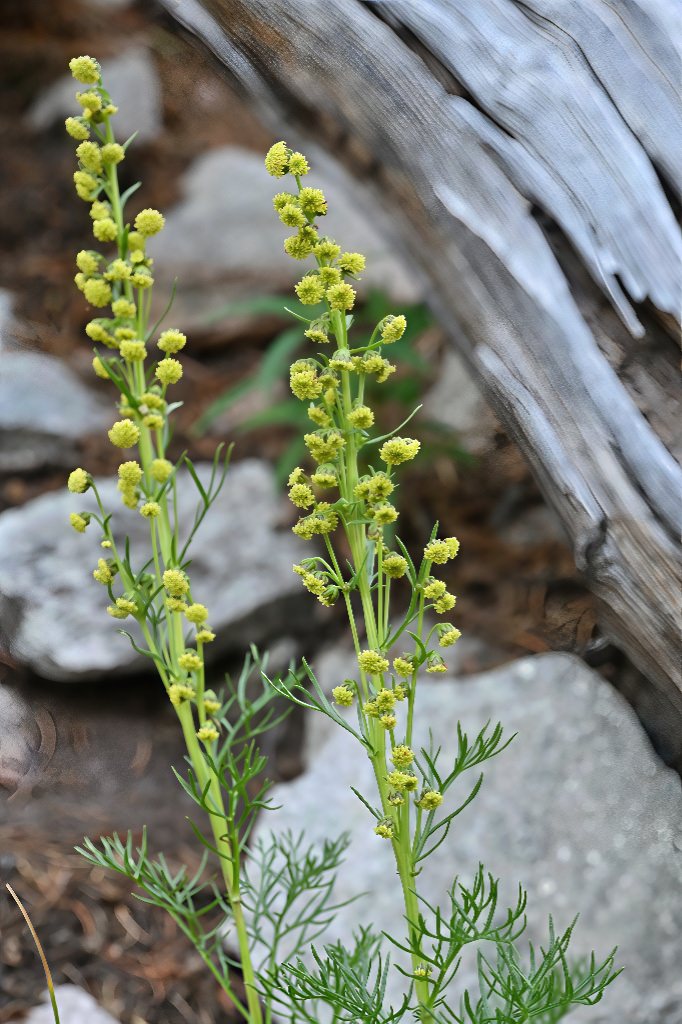
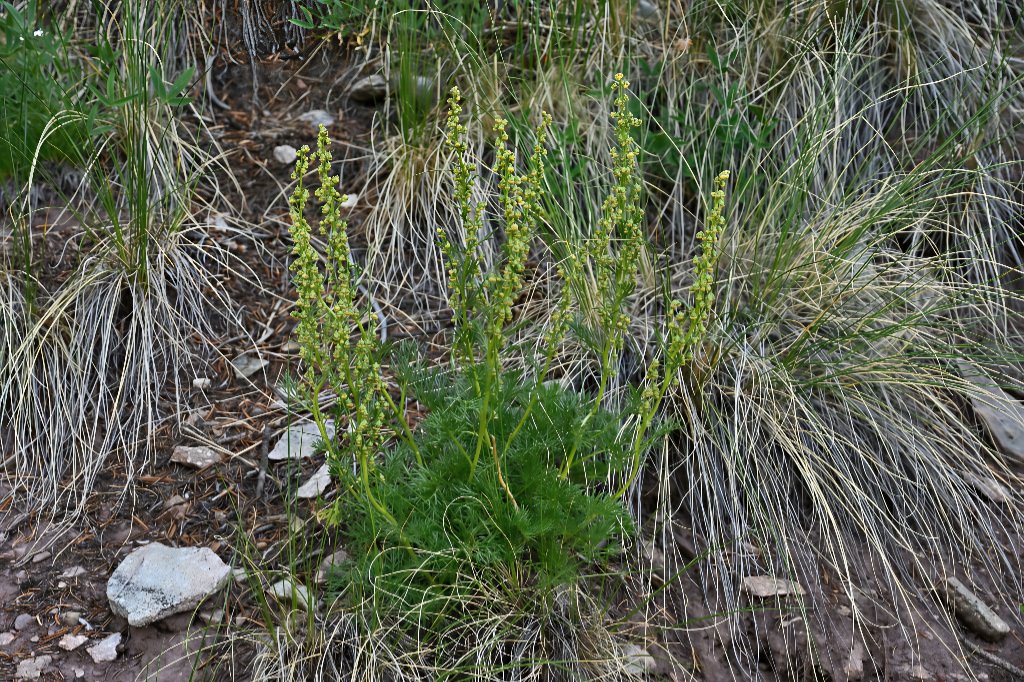
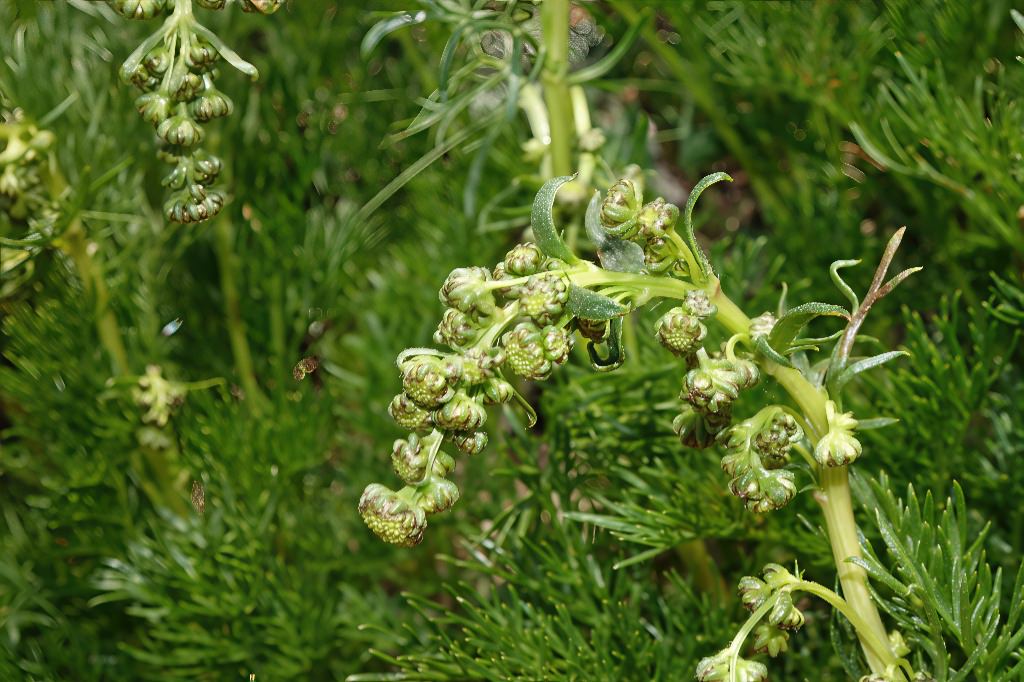
Artemisia parryi is a perennial, 1-3 dm tall with mostly basal leaves; The leaves are bipinnatifid, loosely villous to glabrous, forming oblong segments 2-7 cm long. The spike-like inflorescence supports numerous nodding heads; involucres are 2.5-4 mm high, receptacle naked, yellowish disk flowers 20-50 per head (Ackerfield 2022, FNA 2006).
Look Alikes:
Artemisia parryi is not likely to be confused with other species within its habitat.
Phenology:
This taxon flowers from late summer to early fall (FNA 2006).
Habitat
Artemisia parryi is found in subalpine and alpine meadows on rocky soils (FNA 2006). In Colorado it is found on rocky outcrops in Picea engelmannii - Pinus aristata forests with Eriocoma pinetorum, Ribes cereum, Chaenactis douglasii var. alpina and Polemonium viscosum (CNHP 2026).
Elevation Range:
9,300 - 12,000 feet (2,835 - 3,658 meters)
Distribution
Colorado Endemic:
No
Range:
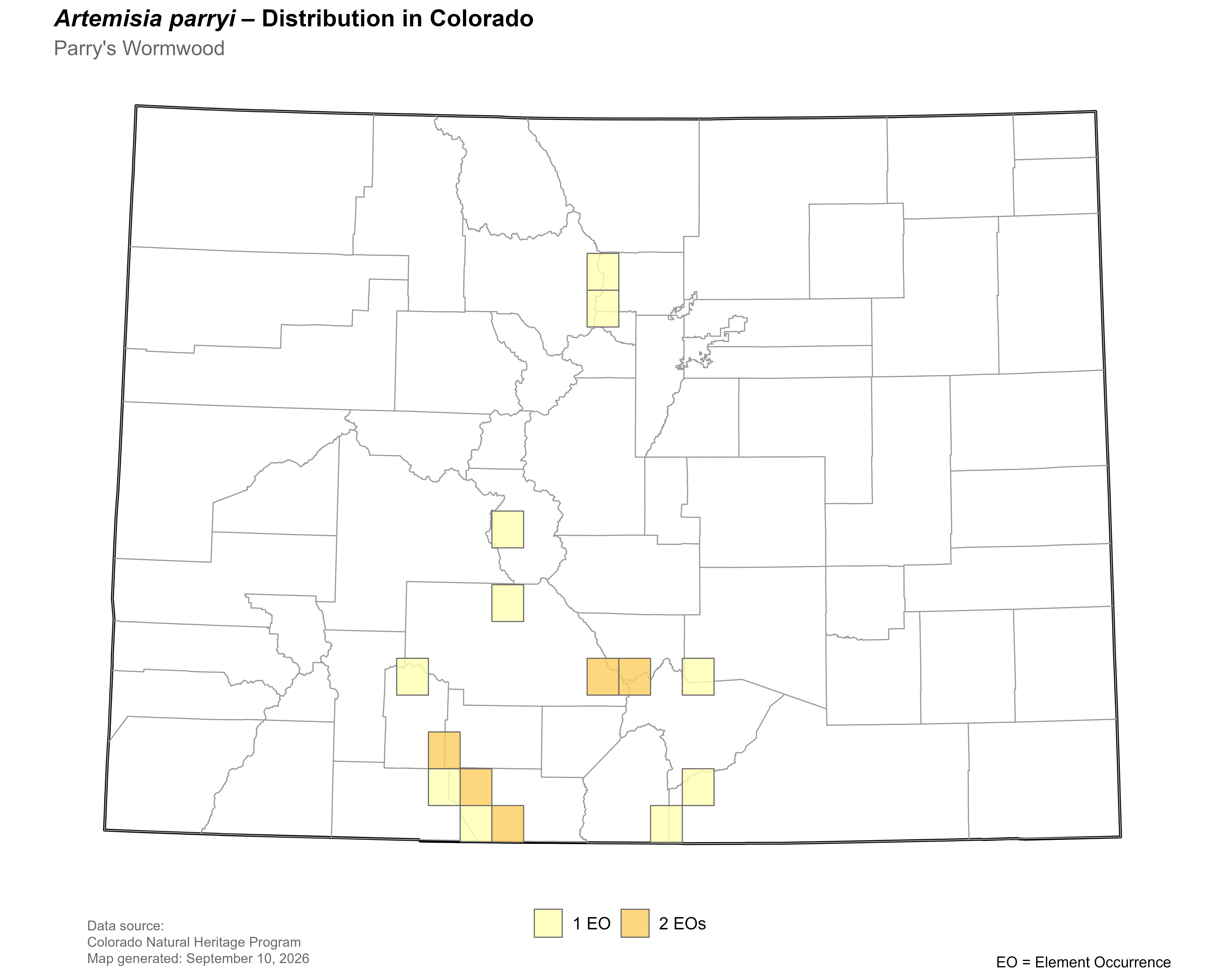
Artemisia parryi is a regional endemic of southern Colorado and northern New Mexico, USA. The majority of A. parryi occurrences are known from Colorado, with 2-3 occurrences reported from northern New Mexico. In Colorado A. parryi is known from Chaffee, Conejos, Custer, Gilpin, Grand, Huerfano, Las Animas, Mineral, Rio Grande, and Saguache counties. The estimated range extent in Colorado of 33,333 square kilometers was calculated in GeoCAT using occurrence data provided by the Colorado Natural Heritage Program (2026).
Click on map to enlarge |
Threats and Management Issues
Threats to this species are poorly documented but as with many western plant species the effects of long term drought is a concern. This species is considered to have moderate adaptive capacity and is expected to be less vulnerable to climate change under both RCP 4.5 and 8.5 scenarios, as assessed for the 2025 Colorado State Wildlife Action Plan (CNHP 2025).
References
- Ackerfield, Jennifer. 2022. Flora of Colorado. Second Edition. Bot. Misc. 60. BRIT Press, Fort Worth Botanic Garden/Botanical Research Institute of Texas, U.S.A. 861 pp.
- Colorado Natural Heritage Program (CNHP). 2025. Climate Change Vulnerability Assessment of Colorado Tier 1 and Tier 2 Plant Species of Greatest Conservation Need (SCGN) for the 2025 Colorado State Wildlife Action Plan. Colorado Natural Heritage Program, Colorado State University, Fort Collins, CO.
- Colorado Natural Heritage Program (CNHP). 2026. Biodiversity Tracking and Conservation System (Biotics 5). Colorado Natural Heritage Program, Colorado State University, Fort Collins.
- Flora of North America Editorial Committee (FNA). 2006a. Flora of North America north of Mexico. Vol. 19. Magnoliophyta: Asteridae, part 6: Asteraceae, part 1. Oxford University Press, New York. xxiv + 579 pp.