


Scientific Name : Aliciella penstemonoides
Author : (M.E. Jones) J.M. Porter NatureServe Explorer
Common Name : Black Canyon Gilia
 Current Research Activities
 1997 profile


☰ Click link below for details.
Taxonomy
Polemoniaceae (phlox family)
Following molecular and phylogenetic analyses Porter (1998) proposed that the Gilia genus is polyphyletic, and he consequently moved members of the section Giliandra of genus Gilia to section Giliandra of the subgenus Aliciella of the genus Aliciella. Under this treatment, the genus Aliciella consists of 21 species including A. penstemonoides (Beatty et al. 2004). Aliciella penstemonoides is the accepted name in Plants of the World Online (2026).
Ranks and Status
State Rank : S2
State Rank Reason : Aliciella penstemonoides is a Colorado endemic with approximately 25 occurrences within a three county region of southwestern Colorado, USA. This species occurs on cliff faces and is, therefore, naturally protected from many threats, however, long-term drought, competition from invasive species and non-motorized recreation pose threats to the species. It is considered to have low adaptive capacity and is expected to be moderately to highly vulnerable to climate change.
U.S. Endangered Species Act : none
Colorado Threatened and Endangered List : none
Other Statuses : SWAP Tier 2
Description and Phenology
General Description:
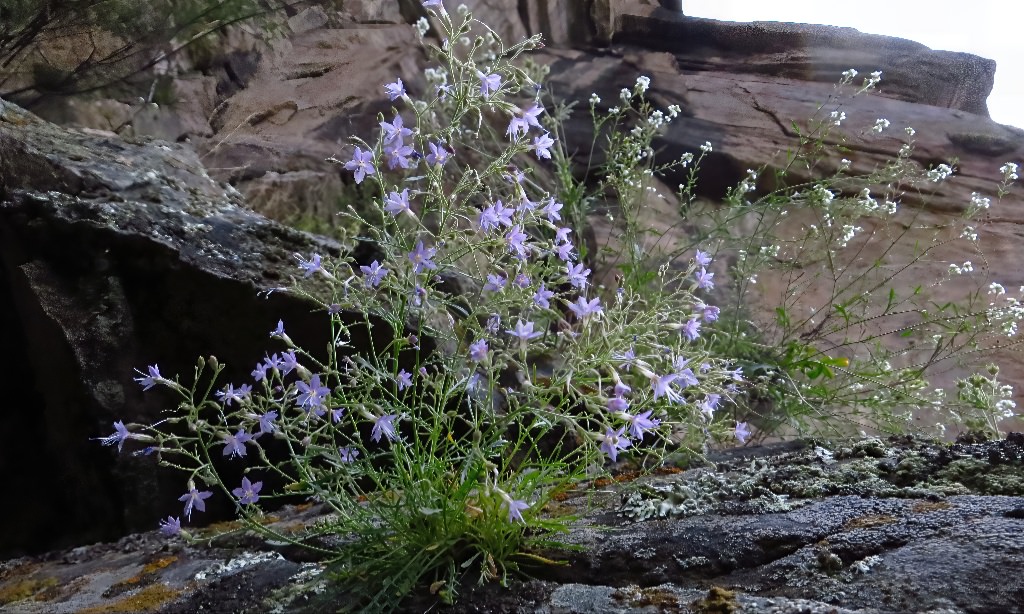
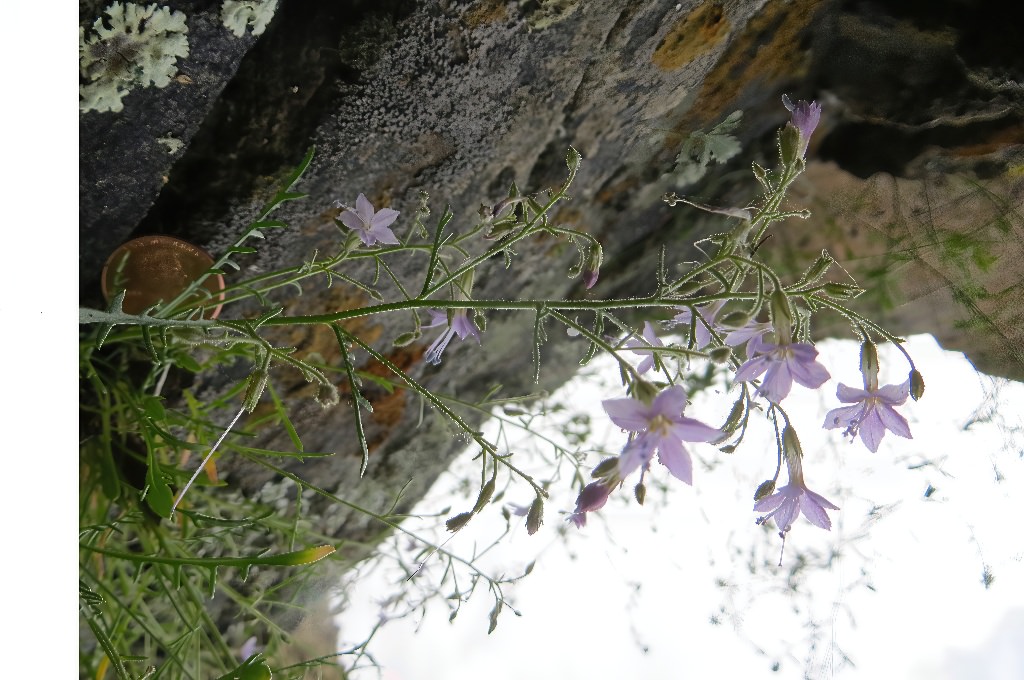
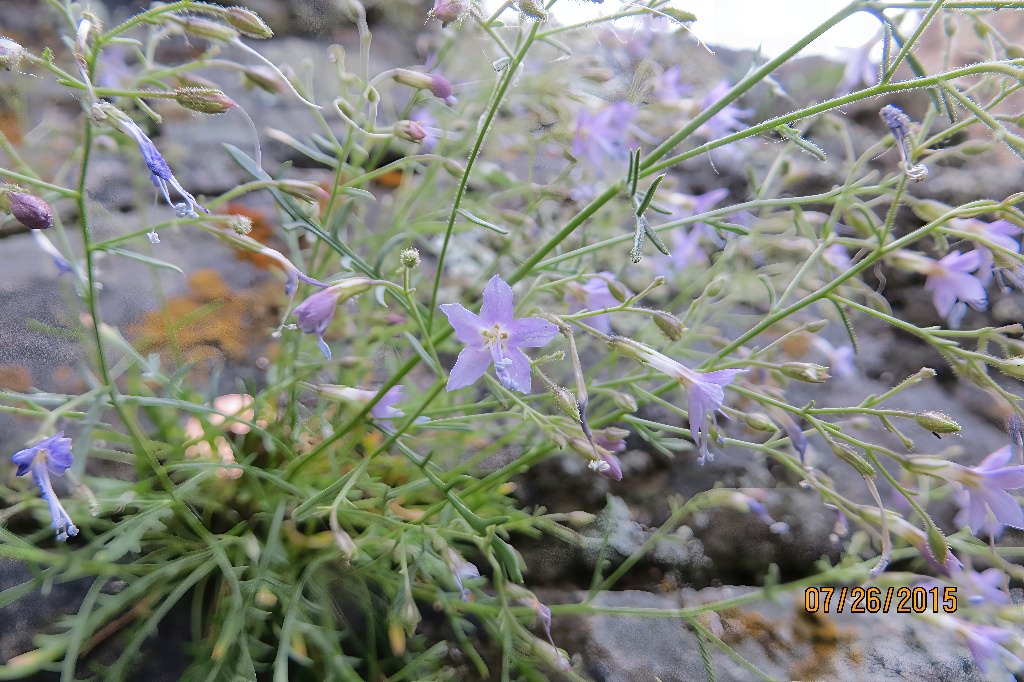
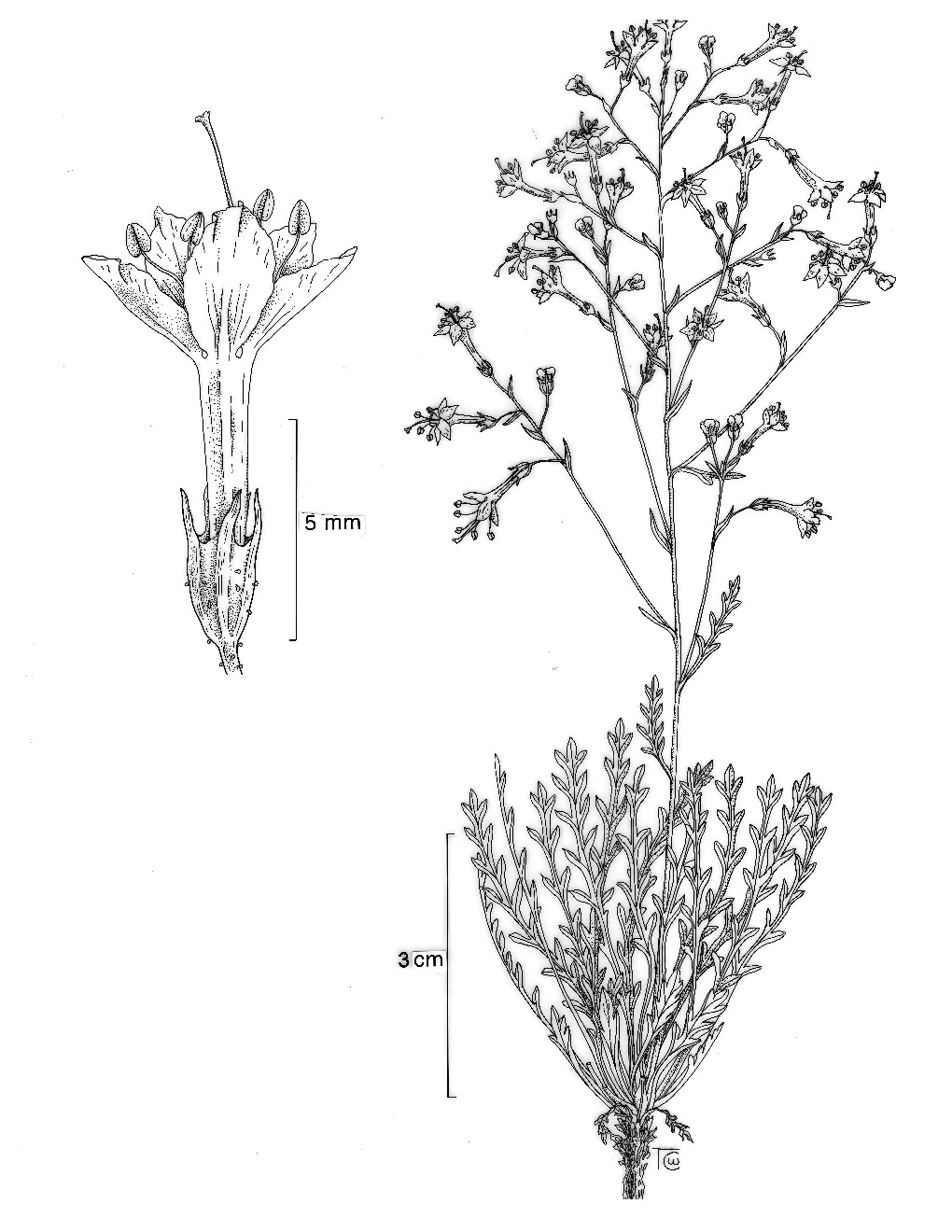
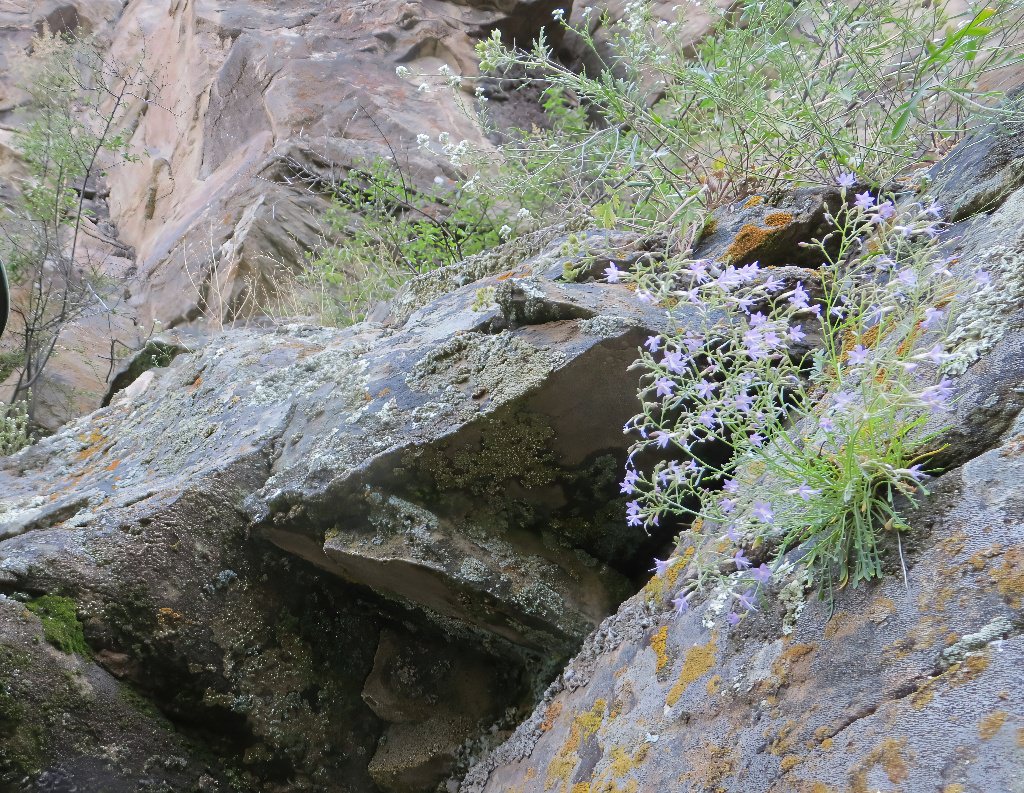
Short- to long-lived monocarpic perennial, herbaceous from a stout taproot, 5.5-18 cm tall. Stems glandular pubescent, simple and erect, often diffusely branching in flower. Leaves sparsely glandular puberulent; basal leaves forming a loose rosette, linear to linear-lanceolate, entire or pinnately lobed to 5 cm long; cauline leaves gradually reduced in size, linear and entire or slightly lobed. Calyx 2.5-4 mm long; corolla blue, lavender, occasionally white, stamens exerted from the corolla, the tube ca. 10 mm long with 5 mm long lobes (Ackerfield 2022, Porter 1998).
Look Alikes:
Generally, Aliciella penstemonoides is not likely to be confused with other species in the same range and habitat (Spackman et al. 1997). However, the ranges of A. penstemonoides and A. pinnatifida overlap in various canyons, especially in Mineral and Hinsdale counties. The two species share many morphological characteristics and can be difficult to distinguish. Aliciella pinnatifida is an annual or biennial and has consistently symmetrical pinnatifid basal leaves compared to A. pentstemonoides which is a perennial, with some basal leaves entire and asymmetrical pinnae; it often grows in colonies, with several basal rosettes retaining previous years? flowering stalks. (Ackerfield 2022, Hum 2026, Porter 1998).
Phenology:
Aliciella penstemonoides has an extended flowering period which begins in early June and proceeds through late August. Fruiting begins in mid-June and terminates by September (Peterson 1981).
 |
Habitat
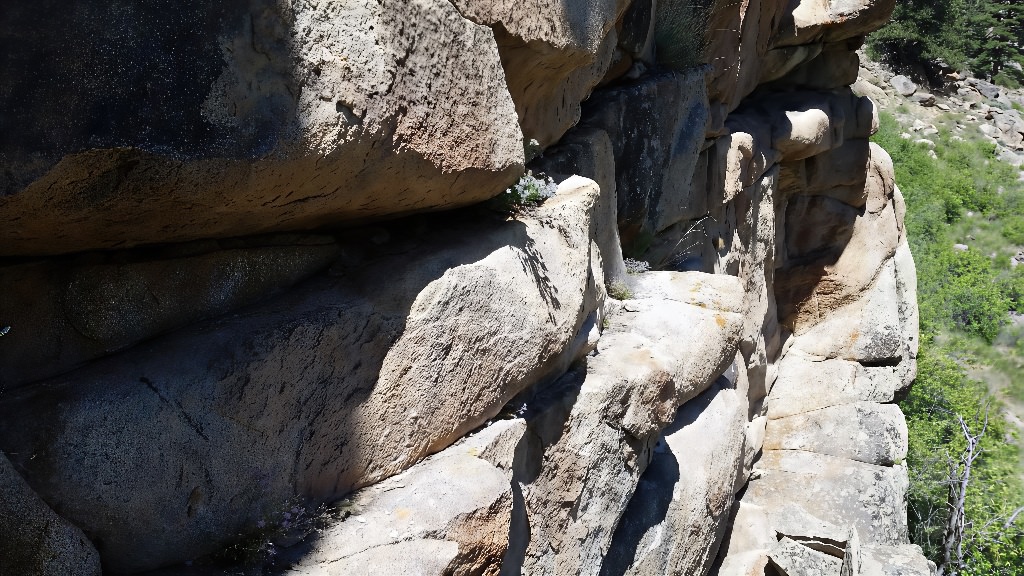
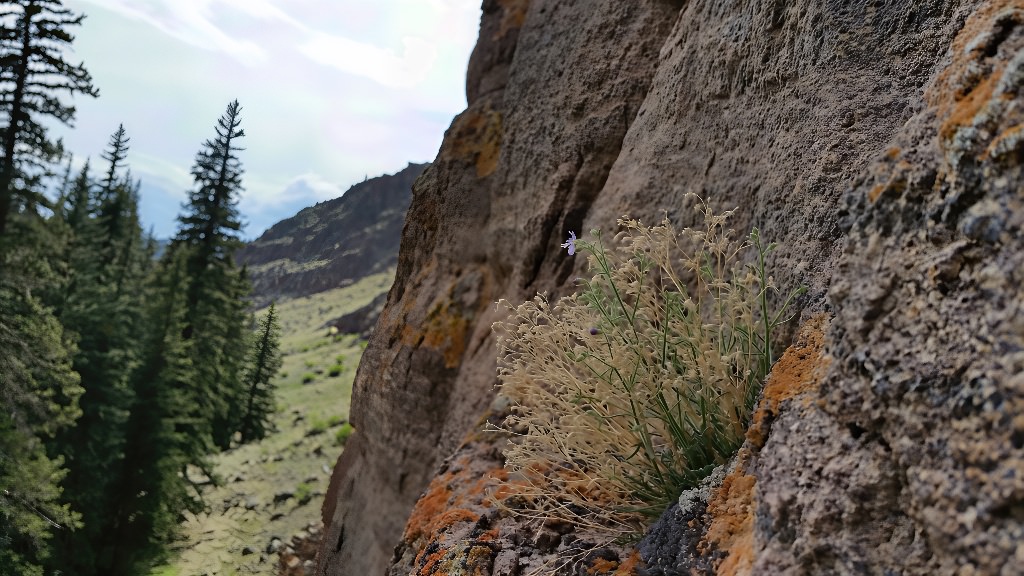
Aliciella penstemonoides is endemic to the Gunnison River Basin and is restricted to cliff walls along the upper tributaries of the basin (Hum 2026). It grows on igneous and metamorphic rocks primarily in damp, rocky soils in shallow crevices with little soil accumulation, and does not grow in deep pockets of soil or in open areas (Beatty et al. 2004, Hum 2017, O'Kane 1988). The dominant plant community surrounding occupied habitat is often comprised of Picea pungens/Alnus incana riparian woodlands or Amelanchier utahensis with Heterotheca villosa. Associated species on the sparsely vegetated cliff habitat include Artemisia frigida, Aletes anisatus, Holodiscus discolor, Cheilanthes sp., Echinocereus triglochidiatus, Philadelphus microphyllus and Saxifraga austromontana (CNHP 2026).
click on image to enlarge
 |
 |
 |
Elevation Range:
6,503 - 9,626 feet (1,982 - 2,934 meters)
Distribution
Colorado Endemic:
Yes
Range:
Aliciella penstemonoides is endemic to Gunnison, Hinsdale, and Montrose counties, Colorado, USA. Estimated range extent in Colorado of 3,936 square kilometers was calculated in GeoCAT using occurrence data provided by the Colorado Natural Heritage Program (2026). Occurrences in Mineral County, Colorado, were discarded from this analysis as they are of questionable identity (specimens annotated to either Aliciella pinnatifida or Aliciella cf penstemonoides). The only occurrence in Ouray County is also considered of questionable identity (Lyon pers comm 2024) and was discarded from the analysis.
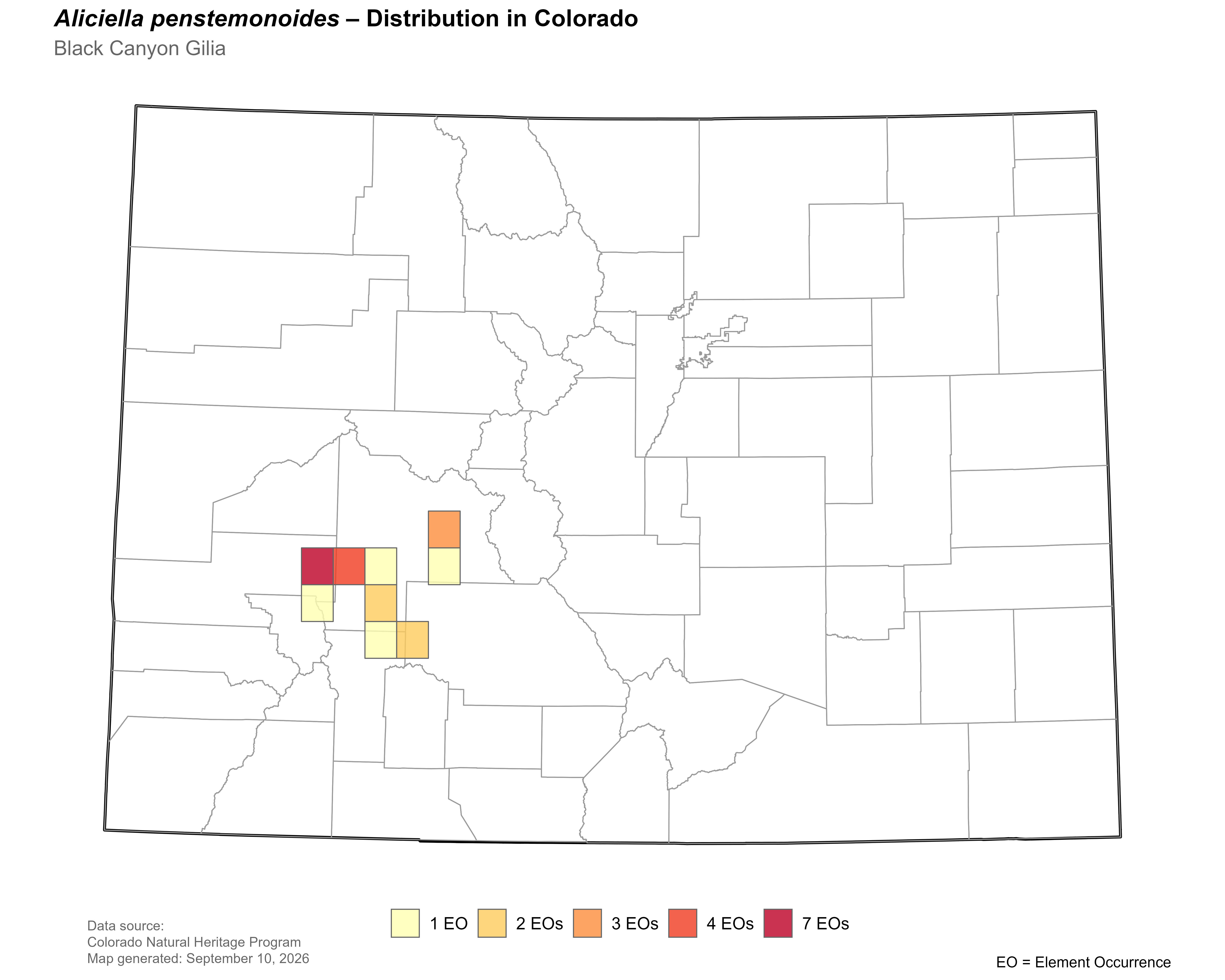
Click on map to enlarge |
Threats and Management Issues
This species occurs on cliff faces and is, therefore, naturally protected from many threats; however, the creation of Blue Mesa Reservoir flooded/extirpated four of the known occurrences. Rock climbing and hiking trails occur in or near several occurrences, and trampling of plants has been noted (Hum 2017). Invasive plant species, including Bromus tectorum have been observed at 20% of the occurrences. Four occurrences are found adjacent to old roads or mining sites but appear to be unaffected. Rangewide long-term drought is a concern as Aliciella penstemonoides shows a preference for a specialized habitat and potential reliance on adequate water renders it vulnerable to climate drying (Beatty et al. 2004). This species is considered to have low adaptive capacity and is expected to be moderately vulnerable to climate change with an RCP 4.5 scenario and highly vulnerable to climate change with an RCP 8.5 scenario, as assessed for the 2025 Colorado State Wildlife Action Plan (CNHP 2025).
References
- Ackerfield, Jennifer. 2022. Flora of Colorado. Second Edition. Bot. Misc. 60. BRIT Press, Fort Worth Botanic Garden/Botanical Research Institute of Texas, U.S.A. 861 pp.
- Beatty, B. L., W. F. Jennings, and R. C. Rawlinson. 2004. Gilia penstemonoides M.E. Jones (Black Canyon gilia): a technical conservation assessment. USDA Forest Service, Rocky Mountain Region. Online. Available: http://www.fs.fed.us/r2/projects/scp/assessments/giliapenstemonoides.pdf (accessed 2025).
- Colorado Natural Heritage Program (CNHP). 2025. Climate Change Vulnerability Assessment of Colorado Tier 1 and Tier 2 Plant Species of Greatest Conservation Need (SCGN) for the 2025 Colorado State Wildlife Action Plan. Colorado Natural Heritage Program, Colorado State University, Fort Collins, CO.
- Colorado Natural Heritage Program (CNHP). 2026. Biodiversity Tracking and Conservation System (Biotics 5). Colorado Natural Heritage Program, Colorado State University, Fort Collins.
- Hum, R. 2026. Personal communication regarding Aliciella penstemonoides.
- Hum, Richard A. 2017. Population inventory, threat assessment, and anticipated effects of global climate change on an endemic, cliff habitat specialist, Aliciella penstemonoides (Polemoniaceae). Master's Thesis, Department of Biology, Appalachian State University.
- O'Kane, S. L. 1988. Colorado's Rare Flora. Great Basin Naturalist. 48(4):434-484.
- Peterson, J. S. 1981. Status Report on Gilia penstemonoides. Unpublished report prepared for the Colorado Natural Areas Program, Denver, CO.
- Plants of the World Online (POWO). 2026. Plants of the World Online. Facilitated by the Royal Botanic Gardens, Kew. Published on the Internet; http://www.plantsoftheworldonline.org/ (accessed 2026).
- Porter, J. M. 1998. Nomenclatural Changes in Polemoniaceae. Aliso 17(1): 83-85.
- Spackman, S., B. Jennings, J. Coles, C. Dawson, M. Minton, A. Kratz, and C. Spurrier. 1997. Colorado rare plant field guide. Prepared for Bureau of Land Management, U.S. Forest Service and U.S. Fish and Wildlife Service by Colorado Natural Heritage Program.
Biotics Export Date : 2026-09-16