


Scientific Name : Aletes sessiliflorus
Author : Theobald & Tseng NatureServe Explorer
Common Name : New Mexico False Carrot
 Current Research Activities


☰ Click link below for details.
Taxonomy
Apiaceae (carrot family)
Ackerfield (2022) lists this as Aletes sessiliflorus W.L. Theob. & C.C. Tseng, and Ackerfield (2015) lists this as Cymopterus sessiliflorus (W.L. Theob. & C.C. Tseng) R.L. Hartman. The taxon Aletes macdougallii var. breviradiatus was subsumed into A. sessiliflorus (FNA vol. 13, 2024).
Ranks and Status
State Rank : S1
State Rank Reason : Aletes sessiliflorus is known from eight occurrences within a limited area in southwest Colorado, USA. Potential threats include oil and gas development, long-term drought, and changes in the local fire regime. This species is considered to have low adaptive capacity and is expected to be extremely vulnerable to climate change.
U.S. Endangered Species Act : none
Colorado Threatened and Endangered List : none
Other Statuses : SWAP Tier 2
Description and Phenology
General Description:
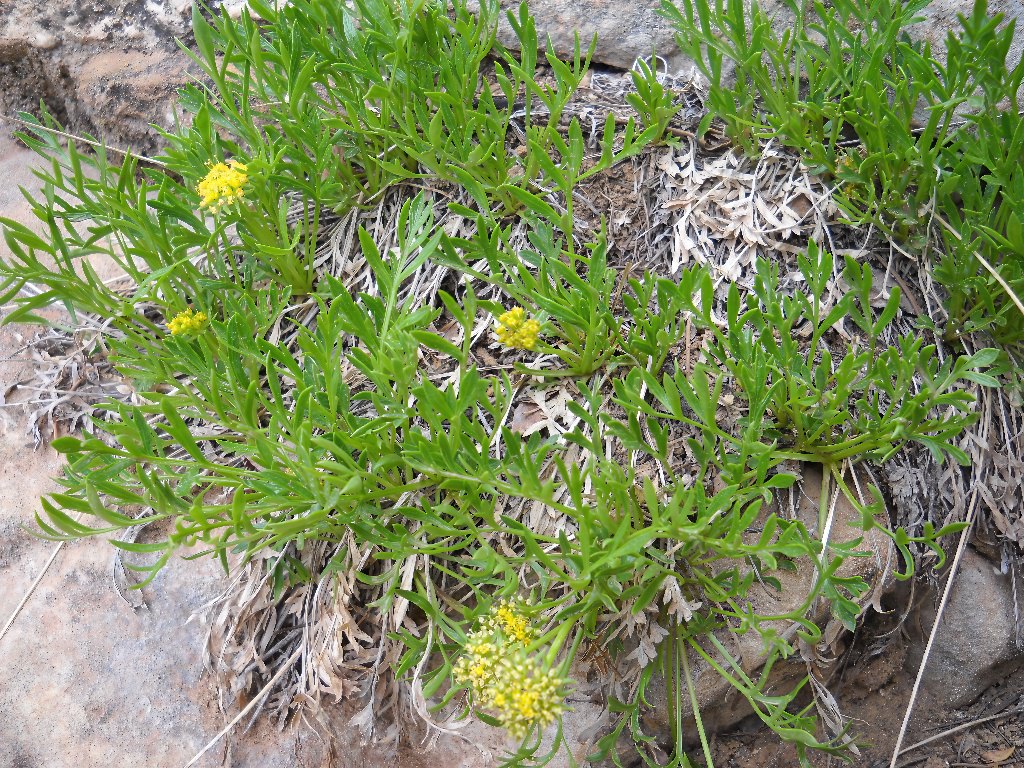
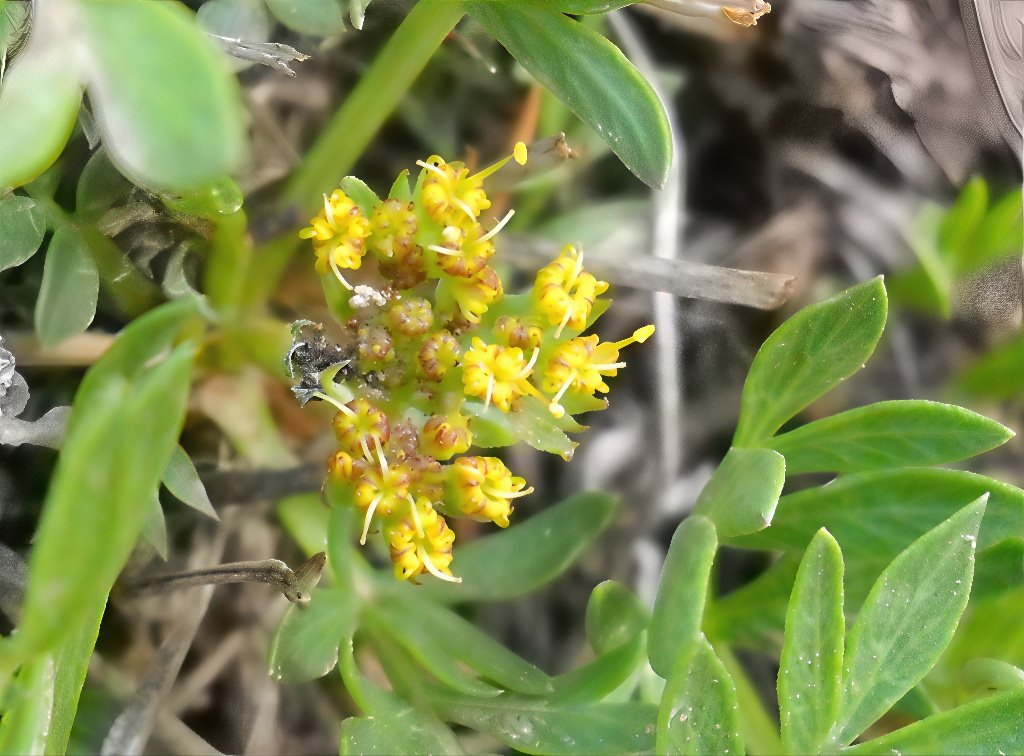
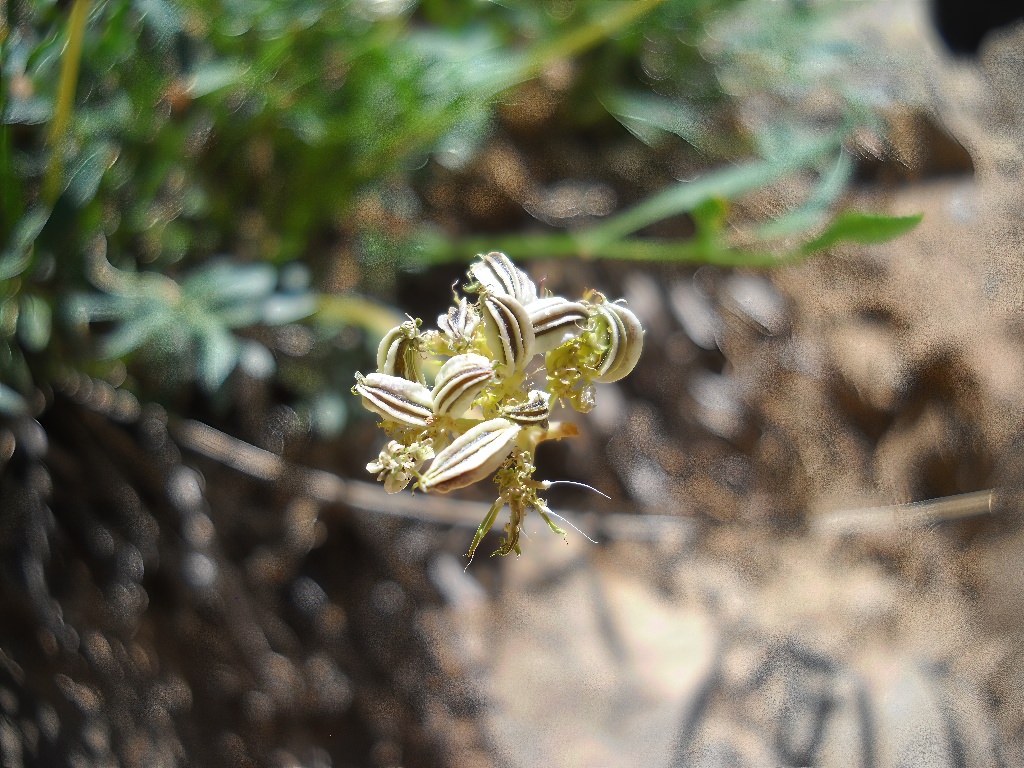
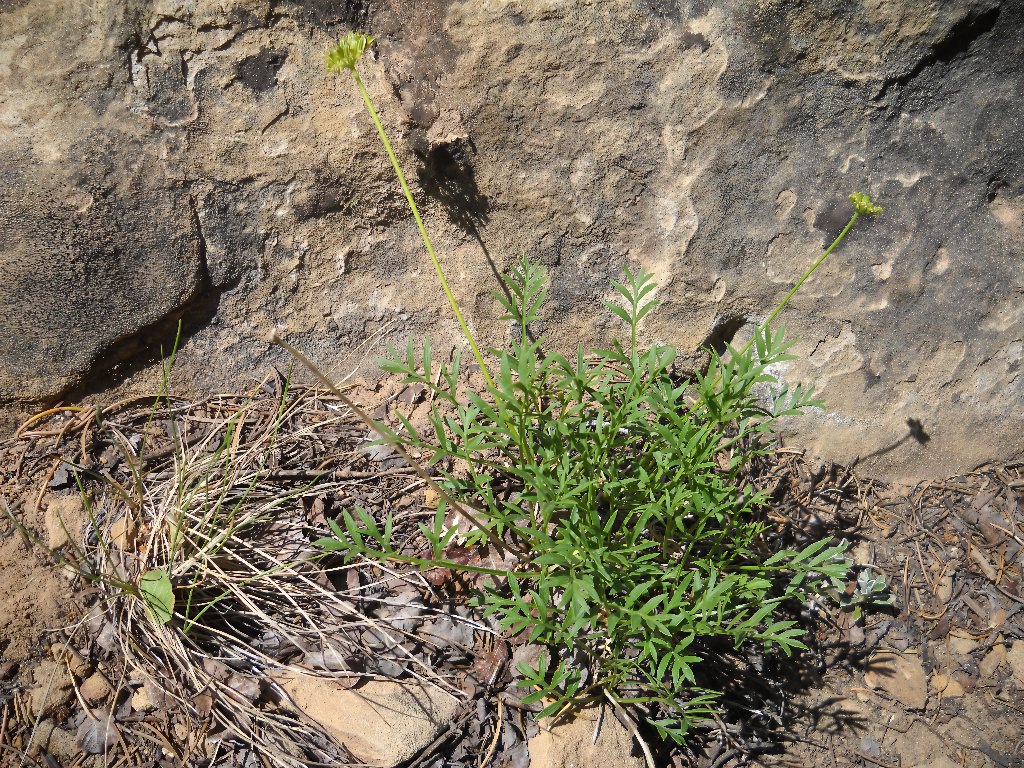
Aletes sessiliflorus is a stemless herbaceous perennial, 6-20 cm tall. It has several to many leaves from a much-branched, woody root crown. The leaves are oblong in outline, blades glabrous, 2.6-6.4 cm long, 1-2.5 cm wide, pinnate or bipinnate, the ultimate divisions linear, 3-25 mm long, 1.5 mm wide. The small yellow flowers are borne on peduncles that are 4-12 cm long and may be exceeded by the leaves; rays 4-8, spreading, unequal, 2-7 mm long; involucel bractlets linear to lanceolate or ovate, 2-4.5 mm long. There are 4-6 narrow, oblong, membranous winged fruits in each umbellet, sessile or subsessile, 1.8-4 mm long, 0.9-2 mm wide. (Ackerfield 2022, NM Rare Plants 2026)
Look Alikes:
Aletes sessiflorus is most similar to A. anisatus but is distinguished by its smaller stature and erect to ascending leaf segments versus the taller A. anisatus with mostly spreading leaf segments; however, their range does not overlap.
Phenology:
A. sessiliflorus flowers from April-May; fruiting in May or early June (Colorado Natural Heritage Program 2026).
Habitat
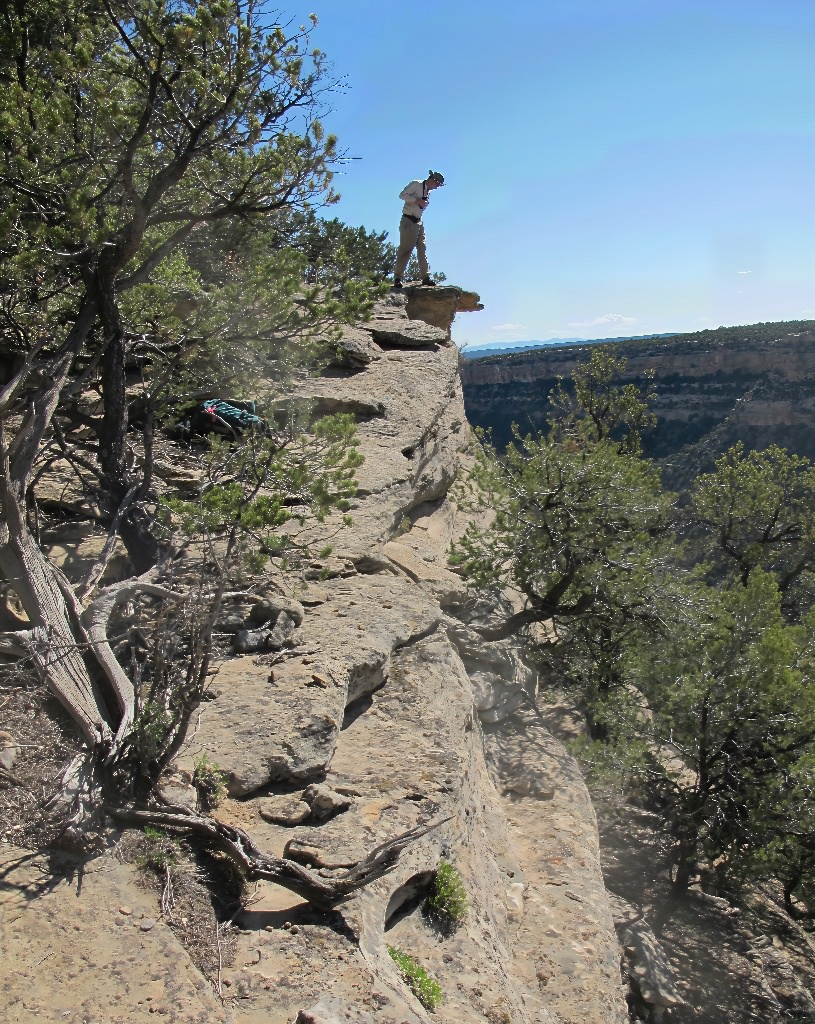
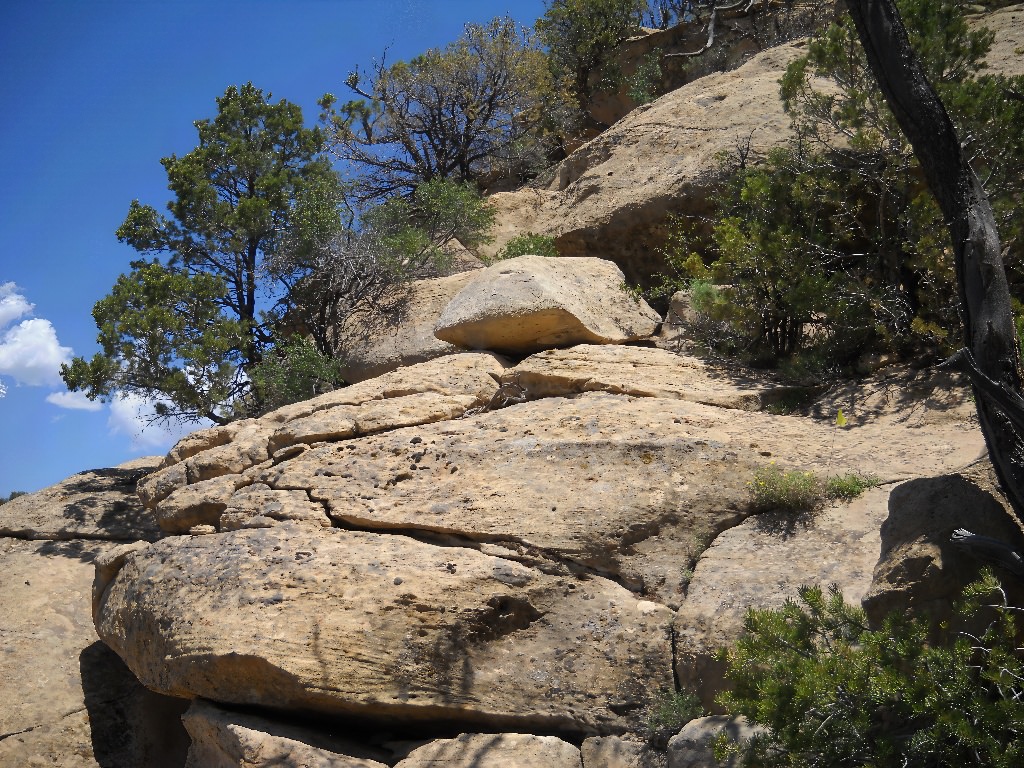
In Colorado, A. sessiflorus is found on shelves and in cracks of west-facing sandstone cliffs, side canyons or mesa tops in somewhat mesic areas with sandy soil. It can be found growing in Pinus edulis and Juniperus osteosperma litter. It is also found on dark gray badland shales of the San Juan Formation. Additional associated plant species include: Amelanchier utahensis, Artemisia tridentata, Cercocarpus montanus, Ephedra viridis, Quercus gambelii, Purshia tridentata, Ericameria nauseosa, Ericoma hymenoides, Poa fendleriana, Astragalus flavus, A. lonchocarpus, A. wingatanus, Eriogonum lonchophyllum, E. ovalifolium, Heterotheca villosa, Ipomopsis aggregata and Opuntia polyacantha (Colorado Natural Heritage Program 2026).
click on image to enlarge
 |
 |
Elevation Range:
6,545 - 6,834 feet (1,995 - 2,083 meters)
Distribution
Colorado Endemic:
No
Range:
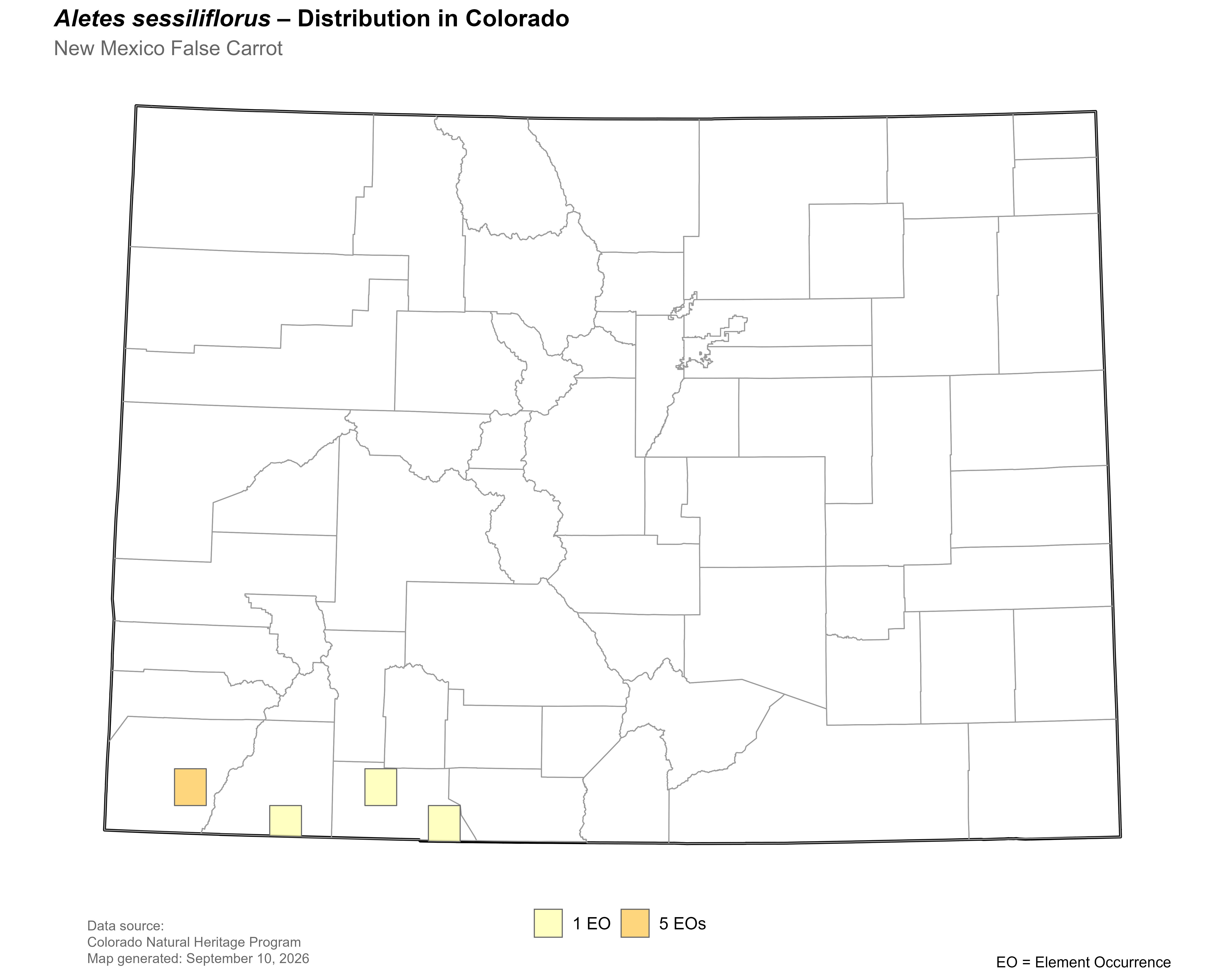
Aletes sessiliflorus is known from Archuleta, La Plata, and Montezuma counties in Colorado, USA. Estimated range extent in Colorado of 1,613 square kilometers was calculated in GeoCAT using occurrence data provided by the Colorado Natural Heritage Program (2026). This range estimate includes Montezuma County occurrences previously considered to be Aletes macdougalii ssp. breviradiatus. This species is also known from Arizona, New Mexico, Wyoming and the Navajo Nation, USA.
Click on map to enlarge |
Threats and Management Issues
This species is threatened primarily by long-term drought and changes in the local fire regime. Portions of some occurrences have burned in the past and did not appear to recover. Competition from invasive plant species including Salsola tragus, Bromus tectorum, and Carduus nutans have been reported from two of the occurrences. Oil and gas development may be a threat at one location. One occurrence receives minor disturbance from researchers accessing archaeological sites; the remainder of the occurrences are not threatened. In general, threats are considered to be relatively few and localized, principally because the habitat of Aletes sessiliflorus is relatively inaccessible with over half of the occurrences within undisturbed backcountry. However, issues related to climate change are also concerning; A.sessiflorusis is considered to have low adaptive capacity and is expected to be extremely vulnerable to climate change under both RCP 4.5 and 8.5 scenarios, as assessed for the 2025 Colorado State Wildlife Action Plan (CNHP 2025).
References
- Ackerfield, J. 2015. Flora of Colorado. BRIT Press, Botanical Research Institute of Texas, Fort Worth, TX. 818 pp.
- Ackerfield, Jennifer. 2022. Flora of Colorado. Second Edition. Bot. Misc. 60. BRIT Press, Fort Worth Botanic Garden/Botanical Research Institute of Texas, U.S.A. 861 pp.
- Colorado Natural Heritage Program (CNHP). 2025. Climate Change Vulnerability Assessment of Colorado Tier 1 and Tier 2 Plant Species of Greatest Conservation Need (SCGN) for the 2025 Colorado State Wildlife Action Plan. Colorado Natural Heritage Program, Colorado State University, Fort Collins, CO.
- Colorado Natural Heritage Program (CNHP). 2026. Biodiversity Tracking and Conservation System (Biotics 5). Colorado Natural Heritage Program, Colorado State University, Fort Collins.
- Flora of North America Editorial Committee (FNA). 2024. Flora of North America north of Mexico. Vol. 13. Magnoliophyta: Geraniaceae to Apiaceae. Oxford Univ. Press, New York. xxiv + 566 pp.
- Kartesz, J.T. 1994. A synonymized checklist of the vascular flora of the United States, Canada, and Greenland. 2nd edition. 2 vols. Timber Press, Portland, OR.
- New Mexico Rare Plant Technical Council. 1999. New Mexico Rare Plants. Albuquerque, NM: New Mexico Rare Plants Home Page. https://nmrareplants.unm.edu(Latest update: 10 Mar 2026).


