


Scientific Name : Aletes humilis
Author : Coult. & Rose NatureServe Explorer
Common Name : Larimer Aletes
 Current Research Activities
 1997 profile


☰ Click link below for details.
Taxonomy
Apiaceae (carrot family)
Ranks and Status
State Rank : S2S3
State Rank Reason : There are 28 occurrences of Aletes humilis in a restricted area of the northern Front Range of Colorado, USA. The species may possibly extend into southern Wyoming (although only 1 possible Wyoming collection, made in the 1890s, is known). Most occurrences are good-sized with at least one occurrence with over 1,000 individuals. The plants are probably somewhat protected by their inaccessible habitat, but the impacts of recreational uses including off-road vehicles should be monitored. One large population is protected on a Nature Conservancy preserve. Aletes humilis is considered vulnerable to climate change throughout its range.
U.S. Endangered Species Act : none
Colorado Threatened and Endangered List : none
Other Statuses : SWAP Tier 1
Description and Phenology
General Description:
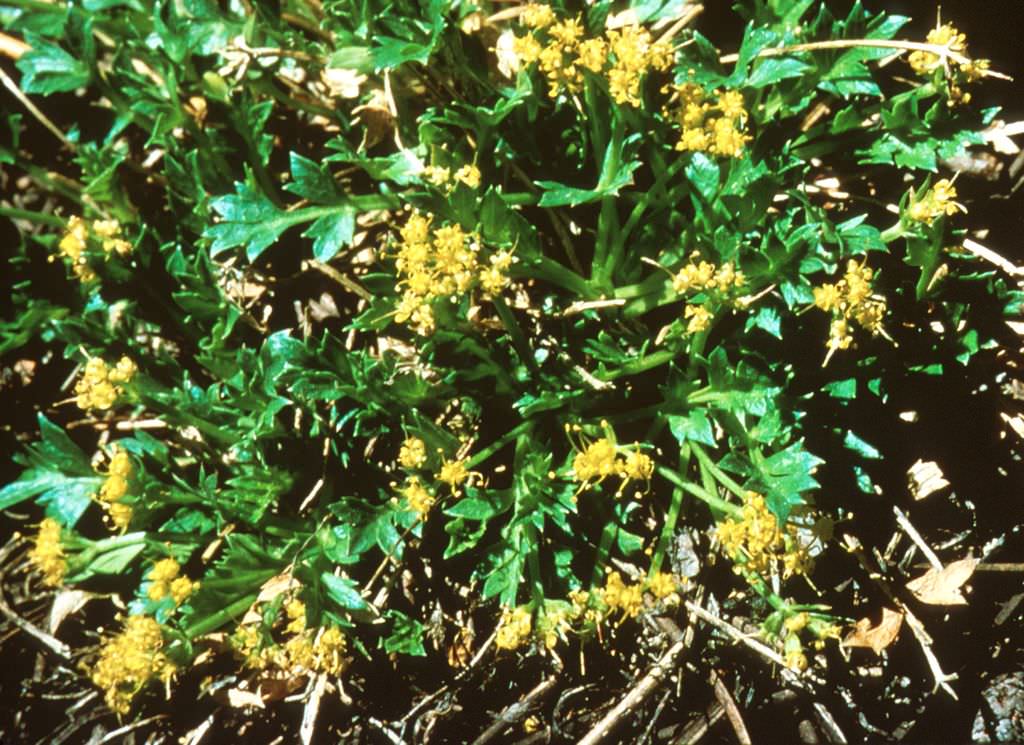
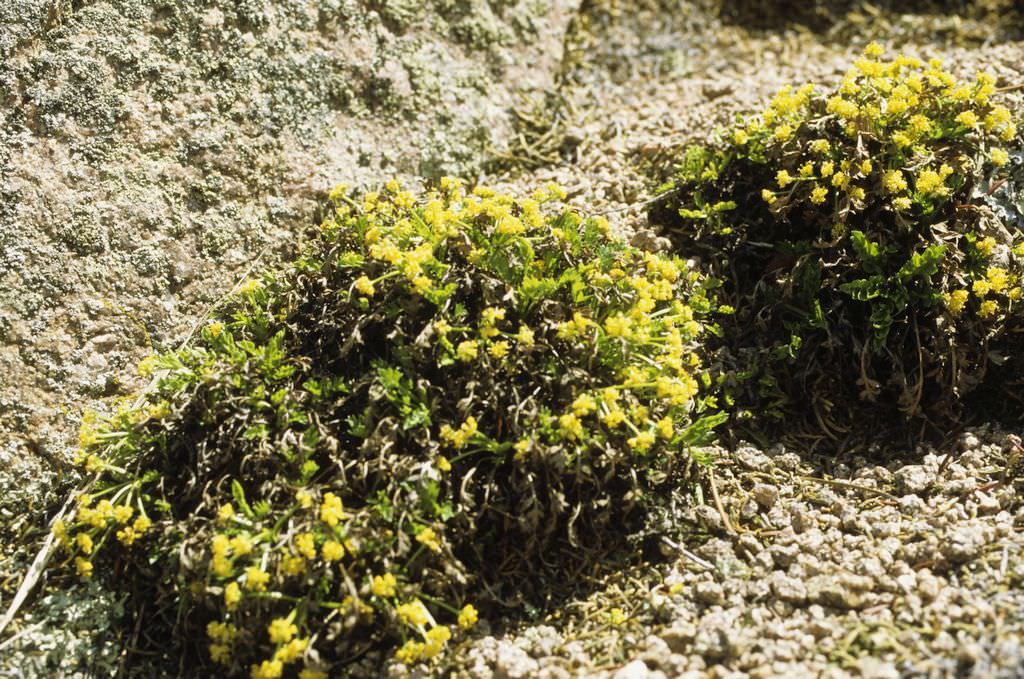
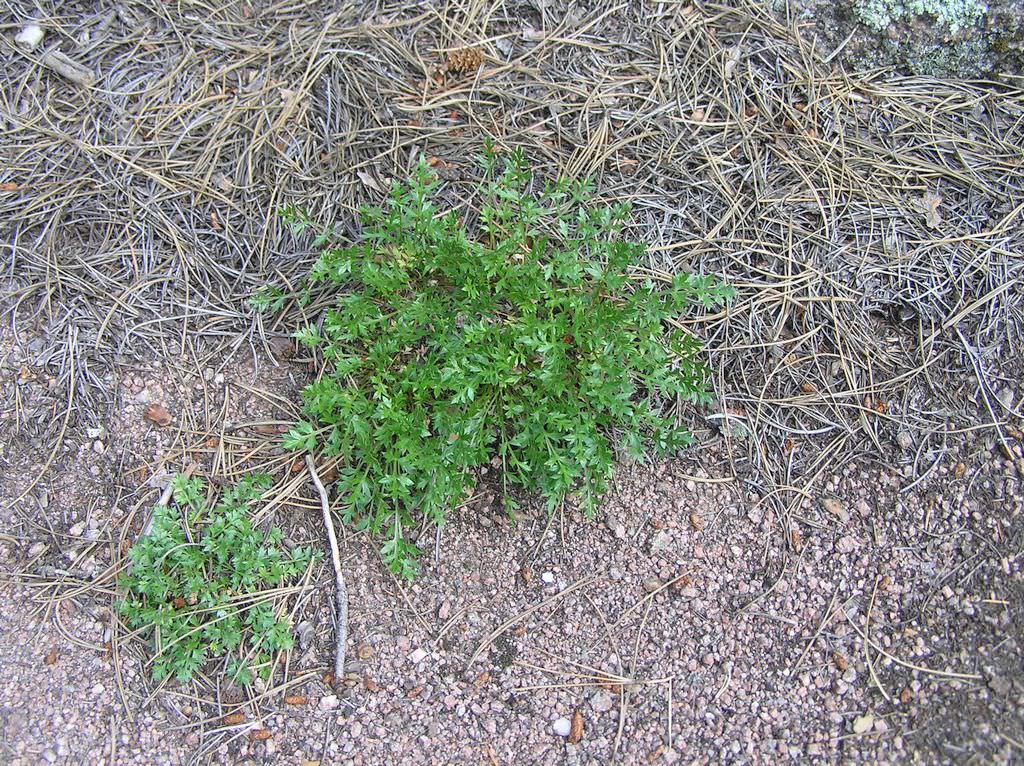
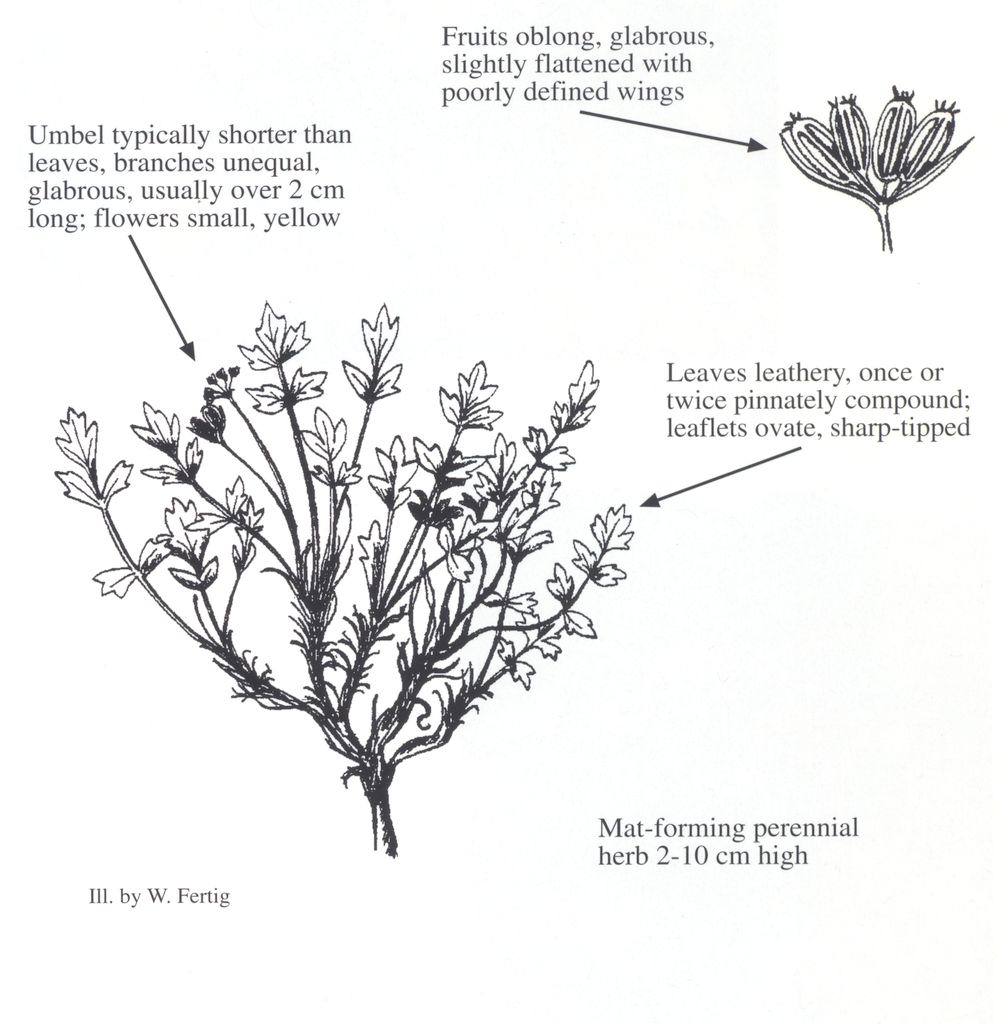
Aletes humilis grows in cushions 2-10 cm high and about 5-20 cm in diameter. During the growing season, the plants are bright green. The leaves are once or twice pinnate, oblong in outline with blades 1.8-3.2 cm long and 1-2 cm broad and with sharp teeth. The flowers are bright yellow. The peduncles are 0.8-4 cm long, shorter than the leaves, causing the inflorescence to be borne among the leaves. The bracts of the involucre are usually absent, rays 3-5 and spreading. The pedicels are 5-7 in number and are 1-2 mm long. The fruits are oblong to ovoid-oblong, 2-5 mm long and 0.8-2 mm wide, the ribs obscure (Theobald 1964).
Look Alikes:
Aletes anisatus has a strong anise or citronella odor while Aletes humilis has a celery or soapy odor. Aletes acaulis forms loose clumps rather than mats as in A. humilis. A. humilis has conspicuous ribs on fruit and has a peduncle which is shorter than the leaves (Spackman et al. 1997).
Phenology:
Usually flowers in early May, although it has been found flowering into early July. This plant generally fruits in July, although it has been found in fruit into October.
 |
Habitat
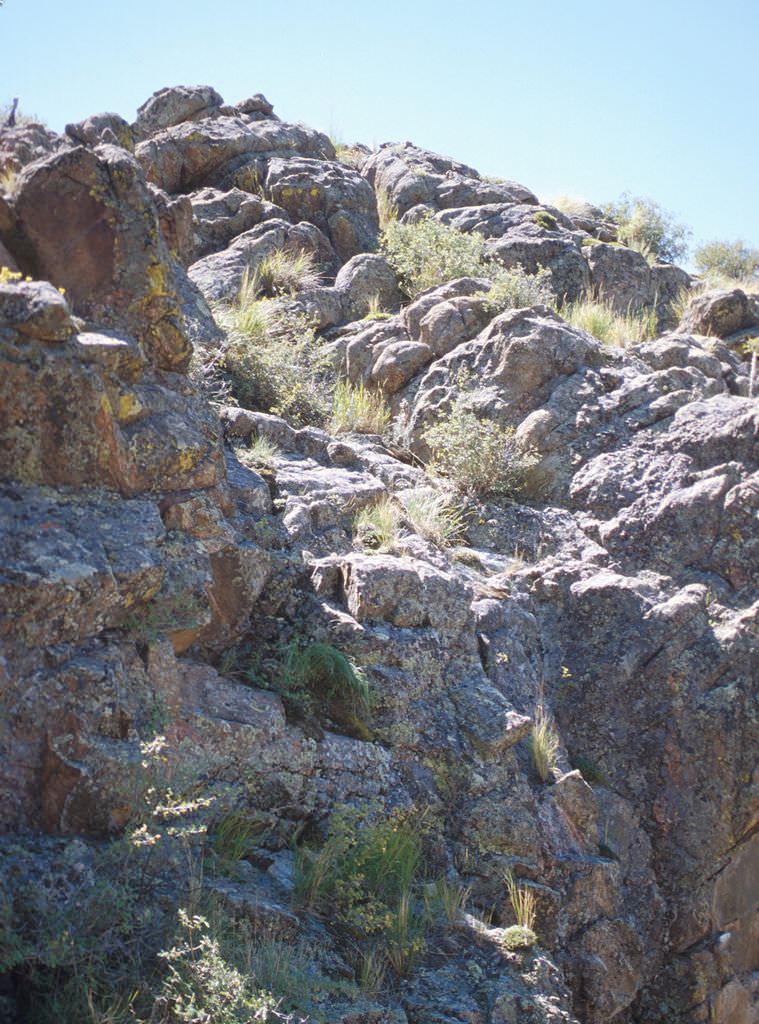
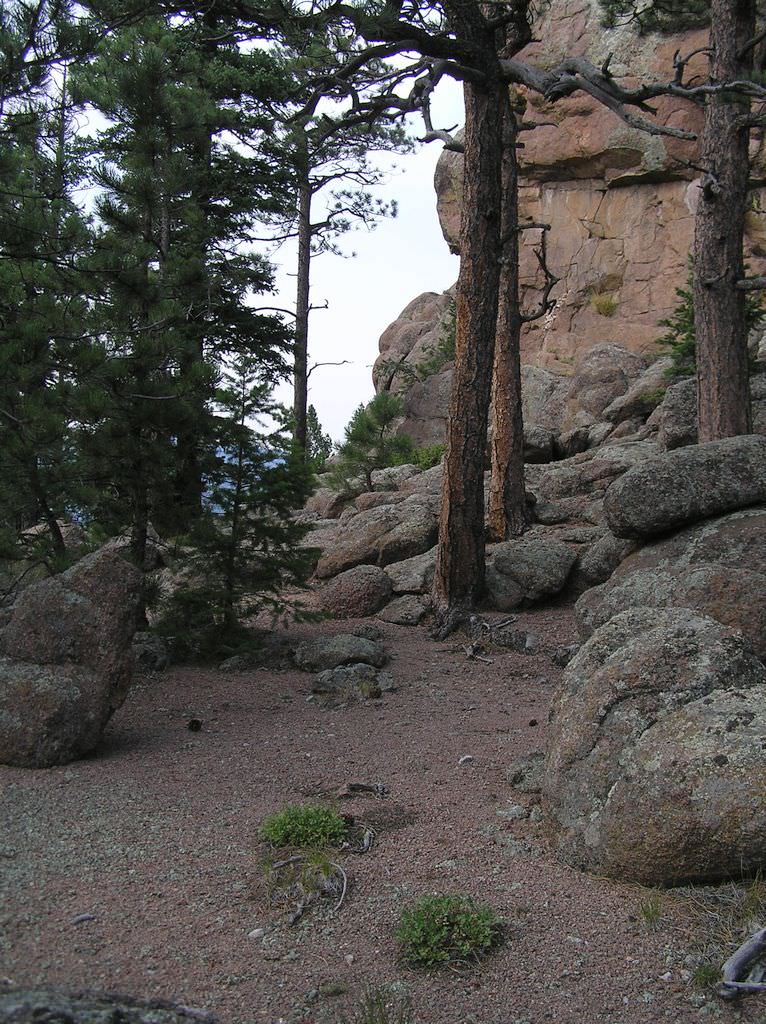
Cracks and cliffs of Silver Plume granite faces. Mostly in cracks in massive rocks or between boulders. Also in duff with Ponderosa pine. Found largely on sites that do not receive continual direct sunlight.
click on image to enlarge
 |
 |
Elevation Range:
6,154 - 8,846 feet (1,876 - 2,696 meters)
Distribution
Colorado Endemic:
Yes
Range:
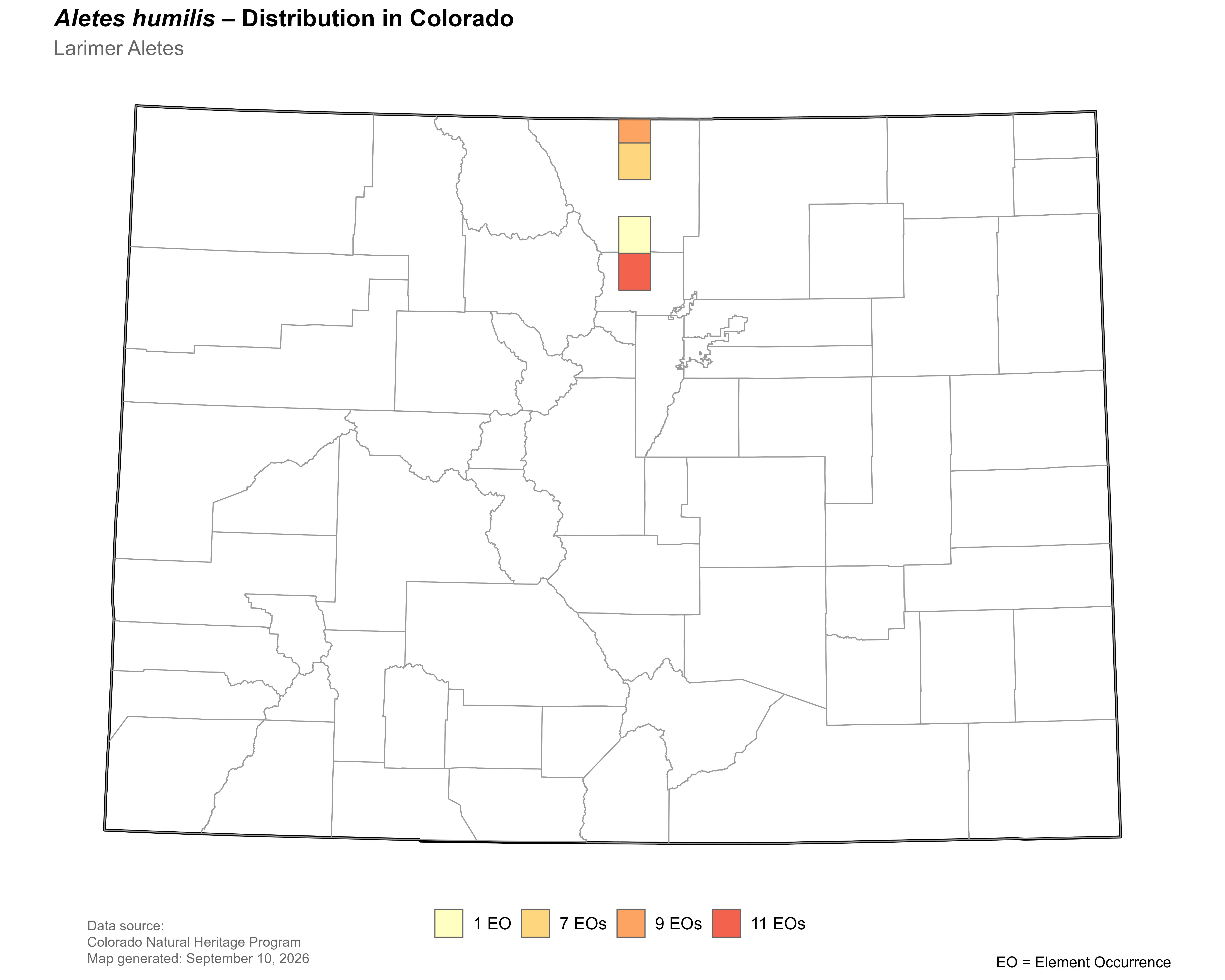
Aletes humilis is endemic to Colorado (Boulder and Larimer counties), Colorado, USA. There is one historical occurrence from Wyoming near the Colorado-Wyoming border (Moore and Friedley 2004). Estimated range extent in Colorado of 1412 square kilometers was calculated in GeoCAT using occurrence data provided by the Colorado Natural Heritage Program (2023).
Click on map to enlarge |
Threats and Management Issues
Recreational uses are considered to be the primary threat to the species at this time (CNHP Scorecard 2006, Scully 2011). Overall, the threats appear to be limited due to the remote and inaccessible locations of many of its occurrences. Several occurrences mention off road vehicle trails within the occurrence area; the impact is not known. Perhaps the greatest threat is inadvertent destruction by hikers and rock-climbers. One population is protected at a Nature Conservancy Preserve. Another population occurs atop a popular hiking destination on US Forest Service land; however, inspections of plants at this site did not reveal evidence of destruction of the plants by visitors (Carpenter and Neely personal observations), however, in 2011 a lot of forest thinning was taking place around two monitored plots where this species occurs (Scully 2011). Other management activities that may influence A. humilis are prescribed fire, recreation, and grazing. Occurrences located in sparsely vegetated habitats would not be directly impacted by fire due to the minimal fuels available in these types of habitats. Occurrences located in forest duff could be directly impacted by prescribed fire. Palatability of A. humilis has not been documented; however, the plant's low stature, sparsely vegetated locations, and steeply sloped habitats may provide some protection from herbivory. Secondary grazing impacts from changes in plant species composition (including spread of invasive species), soil compaction, and erosion may still be important (Moore and Friedly 2004). Finally, A. humilis is considered to have low adaptive capacity and is expected to be moderately vulnerable to climate change with an RCP 4.5 scenario and extremely vulnerable to climate change with an RCP 8.5 scenario, as assessed for the 2025 Colorado State Wildlife Action Plan (CNHP 2025).
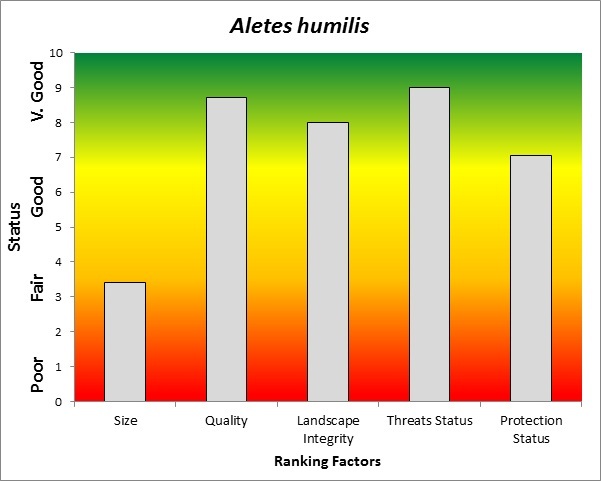
Summary results of an analysis of the status of Aletes humilis based on several ranking factors. This species was concluded to be Effectively Conserved. From Rondeau et al. 2011. |
References
- Ackerfield, J. 2015. Flora of Colorado. BRIT Press, Botanical Research Institute of Texas, Fort Worth, TX. 818 pp.
- Colorado Native Plant Society. 1989. Rare plants of Colorado. Rocky Mountain Nature Association, Colorado Native Plant Society, Estes Park, Colorado. 73 pp.
- Colorado Natural Heritage Program (CNHP). 2023. Biodiversity Tracking and Conservation System (Biotics 5). Colorado Natural Heritage Program, Colorado State University, Fort Collins.
- Colorado Natural Heritage Program (CNHP). 2025. Climate Change Vulnerability Assessment of Colorado Tier 1 and Tier 2 Plant Species of Greatest Conservation Need (SCGN) for the 2025 Colorado State Wildlife Action Plan. Colorado Natural Heritage Program, Colorado State University, Fort Collins.
- Fertig, W., C. Refsdal, and J. Whipple. 1994. Wyoming rare plant field guide. Wyoming Rare Plant Technical Committee, Cheyenne. No pagination.
- Handwerk, J., L. Grunau, and S. Panjabi. 2015. Colorado Wildlife Action Plan: 2015 Rare Plant Addendum. Colorado Natural Heritage Program, Colorado State University, Fort Collins, Colorado, USA.
- Linhart, Y.B. and A.C. Premoli. 1993. Genetic variation in Aletes acaulis and its relative, the narrow endemic A. humilis (Apiaceae). American Journal of Botany 80(5):598-605.
- Moore, L. and S. Friedley. (2004, September 24). Aletes humilis Coult. & Rose (Colorado aletes): a technical conservation assessment. [Online]. USDA Forest Service, Rocky Mountain Region. Available: http://www.fs.fed.us/r2/projects/scp/assessments/aleteshumilis.pdf [March 2006].
- Neely, B., S. Panjabi, E. Lane, P. Lewis, C. Dawson, A. Kratz, B. Kurzel, T. Hogan, J. Handwerk, S. Krishnan, J. Neale, and N. Ripley. 2009. Colorado Rare Plant Conservation Strategy, Developed by the Colorado Rare Plant conservation Initiative. The Nature Conservancy, Boulder, Colorado, 117 pp.
- O'Kane, S. L. 1988. Colorado's Rare Flora. Great Basin Naturalist. 48(4):434-484.
- Rondeau, R., K. Decker, J. Handwerk, J. Siemers, L. Grunau, and C. Pague. 2011. The state of Colorado's biodiversity 2011. Prepared for The Nature Conservancy. Colorado Natural Heritage Program, Colorado State University, Fort Collins, Colorado.
- Spackman, S., B. Jennings, J. Coles, C. Dawson, M. Minton, A. Kratz, and C. Spurrier. 1997. Colorado rare plant field guide. Prepared for Bureau of Land Management, U.S. Forest Service and U.S. Fish and Wildlife Service by Colorado Natural Heritage Program.
- Theobald, W. L., C. S. Tseng, and M. E. Mathias. 1964. A revision of Aletes and Neoparrya (Umbelliferae). Brittonia 16:296-315.
- Weber, W. A. and R. C. Wittmann. 2012. Colorado Flora, Eastern Slope, A Field Guide to the Vascular Plants, Fourth Edition. Boulder, Colorado. 555 pp.