Colorado Bat Working Group Logo Colorado Bat Working Group Logo CBWG
  • About CBWG
  • Bats of Colorado
  • Plan
  • Management and Conservation
  • CO Bat Matrix
    • Search CO Bat Matrix
    • CO Bat Species List
    • CO Bat Matrix Methods
    • CO Bat Matrix References
    • CO Bat Matrix Poster
  • Excluding bats
  • CNHP Home

Big free-tailed bat (Nyctinomops macrotis)
Family: Molossidae

Bats of Colorado > Big free-tailed bat (Nyctinomops macrotis)
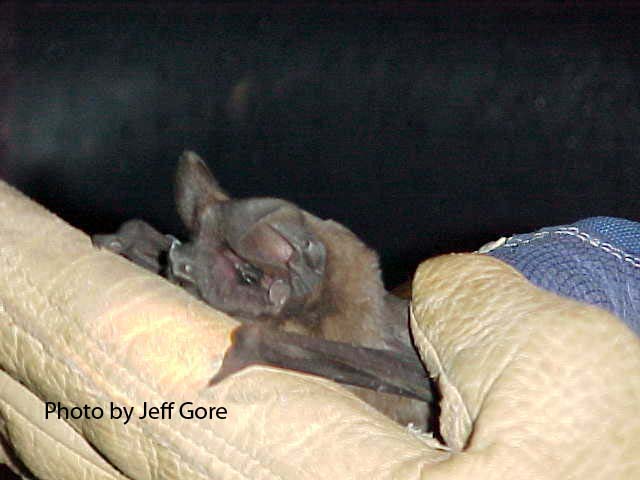
BatPicture.
  • Recognition
  • Distribution
  • Habitat and Habits
  • Breeding
  • Food
  • Remarks
  • Recent Citations
  • View Species Threat Matrix

Recognition

Back to top

Like the Brazilian free-tailed bat, these animals have a tail that extends well beyond the uropatagium. This bat is much larger than the Brazilian free-tailed bat, and its ears join at the midline of the forehead. Color varies from pale brown to black. Wingspan is approximately 425 mm. Average measurements are: total length, 140 mm; length of ear, 25 mm; length of forearm, 60 mm.

Distribution

Back to top

The big free- tailed bat occurs mainly in southern California, Arizona, New Mexico, Texas and Mexico. Long thought to be an accidental wanderer in Colorado, recent data show the presence of breeding colonies in Colorado. Indeed, audible echolocation calls and recordings provide evidence of widespread occurrence across Colorado.

Habitat and Habits

Back to top

This bat frequents rocky or canyon country where it roosts in crevices. This migratory species is a swift, powerful flier, and occasional individuals wander as far north as Canada. Little is known of mortality and longevity.

Breeding

Back to top

Breeding probably occurs in midwinter while the species is in warmer latitudes. A single young is born in mid-June to early July. Females form small nursery colonies, and the young do not leave the nursery until they are almost full grown.

Food

Back to top

Moths seem to be the mainstay of their diet, although little data has been collected. This bat emerges late in the evening and forages at high altitudes. The echolocatory calls are audible to humans.


Remarks

Back to top

Recent Citations

Back to top

Colorado Bat Working Group

About CBWG
Bats of Colorado
CBWG Bat Conservation Plan
Bat Management and Conservation Information
Links

CO Bat Matrix

CO Bat Matrix
Search Matrix
CO Bat Species List
Methods
References

Web Projects

  • CODEX - Colorado’s Conservation Data Explorer
  • Rare Plant Guide Online
  • Colorado Wetland Info Center
  • COMaP - Colorado Protected Lands
  • Colorado Bat Working Group
  • STReaMS - Endangered Fishes Database
  • Colorado Native Plant Database Data Portal

About Us

  • About CBWG
  • Bats of Colorado
  • CO Bat Conservation Plan
  • Management and Conservation
  • CO Bat Matrix
  • Links
  • Site Map
Warner College of Natural Resources Logo
  • Apply to CSU
  • Equal Opportunity
  • Disclaimer
  • Privacy Statement
  • Search CSU
  • CSU Land Acknowledgement
  • CSU Principles of Community
© 2026 Colorado Natural Heritage Program
Colorado State University Logo
  • About CBWG
  • Bats of Colorado
  • Plan
  • Management and Conservation
  • CO Bat Matrix
    ▼
    • Search CO Bat Matrix
    • CO Bat Species List
    • CO Bat Matrix Methods
    • CO Bat Matrix References
    • CO Bat Matrix Poster
  • Excluding bats
  • CNHP Home